
Roofing projects generate tons of debris, and how you handle it directly impacts your bottom line and your legal standing. Improper disposal can trigger fines, environmental violations, and costly liability issues that derail your business.
At Dumpster Solutions NW, we’ve helped contractors across Washington State manage roofing waste efficiently. This guide walks you through proven disposal practices that protect your reputation and cut costs.
Why Proper Roofing Disposal Matters
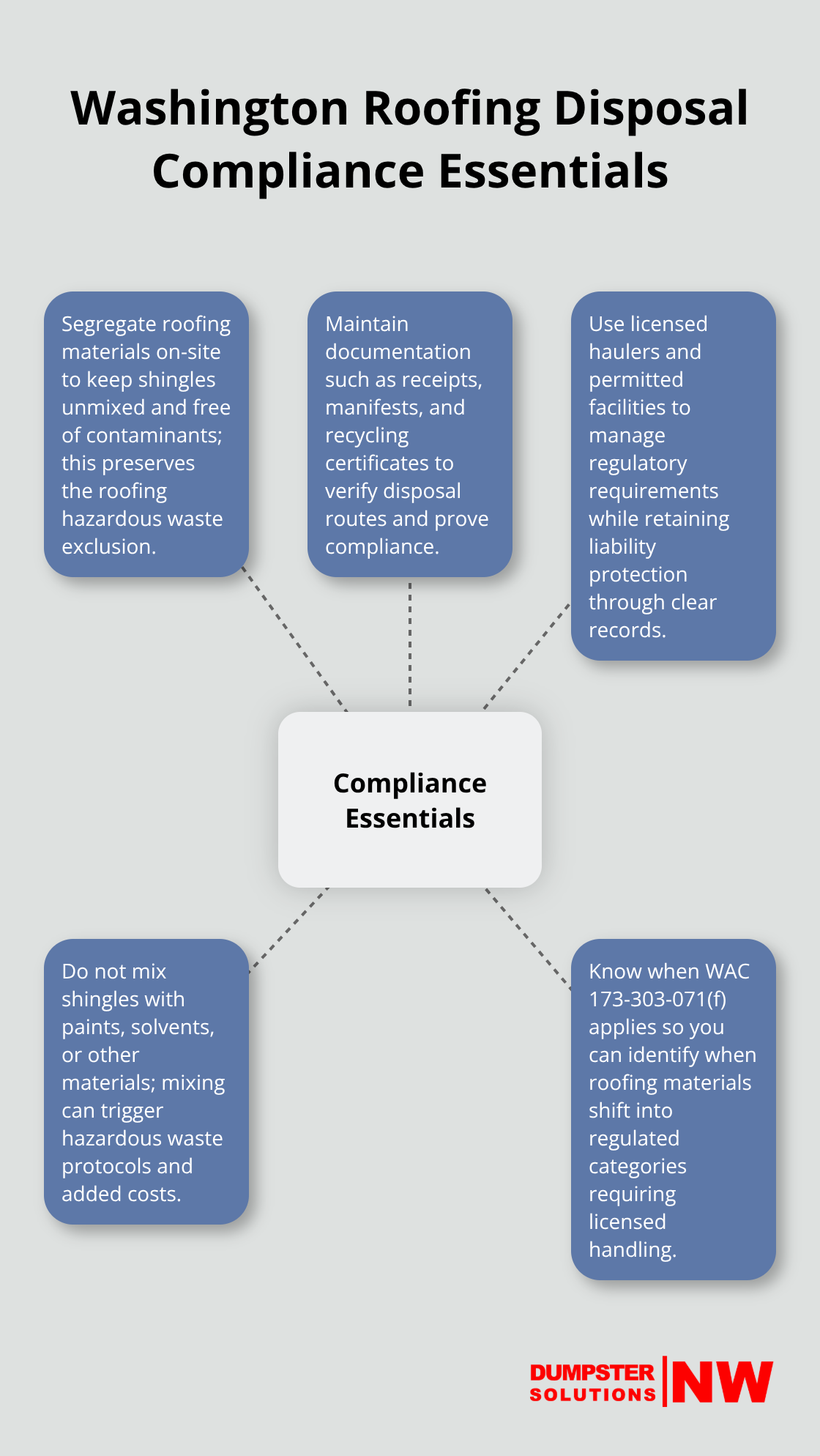
The EPA estimates asphalt shingle waste reaches U.S. landfills annually, yet recycling rates remain low. That gap matters to your bottom line and your legal exposure. Asphalt shingles don’t biodegrade and persist in landfills for centuries, but more immediately, improper disposal invites regulatory scrutiny. Washington State classifies roofing waste under specific hazardous waste rules in WAC 173-303-071(f). If your roofing tars and shingles mix with other materials or exhibit hazardous characteristics, they shift into a regulated category that demands licensed handling and documentation. Contractors who ignore this distinction face fines, project shutdowns, and liability claims that far exceed the cost of doing it right.
The environmental case is equally compelling: recycling asphalt shingles reduces the need for virgin asphalt and aggregate, cutting carbon emissions. That’s measurable impact that resonates with clients, insurers, and regulators.
Compliance Keeps Your License Clean
Washington State requires contractors to segregate roofing waste at the job site and document disposal routes. Mixing shingles with paints, solvents, or other materials automatically removes the standard waste exclusion and triggers hazardous waste protocols. You need receipts, manifests, and recycling certificates to prove compliance if an inspector asks. Non-compliance costs real money: fines compound quickly, and a single violation can jeopardize your contractor license or insurance coverage. Licensed waste management services and permitted recycling facilities handle the regulatory burden, but you remain liable for what leaves your site. Proper planning upfront-choosing a reputable provider, maintaining clear documentation, and training your crew on waste segregation-eliminates guesswork and protects your business.
Efficient Disposal Reduces Project Costs
Contractors who plan waste management strategically cut disposal expenses by 20–30 percent. Right-sizing your dumpster rental prevents overpaying for unused space or paying surcharges for multiple hauls. Recycling asphalt shingles often generates revenue recovery or reduced tipping fees compared to straight landfill disposal, and some facilities offer incentives for clean, separated material streams. Organizing on-site sorting stations and training crews to separate metal, wood, and shingles from general debris means faster loading, fewer contamination issues, and lower per-ton disposal costs.
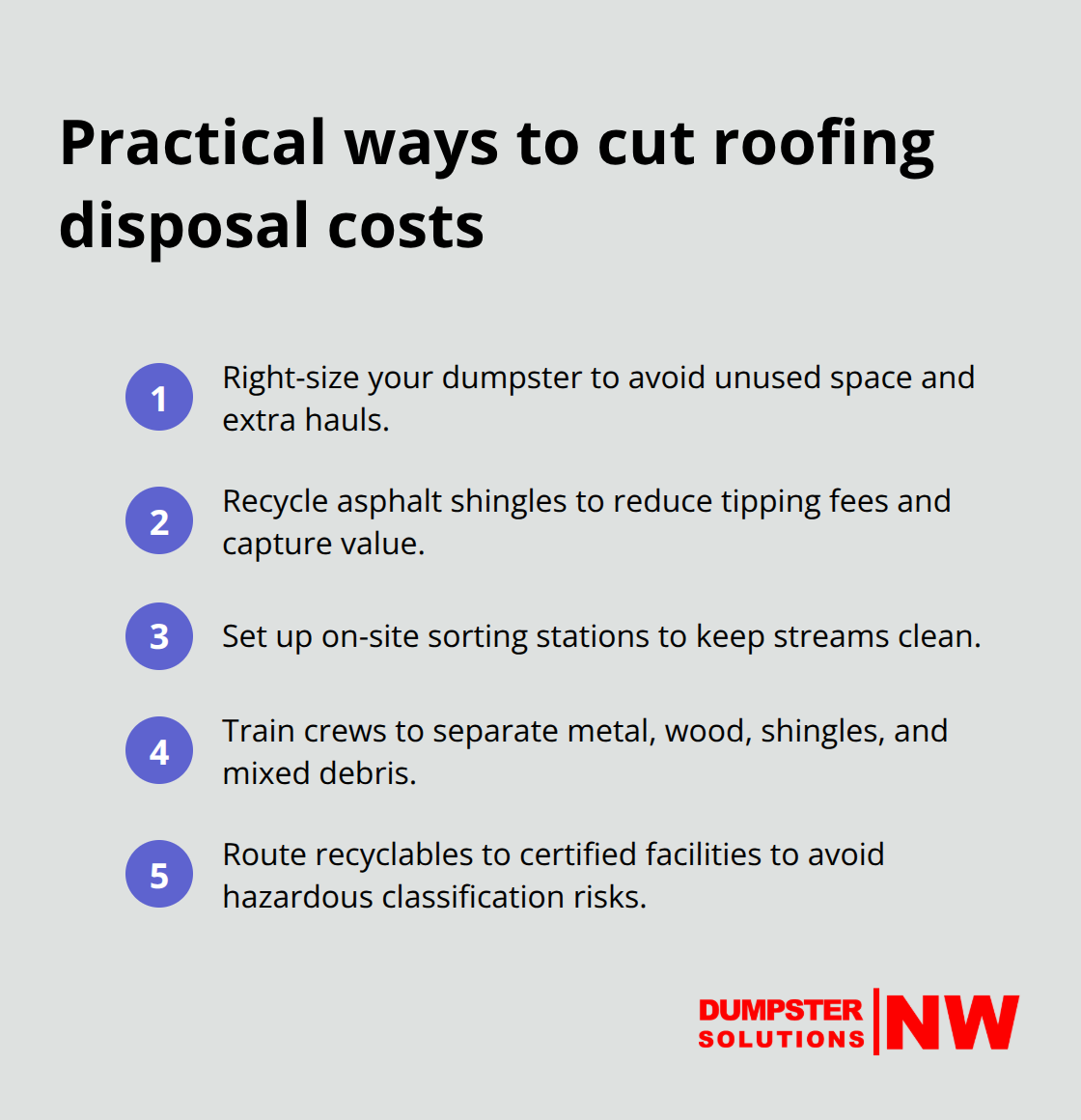
When you route recyclable materials through certified recyclers instead of landfills, you also sidestep hazardous waste classification risks that could trigger costly remediation or fines. The math is straightforward: a structured disposal plan pays for itself through avoided fees, compliance penalties, and potential recycling revenue. With these cost and compliance foundations in place, the next step is learning how to sort and manage your roofing waste streams on site.
Best Practices for Roofing Material Disposal
Separate Your Waste Streams First
The difference between a smooth disposal process and a compliance nightmare comes down to what happens on your job site during tear-off. Asphalt shingles, metal flashing, nails, wood framing, and general debris must stay physically separated from the moment they leave the roof. Washington State’s hazardous waste exclusion for roofing materials only holds if you keep shingles unmixed and free from contaminants. Once a nail from the roof lands in a pile destined for a general landfill, or shingles get tossed into a bin with leftover paint or solvents, you’ve crossed into regulated waste territory.
The practical solution involves designating separate drop zones on your site: one for shingles, one for metal, one for wood, and one for mixed debris. Use clearly labeled roll-off containers or tarps to prevent cross-contamination. A magnetic sweeper pulled across the debris area after tear-off removes loose nails and fasteners, reducing hazard during loading and keeping metal streams clean for recycling. This segregation takes minimal extra effort during the project but eliminates the regulatory risk that compounds into fines and liability exposure later.
Partner with a Licensed Waste Provider
Not all dumpster rental companies understand roofing waste regulations or maintain relationships with permitted recycling facilities. You need a provider who accepts roofing shingles without question, delivers promptly, and routes materials to compliant disposal or recycling endpoints. Dumpster Solutions NW serves the Seattle and Puget Sound region with transparent flat-rate pricing and no hidden fees. We offer 10, 20, 30, and 40-yard dumpsters sized for everything from small residential roof replacements to large commercial tear-offs. Our same-day or next-day delivery means your crew starts on schedule, and we handle the entire hauling and responsible disposal process.
When you rent from a provider who knows Washington State regulations and maintains proper documentation, you transfer the compliance burden to professionals while maintaining your liability protection through clear records and verified disposal routes. Ask potential providers whether they recycle asphalt shingles or send them to permitted landfills, what documentation they provide, and whether they’ve worked with roofing contractors before.
Route Shingles to Recycling When Possible
The Shingle Recycling Coalition reports that over 16 million tons of asphalt shingle waste have been recycled into asphalt roads since 2009, yet the U.S. still generates 15.1 million tons annually with only about 1.067 million tons currently being recycled. That gap represents both environmental waste and missed opportunity. Recycling asphalt shingles not only diverts waste from landfills but also reduces the need for new material extraction and production.
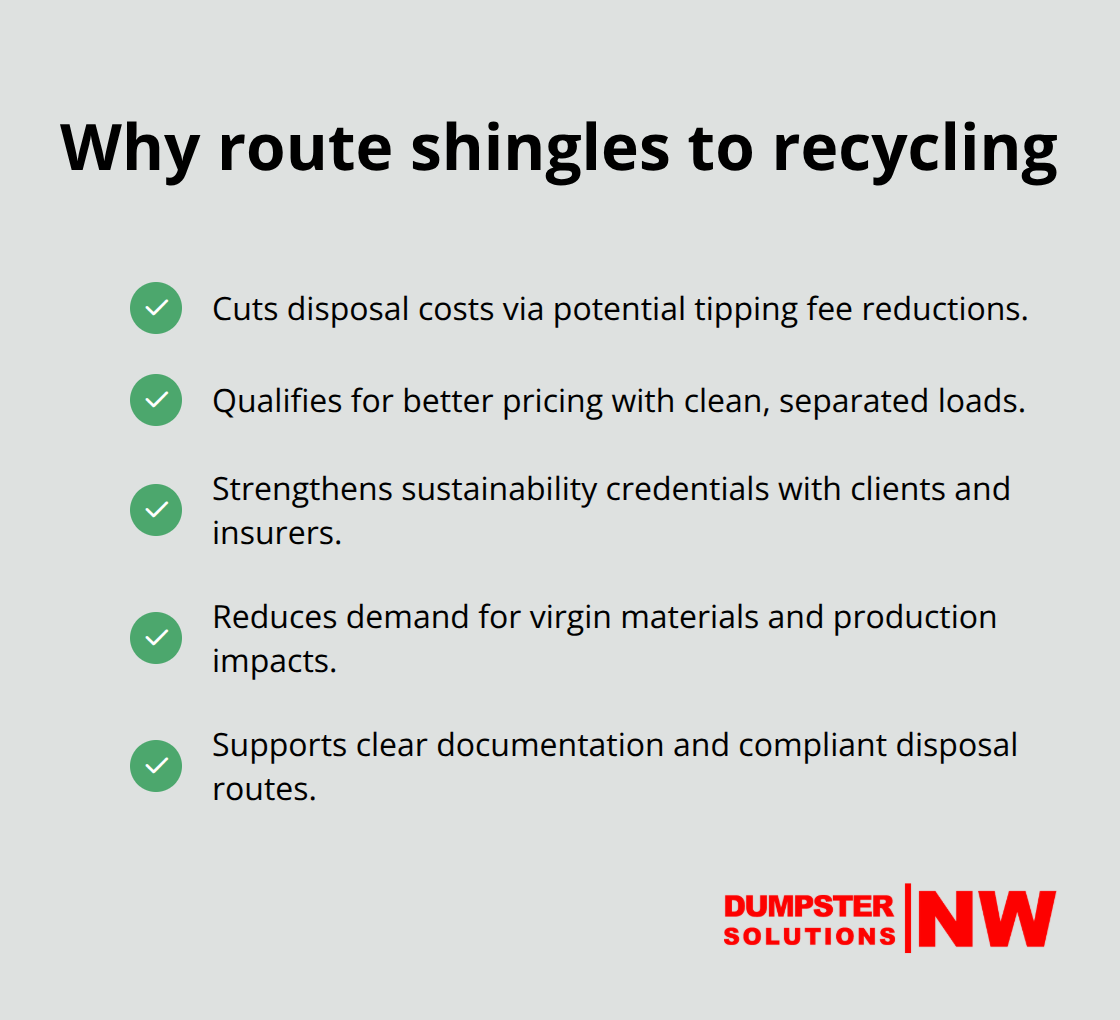
If a licensed recycling facility operates in your service area, routing clean, separated shingles there instead of to a landfill cuts your disposal cost, generates potential tipping fee reductions, and strengthens your sustainability credentials with clients and insurers. Confirm the recycler’s permit status and ask whether they accept shingles from roof tear-offs. Facilities vary in their contamination tolerance, so shingles free from nails, tar paper, and mixed debris load faster and often qualify for better pricing. Recycling doesn’t always cost more than landfill disposal, and when it does, the difference is typically modest against the environmental and regulatory advantages.
With your waste streams sorted and your recycling partners identified, the next step focuses on streamlining the actual disposal process through smart planning and the right equipment.
Streamlining Your Roofing Disposal Process
Calculate Your Debris Volume Accurately
Smart planning transforms roofing disposal from a logistical headache into a controlled, cost-effective operation. Start your project with a roofing dumpster calculator to estimate the right size for your needs. A typical residential tear-off on a 2,000-square-foot home produces roughly 4 to 6 tons of mixed debris. That translates to a 20-yard dumpster for most single-family homes, while larger commercial roofs or multi-story buildings demand 30 or 40-yard capacity.
Right-sizing your dumpster upfront prevents expensive return trips or overpaying for unused space. Schedule delivery to arrive one day before tear-off starts so your crew loads debris immediately without staging piles on the ground. Confirm that your provider accepts roofing shingles and routes them to recycling or permitted disposal facilities. Request a flat-rate quote with no hidden fees, and verify whether the price includes hauling and responsible disposal.
Schedule Delivery and Organize Your Site
Most contractors save 20 to 30 percent on disposal costs simply through proper dumpster sizing and delivery timing. Separate your waste streams on site before the dumpster arrives: designate zones for shingles, metal, wood, and mixed debris so loading remains organized and contamination stays minimal. A magnetic sweeper pulled across the debris area after tear-off removes loose nails and fasteners, reducing hazard during loading and keeping metal streams clean for recycling.
Dumpster Solutions NW delivers 10, 20, 30, and 40-yard containers throughout the Seattle and Puget Sound region, often within 24 hours of booking. We provide transparent, flat-rate pricing with no hidden fees and handle the entire hauling and responsible disposal process for you.
Maintain Documentation for Legal Protection
Documentation protects you legally and proves compliance if regulators inspect your project. Maintain receipts from your dumpster provider showing what materials were removed and where they went. Request disposal certificates or recycling confirmations that specify whether shingles went to a licensed recycler or a permitted landfill. Keep these records for at least three years, along with photos of segregated waste streams and signed manifests if hazardous materials were involved.
Washington State contractors face increasing scrutiny around construction waste management, and clean documentation is your first defense against fines or license complications. Train your crew before work starts on which materials go where and why segregation matters. A 10-minute safety briefing covering proper nail removal, safe loading techniques, and waste stream identification prevents injuries and compliance errors.
Handle Specialized Materials Separately
If your project involves older roofing materials suspected of containing asbestos, hire a licensed abatement contractor to test and remove those materials separately before general tear-off starts. Asbestos-containing roofing waste requires hazardous waste protocols and specialized disposal, not standard dumpster routing. On smaller projects, a 20-yard dumpster works well for most residential tear-offs. On larger commercial jobs, combine a 30 or 40-yard dumpster with on-site magnetic sweeping to capture nails and fasteners, reducing contamination and accelerating the entire process.
Final Thoughts
Proper roofing debris disposal isn’t optional-it’s the foundation of a compliant, profitable contracting business. The practices outlined in this guide protect your license, reduce your liability, and cut real costs from your bottom line. Segregating roofing debris on site, partnering with licensed waste providers, and routing materials to recycling facilities when possible transform what could be a regulatory nightmare into a streamlined operation.
Contractors who adopt responsible disposal practices build stronger relationships with clients, insurers, and regulators. Your reputation as someone who handles waste properly becomes a competitive advantage, especially in markets like Seattle, Tacoma, and the Puget Sound region where environmental standards are tightening. Recycling asphalt shingles reduces your disposal costs while supporting the circular economy-a message that resonates with property owners and strengthens your brand.
Before your next roofing project, calculate your debris volume, identify a licensed waste provider who accepts roofing materials, and confirm whether recycling facilities operate in your service area. Visit Dumpster Solutions NW to book your dumpster and get your next project started on the right footing. We deliver same-day or next-day service across the Seattle and Puget Sound region with transparent flat-rate pricing and responsible disposal.