
Renting a dumpster seems straightforward until you start loading it. The wrong debris types end up costing you extra fees or creating safety hazards.
We at Dumpster Solutions NW want you to know exactly what goes in and what stays out. This guide covers accepted materials, prohibited items, and smart loading strategies for your rental.
What You Can Actually Put in Your Dumpster
Standard Household Items and General Debris
Most rental dumpsters accept standard household waste, construction debris, and yard materials-but the specifics matter more than you’d think. General household items like old furniture, broken appliances without refrigerants, cardboard, and general clutter fit into most dumpsters.
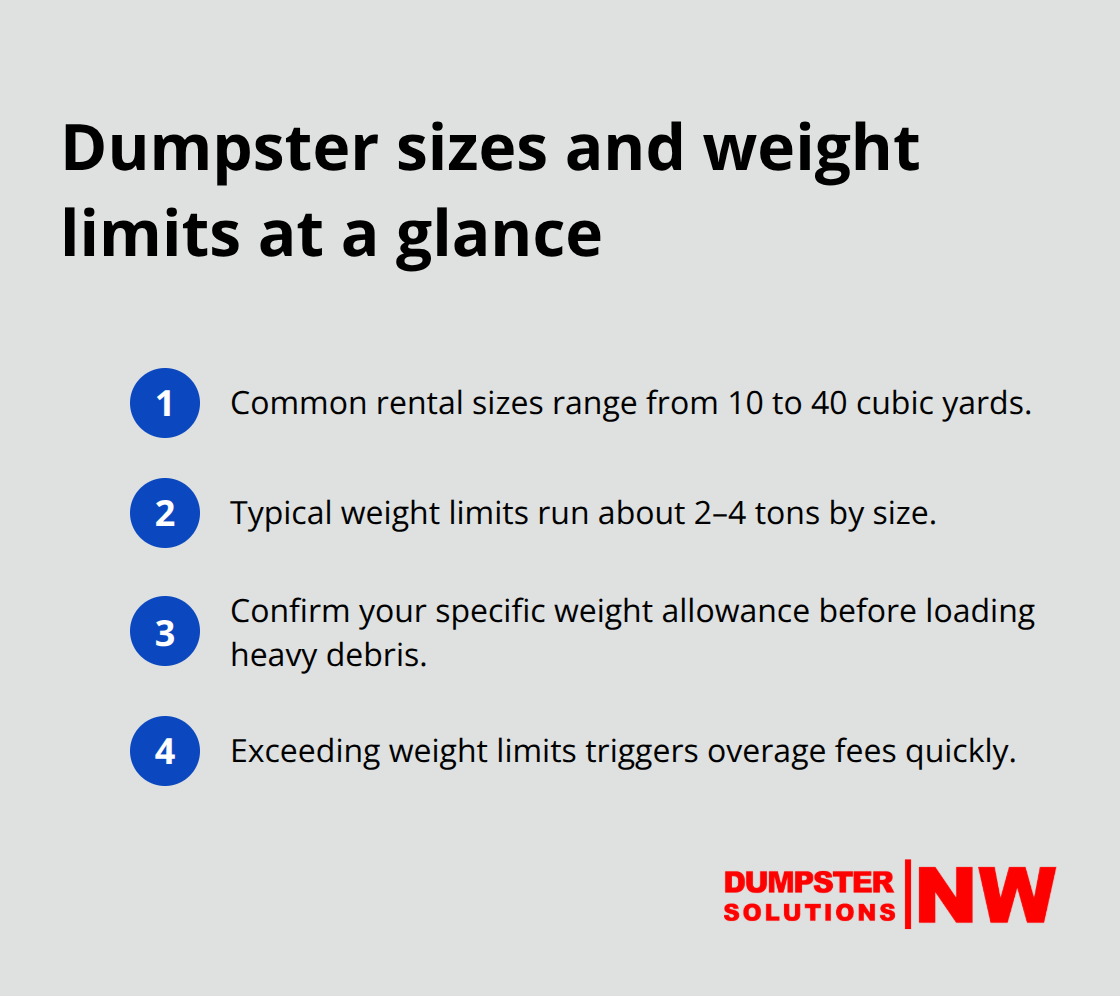
Waste Management reports that typical rental dumpsters range from 10 to 40 cubic yards, with weight limits around 2–4 tons depending on size. You’ll want to confirm your weight limit before loading heavy materials, as exceeding it triggers overage fees that add up fast.
Construction and Demolition Materials
Construction and demolition materials like wood, drywall, concrete, and metal are widely accepted in rental dumpsters. Concrete and masonry materials are heavy and consume your weight limit quickly, so plan accordingly. Roofing debris and foundation concrete demand special attention to weight calculations before you start loading. Treated wood like railroad ties and telephone poles cannot go in dumpsters due to harmful preservatives-this restriction applies firmly across Washington State.
Yard Waste and Soil
Yard waste including grass clippings, branches, leaves, and landscaping soil typically fits into most dumpsters, though some areas require yard waste separation for composting rather than landfill disposal. King County allows uncontaminated dirt and soil up to a full pickup truckload if dust control measures are used during unloading. Cardboard should be broken down to save space, and metals like steel or aluminum are often accepted and can be recycled separately. Bulky items such as mattresses and box springs may be allowed in certain areas but frequently incur additional processing fees if accepted at all.
Know Your Local Rules Before Loading
Electronics, appliances with refrigerants, tires, and hazardous materials have dedicated disposal streams and absolutely cannot be mixed with standard rental dumpster loads. King County’s Waste Acceptance Rule governs what materials facilities accept, and violations result in extra charges or rejection of your entire load. Contact your local waste authority if you’re unsure whether an item qualifies for your dumpster. Understanding these restrictions upfront prevents costly mistakes and keeps your project on track-which brings us to the prohibited items that create the most confusion and problems.
What You Cannot Put in Your Dumpster
Hazardous Materials and Chemicals
Hazardous materials create expensive mistakes and safety risks in rental dumpsters. Oil-based paints, solvents, thinner, epoxy, and paint strippers violate U.S. EPA guidelines and cannot enter your dumpster. Latex paint qualifies for disposal only if you completely dry it and seal it in its original container. Pesticides, oven cleaners, degreasers, household bleach, deck cleaners, and wood preservatives all require disposal through your local hazardous waste facility. King County residents can locate these facilities through the 1-800-RECYCLE database or by calling 1-800-RECYCLE.
Propane tanks, compressed gas cylinders, and aerosol cans with liquid inside create explosion risks and must go to appropriate hazardous waste facilities. Batteries present another critical hazard: car batteries, lithium batteries, and rechargeable batteries cannot enter standard rental dumpsters. The U.S. EPA prohibits these items because they corrode, leak, and contaminate soil and water. Take car batteries to your local auto shop or recycler, and use designated battery recycling programs for household batteries.
Medications and pharmaceutical waste belong in specialized disposal programs, not dumpsters. MedProject operates a nationwide take-back program for unwanted, leftover, or expired prescriptions. Household cleaning products, adhesives like glue or epoxy, and hobby chemicals (including pool chemicals and lighter fuels) fall under moderate risk waste and require separate handling.
Electronics and Appliances with Refrigerants
Electronics and appliances with refrigerants demand specialized disposal because they contain hazardous materials that damage the ozone layer. Refrigerators, freezers, air conditioning units, and dehumidifiers all contain refrigerants that licensed professionals must remove before any disposal occurs. TVs, computer monitors, cell phones, tablets, and laptops contain toxic materials like lead and mercury and must go to e-waste recycling facilities. King County offers dedicated electronics recycling options rather than standard dumpster disposal.
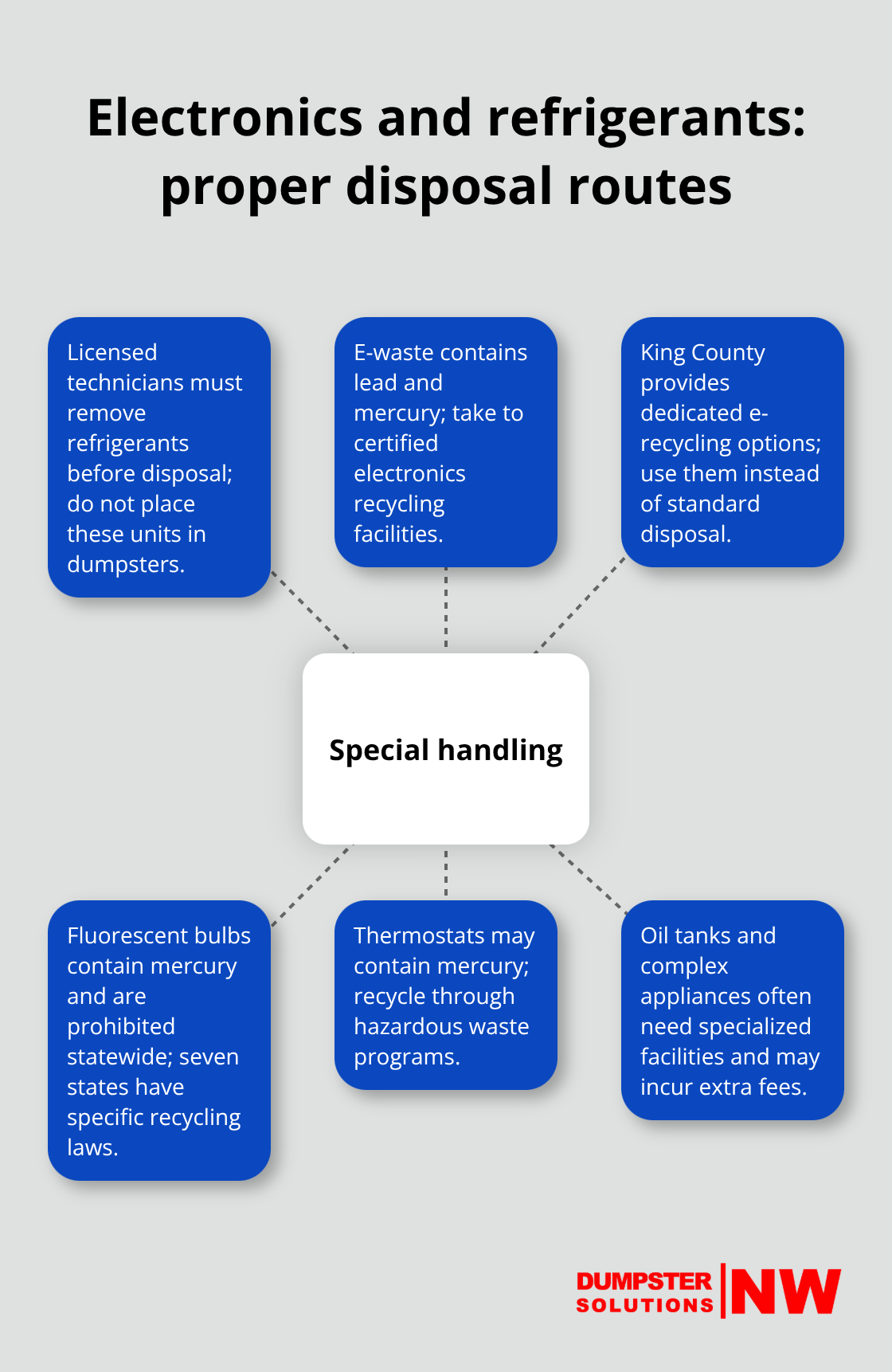
Fluorescent lightbulbs contain mercury and are prohibited in dumpsters across Washington State. Seven states, including Washington, have specific legal requirements for fluorescent bulb recycling. Thermostats often contain mercury and require proper recycling through hazardous waste programs. Hot water tanks, oil tanks, and other appliances with oils or complex circuitry may require specialized disposal facilities and incur extra fees.
Tires and Automotive Waste
Tires cannot go in rental dumpsters for businesses, and residential tire disposal faces strict limitations. King County allows only four passenger car tires per vehicle at select facilities, with large truck tires rejected entirely. Tire dealerships, auto parts stores, and municipal tire recycling programs handle proper tire disposal. Motor oil, antifreeze, gasoline, and solvents from vehicles must go to hazardous waste facilities, never into dumpsters.
Materials Requiring Professional Handling
Asbestos-containing materials demand licensed hazardous waste professionals for removal and disposal. Medical waste and sharps require licensed medical waste services and cannot enter standard rental dumpsters. Ammunition, fireworks, and vaping devices pose serious safety risks and have no place in rental dumpsters. Contact your local waste authority or law enforcement for proper disposal options on these items.
Understanding what stays out of your dumpster protects your wallet and your community. The next section covers smart loading strategies that maximize your dumpster space while keeping your project on schedule.
Best Practices for Loading Your Dumpster
Estimate Your Volume and Weight Accurately
Accurate volume estimates prevent overage fees and wasted money before you rent. Measure your project’s debris in cubic feet or yards if possible. Standard rental dumpsters range from 10 to 40 cubic yards, and weight limits typically run 2–4 tons depending on size. Heavy materials like concrete, masonry, and roofing debris consume your weight allowance fast, so plan for these separately. If your project includes concrete or foundation materials, ask about weight capacity specifically, since exceeding limits triggers expensive overage charges.
Compress and Stack Materials Strategically
Smart arrangement maximizes your dumpster space without wasting cubic yards. Break down cardboard into flat pieces to save roughly 30–40 percent of the space those boxes would consume whole. Stack wood debris vertically rather than horizontally, and remove legs or arms from furniture to compress bulky items.
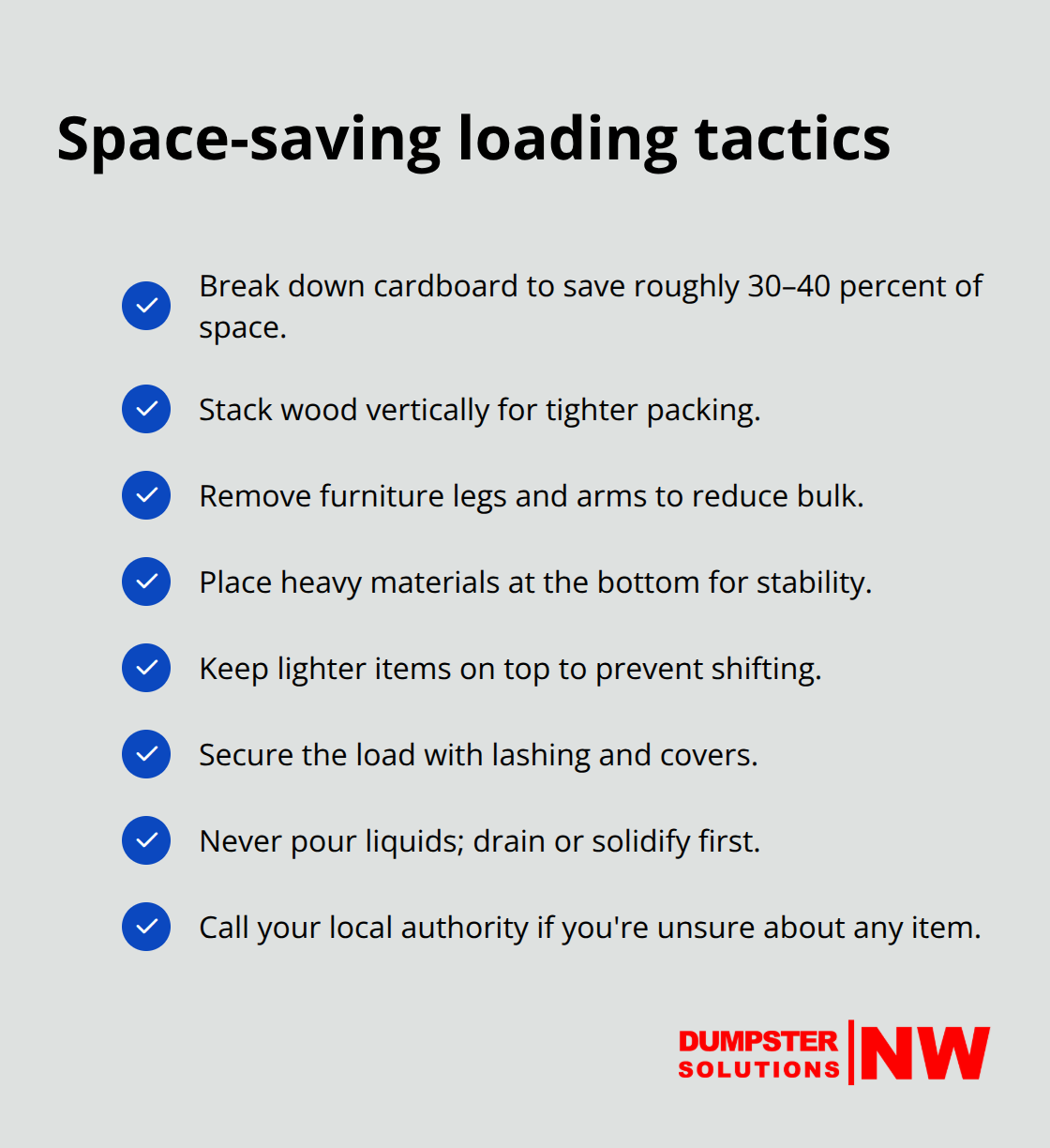
Place heavier materials at the dumpster’s bottom and lighter items on top to prevent shifting during transport.
Separate Prohibited Items Before Loading Day
Sorting materials before loading prevents violations and rejection of your entire load at the disposal facility. King County enforces strict separation rules, and mixing prohibited items with acceptable debris means your entire load gets rejected or flagged for additional fees. Oil-based paints, solvents, batteries, electronics, and appliances with refrigerants have no place in rental dumpsters and must go to specialized facilities. Yard waste sometimes requires separate handling for composting rather than landfill disposal, so confirm your local rules through King County’s Waste Acceptance Rule before you start.
Load Systematically and Secure Your Dumpster
Load your dumpster in sections, placing similar materials together so you know exactly what’s inside and can respond quickly if questions arise. Secure your dumpster load with proper lashing and covers to prevent spills during transport, protecting both the environment and your liability. Never pour liquids or liquid-contaminated waste into dumpsters; drain materials completely or solidify liquids before disposal. If uncertainty arises about any item, contact your local waste authority for clarification rather than risking a rejection or fine.
Final Thoughts
Knowing which debris types belong in your dumpster and which don’t separates smooth projects from costly mistakes. Accepted materials like household waste, construction debris, yard waste, and metals keep your rental working efficiently, while prohibited items such as hazardous chemicals, electronics, appliances with refrigerants, batteries, tires, and medical waste demand specialized disposal through dedicated facilities. Following these guidelines protects your wallet, prevents rejection of your entire load, and keeps your community safe from environmental contamination.
The disposal rules exist for real reasons: hazardous materials corrode landfill infrastructure and contaminate groundwater, electronics contain toxic substances that leach into soil, refrigerants damage the ozone layer, and batteries explode during transport. These aren’t theoretical concerns-they’re why King County, Washington State, and the U.S. EPA enforce strict separation requirements. When you follow the rules, you protect the region where you live while avoiding fines.
We at Dumpster Solutions NW understand that rental dumpsters should simplify your project, not complicate it. If you’re uncertain about specific debris types or need clarification before your project starts, contact our local team directly-we know Washington’s disposal rules inside and out and can answer your questions quickly so your project stays on track.
Disclaimer: The information provided in this blog is for general informational purposes only and does not constitute legal, financial, or insurance advice. Coverage options, terms, and availability may vary. Please consult with a licensed professional for advice specific to your situation