
Spring is the perfect time to tackle projects you’ve been putting off all winter. From garage overhauls to basement renovations and yard work, seasonal cleanup often generates far more waste than you can handle alone.
We at Dumpster Solutions NW know that hauling debris yourself wastes time and energy. That’s why professional waste removal makes spring projects faster, safer, and less stressful.
Garage Cleanouts: What to Keep and What to Haul Away
The Garage Storage Problem
Your garage has become a storage unit for everything that doesn’t fit inside the house. Old tools, broken equipment, seasonal decorations, boxes you haven’t opened in five years-it all piles up. Garage cleanouts rank among the top spring priorities because they reclaim usable space fast. According to HomeAdvisor data from 2023, 42% of homeowners undertake spring projects, and garage overhauls consistently lead the list. The challenge isn’t deciding to clean; it’s handling the sheer amount of stuff that needs to leave your property.

Sort Items Into Three Categories
Start by creating three distinct piles: items to keep, items to donate or sell, and items headed to the landfill. This sorting approach prevents decision fatigue and keeps momentum going. Anything unused for over a year should go. Be honest about broken tools, expired chemicals, or damaged furniture-these items won’t magically become useful again.
Find Value in What You’re Removing
The resale industry generated about 17.6 billion dollars in 2022 according to NARTS data, meaning your old items have genuine value if they’re in decent condition. Craigslist, Facebook Marketplace, and local buy-and-sell groups move furniture and tools quickly in spring. For donations, local charities often pick up larger items, saving you a trip.
Handle Hazardous Materials Properly
The real problem emerges when you factor in hazardous materials. Old paint cans, batteries, motor oil, and cleaning products require proper disposal-not curbside pickup. Household hazardous waste like cleaners, paints, and oils needs careful management to prevent environmental damage. Many municipal hazardous waste events happen in spring, but they fill up fast, and getting there requires time and transportation.
Let Professionals Handle the Heavy Lifting
Heavy items like old appliances, broken furniture, and metal shelving demand physical effort and a vehicle large enough to haul them. A single garage cleanout typically generates enough debris to fill a 20-yard dumpster, especially if you’re removing shelving units, old cabinets, or broken equipment. Professional waste removal handles the loading logistics and manages responsible disposal so you focus on sorting rather than hauling. Once items are in the dumpster, you’re done-no multiple trips, no strain, no hazmat headaches. With your garage cleared and organized, you’re ready to tackle the next major spring project: your basement and attic.
Basement and Attic Renovation Work
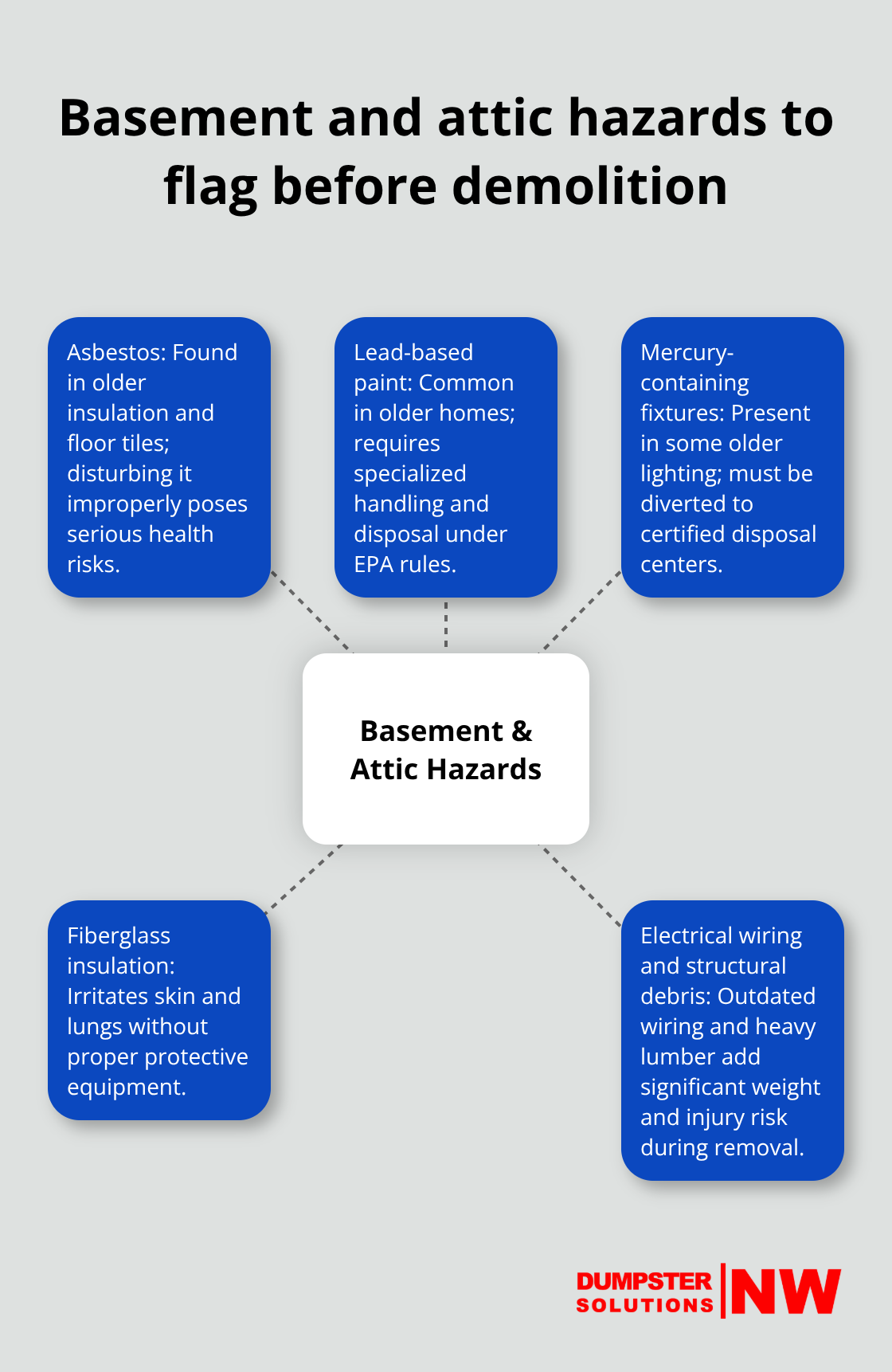
Basement and attic projects generate the heaviest, most hazardous debris of any spring renovation. Unlike garage cleanouts, these spaces contain materials that demand specialized handling: old insulation laden with fiberglass or asbestos, rotted flooring, outdated electrical wiring, and structural debris from wall removal. The EPA reports that construction and demolition debris totals around 600 million tons annually, and residential renovation work accounts for a significant portion of that volume. When you tear into basement walls or attic spaces, you extract decades of building materials that were never designed for DIY hauling. Fiberglass insulation irritates skin and lungs without proper protective equipment. Asbestos, found in older insulation and floor tiles, poses serious health risks if disturbed improperly. Old flooring materials, drywall dust, and structural lumber create massive weight loads that exceed what a pickup truck can safely carry.
Hauling this debris yourself means renting equipment you don’t own, making multiple trips to disposal facilities, and risking injury or environmental violations. A 30-yard dumpster fills quickly with basement or attic renovation waste-often in a single day of work-because the materials are dense and bulky.
Identify Hazardous Materials Before You Start
Older homes frequently contain hazardous materials hidden in plain sight. Asbestos insulation, lead-based paint, and mercury-containing fixtures were standard before regulations changed. You cannot simply throw these materials in a standard dumpster or haul them to your local landfill. The EPA enforces strict rules on hazardous waste handling, and violations carry fines and legal liability. Professional waste removal services understand local regulations and know which facilities accept specific materials. They identify hazardous items before loading, separate them from general debris, and route them to certified disposal centers. This protects your health, your family, and your liability. Spring renovation season overlaps with peak disposal intake periods, so booking professional removal early prevents facility delays that could stall your entire project. A certified waste removal provider handles the documentation, permits, and compliance work that most homeowners don’t even realize they need.
Handle Heavy Materials With Proper Equipment
Basement joists, old HVAC equipment, water heaters, and structural lumber weigh hundreds of pounds each. Loading this material into a truck without proper equipment causes back injuries, crushed fingers, and property damage. A single water heater weighs 40 to 80 pounds and requires two people and a dolly to move safely. Old furnaces and ductwork are bulkier and equally heavy. Concrete basement floors that are removed generate tons of material that requires a heavy-duty dumpster and professional disposal. Right-sized containers accommodate the actual weight and volume of basement and attic debris, eliminating the guesswork and preventing overload penalties at disposal facilities. Your renovation stays on track because the equipment matches the job, not the other way around.
Protect Your Timeline and Safety
Professional waste removal keeps your project on schedule and your family safe. Attempting to manage basement and attic debris yourself stretches timelines, increases injury risk, and creates environmental compliance headaches. Yard work and landscaping cleanup present their own challenges-heavy branches, soil, and construction materials demand space and proper handling that most homeowners lack.
Yard Work and Landscaping Cleanup
Spring yard debris accumulates faster than most homeowners expect. Fallen branches from winter storms, dead plant material, old mulch, and soil from garden bed overhauls create substantial volume that a standard trash service won’t accept. According to EPA data, yard waste comprised 7.2 percent of municipal solid waste landfilled in 2018, yet most curbside programs limit yard debris to small bags or bundles. A single mature tree can drop hundreds of pounds of branches, and removing an old deck or patio generates construction materials that require specialized handling. The real issue isn’t the debris itself-it’s that spring yard work overlaps with peak disposal facility intake periods. Municipal systems experience strain during March through May as homeowners and contractors simultaneously clear winter damage and undertake outdoor renovations. Some jurisdictions adjust intake schedules or impose temporary restrictions during these peak windows, meaning your debris pile might sit for weeks waiting for acceptance. This delay stalls your project and leaves your yard looking incomplete.
Dense Debris Requires Proper Sizing
Heavy materials like concrete, asphalt shingles from roof work, and treated lumber demand more than casual hauling. A 20-yard dumpster accommodates most residential yard projects, from comprehensive spring cleanouts to moderate deck removal, because yard debris compacts poorly and takes up significant space relative to its weight. Branches consume volume quickly, even when chipped. Soil and mulch are deceptively heavy-a cubic yard of wet soil weighs roughly 1.3 to 1.7 tons, meaning a modest garden bed renovation can generate several tons of material. Attempting multiple trips to your local disposal facility wastes fuel, time, and your weekend. Professional dumpster rental services size containers based on actual project scope, not guesses, so you avoid overages and facility rejection fees that occur when loads arrive improperly sorted or overweight.
Separate Materials for Disposal Efficiency
Yard waste disposal rules vary significantly across Washington State communities like Seattle, Tacoma, Bellevue, and Renton. Some facilities accept only organic material and reject treated lumber or concrete. Mixing materials creates rejection headaches and forces you to return with separated loads. Treated lumber from old raised beds or fence posts cannot go into standard yard waste programs because the chemical treatment contaminates compost. Concrete and asphalt require dedicated facilities with crushing equipment. Shingles from roof work need specialized handling due to tar components. Sorting materials on-site before removal prevents facility delays and disposal fees associated with mixed or contaminated loads.
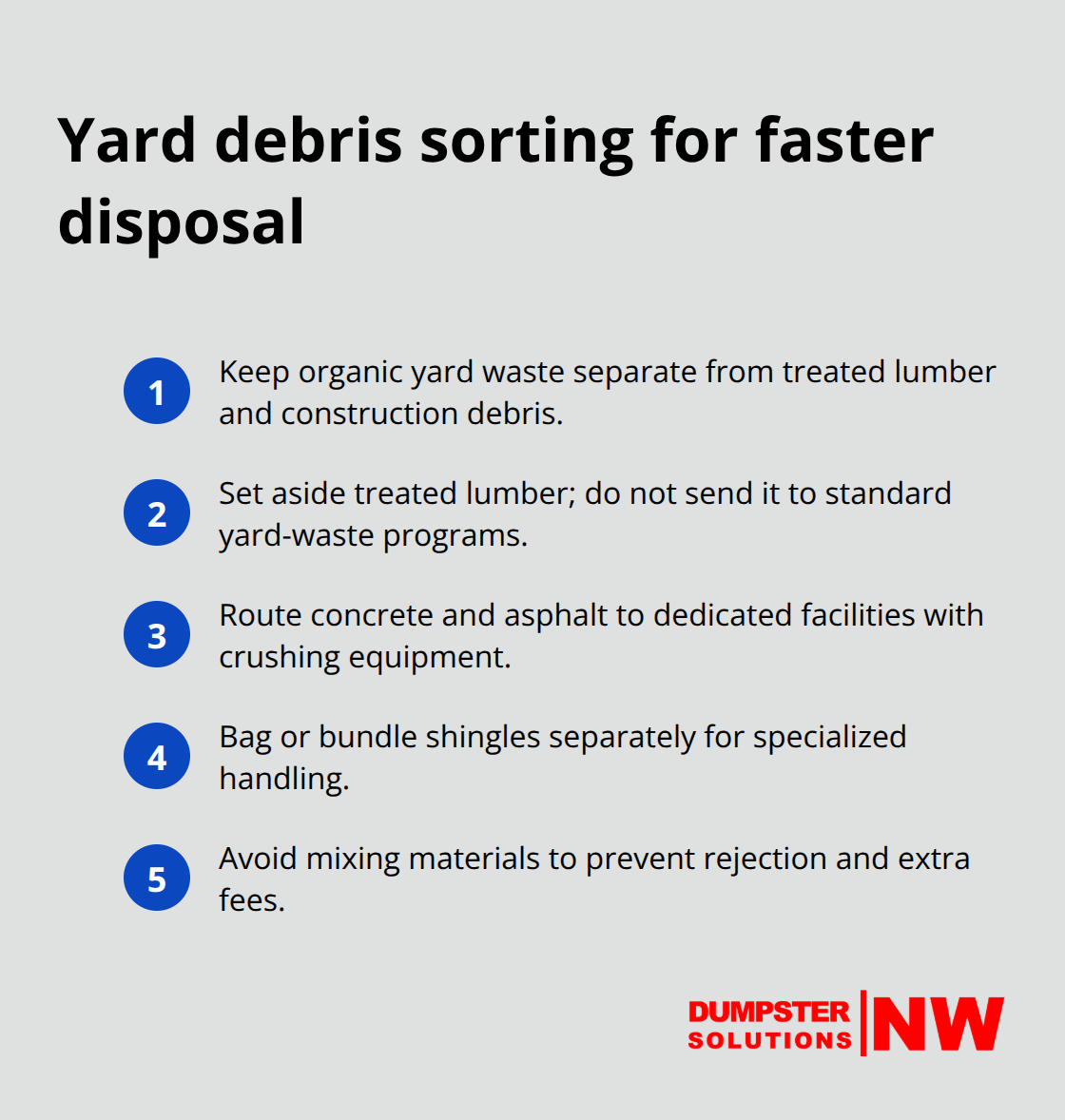
Professional removal services handle this separation automatically, routing concrete to one facility, organic matter to another, and treated materials to appropriate processors. This logistics work remains invisible to you but proves critical to keeping your project moving.
Final Thoughts
Spring projects expose the true scope of seasonal cleanup work that accumulates over months. Garage cleanouts pull out years of items requiring sorting and responsible disposal. Basement and attic renovations unearth hazardous materials like asbestos and old insulation that demand certified handling. Yard work creates dense, bulky debris that municipal facilities struggle to process during peak season. Each task shares one reality: the physical and logistical burden falls on you without professional support.
Professional waste removal transforms spring projects from exhausting ordeals into manageable work. You avoid multiple trips to disposal facilities, eliminate injury risk from heavy lifting, and sidestep environmental violations tied to improper hazardous material handling. Right-sized dumpsters accommodate actual project volume, preventing overload fees and facility rejections. Certified services understand local regulations across Washington State communities (Seattle, Tacoma, Bellevue, Renton, and Kirkland), routing materials to appropriate processors so your project stays on schedule.
We at Dumpster Solutions NW simplify the entire process with transparent, flat-rate pricing, fast delivery often on the same or next day, and sizes from 10 to 40 yards matching any project scope. Whether you clear a garage, renovate a basement, or tackle yard work, Dumpster Solutions NW handles the hauling and responsible disposal so you focus on the work itself. Contact us today to get started with your spring cleanup.
Disclaimer: The information provided in this blog is for general informational purposes only and does not constitute legal, financial, or insurance advice. Coverage options, terms, and availability may vary. Please consult with a licensed professional for advice specific to your situation