
Tree removal and pruning projects generate massive amounts of landscaping waste that most homeowners don’t know how to handle properly.
At Dumpster Solutions NW, we’ve seen countless residents in the Seattle and Puget Sound region struggle with debris disposal, leading to fines, environmental damage, and safety hazards. The good news is that disposing of tree debris responsibly is straightforward once you know your options.
Why Proper Tree Debris Disposal Matters
Dumping tree debris in the wrong place costs money and creates real environmental damage. Organic waste in landfills breaks down anaerobically, producing methane-a greenhouse gas roughly 28 times more potent than carbon dioxide over a 100-year period, according to the EPA. Washington State recognizes this problem seriously. Starting January 1, 2025, businesses in designated Business Organics Management Areas across 10 counties must subscribe to curbside organics collection if they generate four cubic yards or more of food and yard waste weekly. This threshold drops to just 96 gallons per week by 2026.
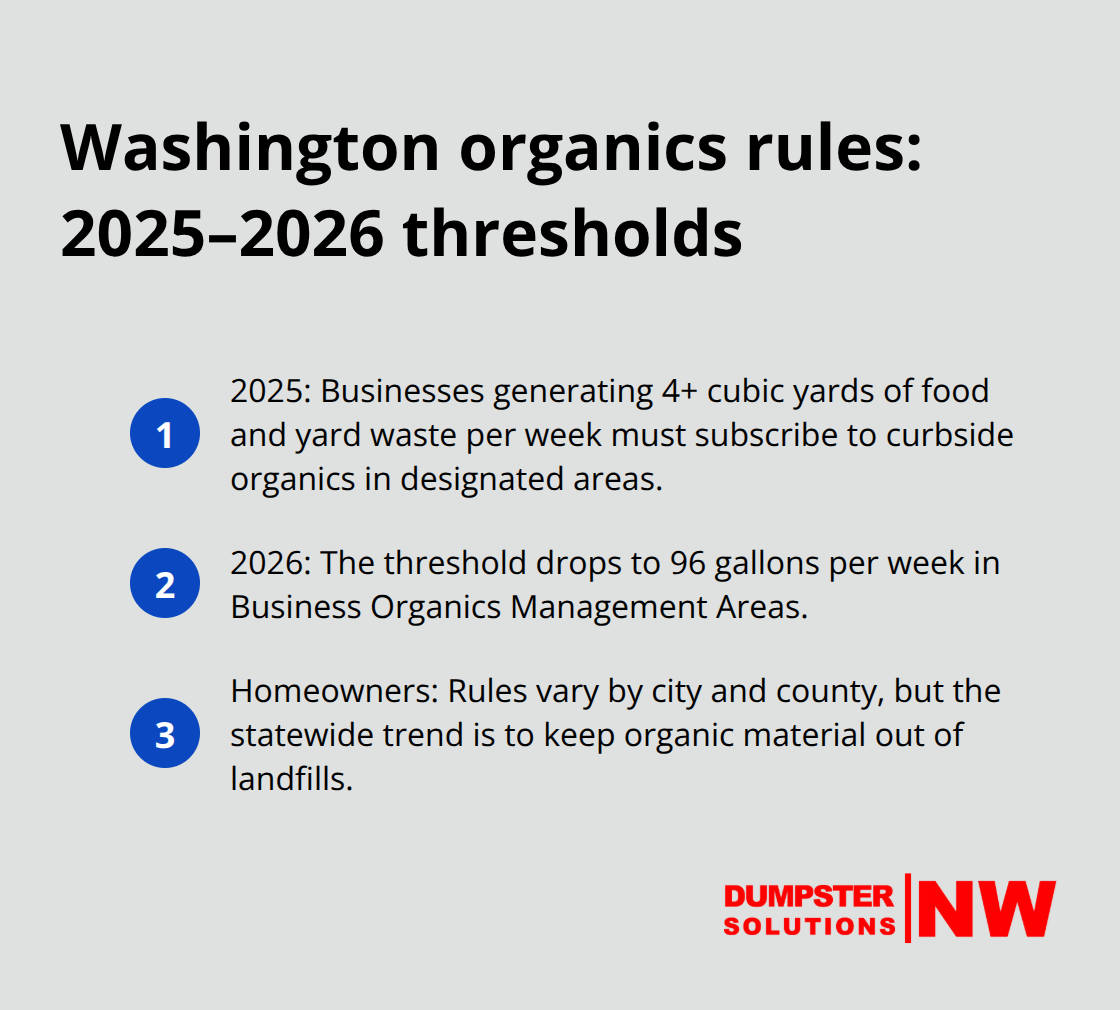
For homeowners, the rules vary by city and county, but the trend is clear: Washington State is pushing hard to keep organic material out of landfills.
Local Regulations Carry Real Penalties
Violating local regulations triggers fines and penalties that make proper disposal the financially smart choice. King County and the City of Seattle enforce specific requirements for tree debris disposal. If you leave branches at the curb improperly or dump debris illegally, your municipality will assess fines. Many cities require tree debris to go through approved curbside yard waste programs, private facilities, or designated drop-off locations. Checking with your local city website or contacting your waste hauler directly takes 15 minutes and prevents costly mistakes.
Safety Hazards Hide in Debris Piles
Accumulated debris piles create fire hazards, especially during dry summers common in Washington. Branches stacked against your house or fence harbor rodents and insects that eventually move indoors. Large piles also become tripping hazards and block emergency access to your property. Professional removal or proper disposal eliminates these risks immediately.
Your Disposal Options Start Here
Understanding what disposal methods work in your area sets you up for success. The Seattle and Puget Sound region offers multiple pathways-from curbside yard waste pickup to drop-off facilities to dumpster rentals for larger projects. Each option has different costs, timelines, and capacity limits. Your project size and local availability determine which method works best for your situation.
Methods for Disposing of Tree Removal and Pruning Debris
Match Your Disposal Method to Project Size
Tree debris disposal breaks into three practical approaches, each suited to different project sizes and situations. For smaller pruning jobs producing modest volumes, chipping your branches into mulch works well if you have the time and equipment access. Waste Connections of Washington operates across Clark County with yard debris pickup starting at $9.91 to $11.26 monthly depending on your city, accepting 90-gallon carts serviced every other week, though volumes beyond that incur extra fees around $3.49 to $4.59 per additional bundle. Composting at home suits homeowners with space and patience-branches decompose over months into nutrient-rich soil amendments that improve landscaping without ongoing disposal costs.
Why Curbside and Composting Hit Their Limits
These methods hit practical limits quickly. A typical tree removal generates substantial debris, far exceeding what most homeowners can chip, compost, or fit into curbside programs. Curbside pickup accepts limited volumes on fixed schedules, and composting requires months of waiting plus adequate yard space. When your project produces substantial debris, these options simply cannot handle the volume efficiently.
Dumpster Rental Handles Any Project Size
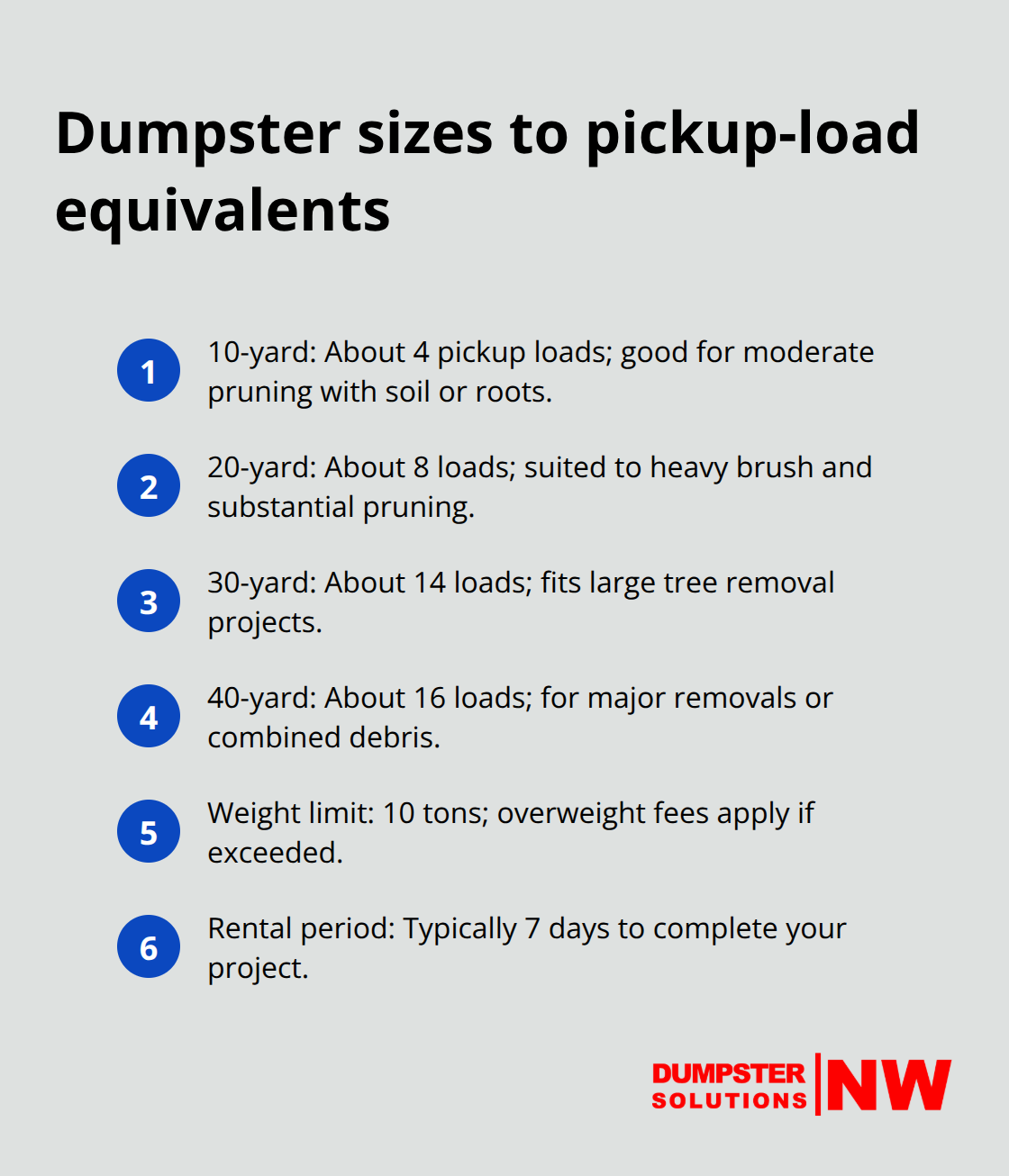
Dumpster rental becomes the straightforward solution for larger projects. Size your dumpster based on actual debris volume rather than guessing. A 10-yard dumpster handles roughly four pickup truck loads and works for moderate pruning with soil or roots; a 20-yard dumpster accommodates eight loads of heavy brush and branches from substantial pruning; a 30-yard dumpster suits large tree removal projects at around 14 loads; a 40-yard dumpster handles major removals or combined debris at 16 loads. Each container carries a 10-ton weight limit-exceed it and you’ll face overweight fees. The rental period typically runs seven days, giving you a realistic window to complete your project without rushing.
Load and Dispose Without the Hassle
Open-top design means no wrestling with bags or bins; simply load bulky limbs and trunks directly into the container. For projects spanning multiple days, coordinating regular pickups as work progresses keeps your property clear and safe. Dumpster Solutions NW offers transparent, flat-rate pricing with no hidden fees and delivers across Seattle and nearby areas, so you can book immediately once work finishes rather than scrambling for last-minute solutions.
Professional Removal Services Complete the Job
When debris volume overwhelms your capacity or timeline, professional tree removal services handle everything from cutting to hauling. These services (often bundled with pruning or storm damage mitigation) eliminate the physical labor and disposal logistics entirely. Your next step involves evaluating which local facilities and professional services operate in your specific area.
Where to Take Tree Debris in Your Area
Contact Your Local Waste Hauler First
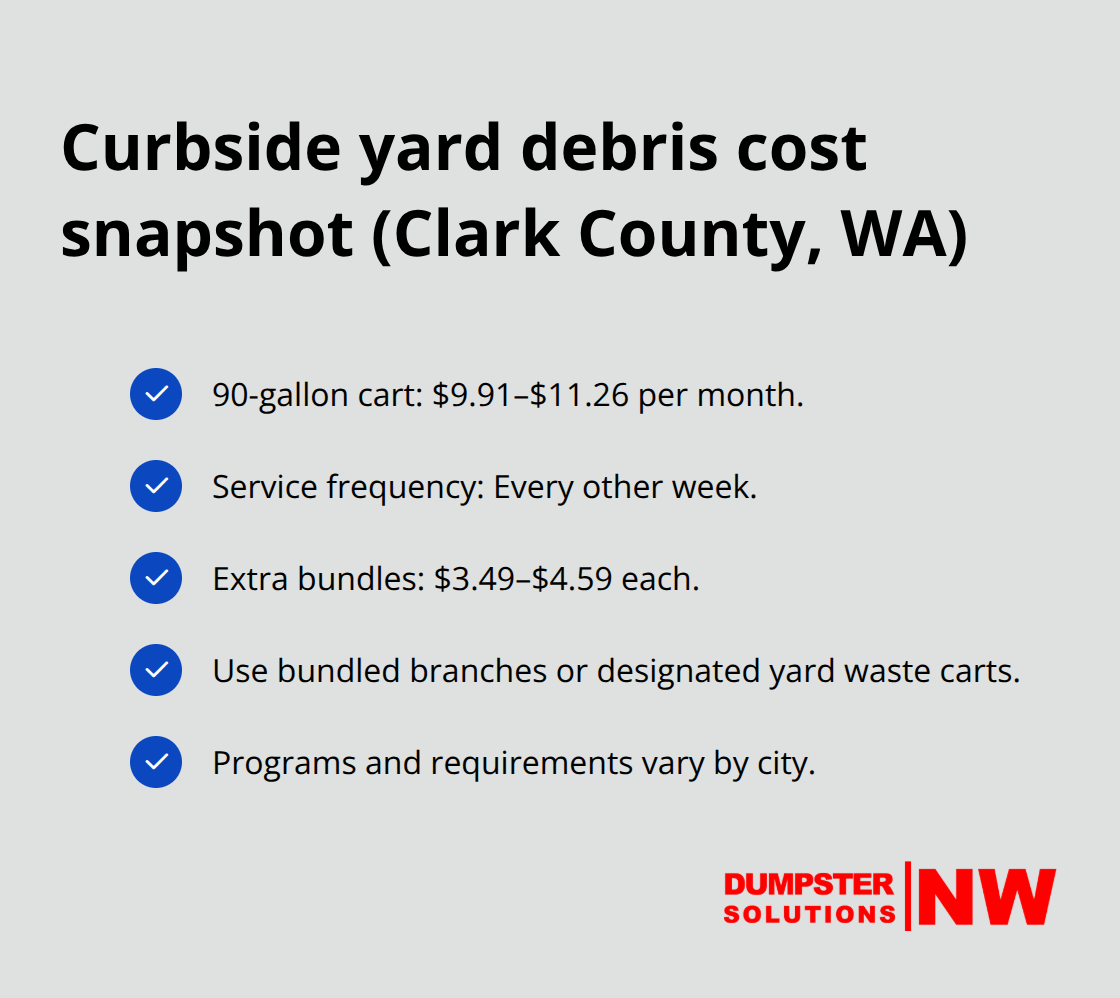
Start with your local waste hauler or city website-they’ll tell you exactly what curbside yard waste programs exist in your neighborhood and what materials they accept. King County and cities throughout the Seattle and Puget Sound region operate different systems, so what works in Seattle may differ from Tacoma or Bellevue. Many cities accept tree debris through curbside pickup if you bundle branches properly or place them in designated yard waste carts. Waste Connections of Washington, which serves Clark County cities including Camas, Ridgefield, Vancouver, and Washougal, charges between $9.91 and $11.26 monthly for a 90-gallon yard debris cart serviced every other week. Extra debris beyond your regular cart costs $3.49 to $4.59 per additional bundle.
Explore Drop-Off Facilities and Seasonal Events
If curbside service isn’t available in your area, check whether your city operates drop-off facilities or hosts seasonal tree-recycling events. King County maintains a What Do I Do With resource listing tree recycling options by location, and the Tree Recycling Options flyer provides current disposal sites near you. Contact your hauler directly to confirm what materials qualify-King County yard waste programs have specific requirements for separation of yard debris from solid waste, so some programs accept only branches up to a certain diameter, while others restrict pickup to specific seasons like spring or fall.
Use Temporary Containers for Large Volumes
For large volumes exceeding your curbside program’s capacity, temporary containers through services like Rent-a-Bin offer flexibility. Vancouver’s Rent-a-Bin service costs $230.73 upfront with five days included, plus $142.98 for extra pickups, making it practical for substantial tree removal projects that would require multiple curbside pickups over weeks.
Hire Professional Tree Removal Services
Professional tree removal services often include debris hauling as part of their work, bundling the cost with pruning or storm damage mitigation. Beyond The Leaf Tree and Shrub Experts, for example, offers debris removal integrated into their service. When your project involves significant tree removal or storm damage cleanup, hiring professionals eliminates the logistics headache entirely.
Rent a Dumpster for Independent Projects
For homeowners in the Seattle and Puget Sound region managing debris independently, dumpster rental remains the most straightforward option for projects exceeding curbside capacity. Dumpster Solutions NW delivers across your area with transparent, flat-rate pricing and flexible scheduling, letting you book a container once work finishes rather than coordinating multiple curbside pickups over weeks. Try sizing your dumpster based on actual debris volume-10-yard for moderate jobs with soil, 20-yard for substantial pruning, 30-yard for large removals, or 40-yard for major projects (each with a seven-day rental window). When positioning your dumpster, keep it away from roof drainage areas and natural water collection points to prevent overflow issues. Plan your rental around your work schedule to avoid rush fees or extended holding costs.
Final Thoughts
Proper tree debris disposal protects your wallet, your property, and Washington’s environment. Leaving branches at the curb improperly invites fines from your city, while dumping landscaping waste illegally creates fire hazards and attracts rodents that eventually infest your home. Sending organic material to landfills accelerates methane emissions that worsen climate change, so matching your debris volume to the right disposal method matters more than you might think.
Small pruning jobs fit curbside yard waste programs or home composting if you have the time and space. Moderate projects work with Waste Connections’ 90-gallon carts or temporary containers like Rent-a-Bin for larger volumes, while major tree removals demand dumpster rental because curbside pickup cannot handle the scale. A 10-yard dumpster handles four truck loads of moderate debris; a 20-yard takes eight loads; a 30-yard suits large removals at 14 loads; a 40-yard manages major projects at 16 loads (each rental runs seven days).
Start your debris management plan with one phone call to your local waste hauler or a quick visit to your city website. If curbside doesn’t work, check King County’s What Do I Do With resource or contact local drop-off facilities. We at Dumpster Solutions NW make the rental process straightforward-visit our site to check pricing, choose your dumpster size, and schedule delivery across the Seattle and Puget Sound region with transparent, flat-rate pricing and no hidden fees.
Disclaimer: The information provided in this blog is for general informational purposes only and does not constitute legal, financial, or insurance advice. Coverage options, terms, and availability may vary. Please consult with a licensed professional for advice specific to your situation