
Demolition cleanup doesn’t have to be complicated. Whether you’re removing a bathroom fixture, tearing down a shed, or tackling a kitchen remodel, picking the right dumpster size makes all the difference.
We at Dumpster Solutions NW help property owners across Washington State handle debris removal efficiently. This guide walks you through sizing your rental for any small demolition project.
What Counts as Small Demolition
Defining Small Demolition by Debris Volume
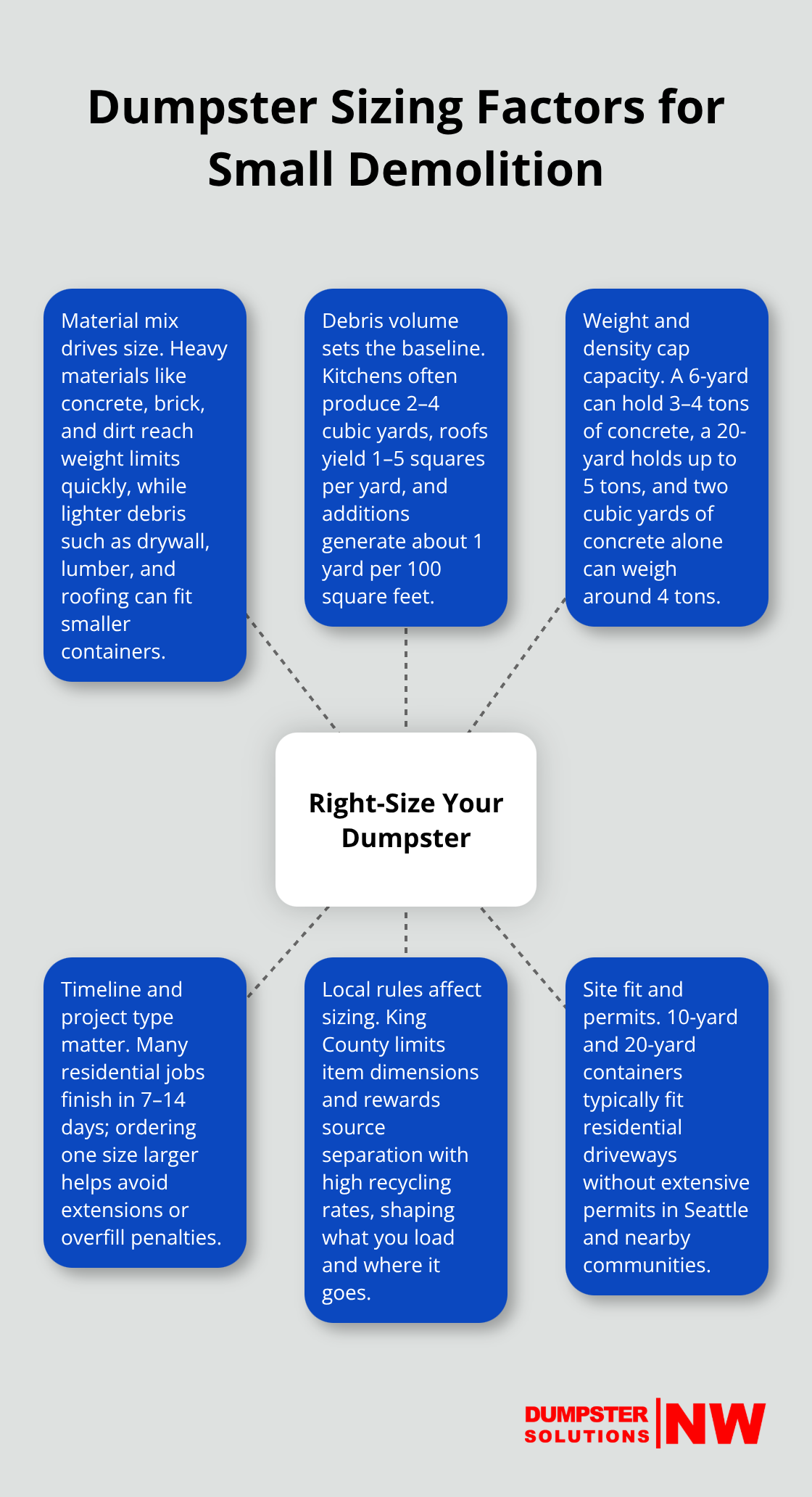
Small demolition projects span everything from removing a single bathroom or kitchen fixture to tearing down an entire shed or garage. The defining factor isn’t the structure itself but the volume and type of debris generated. A kitchen remodel typically produces 2–4 cubic yards of waste, while a roof replacement yields 1–5 squares per yard depending on the roof size. Home additions generate roughly 1 yard of debris per 100 square feet of added space. These numbers matter because they directly determine which dumpster size you’ll need and how much your project will cost. Understanding what you’re actually removing-not just the square footage-prevents the frustration of ordering a container that’s either too small or wastefully oversized.
How Material Density Affects Your Container Choice
Material density changes everything in small demolition work. Heavy materials like concrete, brick, and dirt reach weight limits quickly. A 6-yard dumpster can legally hold 3–4 tons of concrete, while most residential demolition projects in the Seattle and Puget Sound region benefit from either 10-yard or 20-yard containers, which keep hauling trips minimal while fitting residential driveways without requiring extensive site permits.
Disposal Options and Recycling Requirements in King County
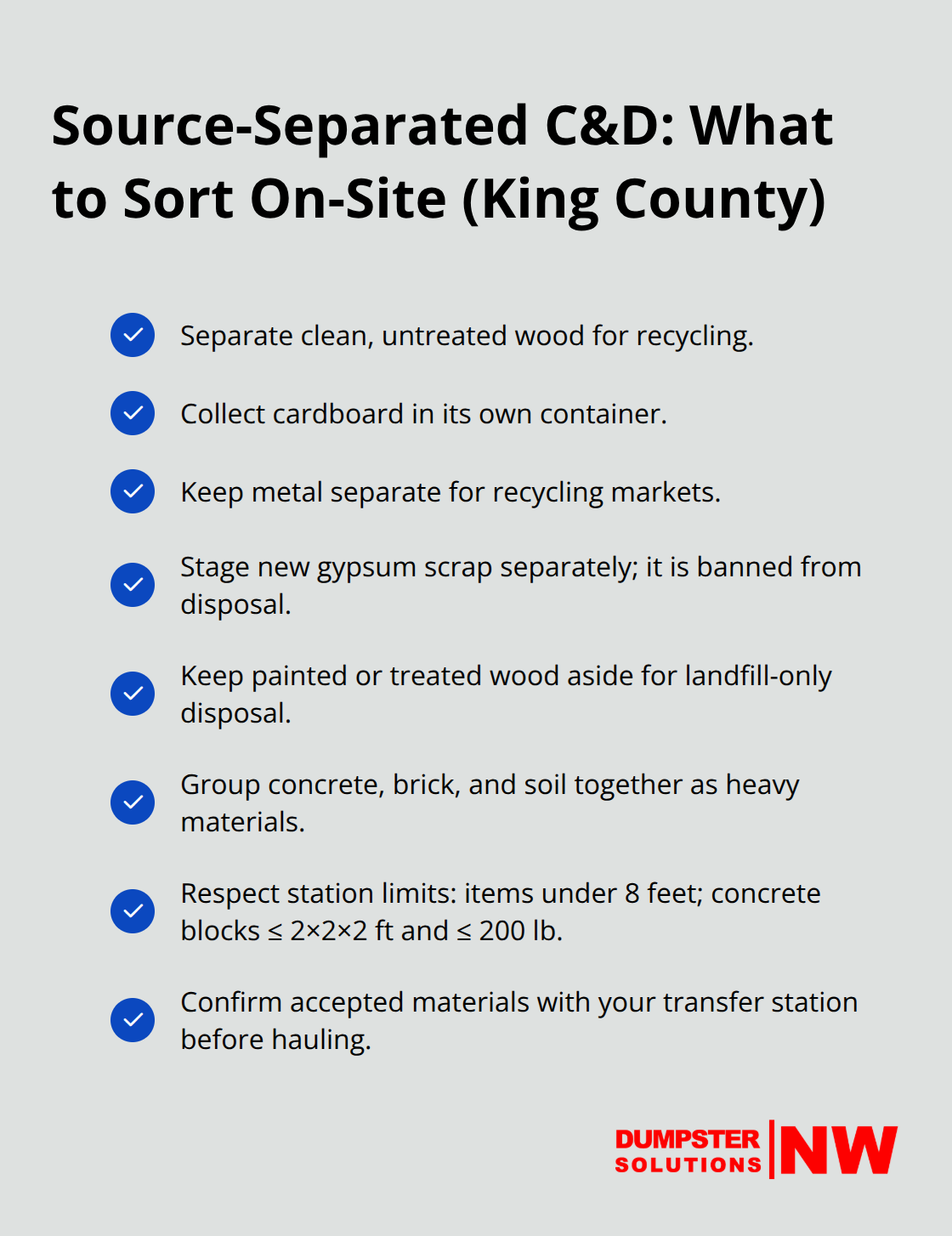
King County residents tackling small C&D loads can use transfer stations at Bow Lake, Enumclaw, or Shoreline, provided materials stay under 8 feet in length and individual items like concrete blocks don’t exceed 2 by 2 by 2 feet and 200 pounds. The real efficiency gain comes from sorting materials on-site-source-separated C&D streams achieve recycling rates above 90 percent, compared to much lower rates for commingled loads. Painted or treated wood cannot be recycled and requires separate disposal, while clean untreated wood, cardboard, metal, and new gypsum scrap (which is now banned from disposal) should be separated into dedicated containers from the start. This separation strategy not only supports local recycling markets but also simplifies your hauling logistics and reduces overall disposal costs.
Sizing Your Container to Match Your Actual Debris
Catalog Your Materials, Not Square Footage
Start with your blueprints or photos of the space, then list each material you’ll remove: How many linear feet of drywall? How many roof squares? How much concrete? Kitchen remodels produce 2–4 cubic yards, roof replacements yield 1–5 squares per yard, and home additions generate roughly 1 yard per 100 square feet. This material-by-material approach beats guessing based on room size alone. Once you have your list, multiply loose debris volumes by 1.5x to account for weight-this prevents ordering a container that looks spacious but hits its weight limit before it’s full.
Account for Material Weight and Density
Heavy materials like concrete and brick reach weight limits fast. A 20-yard dumpster holds up to 5 tons of renovation waste, which covers most residential jobs. Two cubic yards of concrete alone weighs around 4 tons, so a single bathroom demolition with concrete removal might need a 20-yard container instead of the 10-yard you’d initially guess. Lighter debris (drywall, lumber, roofing) fit comfortably in a 10-yard for small kitchens or bathroom strips. Once concrete, brick, or soil enters the equation, jump to 20 yards and avoid overages.
Match Container Size to Your Project Type
The standard sizes matter for practical reasons: 10-yard containers fit most residential driveways, while 20-yard options give you breathing room without requiring extensive site permits in Seattle, Tacoma, Bellevue, and surrounding King County communities. Order one size larger than your initial estimate; the rental difference is modest compared to the frustration of mid-project extensions or overfill penalties. Most residential projects in your area complete within 7–14 days, so align your rental duration with your actual demolition timeline rather than guessing-weather delays and permit holds happen, and extending a rental costs less than rushing through unsafe work.
Get the Right Fit for Your Scope
Specify your materials when requesting a quote, and the team can recommend the right container for your demolition scope. The practical choice between debris type, total volume, and material weight comes down to your material mix and timeline. Once you’ve selected your dumpster size and rental period, you’ll move into the actual loading phase-and that’s where smart sorting and space management make the difference between a smooth project and one that drags on.
Loading and Organizing Your Dumpster for Maximum Efficiency
Separate Materials to Maximize Recycling and Cut Costs
Material separation on-site saves time, money, and headaches. King County’s GreenTools program reports that source-separated C&D streams achieve recycling rates above 90 percent, compared to much lower recovery rates for commingled loads. Set up labeled containers on-site for clean wood, cardboard, metal, and new gypsum scrap-these materials have active markets and reduce your overall disposal costs. Painted or treated wood cannot be recycled, so keep it separate for landfill disposal. Concrete, brick, and soil go into their own pile since these heavy materials burn through your weight limit quickly.
Stack and Arrange Materials Strategically
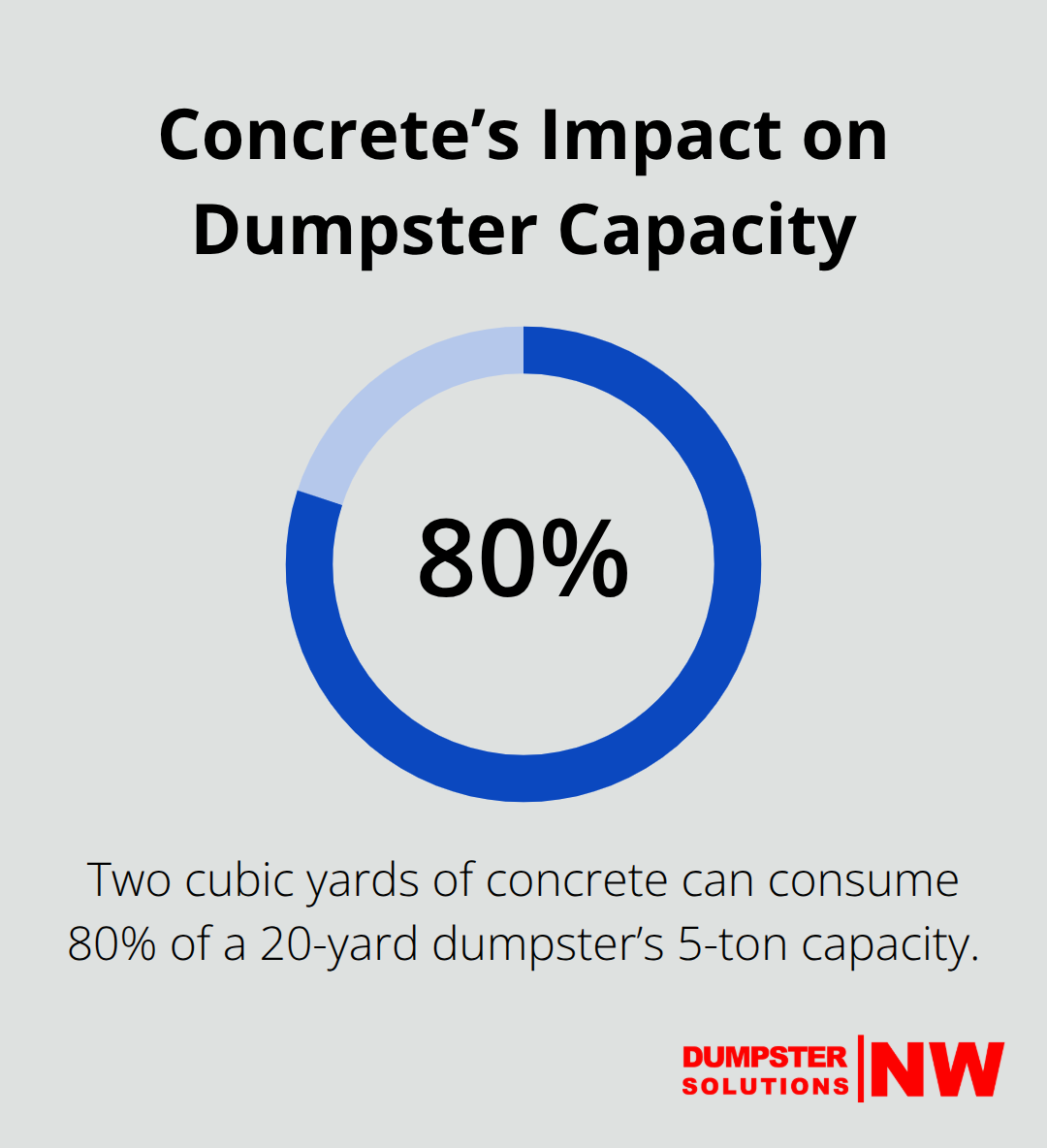
A 20-yard dumpster holds roughly 5 tons of renovation waste, which means two cubic yards of concrete alone consumes 80 percent of your capacity. Place heavier materials at the bottom and break up large pieces-a sledgehammer transforms a bulky concrete slab into manageable chunks that pack tighter and distribute weight more evenly.
Drywall and lumber stack efficiently when you lean them against the container walls rather than throwing them loose. Loose materials expand unpredictably, so multiply your estimated volume by 1.5x when calculating weight (this prevents the frustration of hitting your weight limit with empty-looking space remaining). For projects in Seattle, Tacoma, Bellevue, or surrounding communities, confirm your material list with your rental company before delivery so they can recommend the right container size and discuss which materials your local transfer stations accept.
Protect Yourself While Loading
Wear cut-resistant gloves, steel-toed boots, and eye protection-nails, sharp metal edges, and flying debris cause the majority of demolition injuries. Never climb inside the dumpster to compact or rearrange debris (stepping on unstable piles can collapse material and trap you). Load from the ground level using a ramp if needed, and keep the loading area clear of spectators. Heavy items like concrete or brick should be handed down rather than dropped, which reduces strain and prevents container damage. Questions about safe loading practices and weight distribution for your specific project? Dumpster Solutions NW can answer them and help you complete your demolition safely.
Final Thoughts
Picking the right dumpster size for your small demolition cleanup boils down to three core decisions: understanding your material mix, accounting for weight limits, and matching container capacity to your actual debris volume. A kitchen remodel that generates 2–4 cubic yards of waste calls for a different approach than a roof replacement or concrete removal, where material density dominates your sizing choice. Most residential demolition projects in the Seattle and Puget Sound region succeed with either a 10-yard or 20-yard container, depending on whether heavy materials like concrete and brick are involved.
The 10-yard works for lighter debris like drywall and lumber, while the 20-yard handles mixed loads and keeps your weight safely under the 5-ton limit. When you’re unsure, order one size larger-the modest rental difference beats mid-project extensions or overfill penalties. We at Dumpster Solutions NW offer 10, 20, 30, and 40-yard dumpsters with transparent, flat-rate pricing and no hidden fees, plus same-day or next-day delivery to get your container on-site fast.
Whether you’re tackling a bathroom strip in Bellevue, a shed removal in Tacoma, or a kitchen remodel in Seattle, visit Dumpster Solutions NW to choose your dumpster size and request a quote. Tell us your material mix and project timeline, and we’ll confirm the right container for your demolition scope. Your debris removal doesn’t have to be complicated-let us handle the heavy lifting.
Disclaimer: The information provided in this blog is for general informational purposes only and does not constitute legal, financial, or insurance advice. Coverage options, terms, and availability may vary. Please consult with a licensed professional for advice specific to your situation