
Flooring removal projects generate massive amounts of waste that most homeowners don’t know how to handle properly. Between carpet scraps, tile fragments, and hardwood pieces, the debris piles up fast and becomes expensive to dispose of without a plan.
We at Dumpster Solutions NW help Washington homeowners tackle these projects efficiently. This guide walks you through sorting materials, finding recycling options, and choosing the right dumpster size to keep costs down.
What Makes Each Flooring Material Different to Dispose Of
Carpet Waste: Three Distinct Streams
Carpet removal creates three separate waste streams that most homeowners underestimate. Rolled carpet itself is bulky but relatively light-a typical room produces 200–400 pounds depending on square footage. The padding underneath weighs significantly more and often contains moisture or mold, especially in basements or kitchens near water sources. Tack strips, the wooden or metal strips that hold carpet in place, are studded with sharp staples and nails that create safety hazards during handling.
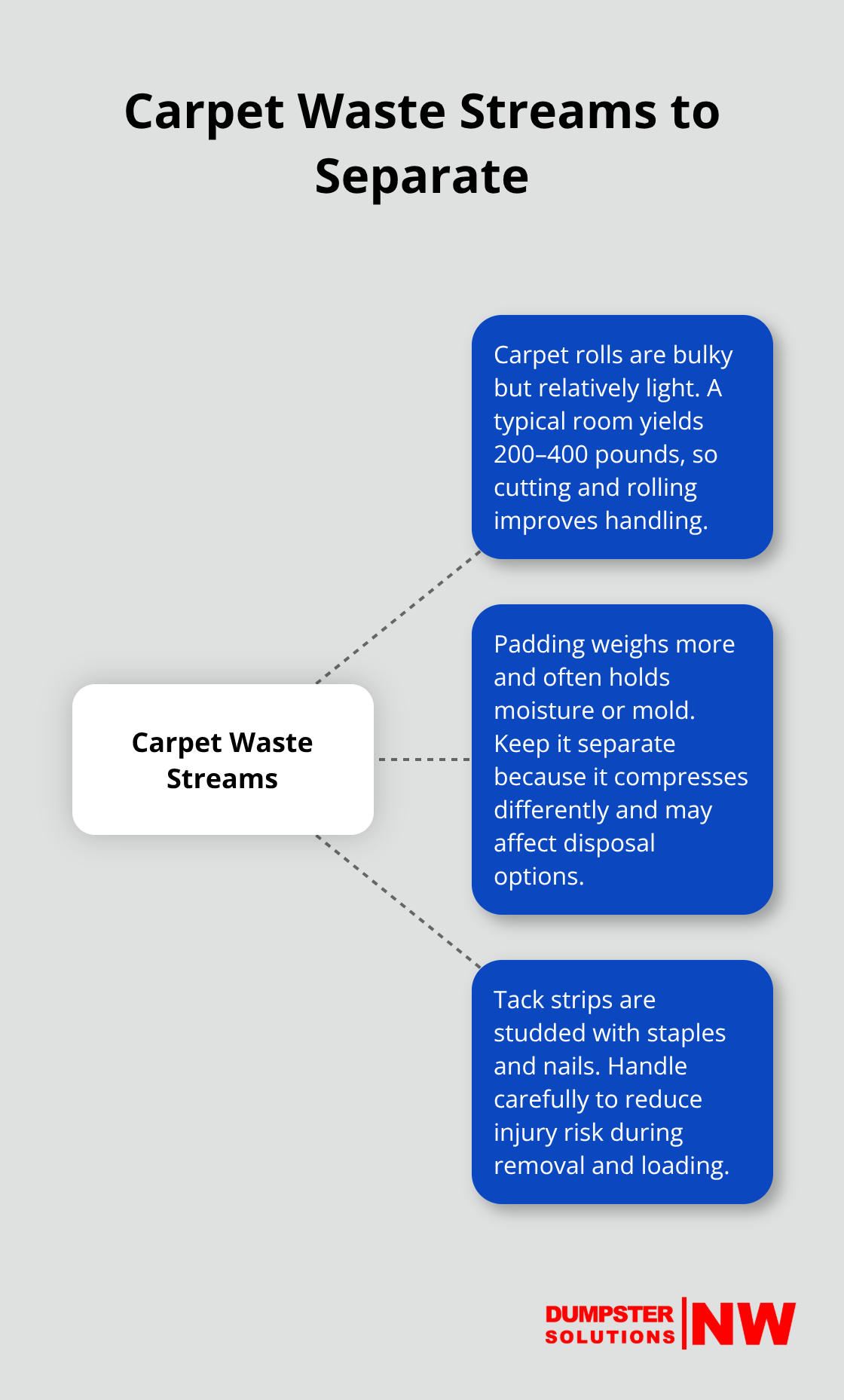
Dust from old carpet fibers and backing material spreads quickly, which is why ventilation and respiratory protection matter during removal. When you cut carpet into 2–3 foot strips and roll them tightly, you reduce volume substantially and make loading into a dumpster far more efficient than stuffing loose pieces. Padding should be rolled separately since it compresses differently and may contain contaminants that affect disposal options.
Tile and Grout: Heavy and Sharp
Tile and grout waste behaves completely differently and demands different handling strategies. Broken tile pieces are sharp, heavy, and don’t compress-a single bathroom renovation can produce 500–800 pounds of tile fragments. Grout dust poses serious respiratory risks if inhaled, making dust masks non-negotiable during removal and cleanup.
Unlike carpet, tile waste cannot be recycled in most King County facilities unless you sort it separately and deliver it to designated C&D facilities. This distinction matters for your disposal plan and final costs.
Hardwood: The Salvage Opportunity
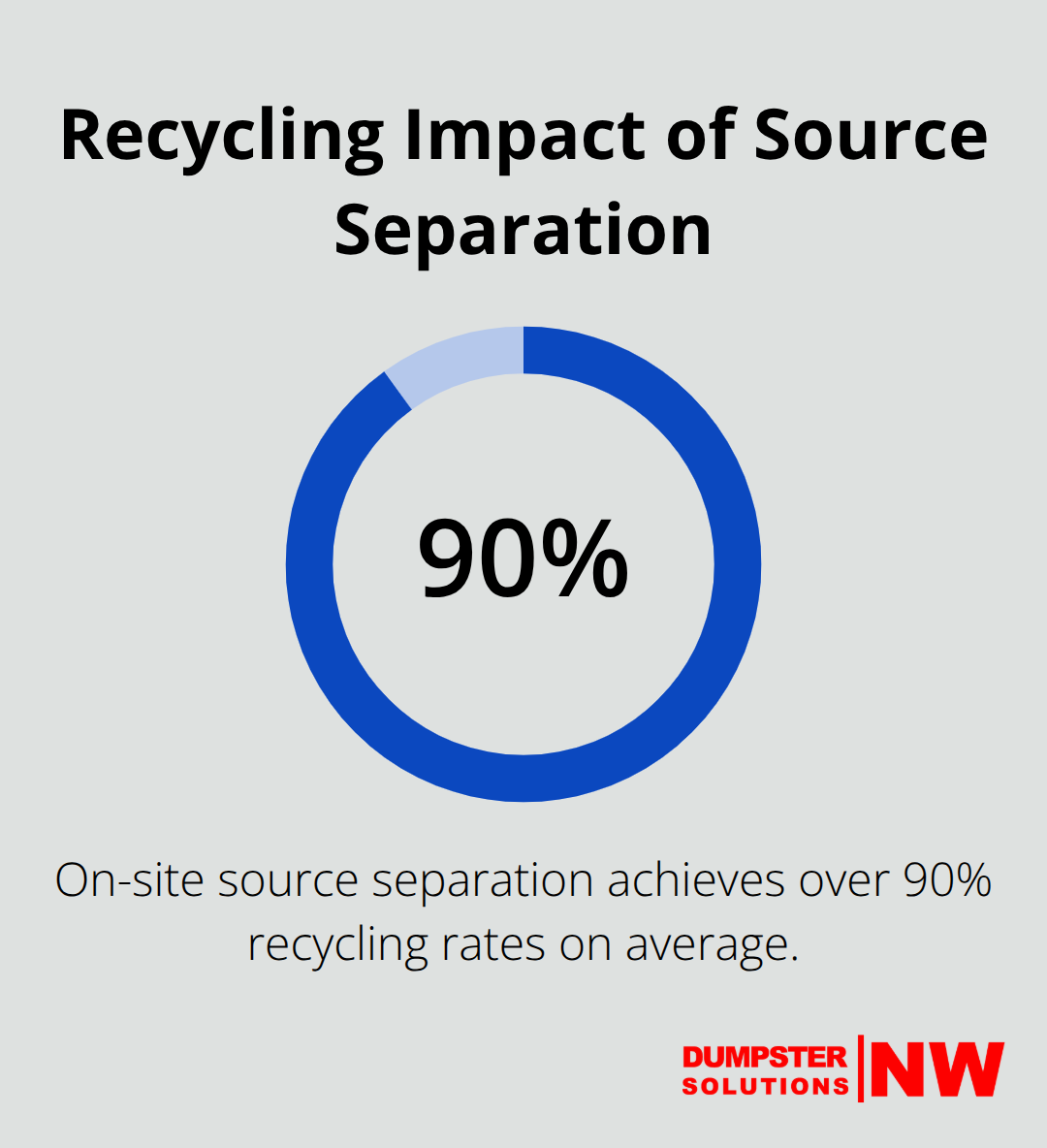
Hardwood flooring presents the best salvage potential of the three materials. Solid hardwood planks in good condition retain resale value and you can donate them to architectural salvage shops or reclaimed wood dealers in the Seattle area. Even damaged hardwood that’s not sellable can be source-separated for wood recycling, which King County actively encourages-on-site source separation of construction debris yields over 90% recycling rates on average.
Painted or treated hardwood cannot be recycled, so you should identify wood condition before removal to prevent wasted effort. Hardwood underlayment and subfloor scraps should be bundled separately from finished flooring pieces. Understanding these material differences shapes how you plan your home renovation project and which disposal method works best for your situation.
How to Sort, Recycle, and Transport Flooring Waste
Separate Materials at the Source
Sorting materials at the source transforms your entire disposal strategy and directly impacts your final costs. The moment you start removing carpet, tile, and hardwood, you face a choice: mix everything together or separate by material type. King County regulations make this decision for you if you’re hauling large loads-mixed C&D waste must go to designated C&D facilities, while source-separated streams can go to regular transfer stations at Bow Lake, Enumclaw, or Shoreline.
On-site source separation yields high recycling rates, which matters because it keeps materials out of landfills and reduces what you pay to dispose of. Set up separate containers or tarps for carpet, tile, hardwood, padding, and tack strips before you start removal. Label each container clearly so family members or helpers don’t throw carpet scraps into the hardwood pile. This discipline takes 15 minutes to organize but saves hours of sorting later and prevents disposal complications.
Identify Hardwood Worth Salvaging
Hardwood salvage potential makes separation worthwhile. Solid hardwood planks in good condition sell through architectural salvage shops and reclaimed wood dealers in Seattle and surrounding areas like Bellevue, Redmond, and Sammamish. Even planks with minor scratches or water damage often have resale value.
Photograph and inspect wood before removal to identify what’s worth salvaging versus what goes to the dumpster. Painted or treated hardwood cannot be recycled under King County guidance, so this step prevents wasted effort. Hardwood underlayment and subfloor scraps should be bundled separately from finished flooring pieces.
Handle Carpet, Tile, and Other Materials
Carpet and padding cannot be recycled in standard King County streams, but some facilities accept clean carpet for alternative uses. Tile fragments have no recycling path in most cases and must go to a designated C&D facility if your load is large. Transport separated materials in distinct batches-hardwood to a salvage dealer first, then tile to a C&D facility, then carpet and padding to a dumpster or landfill.
This multi-trip approach sounds tedious but aligns with county regulations and often costs less than paying disposal fees for mixed loads at the wrong facility. For projects spanning multiple rooms, a 20 or 30-yard dumpster consolidates carpet and padding waste while you handle hardwood and tile separately, streamlining your timeline and keeping your property organized throughout the project. Your next decision involves choosing the right container size and understanding how dumpster capacity affects your overall project budget.
What’s Your Real Flooring Removal Budget
Breaking Down Flooring Removal Costs
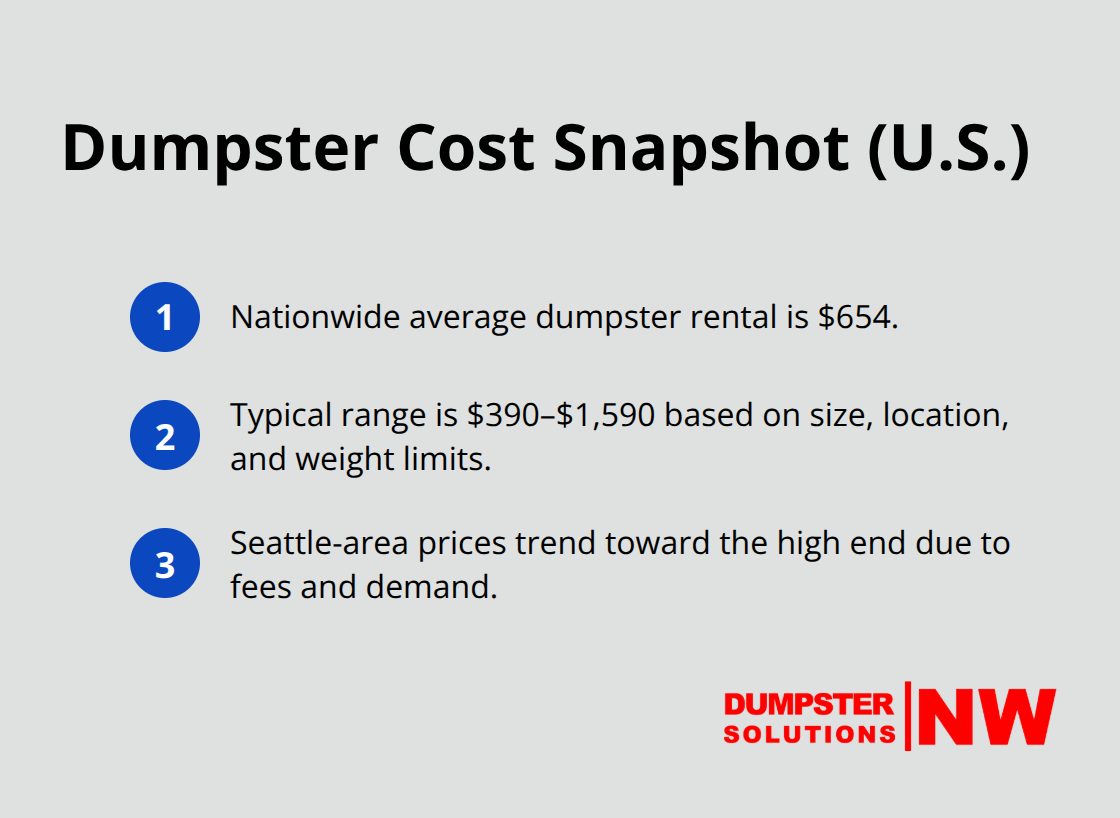
Flooring removal costs split into three categories: labor, materials, and disposal. If you handle removal yourself, you eliminate labor costs entirely, but disposal remains the biggest variable. Nationwide dumpster rental averages around $654 according to Dumpsters.com, though prices range from $390 to $1,590 depending on location, dumpster size, and weight limits. In the Seattle area, expect to pay toward the higher end of that range due to local tipping fees and demand from ongoing development projects.
A 20-yard dumpster typically costs less per cubic yard than a 10-yard because you spread delivery and pickup costs across more capacity. For carpet, tile, and hardwood removal, the 20 or 30-yard sizes make financial sense if your project spans multiple rooms. Junk removal services average $242 according to Angi, but that’s deceptive pricing-most jobs run $60 to $800 depending on load size and complexity, with minimum fees that quickly add up for large flooring debris.
Dumpster Rental vs. Junk Removal Pricing
Dumpster rental provides upfront, transparent pricing with all fees included, while junk removal quotes are assessed on-site and often exceed initial estimates. If you remove flooring from three or more rooms, a dumpster rental almost always beats junk removal on total cost. The difference becomes stark when you factor in multiple trips or handling fees that junk removal companies add after they see the actual debris volume.
Strategies to Minimize Disposal Fees
Material separation strategy before removal starts directly cuts disposal costs. You can recycle separated clean wood, cardboard, and scrap metal at transfer stations, which cost less to dispose of than mixed loads at designated facilities. Hardwood salvage reduces disposal volume substantially; photograph and extract resalable planks before dumpster rental to save hundreds in disposal fees while generating resale income.
Tile fragments and mixed carpet waste have no recycling path and must go to designated facilities, but bundling carpet and padding into a single dumpster rather than making separate trips eliminates multiple delivery and pickup charges. Weight limits matter-exceeding them incurs extra charges, so estimate your debris volume honestly before ordering. Carpet padding compresses significantly when rolled, so a 20-yard dumpster handles most two to three-room projects.
Sizing Your Dumpster and Scheduling Delivery
Tile and grout waste are dense and heavy; a single bathroom renovation generates 500–800 pounds, so account for that density when sizing your container. Scheduling dumpster delivery to align with your removal timeline prevents paying rent for containers sitting idle. Matching the right size to your debris type and volume ensures your project timeline and budget stay on track, while underestimating forces you into emergency same-day upgrades. Online ordering lets you reserve the right size immediately rather than waiting for quotes, and a 7-day rental period gives you a full week to load and organize materials without rush fees.
Final Thoughts
Efficient flooring removal comes down to three core practices: sort materials at the source, understand what can be recycled versus what must go to landfill, and choose the right disposal method for your debris volume. When you separate carpet, tile, and hardwood before removal starts, you create recycling opportunities that reduce landfill waste and lower your overall disposal costs. Hardwood salvage alone can offset a significant portion of your project expenses, while source-separated wood, cardboard, and metal streams qualify for lower-cost disposal at King County transfer stations.
On-site source separation achieves over 90% recycling rates on average, which keeps construction debris out of landfills and sustains markets for recycled-content building materials. When thousands of homeowners across the Seattle area, Tacoma, Bellevue, and surrounding communities adopt these practices, the cumulative effect reduces landfill pressure and supports regional sustainability goals.
Your flooring removal project contributes to this larger environmental impact through responsible waste handling.
Start your project by committing to material separation before you pick up a pry bar-set up labeled containers for carpet, padding, tile, hardwood, and tack strips, photograph hardwood to identify salvage potential, and schedule your dumpster delivery to align with your removal timeline. We at Dumpster Solutions NW handle the hauling and responsible disposal once you load your debris, with transparent flat-rate pricing and same-day or next-day delivery across the Seattle and Puget Sound region. Contact us to reserve the right dumpster size for your flooring removal project and get your space cleared efficiently.
Disclaimer: The information provided in this blog is for general informational purposes only and does not constitute legal, financial, or insurance advice. Coverage options, terms, and availability may vary. Please consult with a licensed professional for advice specific to your situation