
Seattle contractors face strict waste management rules that directly impact project timelines and budgets. From concrete disposal to hazardous materials, getting compliance wrong costs money and creates legal headaches.
We at Dumpster Solutions NW help contractors navigate these regulations every day. This guide breaks down what you need to know to stay compliant and avoid penalties.
Seattle’s Heavy Debris Disposal Rules That Actually Matter
What the City Requires From You
Seattle Public Utilities enforces strict waste diversion mandates that separate contractors from casual haulers. The city requires a Waste Diversion Report for all demolition projects and any new construction or remodels valued at $75,000 or more that receive an SDCI Building Permit after January 1, 2014. You must submit this report within 60 days of Final Inspection. The WDR tracks exactly where your debris goes: reuse on site, salvage off site, recycling (source-separated or commingled), or disposal. You’ll document material types, diversion methods, quantities, your hauler’s name, and the receiving facilities. SPU audits submissions within 30 business days and issues civil fines of $250 plus statutory assessments for failures to submit or comply.
Materials You Cannot Dispose of Locally
Concrete, asphalt, bricks, metal, cardboard, new construction gypsum, and scrap unpainted wood cannot enter Seattle landfills. If you fail to separate these materials at the jobsite, they must go to a Qualified Facility, which costs more and creates scheduling headaches. Your documentation protects you: keep weight tickets and receipts for at least one month after submitting your WDR. Photos of reuse activities count as acceptable proof.

Hitting Your Diversion Targets
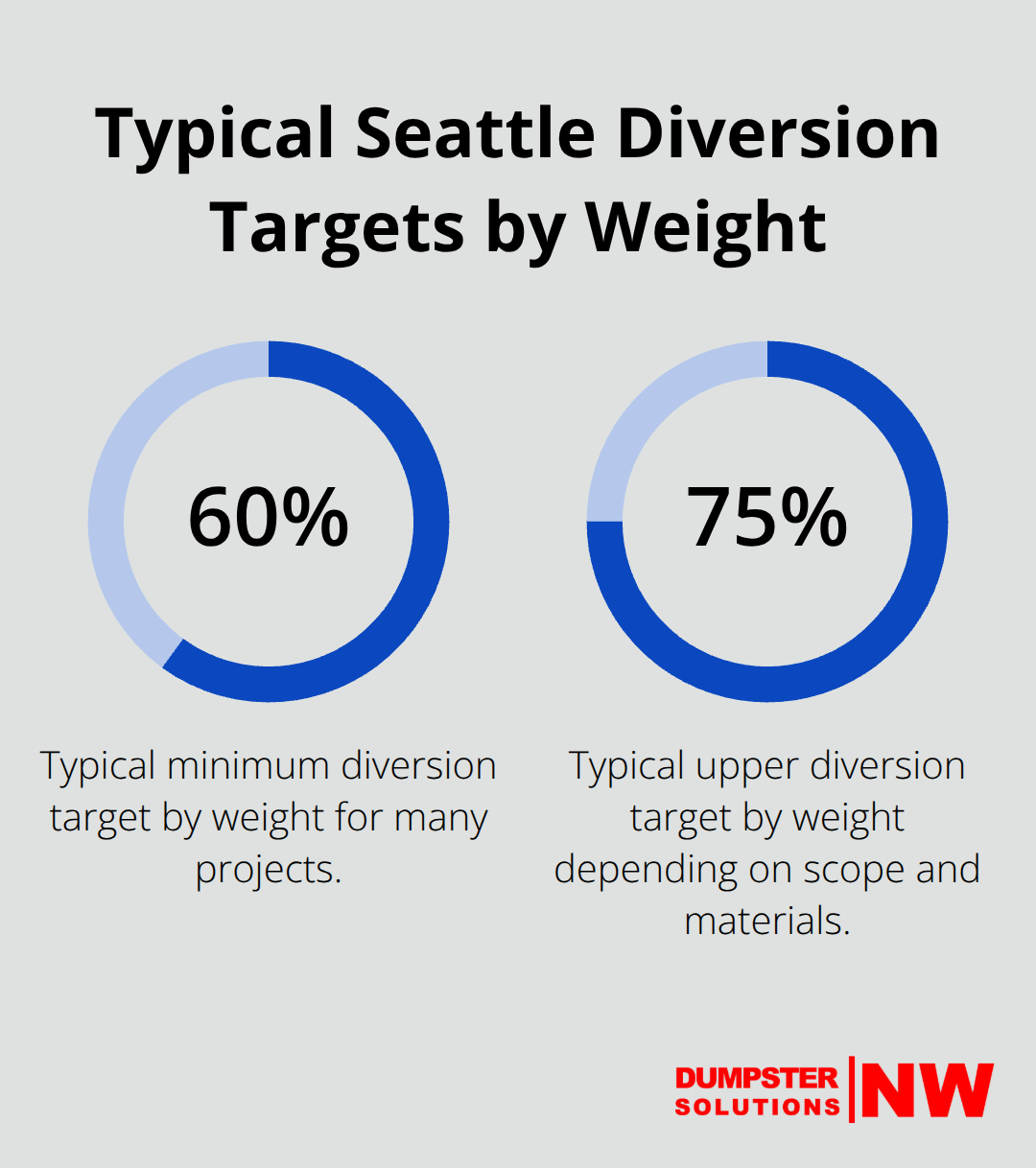
Seattle’s Construction Debris Recycling program sets project-specific diversion targets that typically fall between 60 and 75 percent by weight, depending on materials and project scope. This isn’t a suggestion-it’s a regulatory expectation that affects your project’s compliance status.
Metals (steel, aluminum, copper) generate revenue when you sort them separately on-site and improve diversion rates simultaneously. Concrete and asphalt get crushed and reused as aggregate for new concrete or road base, reducing disposal volume significantly. Drywall gypsum sometimes finds recyclers at permitted facilities, though availability varies by location.
Planning and Tracking for Compliance
You’ll succeed by planning early: designate salvage and deconstruction requirements in your project bid package and reference Section 024293 in city construction standards. Coordinate with licensed haulers before work begins. Color-coded, clearly labeled bins for different debris streams minimize contamination and keep diversion rates honest. Track every load with disposal manifests and weigh tickets to prove compliance and support client reporting. This documentation becomes critical when SPU conducts audits or when you need to demonstrate compliance to project owners.
Hazardous materials present a separate challenge that demands immediate attention before demolition work starts.
Making Separation and Tracking Your Competitive Edge
Sort Materials Before Demolition Starts
Sorting debris at the source stands as the single most effective way to hit your diversion targets and reduce disposal costs simultaneously. Walk the site before demolition begins and identify what materials will come out first-concrete, metals, wood, drywall, cardboard. Assign a team member responsibility for monitoring bins throughout the project; contamination kills diversion rates faster than anything else. Use color-coded, clearly labeled containers for each stream and position them strategically so workers grab the right bin without thinking.
When one material contaminates another, the entire load often downgrades to disposal instead of recycling, which defeats your diversion target and wastes money. King County’s What Do I Do With tool helps you identify exactly which facilities accept each material type in your area, so you know before day one where your sorted debris actually goes.
Maximize Value From High-Demand Materials
Metals command the highest recycling value and improve your diversion percentage immediately. Separate aluminum, copper, and steel right away-all three have ready markets. Concrete and asphalt crushing happens at specialized facilities, but these materials must stay clean and free from rebar or contamination to qualify. Drywall presents a trickier situation since permitted recyclers aren’t everywhere in Washington State, so contact facilities ahead of time to confirm they accept gypsum from your project.
Choose Licensed Facilities and Verify Credentials
Licensed disposal facilities exist for a reason, and choosing the wrong one creates compliance headaches that cost far more than working with the right partner from day one. Verify that your hauler holds the proper licenses and that receiving facilities appear on SPU’s Qualified Facilities list before you sign a contract. Request that your hauler provide weight tickets and receipts for every load-this documentation directly supports your Waste Diversion Report submission and protects you if SPU audits your project.
Ask your hauler how they track contamination and whether they perform pre-haul inspections of loaded bins; reputable operators reject contaminated loads rather than mixing them into recycling streams.
Document Everything for Audit Readiness
Maintain copies of all manifests, receipts, and weight tickets for at least one month after submitting your WDR, though keeping records longer provides extra protection. Photos of salvage activities, reuse on-site, and sorted material piles count as acceptable documentation per SPU guidelines, so assign someone to photograph key sorting milestones. Track every load with specific material descriptions, weights, and destination facilities in a simple spreadsheet or log; this takes minutes per load but transforms your compliance position during an audit.
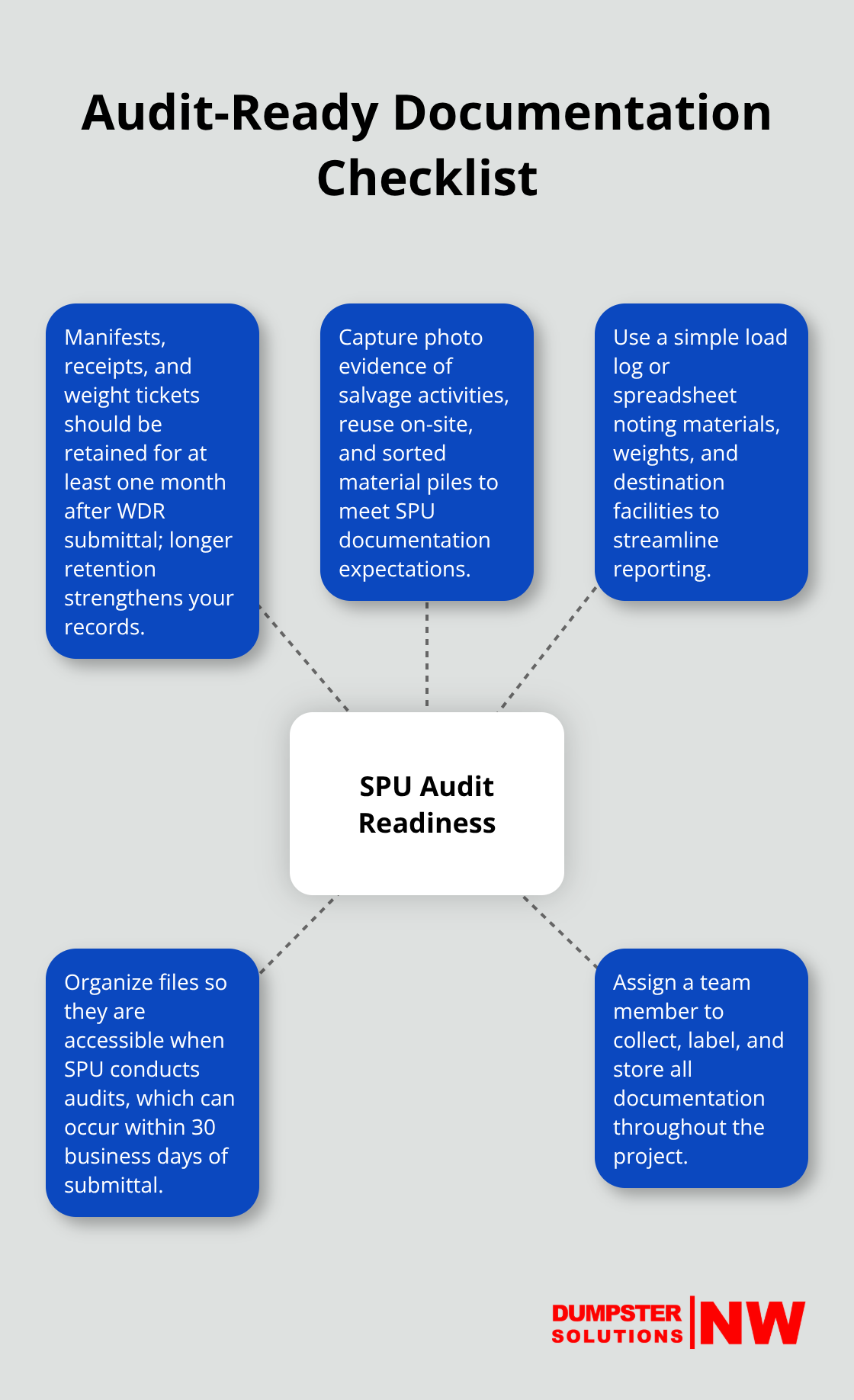
SPU conducts audits within 30 business days of WDR submittal, and auditors will ask for exactly this documentation, so having it organized and accessible prevents penalties and demonstrates professionalism to your clients. Hazardous materials present a separate challenge that demands immediate attention before demolition work starts.
Choosing the Right Disposal Method for Your Project
Dumpster Rentals and Roll-Off Services for Seattle Projects
Dumpster rentals and roll-off services form the backbone of Seattle construction debris management, but not all rental companies understand the compliance layer that separates a smooth project from an audit nightmare. A roll-off container works best for projects that produce mixed debris you’ll sort at a central staging area before hauling, while smaller jobsites benefit from dedicated dumpsters positioned near work zones to catch materials immediately. The key difference: roll-off services typically handle larger volumes (20 to 40 yards) and work well for demolition, whereas standard dumpsters scale down to 10 yards for smaller renovations.
Request that your rental company provide weight tickets for every load and confirm they deliver to SPU-qualified facilities or recycling centers appropriate for your material streams. Ask potential vendors upfront whether they track material types during hauling or simply dump everything together; responsible operators photograph loads, confirm material separation, and refuse contaminated bins rather than mixing them into landfill streams. Dumpster Solutions NW offers 10, 20, 30, and 40-yard options with transparent, flat-rate pricing and same-day or next-day delivery throughout the Seattle and Puget Sound region, eliminating the guesswork around costs and hauler reliability.
Recycling and Salvage Programs That Generate Revenue
Recycling and salvage programs create revenue opportunities that directly offset disposal costs, but only if you identify high-value materials before demolition starts. Metals command immediate cash-copper and aluminum especially-while reclaimed lumber, doors, fixtures, and architectural elements move through the Northwest Building Salvage Network and similar reuse channels. You may need to complete a Salvage Assessment online through Seattle Department of Construction and Inspections to identify what materials qualify for reuse versus recycling versus disposal.
Hazardous Waste Demands Separate Handling
Hazardous waste demands completely separate handling and cannot mix with construction debris under any circumstances. Before demolition, conduct a hazardous materials survey focusing on asbestos, lead, PCBs, mercury-containing lamps, and paints-older Seattle buildings almost always contain at least one hazardous stream. You must submit EPA asbestos notification forms at least 10 working days before touching any asbestos-containing materials, and the waste generator (the property owner) bears legal responsibility for proper disposal regardless of which contractor handles removal. Licensed hazardous waste contractors operate under Washington Department of Ecology rules, and costs run substantially higher than standard disposal, making early identification and separation cost-effective compared to discovering hazardous materials mid-project and halting work while you arrange specialized removal.
Final Thoughts
Seattle’s heavy debris disposal rules protect your projects, your wallet, and the environment. The Waste Diversion Report requirement, material bans, and diversion targets form the framework that separates compliant contractors from those facing audits and penalties. You must submit your WDR within 60 days of Final Inspection, track every load with weight tickets and receipts, and route banned materials like concrete disposal, asphalt, metals, and gypsum to appropriate facilities instead of landfills-SPU audits happen within 30 business days of submittal, so organized documentation transforms a potential compliance headache into proof of professionalism.
Contractors who plan early, sort materials on-site, and work with licensed facilities hit their 60 to 75 percent diversion targets consistently, which builds reputation with project owners and opens doors to larger contracts. Sorting metals, concrete, and high-value salvage materials generates revenue that offsets disposal costs and directly improves your project margins. Licensed haulers and qualified facilities provide the weight tickets and receipts you need, eliminating guesswork and protecting you if questions arise later.
Seattle Public Utilities’ Construction Debris Recycling pages list current diversion targets and approved facilities, while King County’s What Do I Do With tool identifies exactly where your sorted materials go. The Northwest Building Salvage Network connects you with reuse opportunities that maximize revenue, and the EPA National Lead Hotline provides guidance on hazardous waste streams. When you need reliable dumpster rentals with transparent pricing and same-day or next-day delivery, Dumpster Solutions NW handles the logistics so you focus on the work.
Disclaimer: The information provided in this blog is for general informational purposes only and does not constitute legal, financial, or insurance advice. Coverage options, terms, and availability may vary. Please consult with a licensed professional for advice specific to your situation