
The holidays are over, but the clutter they leave behind lingers. Between gifts, decorations, and seasonal items, your home probably feels more crowded than ever.
A holiday cleanup doesn’t have to be overwhelming. We at Dumpster Solutions NW help Washington families tackle large-scale decluttering projects with practical solutions that actually work.
Why Holiday Clutter Piles Up and Demands Your Attention
The holidays create a perfect storm for clutter accumulation. Gifts arrive in boxes wrapped in paper and plastic. Decorations scatter throughout your home. Food containers, packaging, and seasonal items occupy shelf space. Your family members bring home new possessions that lack designated storage spots. This isn’t a character flaw-it’s the result of a compressed timeframe where consumption accelerates while your organizational systems remain unchanged. The problem compounds when you delay action. Each day that passes makes the mental burden heavier and the physical task larger. Clutter left sitting for weeks after the holidays becomes normalized, making it harder to motivate yourself to tackle it.
Act Within Two Weeks for Maximum Impact
The first two weeks of January offer your strongest window for action. Your motivation remains high from New Year intentions, and the holidays feel recent enough that you still remember where items came from and whether you actually want them. Research on behavior change shows that momentum matters enormously-starting early builds habits that stick throughout the year. Waiting until spring means you’ve already normalized the clutter, making the project feel more daunting and less likely to happen.
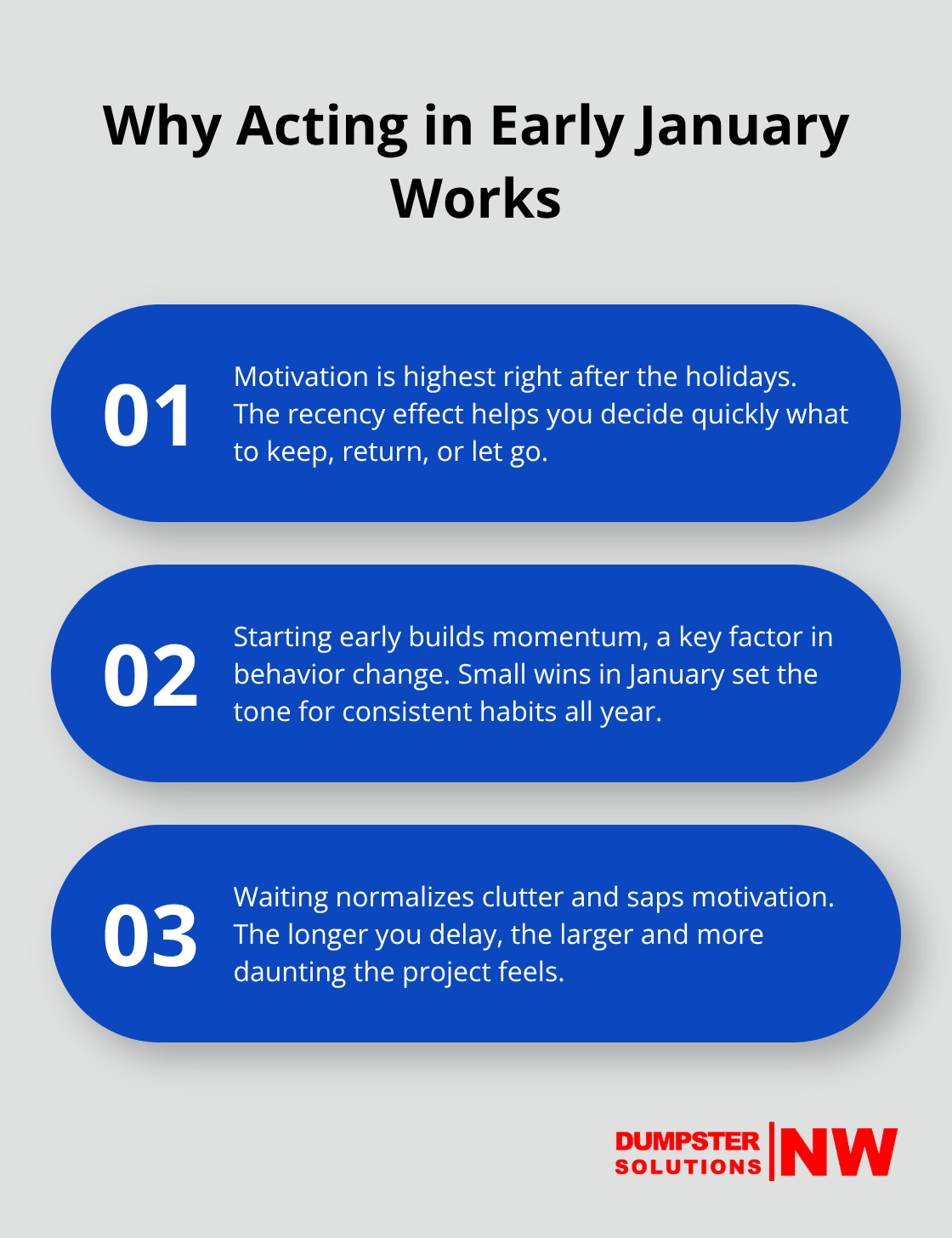
The financial advantage of early decluttering is straightforward. Items sitting in your home represent money already spent that you’re not recouping. Selling items through local marketplaces or donation centers within the first month generates faster sales and more interest. Clothing, electronics, and household goods lose value quickly. A holiday gift that seems marketable in mid-January may be worthless by March. Acting fast also prevents you from storing items you’ll never use, which costs you money in space and energy. A single large decluttering push beats spreading small efforts across months because it creates psychological closure and frees up mental bandwidth immediately.
Your Mental Health Depends on This
Clutter directly impacts stress levels and cognitive function. Researchers have established a clear link between clutter and stress hormones, particularly cortisol. Your brain must constantly process the visual information of items around you, which exhausts mental resources. When you remove clutter, you immediately feel lighter and more capable.
Families who declutter early report higher motivation for other 2025 goals because they’ve cleared mental space. A clean bedroom promotes better sleep. An organized kitchen makes meal preparation faster and less frustrating. A tidy living room becomes a space you actually enjoy rather than a source of daily anxiety. The psychological shift from clutter to clarity happens fast-often within a single weekend of focused work. You’ll notice improved mood, better focus, and reduced stress as soon as you complete even one room. This momentum becomes self-reinforcing, making you want to continue rather than abandon the project halfway through.
Where Large-Scale Waste Goes
Once you’ve decided to declutter, you face a critical question: what do you do with everything you’re removing? Small items fit in your regular trash, but furniture, appliances, electronics, and bulk waste require different solutions. This is where your disposal strategy becomes essential to keeping your project on track.
Room-by-Room Decluttering Strategy
Start Your Garage and Storage Areas First
Launch your decluttering project in your garage or storage areas, not your bedroom or kitchen. This counterintuitive approach works because garages contain the largest volume of items you’ve probably forgotten about, and clearing this space first produces immediate psychological wins and creates the physical room you’ll need for the rest of your project. Garages typically hold holiday decorations, old sports equipment, broken tools, expired paint cans, and items destined for donation that have been sitting there for months. A cluttered garage also makes it harder to access storage during your decluttering push.
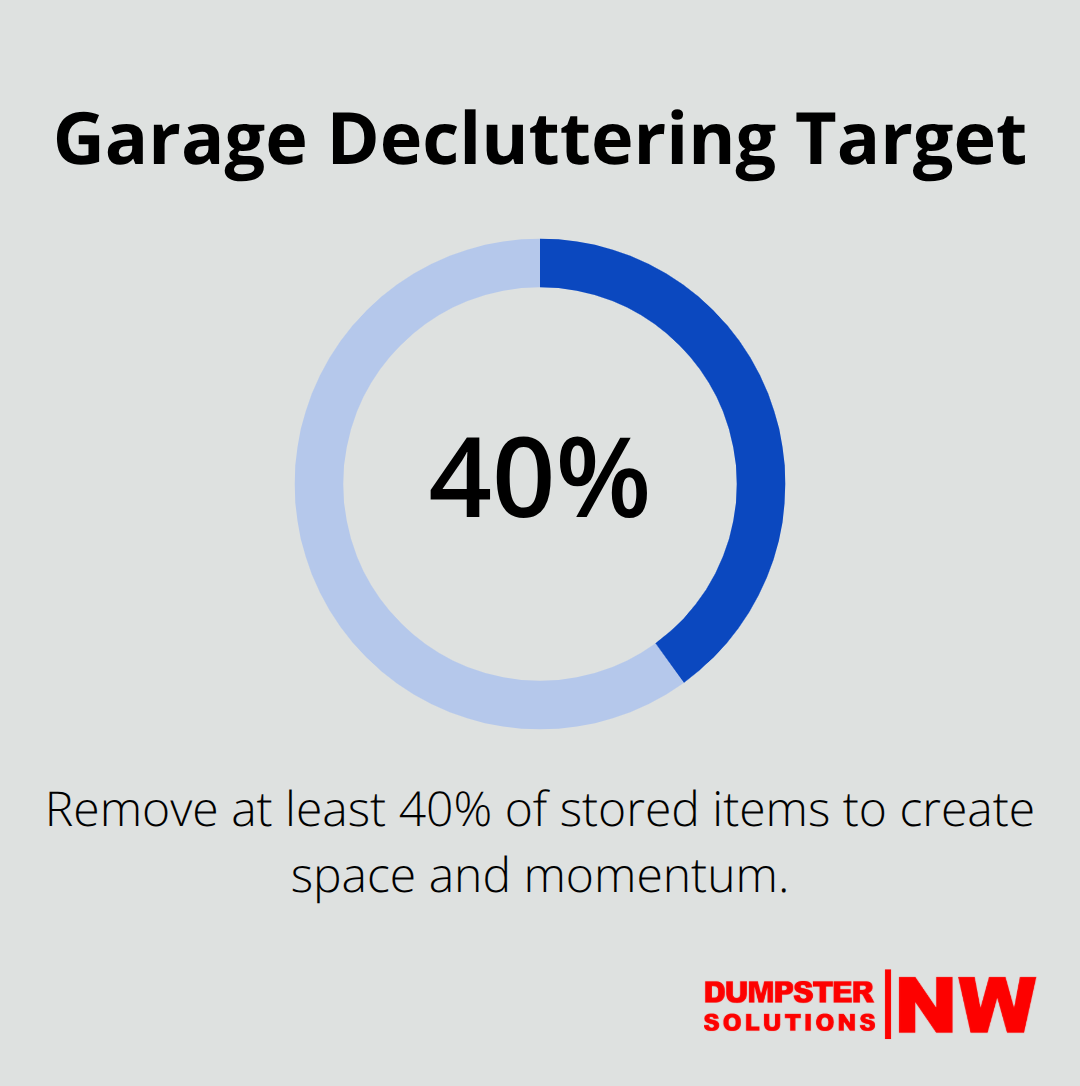
Set a specific target: try to remove at least 40 percent of what’s currently stored there. Sort items into three distinct piles-keep, donate, and discard. Items you haven’t used in over a year almost always belong in the donate or discard pile, regardless of their original cost.
Holiday decorations deserve special attention: store them in clearly labeled bins organized by holiday or theme rather than shoving boxes randomly on shelves. This single change cuts your setup time next year by half.
Organize Your Kitchen and Dining Spaces
Once your garage is manageable, move to your kitchen and dining spaces, where post-holiday clutter tends to concentrate. Food packaging, excess dishes from holiday entertaining, and duplicate kitchen gadgets occupy valuable space. Audit your pantry first-discard expired items and donate duplicate appliances you received as gifts. Many families end up with three can openers or two coffee makers after the holidays. Food storage containers with missing lids should go immediately.
Create a dedicated snack station using labeled jars or bins so everything has a home and your family can maintain the system without your constant guidance. The kitchen is where organization directly impacts daily life, so invest time here to make meal preparation faster and less frustrating. These changes transform how your household functions every single day.
Refresh Bedrooms and Living Areas
Finally, refresh your bedrooms and living areas, which typically need less aggressive decluttering than garages but require thoughtful organization. Bedrooms should focus on clothing and personal items. Apply a one-in-one-out rule starting now: each new gift that enters your closet means an older item leaves. Use shelf dividers and hanging organizers to maximize vertical space, and vacuum-sealed bags work well for seasonal clothing you’re keeping.
Living rooms accumulate decorative items, books, and furniture that no longer serves your family. Be honest about whether each piece contributes to the space you want to live in. Remove items that don’t bring function or joy, and assign every new gift a dedicated home immediately to prevent the clutter from creeping back. This room-by-room sequence-garage first, kitchen second, bedrooms and living areas last-ensures you maintain momentum while building systems that actually stick.
What Happens to Everything You Remove
This room-by-room strategy generates substantial waste: furniture, appliances, electronics, and bulk items that your regular trash service won’t accept. The next section covers your disposal options, from donation centers to recycling programs specific to the Seattle and Puget Sound region, and the most efficient solution for large-scale cleanouts.
Efficient Disposal Options for Holiday Waste
You’ve sorted your garage, kitchen, and bedrooms into three piles: keep, donate, and discard. Now comes the practical challenge of moving everything out of your home efficiently. Your options fall into three categories, each suited to different types of waste and project scales. Donation centers work well for gently used furniture, clothing, and household goods that still have value. Recycling programs handle specific materials like electronics, batteries, and foam that your regular trash service won’t accept. Dumpster rentals solve the volume problem when you’re removing large quantities of mixed waste across multiple rooms.
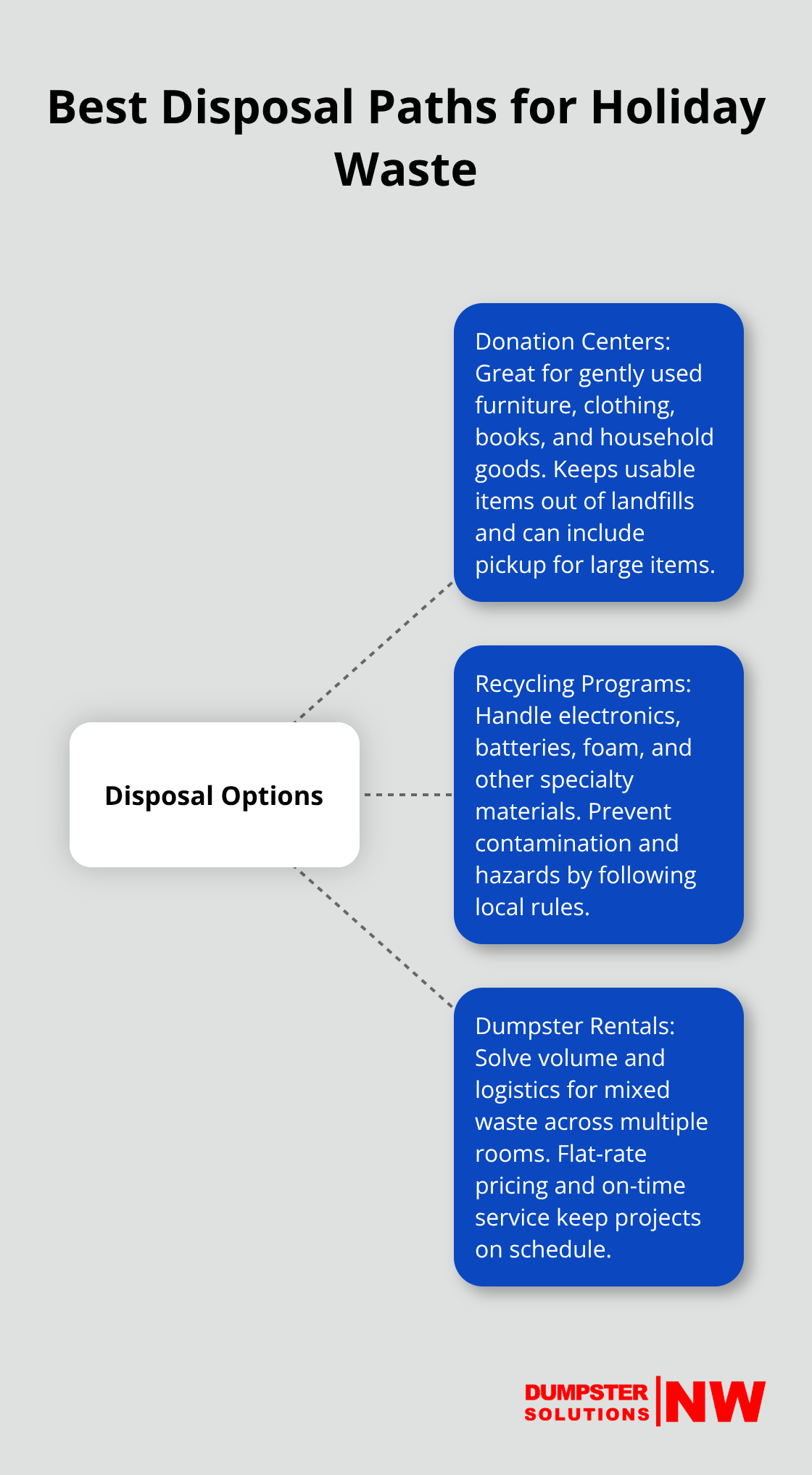
The right choice depends on what you’re throwing away and how much of it you have.
Donation Centers Keep Usable Items Out of Landfills
Furniture, clothing, books, and kitchen items in good condition should go to local charities rather than the trash. Goodwill and The Salvation Army operate throughout the Seattle and Puget Sound region, accepting furniture, appliances, electronics, and household goods. Both organizations offer free pickup for large items if you have multiple pieces to donate. Seattle has dozens of smaller nonprofits specializing in specific categories: furniture banks serve families in need, book exchanges take your excess reading material, and clothing consignment shops accept designer items in excellent condition.
This approach serves two purposes simultaneously-your items find new owners and you create space in your home without paying disposal fees. Items donated within the first month of January sell faster because people actively furnish new homes and start fresh after the holidays. Waiting until March or April means your donations sit longer in warehouse space before selling.
Regional Recycling Programs Handle Specialty Materials
Clark County Public Works and local recycling programs accept materials that belong nowhere near a landfill. Electronics, batteries, and e-waste require specialized recycling-they cannot go in your curbside bin or regular trash. The RecycleRight app or RecyclingA-Z.com locate drop-off locations for hundreds of specific items in your area. Holiday string lights cannot go in curbside recycling and must visit specialty recyclers or go in your garbage. Gift wrap with glitter or foil belongs in the trash, but plain paper wrap recycles normally.
Batteries, particularly lithium-ion batteries from holiday electronics, must go to designated disposal sites-many retailers including Best Buy offer free battery disposal. Block foam from packaging cannot go in curbside recycling carts but accepts disposal at Earth Friendly Recycling in Vancouver or in your garbage carts. Plastic film products like bubble wrap and air pillows recycle at grocery store bins and Clark County transfer stations, never in curbside bins. These distinctions matter because putting prohibited items in curbside recycling contaminates entire loads and creates safety hazards for waste workers. Taking time to sort correctly prevents environmental damage and keeps your community’s recycling system functioning.
Dumpster Rentals Handle the Volume Problem
When you’re removing large quantities of mixed waste-furniture, broken appliances, yard debris, and bulk items from multiple rooms-a dumpster rental becomes the most efficient solution. Dumpster Solutions NW serves the Seattle and Puget Sound region with flat-rate pricing that includes delivery, pickup, and disposal with no hidden fees. Our 10-yard dumpster holds approximately three pickup truck loads and costs less for small garage cleanouts, while our 20-yard option at $695 handles about six truck loads and works perfectly for comprehensive home decluttering.
All rental periods extend up to five days, giving you adequate time to complete your project without rushing. Weight allowances scale with size-the 20-yard includes 3,000 pounds, and anything beyond that runs $195 per ton, so estimating your load prevents surprise overage charges. You fill the dumpster yourself at your own pace, and we handle the hauling away, which means you avoid multiple trips to transfer stations and keep your project moving without logistical friction. Book online 24/7 with on-time delivery and pickup that keeps your schedule predictable. Real local experts answer your questions directly-no call centers, just straightforward guidance on selecting the right size for your specific needs.
Final Thoughts
Your holiday cleanup project transforms your home from post-holiday chaos into an organized space that supports better sleep, faster meal preparation, and genuine enjoyment of the spaces where your family spends time. Early action prevents clutter from becoming normalized, protects your mental health by reducing daily stress, and captures the financial value of items you sell or donate. These gains compound throughout 2025 as you maintain the systems you’ve built through consistent routines and monthly mini-declutters.
The disposal method you select determines whether your project stays on track or gets derailed by logistical complications. Donation centers work well for usable items, recycling programs handle specialty materials correctly, and a dumpster rental eliminates the friction of multiple trips when you’re removing large volumes of mixed waste across multiple rooms. We at Dumpster Solutions NW provide exactly this solution throughout the Seattle and Puget Sound region with flat-rate pricing that includes delivery, pickup, and disposal-no hidden fees.
Our 20-yard dumpster handles approximately six pickup truck loads at $695, making it ideal for comprehensive home decluttering projects. You fill it at your own pace, we haul it away responsibly, and your project stays on schedule without interruption. Book online 24/7 with Dumpster Solutions NW or speak with real local experts who understand your specific needs.
Disclaimer: The information provided in this blog is for general informational purposes only and does not constitute legal, financial, or insurance advice. Coverage options, terms, and availability may vary. Please consult with a licensed professional for advice specific to your situation