
Picking the right commercial trash dumpsters can transform how your business handles waste. We at Dumpster Solutions NW know that proper waste management cuts costs, boosts efficiency, and keeps your operations running smoothly.
This guide covers everything from dumpster sizes to environmental responsibility, plus how to find a provider that actually delivers.
Which Dumpster Type Fits Your Business
Roll-Off Dumpsters for Construction and Heavy Materials
Your waste profile determines which dumpster works best. Construction sites, retail stores, and high-volume operations each produce different types of debris with different weight and volume patterns, so one container type doesn’t solve every problem. Roll-off dumpsters work well for construction and demolition projects because they handle bulky, heavy materials like concrete, wood framing, and metal. These open-top containers arrive on a truck bed, drop at your site, and you load them directly from ground level-no compacting or sorting required.
Front-Load Dumpsters for Retail, Offices, and Restaurants
For businesses like retail shops, offices, or restaurants, front-load dumpsters serve as the standard choice. These enclosed containers hold roughly 2 to 8 cubic yards and get emptied multiple times weekly, which prevents overflow and pest problems. A small boutique producing 4 to 6 cubic yards weekly needs a 6-yard front-loader serviced twice weekly, while larger retailers pushing 10 to 20 cubic yards per week benefit from an 8-yard unit emptied three times weekly.
Compactor Dumpsters for Maximum Waste Reduction
High-volume businesses-grocery stores, hotels, restaurants with heavy packaging waste-should seriously consider compactor dumpsters. These machines crush material before collection, reducing the number of pickups and cutting disposal costs significantly. A grocery store running compactors can handle twice the waste volume in the same footprint, slashing monthly hauling expenses.
Right-sizing your container Prevents Costly Mistakes
Size matters more than most business owners realize, and guessing creates expensive problems. Oversized containers waste money on capacity you’ll never use, while undersized ones lead to overflow fees and service disruptions. Measure your actual weekly waste output in cubic yards, not estimates. For retail operations, seasonal peaks double normal volume-back-to-school in August, holiday packaging in December, post-inventory clearouts in February-so plan temporary upgrades in advance rather than scrambling during crunch periods.
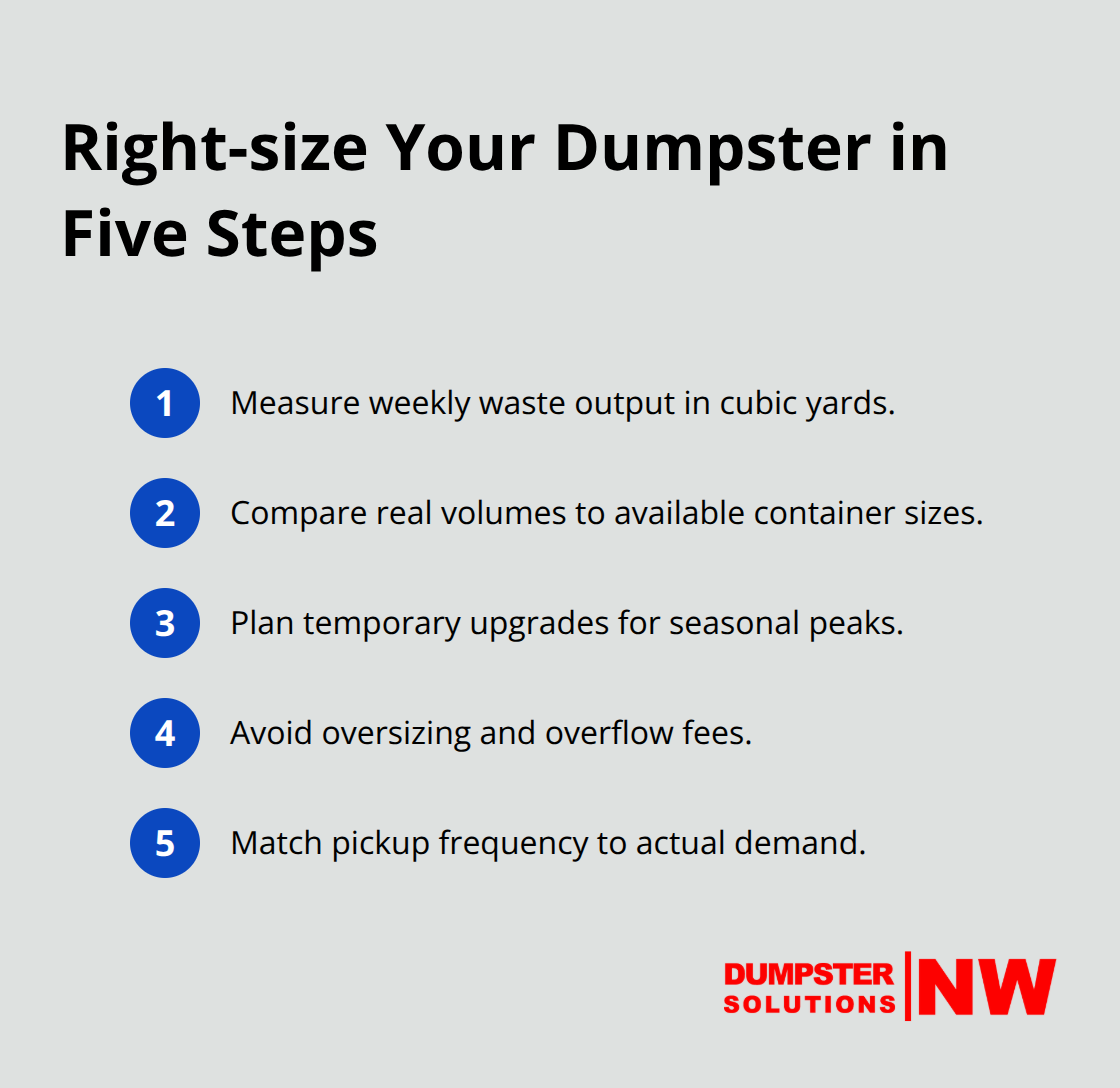
A temporary 20-yard roll-off during peak season keeps monthly costs predictable while avoiding permanent oversizing.
Weight Limits and Seasonal Planning
Weight also matters because dense items like metal shelving, ceramic tiles, or broken fixtures hit surcharges faster than lightweight cardboard. Understanding your waste composition (both volume and density) helps you select the right container and avoid unexpected charges. Seasonal planning prevents the scramble and expense of last-minute upgrades. With accurate data about your operation’s waste streams, you can make smarter, cheaper decisions about container size and pickup frequency-and that foundation sets you up to tackle cost savings in the next section.
How to Cut Waste Costs Without Sacrificing Service
Match Container Size to Actual Waste Output
Right-sizing your dumpster stands as the single most effective way to lower disposal expenses, and the math is straightforward. Oversized containers cost you money on unused capacity every single month, while undersized ones trigger overflow fees that spike your bill unpredictably. A retail operation running a permanent 8-yard dumpster when a 6-yard unit serviced three times weekly would suffice wastes roughly 25 to 30 percent of its container budget. The solution requires measuring actual output, not guessing. Track your waste for two to four weeks, record volume in cubic yards, then match container size to real demand. Dense materials like metal racks or ceramic tile eat through weight allowances faster than lightweight cardboard, so understanding your waste composition prevents surprise surcharges. Companies often overlook this reality: they pay for capacity they never fill. A small shift in container selection or pickup frequency cuts monthly costs by 15 to 20 percent without reducing service quality or risking operational disruption.
Align Pickup Frequency to Your Waste Generation Patterns
Pickup scheduling directly impacts your bottom line, and most businesses leave money on the table here. Frequent pickups for undersized containers cost far more than fewer pickups with right-sized dumpsters. A restaurant generating 6 cubic yards weekly pays less with twice-weekly service on a 6-yard unit than with three pickups on a 4-yard container. Align pickup frequency to your actual waste generation patterns rather than arbitrary schedules.
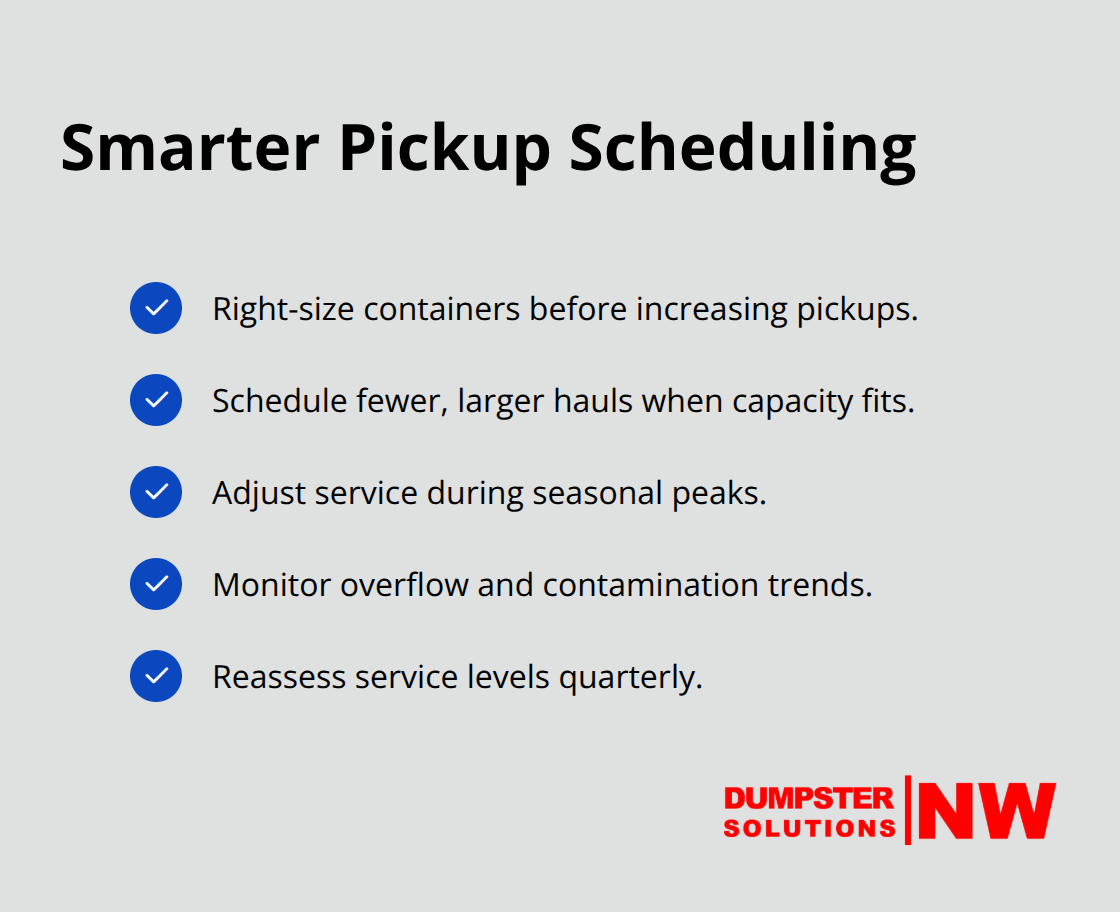
Seasonal adjustments matter too-temporary upgrades during peak periods (August back-to-school, December holidays, February inventory clearouts) prevent overflow and associated fees while keeping your baseline costs predictable year-round.
Leverage Compactors to Reduce Hauling Frequency
Compactor dumpsters for high-volume operations cut pickup frequency dramatically because they compress material, reducing the number of hauls needed. A grocery store using compactors handles twice the volume in the same footprint, slashing hauling costs significantly. This technology transforms waste management for businesses with heavy packaging waste, allowing them to maintain service quality while spending less on transportation and disposal fees.
Protect Operations and Brand Reputation Through Clean Waste Management
Proper scheduling eliminates the operational friction that kills productivity. Overflow situations force staff to stop work, coordinate emergency pickups, or deal with pest problems that damage your facility and customer experience. Clean, managed waste areas keep operations flowing, reduce health and safety risks, and protect your brand reputation. The businesses that win on waste management aren’t the ones obsessing over every dollar-they’re the ones that match container size and pickup frequency to their actual needs, then focus their attention on what matters most to their bottom line. With your waste logistics running smoothly, you can now explore how environmental responsibility and compliance fit into your waste strategy.
Waste Diversion and Compliance Matter More Than You Think
Washington’s Waste Crisis and Your Opportunity
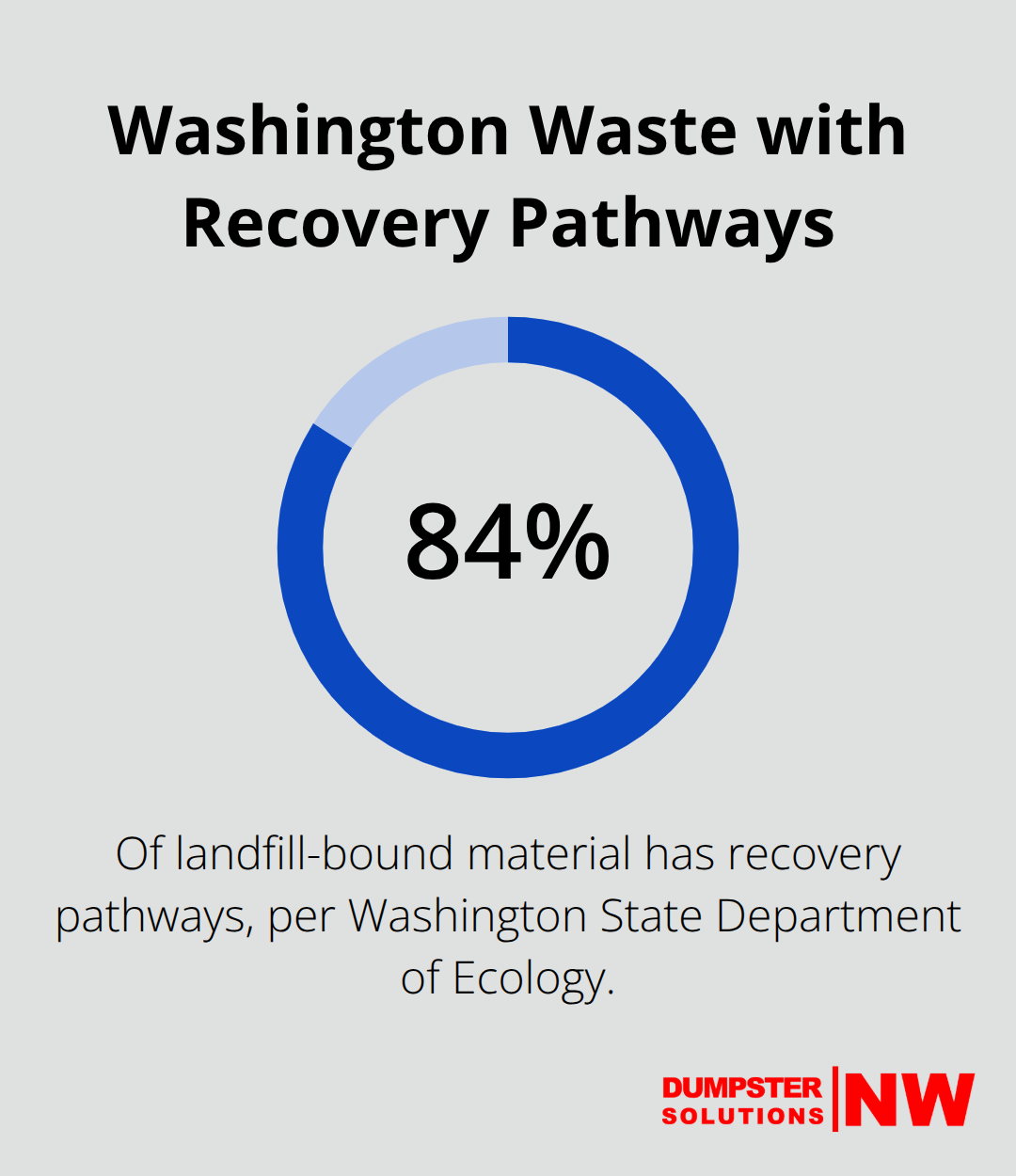
Washington State sends nearly 10 million tons of material to landfills annually, according to the Washington State Department of Ecology, yet roughly 84 percent of that waste has known recovery pathways. This gap represents both a regulatory risk and a cost opportunity for your business.
Most companies fail to recognize that commercial waste management now intersects directly with compliance requirements, sustainability expectations from customers and investors, and genuine bottom-line savings through waste diversion.
The Waste Hierarchy Framework
Washington’s waste hierarchy prioritizes prevention first, then reuse, then recycling, and disposal only as a last resort. Your dumpster strategy should reflect this framework because it shapes what containers you need, how you schedule pickups, and ultimately what you pay for disposal. When you separate recyclables from trash with clearly labeled, color-coded containers, you reduce contamination and increase diversion rates immediately. A retail operation that implements back-of-house sorting cuts disposal costs by 15 to 25 percent while meeting local recycling mandates.
Hazardous Materials and Regulatory Compliance
Hazardous or chemical waste never belongs in standard dumpsters and violates regulations in every Washington jurisdiction. Your team needs clear protocols for handling these materials separately. Track waste metrics like pickup weight, volume, and cost per service to optimize your container selection and identify where diversion opportunities exist. Local regulations vary across your service areas in the Puget Sound region, so compliance requires verification with your specific city or county before ordering containers.
Space, Placement, and Local Requirements
Some jurisdictions mandate enclosures for dumpsters, require solid concrete pads, or have zoning restrictions on placement that directly affect which container sizes fit your location. Verify enclosure requirements, measure your available space, and confirm permit requirements before committing to service. Local codes shape what works at your site, and understanding these rules prevents costly mistakes or service delays.
Prevention and Corporate Responsibility
Corporate responsibility extends beyond regulatory compliance because customers increasingly expect businesses to manage waste responsibly. When you align your waste reduction goals with recognized authorities like EPA guidelines and Washington State Department of Ecology standards, you strengthen your brand reputation and demonstrate genuine commitment to sustainability. Prevention ranks as the most impactful strategy in Washington’s waste hierarchy, so before purchasing new materials or equipment, ask whether you already own something that could serve the purpose. This upstream thinking reduces waste generation far more effectively than managing disposal after the fact, and it compounds cost savings across your entire operation.
Final Thoughts
Finding the right partner for your commercial trash dumpsters matters more than most business owners realize. We at Dumpster Solutions NW understand that waste management isn’t just about hauling away debris-it’s about reliability, transparency, and local support that keeps your operations running without surprises or frustration. Your provider should deliver on three core commitments: reliable service with flexible scheduling that adapts to your actual waste patterns, transparent pricing with no hidden fees, and local expertise across the Puget Sound region (Auburn, Seattle, Tacoma, Bellevue, and surrounding areas).
We at Dumpster Solutions NW deliver on all three fronts with hassle-free dumpster rentals in a range of sizes to fit any project scale. Our process stays straightforward: you choose your size, we deliver on time, you fill it, and we handle responsible disposal with same-day or next-day delivery that keeps your projects moving without delays. Transparent, flat-rate pricing means no surprises when the invoice arrives, and real local support throughout the Seattle and Puget Sound region ensures your project runs smoothly from start to finish.
Contact Dumpster Solutions NW to discuss your commercial waste management needs and receive a straightforward quote with no hidden fees.
Disclaimer: The information provided in this blog is for general informational purposes only and does not constitute legal, financial, or insurance advice. Coverage options, terms, and availability may vary. Please consult with a licensed professional for advice specific to your situation