
Roll off dumpsters for rent are the fastest way to handle debris from any project, whether you’re renovating your home or clearing out a garage. We at Dumpster Solutions NW serve communities across Washington State, making it simple to get the right container delivered exactly when you need it.
This guide walks you through everything-from understanding dumpster sizes to navigating the rental process with confidence.
What Roll Off Dumpsters Actually Do
How Roll Off Dumpsters Work
A roll off dumpster is a large, open-top container that sits on your property while you load it with debris, then gets hauled away once you finish. The container itself rolls onto a specialized truck bed via hydraulic arms, which is where the name comes from. You fill it at your own pace, and we at Dumpster Solutions NW handle the heavy lifting of pickup and disposal. The process works because the dumpster stays put on your driveway or property for as long as you need it, offering flexibility that other waste removal methods simply don’t provide.
Why Roll Off Dumpsters Stand Out
Roll off dumpsters differ fundamentally from stationary compactors or permanent waste bins because they’re temporary, mobile, and designed for debris that doesn’t fit in regular trash cans. Projects across Bellevue, Tacoma, Redmond, and other Puget Sound communities rely on them for roof tear-offs, kitchen renovations, estate cleanouts, and construction debris removal. The real advantage is that you control the timeline and the loading process-no need to make multiple trips to a landfill or wait for a junk removal service to schedule around your availability.
Sizing Your Dumpster Right
Most projects in Seattle and the Puget Sound region use roll off dumpsters because they’re cost-effective for anything from a single-day cleanout to multi-week renovation jobs. The standard sizes we offer-10, 20, 30, and 40-yard containers-match almost any project scope. A 10-yard dumpster holds roughly 50 to 70 trash bags worth of material, while a 40-yard unit can handle around 230 to 250 bags, so you can right-size your rental and avoid paying for capacity you won’t use.
Weight Limits and Material Types
Weight limits do apply, and overage fees kick in if you exceed them, so accurate estimation matters. We recommend discussing your specific project type with us when you call, since heavy materials like concrete or dirt take up less volume but weigh significantly more than drywall or insulation. The flexibility of rental periods, combined with flat-rate pricing and no hidden fees, makes roll off dumpsters the straightforward choice for anyone tackling serious debris removal in Washington State.
Now that you understand how roll off dumpsters work and why they’re ideal for your project, the next step is selecting the right size for your specific needs.
Choosing the Right Roll Off Dumpster Size for Your Project
Match Volume to Your Debris Type
Selecting the right dumpster size comes down to two factors: how much debris you’ll generate and how heavy that debris actually is. Most people underestimate volume but overestimate weight, which leads to renting a dumpster that’s too small or paying for capacity they never use.
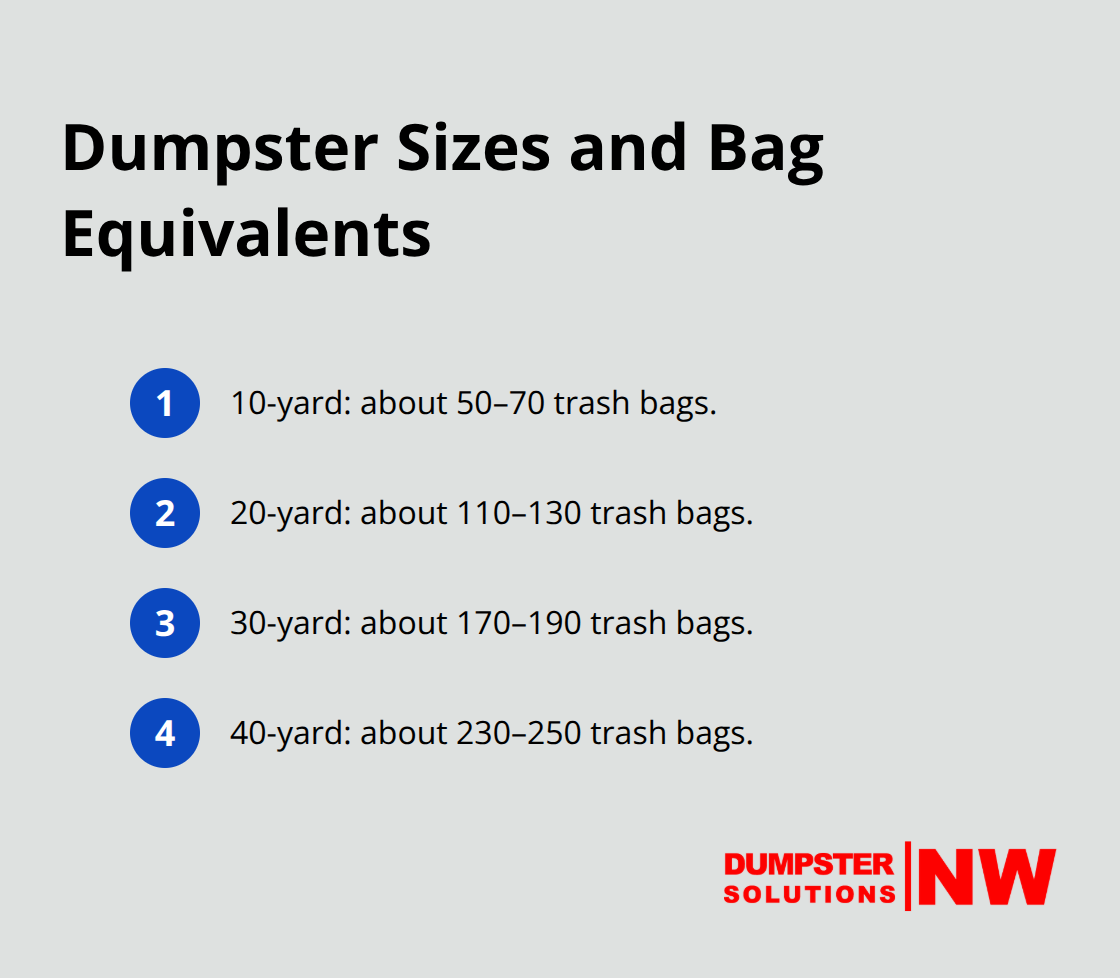
A 10-yard dumpster holds roughly 50 to 70 trash bags worth of material and works best for small garage cleanouts, attic decluttering, or minor bathroom renovations. The 20-yard option jumps to about 110 to 130 bags and handles kitchen remodels, deck removals, or moderate roofing projects. A 30-yard dumpster accommodates 170 to 190 bags and suits larger home renovations or estate cleanouts. The 40-yard unit, holding 230 to 250 bags, tackles major construction sites, whole-house renovations, or commercial demolition work.
Visualize Your Actual Items, Not Just Room Size
Don’t guess based on room size alone. Instead, think about the actual items leaving your property-old appliances, drywall, flooring, lumber-and stack them mentally to visualize the volume. This approach beats abstract estimates every time and prevents you from overshooting or undershooting your rental size.
Account for Weight Before You Commit
Weight limits are where most people hit surprises, and debris type matters far more than volume. Concrete, dirt, asphalt, and brick are deceptively heavy; a single cubic yard of concrete weighs roughly 4,000 pounds, so a modest concrete patio removal can max out a dumpster’s weight allowance before it’s anywhere near full. Conversely, drywall, insulation, and yard waste are light and voluminous, meaning you’ll fill the dumpster long before hitting weight limits. Overage fees kick in if you exceed weight limits, so accurate estimation prevents costly surprises.
Be Specific When You Call
When scheduling your rental, be specific about what you’re throwing away-tell us you’re removing a concrete patio and old roofing shingles, not just that you’re doing a renovation. This honesty prevents overage charges later and ensures we recommend the right container. For mixed projects combining heavy and light debris, many contractors split loads into separate dumpster rentals rather than risk exceeding weight limits and paying steep penalties. Flat-rate pricing means you know the cost upfront, so there’s no financial advantage to cramming everything into one undersized unit.
Plan Your Rental Strategy
Understanding these size and weight dynamics positions you to make an informed choice that matches your actual project scope. With the right dumpster selected, the next step involves understanding how the rental process itself works and what items you can safely load into your container.
The Rental Process with Dumpster Solutions NW
Schedule Delivery in Minutes
Scheduling delivery with us at Dumpster Solutions NW takes minutes and happens fast. Call to confirm your dumpster size, and we’ll deliver it the same day or next day depending on your location across the Seattle and Puget Sound region. Before delivery arrives, clear your driveway or designated spot of obstacles and measure the space: you need roughly 60 feet of straight, level ground and 23 feet of vertical clearance for the truck to position the container safely.
Navigate Street Placement and Permits
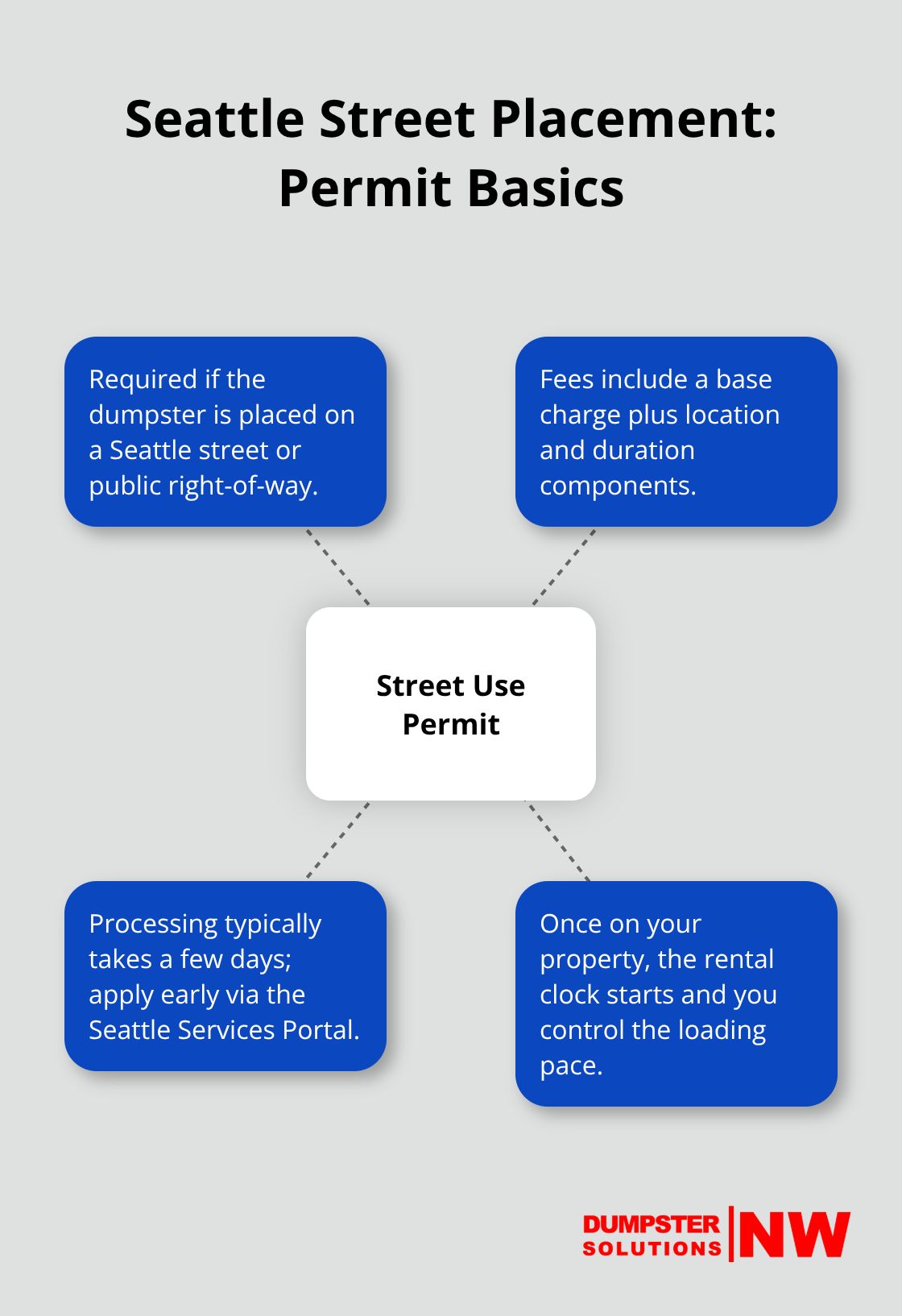
If you place the dumpster on a Seattle street or public right-of-way, you’ll need a Street Use permit from SDOT, which costs a base fee plus location and duration charges. The permit process takes a few days, so apply early through the Seattle Services Portal if street placement is your only option. Once your dumpster lands on your property, the rental clock starts, and you control how fast or slow you load it.
Extend Your Rental Without Pressure
Most projects finish within a week, but rental periods remain flexible: if your renovation runs long, simply call and extend at a flat daily rate rather than rush to finish. This flexibility means your timeline adapts to reality, not the other way around.
Know What Goes In and What Doesn’t
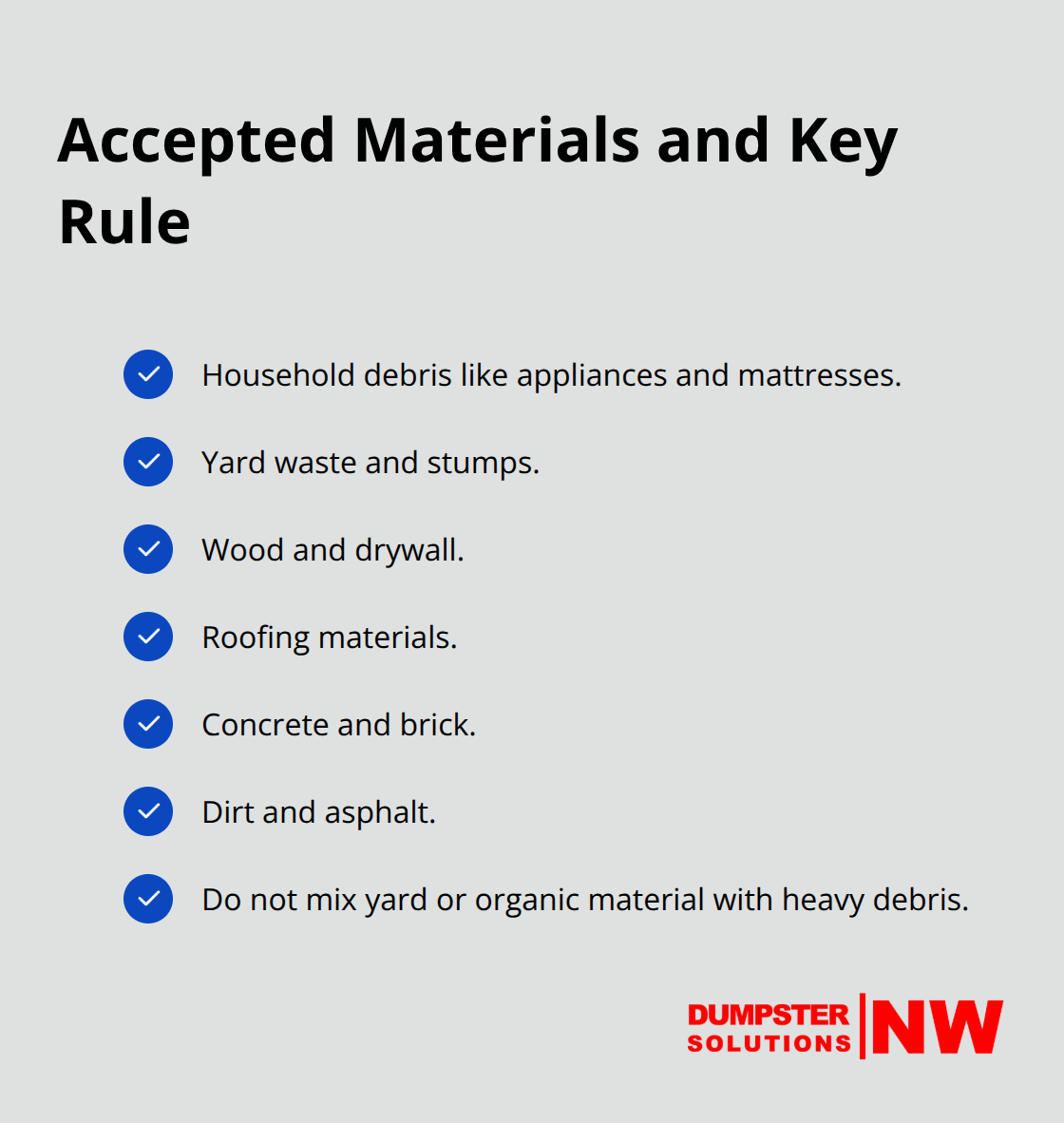
Weight limits and material restrictions exist to protect landfills and recycling facilities, so know what goes in before you start loading. Acceptable materials include household debris like appliances and mattresses, yard waste, stumps, and construction debris such as wood, drywall, roofing materials, concrete, brick, dirt, and asphalt. Never mix yard or organic material with heavy debris in the same dumpster; if your project generates both, rent two containers or schedule separate loads.
Protect Your Dumpster and Budget
Pre-1990 buildings may require an abatement survey and letter before you dispose of construction debris, so ask about that requirement when you book. Heavy rain increases dumpster weight significantly, so cover it with a tarp to prevent water absorption and surprise overage charges. When you’re ready for pickup, call and we’ll collect the container within 24 hours. Flat-rate pricing means you pay one upfront cost with no surprises, making your project budget predictable and honest from start to finish.
Final Thoughts
Roll off dumpsters for rent eliminate the stress of managing debris from start to finish. You no longer need to make multiple trips to a landfill, coordinate with junk removal services around their schedule, or worry about where to temporarily store piles of construction waste. Local service matters because your project has real deadlines and specific constraints, and when you work with a company that understands your neighborhood and knows the permit requirements for your street, your timeline stays on track.
We at Dumpster Solutions NW have served thousands of projects across Washington State, from Auburn to Tacoma and throughout the Puget Sound region. That experience translates into faster delivery, accurate sizing recommendations, and honest pricing with no hidden fees-you work with a team that operates in your community and stands behind its work. Flat-rate pricing means you know your cost upfront, rental periods stay flexible if your project runs long, and pickup happens within 24 hours of your call.
Getting started takes one phone call: tell us your project type, your preferred dumpster size, and when you need delivery, and we’ll handle the rest. Your next renovation, cleanout, or construction project deserves a waste removal partner that makes the process straightforward and reliable.
Disclaimer: The information provided in this blog is for general informational purposes only and does not constitute legal, financial, or insurance advice. Coverage options, terms, and availability may vary. Please consult with a licensed professional for advice specific to your situation