
Dumpster rental costs vary wildly depending on what you need and where you’re located. We at Dumpster Solutions NW see customers across Washington State asking the same question: how much are dumpsters to rent?
The answer isn’t simple because pricing depends on multiple factors. This guide breaks down exactly what you’ll pay and where hidden costs might sneak in.
Dumpster Rental Pricing by Size
10-Yard Dumpsters: The Starting Point
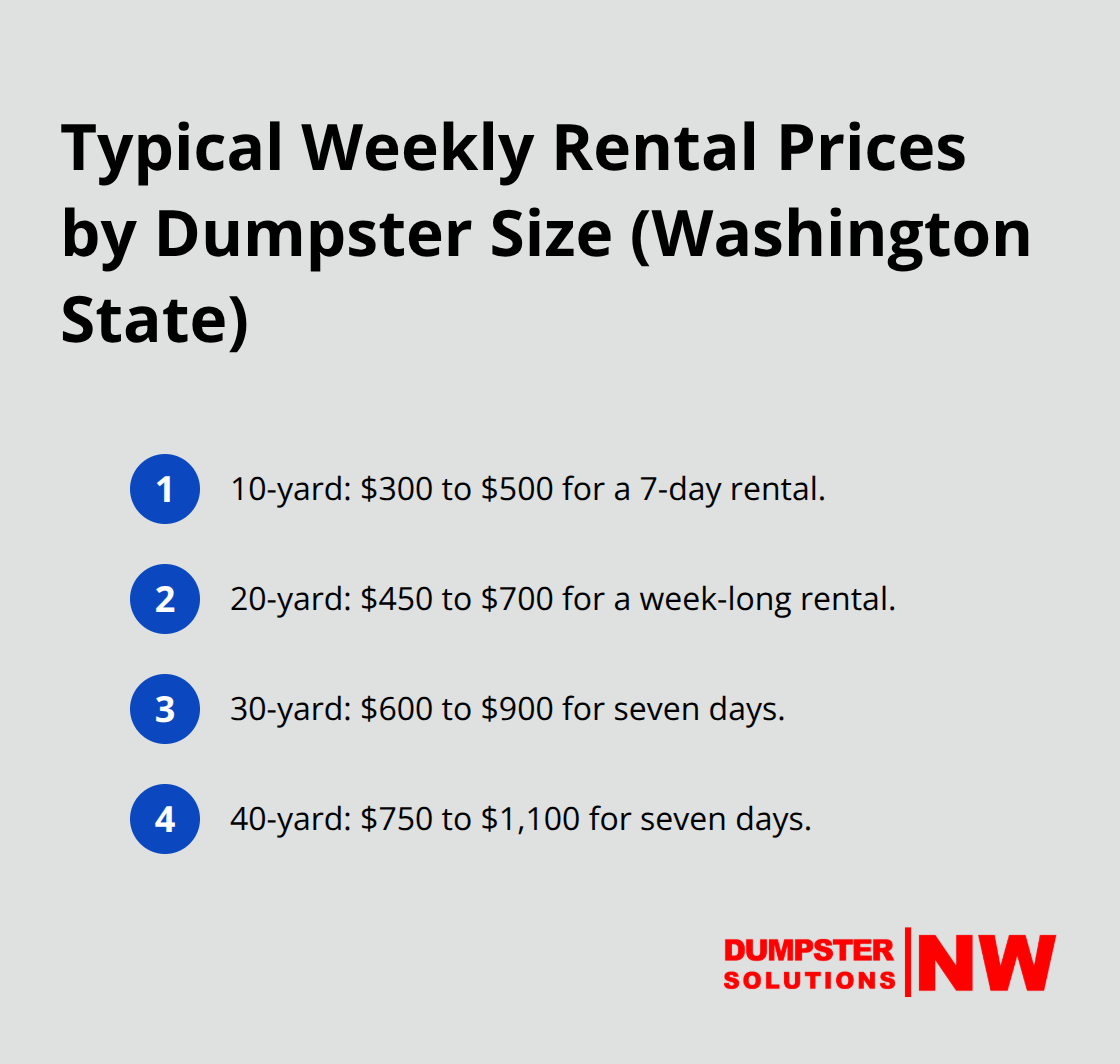
The 10-yard dumpster handles most projects without excessive cost. This size works well for garage cleanouts, small bathroom renovations, and light debris removal. In the Seattle area, you’ll pay between $300 and $500 for a standard 7-day rental, though prices shift based on your specific location within Washington State. Auburn and Tacoma typically cost less than Bellevue or Redmond due to lower landfill tipping fees in those regions. The 10-yard container excels with heavy materials-concrete, asphalt, and dirt load quickly without consuming your budget the way they would in a smaller bin.
20-Yard Dumpsters: The Sweet Spot
The 20-yard dumpster suits most home renovations and larger cleanouts. These containers provide roughly double the space of a 10-yard unit. Pricing typically ranges from $450 to $700 for a week-long rental across Washington State service areas. This size works best for kitchen remodels, roof replacements, or full-home declutters. Don’t assume more space means you can ignore weight limits. A 20-yard dumpster filled with concrete or brick hits weight thresholds while appearing only half full. Per-ton overage charges above your weight allowance add $50 to $250 to your final bill, so accurate weight estimates matter far more than visual fill levels.
30 and 40-Yard Dumpsters: Large-Scale Projects
Substantial home renovations and construction work demand 30 or 40-yard dumpsters. You’ll pay $600 to $900 for a 30-yard unit and $750 to $1,100 for a 40-yard over seven days, depending on your location. Puyallup and Kent customers often see lower rates than those in Kirkland or Sammamish due to distance from disposal facilities. The 30-yard size suits office renovations, large construction demolition, and substantial property cleanouts. The 40-yard handles major construction projects where you remove walls, flooring, and structural debris. Choosing between a 30 and 40-yard often comes down to delivery logistics, not just capacity. If your property has tight access or low overhead clearance, a 30-yard might be your only option. Oversizing your dumpster costs more upfront but prevents the expensive mistake of needing a second rental midproject.
Understanding your project’s true scope determines which size makes financial sense. The next section reveals how location, rental duration, and waste type shift these baseline prices in ways that catch many renters off guard.
Factors That Affect Dumpster Rental Prices
Location and Service Area Variations
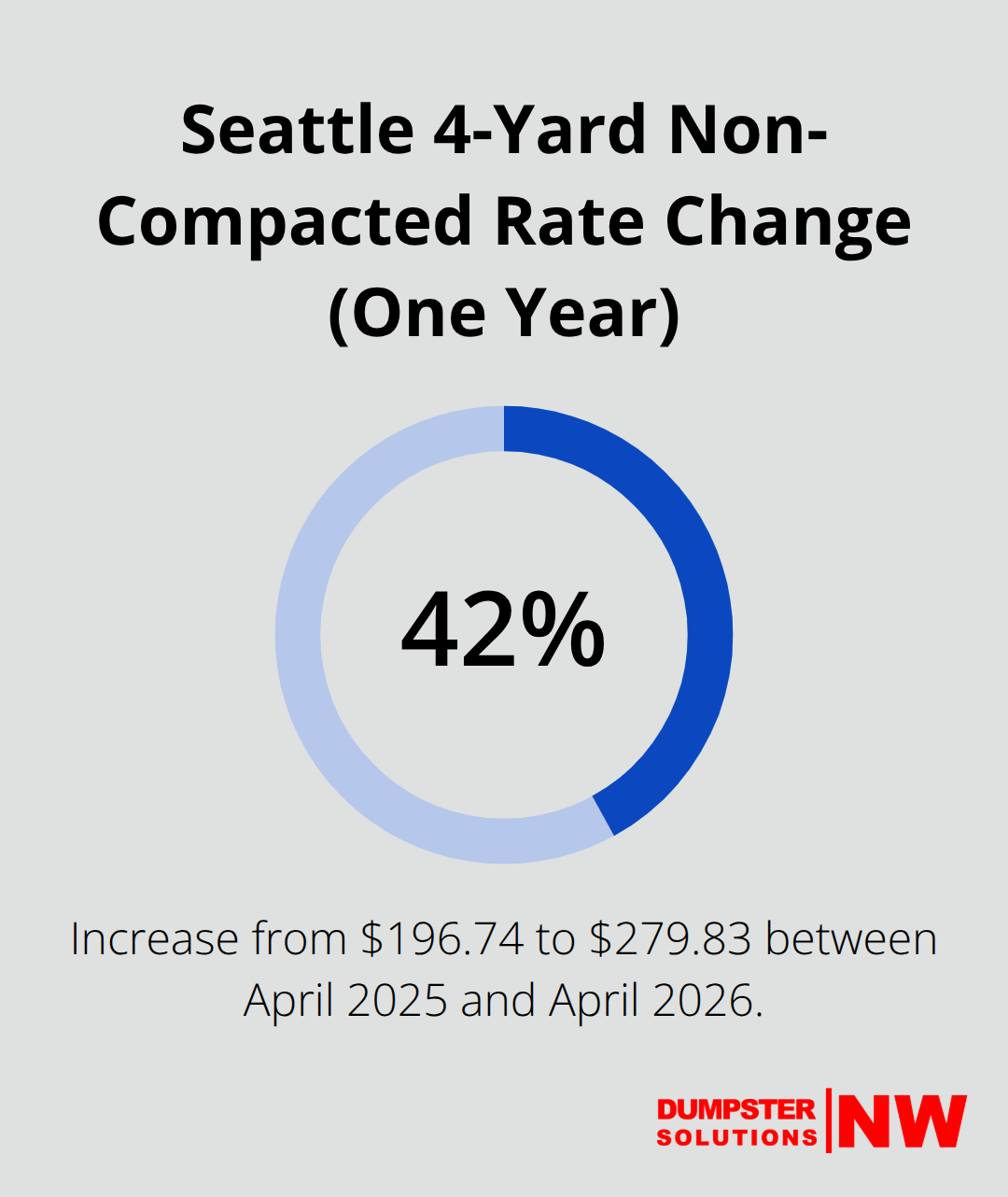
Washington State’s geography and disposal infrastructure create stark pricing differences that surprise most renters. Seattle Public Utilities raised its account fees from $49.50 in April 2025 to $51.15 in April 2026, with non-compacted dumpster rates climbing across all sizes. A 4-yard non-compacted container jumped from $196.74 to $279.83-a 42% increase in just one year. These aren’t random spikes; they reflect landfill tipping fees, fuel surcharges, and transport costs that differ dramatically by region.
Rural areas like parts of Puyallup and Federal Way often cost less than dense urban zones like Bellevue or Kirkland, where disposal facilities sit farther away and competition drives prices differently. Your zip code matters more than most renters realize. Distance from landfills, regional fuel costs, and local disposal regulations all shift what you’ll pay for the same dumpster size.
Heavy Materials and Weight Surprises
Concrete and brick are the culprits behind weight surprises. A 20-yard dumpster filled with concrete or roofing shingles hits the standard 10-ton weight limit while looking half empty. Seattle Public Utilities charges $14.40 per bundle for overload waste as of April 2026-roughly $0.05 per pound of overage if you’re not careful.
Heavy debris like dirt, asphalt, and structural demolition material loads fast and costs hard. Weight limits matter far more than visual fill levels. Accurate weight estimates prevent overage charges from derailing your budget.
Rental Duration and Extension Costs
Standard pricing covers 7–10 days; extensions typically run $15 to $50 per day depending on your provider and location. A project that stretches two weeks instead of one adds $105 to $350 to your final bill. Planning your timeline upfront prevents extension fees from consuming your budget.
Type of Waste and Disposal Fees
Mattresses, electronics, appliances with refrigerants, and hazardous materials like oil and asbestos either get rejected outright or trigger disposal fees ranging from $25 to $200 per item. Seattle’s landfill regulations and hazardous waste rules mean prohibited items don’t just get accepted; they get flagged and billed separately or denied entirely. State your debris type explicitly when requesting quotes to avoid surprises.
Nearly 400,000 tons of recyclable and compostable material from Seattle went to the landfill last year, underscoring why waste type matters financially. If your project involves mixed debris, separate recyclables and compostables before the dumpster arrives. This action reduces the total weight and disposal charges. A basic recycling program alongside your rental cuts costs faster than oversizing your dumpster-and that’s where hidden fees start to reveal themselves.
What Really Costs Extra When You Rent a Dumpster
Weight Limits Hit Hard and Fast
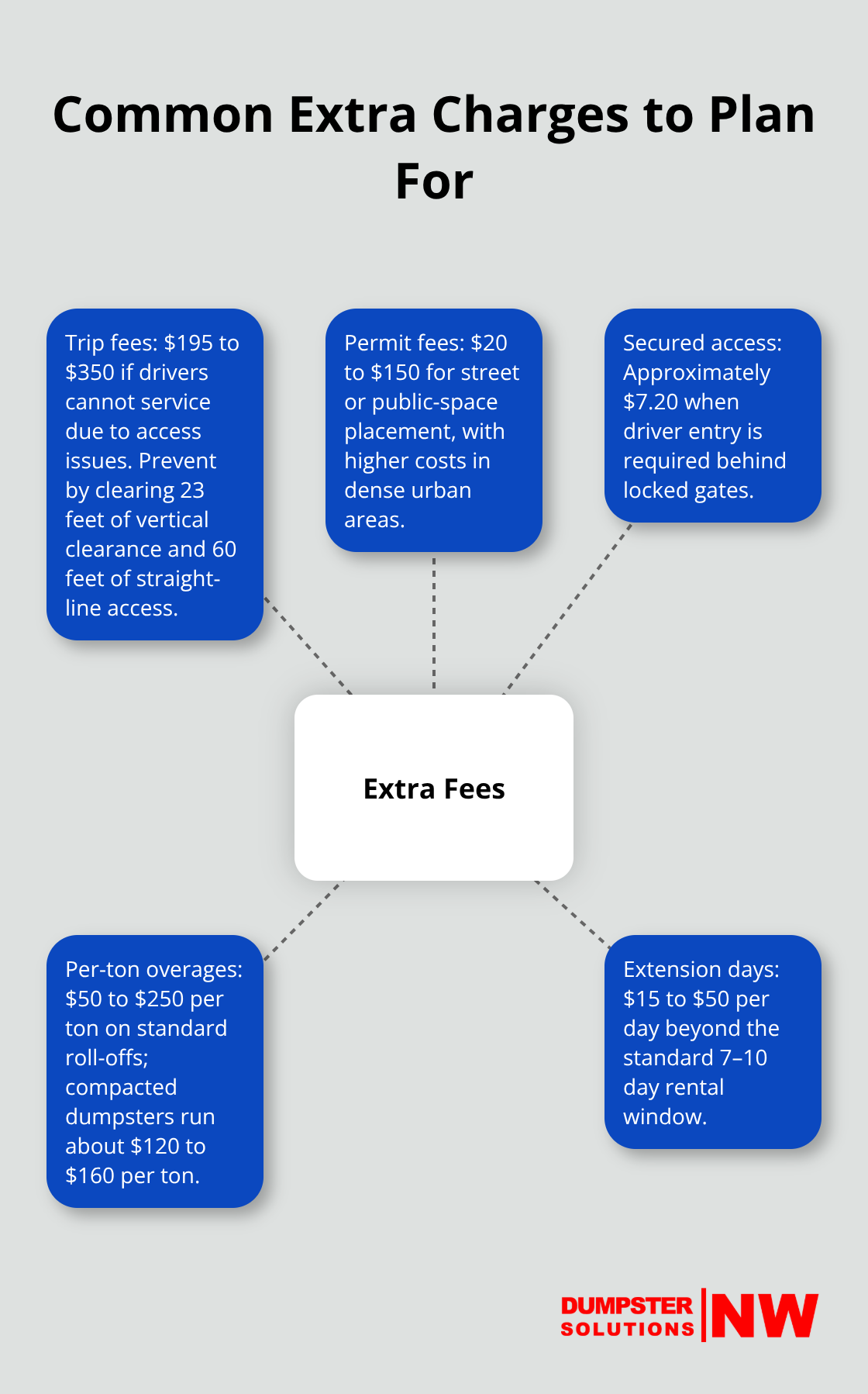
Weight limits are the primary culprit behind surprise bills that arrive weeks after your dumpster pickup. Your dumpster includes a weight allowance-typically 10 tons for standard roll-off containers-but the landfill scales your load before and after use. Exceed that limit and you’ll face overage charges of $50 to $250 per ton, depending on your location and disposal facility. Seattle Public Utilities charges per-ton overages on compacted dumpsters that range from roughly $120 to $160 per ton based on 2026 pricing.
The problem intensifies with heavy materials. A 20-yard dumpster filled with concrete, brick, or roofing shingles hits weight limits while appearing only partially full. Soil, asphalt, and demolition debris load even faster. Many renters misjudge capacity based on visual fill rather than actual tonnage. If your project involves these materials, request a weight estimate from your provider before rental. Overage charges appear on invoices 30 to 120 days after pickup once the landfill processes weight tickets-a delayed surprise that catches budget-conscious renters off guard.
Delivery and Pickup Fees Add Up Quickly
Delivery and pickup fees add another layer beyond your base rental price. Trip fees of $195 to $350 apply when drivers cannot complete scheduled service due to site conditions. Blocked driveways, parked cars, low overhead clearance, or soft ground trigger these charges within 30 days of final pickup. Clear your delivery site beforehand to prevent trip fees entirely: move vehicles, remove obstacles, open gates, and confirm 23 feet of vertical clearance and at least 60 feet of straight-line access.
Permits required for street or public-space placement cost $20 to $150 depending on your city and property location. Seattle and other urban centers charge higher permit fees than outlying areas like Puyallup or Auburn. Secured building access fees of approximately $7.20 (as of 2026) apply if your dumpster sits behind locked gates requiring driver entry.
Extension Costs Extend Your Budget
Extensions beyond your standard 7 to 10-day rental period cost $15 to $50 daily, which adds $105 to $350 for a two-week project. Plan your timeline aggressively and request written quotes that itemize all potential charges-delivery, pickup, permits, weight limits, and extension rates-before committing. This approach prevents unexpected costs from derailing your project finances.
Final Thoughts
Dumpster rental pricing compounds quickly when you ignore the variables that extend beyond your base rate. Size, location, weight limits, rental duration, and waste type all shift your final bill, and understanding how much dumpsters cost to rent requires accounting for delivery fees, permits, extensions, and overage charges upfront. Request a line-item quote that breaks down every potential cost-delivery, pickup, weight limits, extension rates, and location-specific surcharges-so you can compare providers accurately and eliminate surprises that arrive weeks after pickup.
State your debris type explicitly, estimate weight alongside volume, and confirm your delivery site meets access requirements (23 feet of vertical clearance and 60 feet of straight-line space). Provide your exact address so your provider accounts for regional disposal fees and landfill tipping costs specific to your area. Ask whether your quote includes all potential charges or if additional fees might apply after the dumpster leaves your property.
We at Dumpster Solutions NW deliver transparent pricing without hidden fees across the Seattle and Puget Sound region with sizes ranging from 10 to 40 yards. Contact Dumpster Solutions NW for a straightforward quote that keeps your project on budget and on schedule, whether you’re handling a garage cleanout or a major renovation.
Disclaimer: The information provided in this blog is for general informational purposes only and does not constitute legal, financial, or insurance advice. Coverage options, terms, and availability may vary. Please consult with a licensed professional for advice specific to your situation