
Yard waste piles up fast, especially in Washington State where spring and fall bring endless leaves and branches. We at Dumpster Solutions NW know that most property owners struggle with what to do with all that debris.
The best practices for yard waste disposal aren’t complicated, but they do make a real difference for your property and the environment. This guide walks you through sorting, disposal methods, and why proper management matters.
Sort and Prepare Your Yard Waste First
Separate Materials Into Three Piles
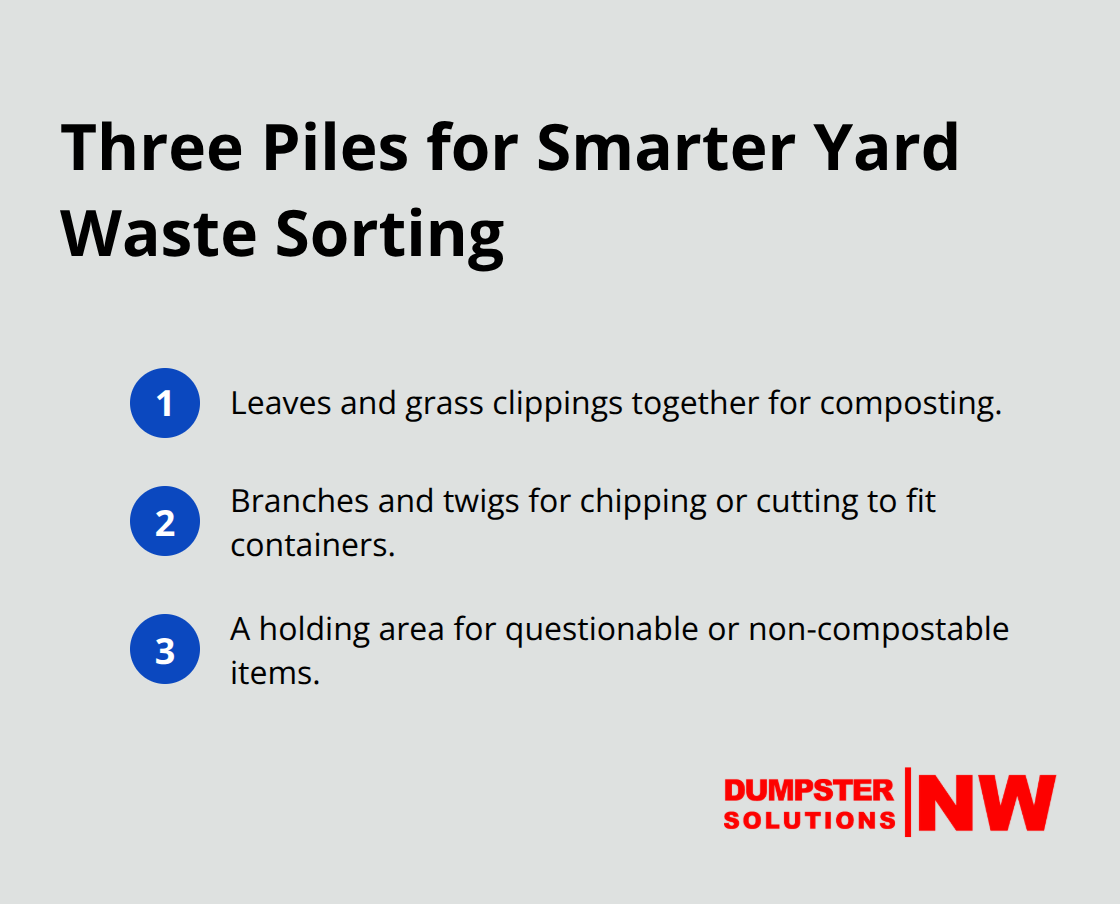
Sorting yard waste before disposal saves time, money, and headaches down the road. The mistake most property owners in Washington make is dumping everything together, which limits disposal options and often costs more. Leaves, branches, and grass clippings break down at different rates and require different handling methods, so separating them upfront opens up better choices. Leaves and grass clippings work well for composting, while branches need chipping or breaking into smaller pieces to fit standard disposal containers. Start with three separate piles in your yard or driveway: one for leaves and grass clippings, one for branches and twigs, and a holding area for anything questionable that shouldn’t be there.
Remove Non-Compostable Materials First
Non-compostable materials like plastic bags, rocks, treated wood, and metal hardware must go before anything else. These items contaminate compost, damage equipment, and violate most local disposal regulations in Washington communities. Scan for plastic yard waste bags (use paper bags instead), metal stakes and cages, rocks and soil, diseased plant material, and any wood treated with preservatives or paint. All of these must go to regular trash or hazardous waste facilities depending on local rules.
Break Down Large Debris Into Manageable Pieces
Breaking down large debris into manageable pieces is essential, especially if you’re renting a dumpster or hauling to a local facility. Branches thicker than your wrist should be cut down to 3- to 4-foot lengths so they pack efficiently and don’t stick out of the container. Oversized items take up disproportionate space and can cause spillage during transport, which creates safety hazards and additional fees. A basic hand saw or electric reciprocating saw cuts the work time significantly compared to breaking branches by hand. Leaves and grass clippings compact easily, so pile them loosely rather than cramming them down, which actually slows decomposition if composting or delays processing at municipal facilities.
With your materials sorted and sized appropriately, you’re ready to explore the disposal methods that work best for your situation and property size.
Choosing the Right Disposal Method for Your Situation
Composting Transforms Yard Waste Into Garden Gold
Composting works best if you have moderate amounts of leaves and grass clippings and space in your yard. You’ll transform that organic material into nutrient-rich soil within several months instead of paying disposal fees. The EPA notes that composting diverts yard waste from landfills, which matters because food waste in landfills produces methane-a greenhouse gas significantly more warming than CO2. To start composting effectively, layer brown materials like dried leaves with green materials like grass clippings in a roughly 2-to-3:1 ratio, keep the pile moist, and turn it occasionally. Your compost reaches usable quality when it heats to about 160°F, cools down, turns dark brown, and breaks into soil-like particles, typically after several months depending on weather and how often you turn it.
Municipal Programs Offer Free or Low-Cost Options
If composting feels like too much work or you lack yard space, check whether your local Washington community offers municipal yard waste pickup or drop-off programs. Cities like Seattle, Tacoma, and Bellevue operate curbside collection on specific days or accept bagged yard waste at designated facilities, often free or for a modest fee. You’ll need to verify what materials your specific community accepts and whether they require paper bags instead of plastic. This option works well for smaller cleanup projects where you don’t need immediate removal.
Dumpster Rentals Handle Large Projects Efficiently
For larger cleanup projects, storm damage, or landscaping renovations where you’re dealing with substantial volumes, renting a dumpster is the most practical solution. Dumpster Solutions NW provides hassle-free dumpster rentals throughout the Seattle and Puget Sound region with sizes ranging from 10 to 40 yards, so you can pick the container that actually fits your debris volume instead of overpaying for space you won’t use. A typical one-week rental handles most residential yard cleanup projects, and our flat-rate pricing means no surprise charges.
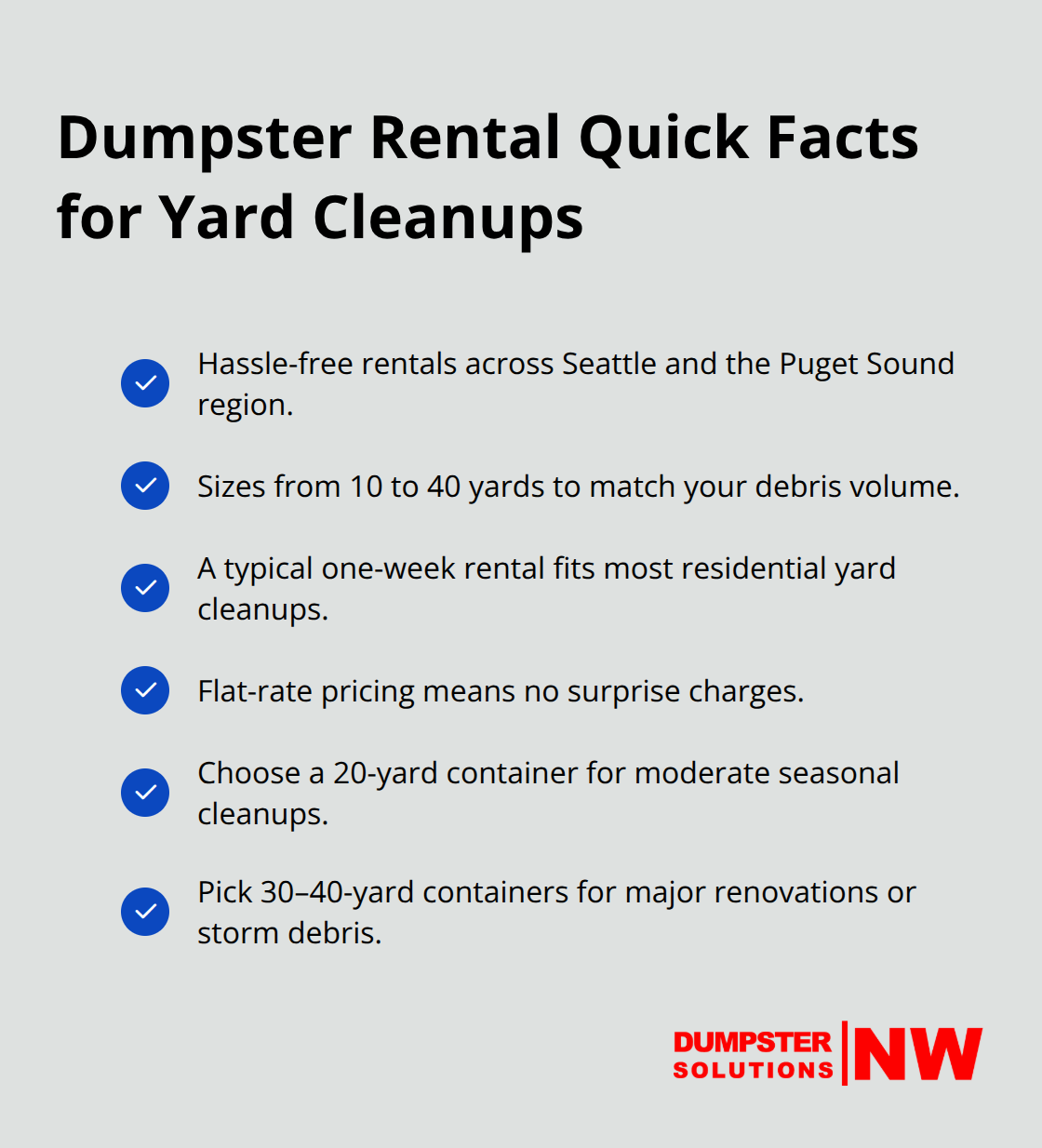
The 20-yard option works well for moderate spring or fall cleanups on average residential properties, while the 30 and 40-yard sizes handle major renovations or storm debris.
Speed and Convenience Save Time and Physical Strain
Renting a dumpster offers real advantages over other methods. You pack debris at your own pace without coordinating pickup schedules or making multiple trips to municipal facilities. Simply fill the container, call for pickup, and we handle the hauling and responsible disposal. This approach saves time and eliminates the physical strain of hauling heavy branches and packed leaves yourself, which matters significantly if you’re managing a large property or dealing with storm damage that left piles of broken limbs across your yard. Once you’ve selected your disposal method, understanding the environmental impact of your choice helps you make decisions that benefit both your property and the community.
Why Proper Yard Waste Disposal Matters for Your Community
Landfill Methane Creates a Real Climate Problem
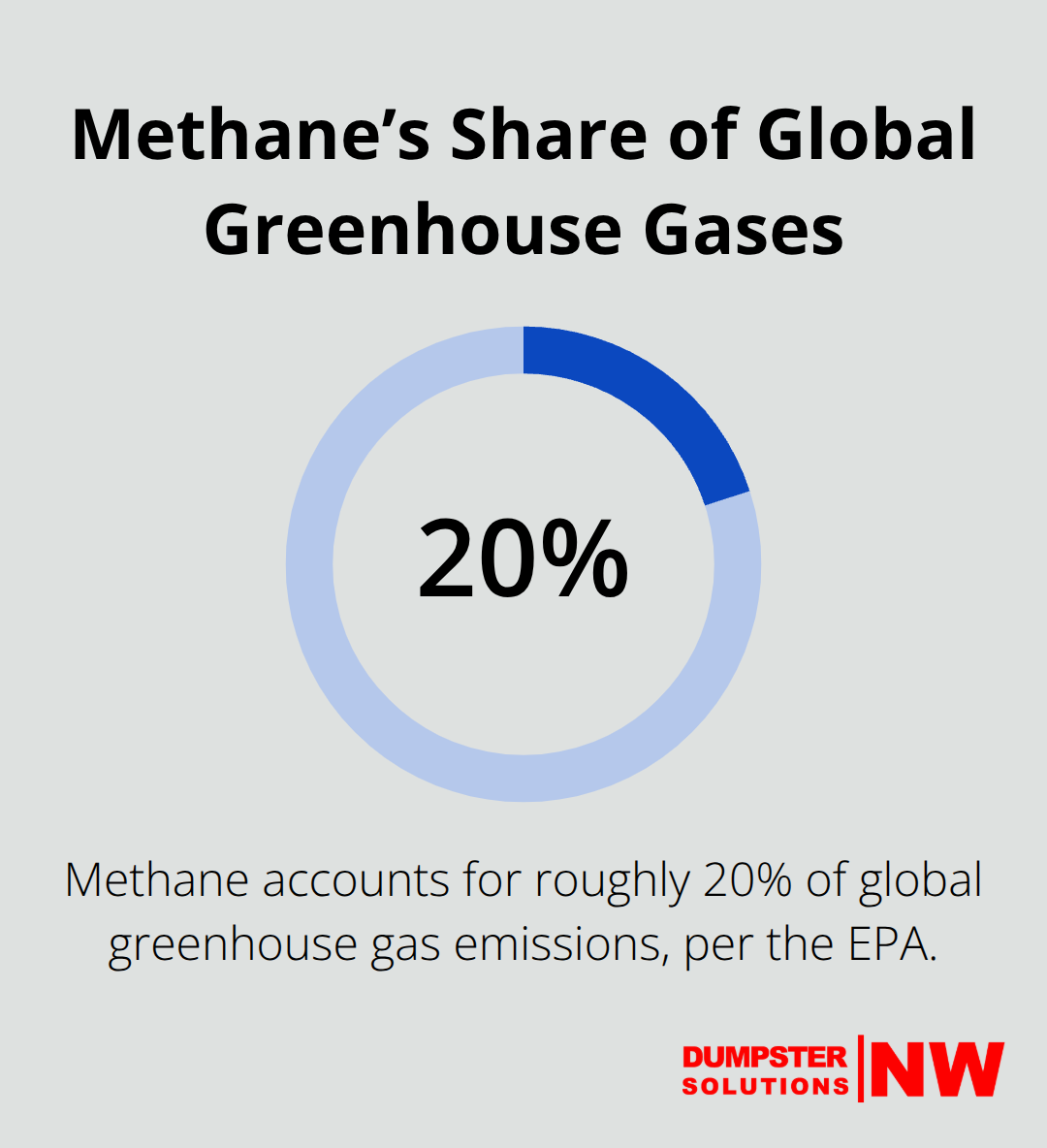
Yard waste in landfills produces methane at rates that most property owners never consider when they toss debris into regular trash. The EPA reports that methane accounts for roughly 20% of global greenhouse gas emissions and contributes significantly to warming Earth.
When yard waste decomposes in landfills without oxygen, it produces methane at an accelerated rate compared to composting or mulching where organic material breaks down with air exposure. In Washington State, where fall leaf cleanup alone generates enormous volumes of debris across communities like Seattle, Tacoma, and Bellevue, choosing responsible disposal methods directly reduces regional methane production. Composting yard waste at home or selecting a disposal service that transports debris to composting facilities instead of landfills prevents this greenhouse gas formation entirely.
Compost Improves Your Soil and Saves Money
Compost delivers practical benefits you’ll see and use immediately on your property. This material provides soil structure, moisture retention, and essential nutrients that support healthier plants while reducing your need for commercial fertilizers (which saves money and cuts chemical runoff into local water systems). A mature compost pile generates soil-like material within several months that you spread around trees, shrubs, and garden beds to improve drainage, suppress weeds, and cool root systems during hot Washington summers. Property owners who compost also reduce the total volume they need to dispose of through other methods, which means smaller dumpster rentals or fewer municipal pickup trips.
Community-Wide Composting Strengthens Local Programs
When residents throughout Washington communities embrace composting and proper waste disposal, local waste management facilities process less contaminated material and operate more efficiently. Municipal programs across the region increasingly prioritize diverting organic waste from landfills because composted material returns to local soil instead of creating greenhouse gas emissions. This approach supports regional waste reduction goals and community environmental commitments. The choice between tossing everything into a dumpster destined for landfill versus selecting composting or municipal programs that prioritize organic recycling isn’t just better for the environment-it’s the only choice that makes sense when you understand the climate impact.
Final Thoughts
Proper yard waste disposal starts with sorting and preparation, then moves through selecting the right method for your situation. Composting reduces disposal costs while building soil that supports healthier plants, municipal programs offer convenient options for smaller cleanups, and dumpster rentals handle large projects efficiently without the physical strain of hauling debris yourself. When you choose responsible disposal methods instead of sending everything to landfills, you directly reduce methane emissions that contribute to climate change.
Your next step depends on your cleanup scale and what works best for your property. For moderate amounts of leaves and grass clippings, start a compost pile or check whether your local Washington community offers curbside pickup. For larger projects-storm damage, landscaping renovations, or major spring and fall cleanups-renting a dumpster removes the guesswork and handles everything in one efficient process.
We at Dumpster Solutions NW make yard waste disposal straightforward with transparent pricing, same-day or next-day delivery, and dumpster sizes ranging from 10 to 40 yards. Contact Dumpster Solutions NW to get a quote and schedule your rental, or reach out directly to discuss which size fits your project. Managing yard waste responsibly protects your property, supports your community’s environmental goals, and costs less than you might expect.
Disclaimer: The information provided in this blog is for general informational purposes only and does not constitute legal, financial, or insurance advice. Coverage options, terms, and availability may vary. Please consult with a licensed professional for advice specific to your situation