
Managing multiple jobsite dumpsters isn’t just about having enough containers on-site. It’s about coordinating pickups, tracking waste types, and keeping costs under control across your entire project.
We at Dumpster Solutions NW work with construction teams throughout Washington State who juggle several dumpsters at once. The difference between chaos and smooth operations comes down to planning, placement, and monitoring.
Planning and Sizing Multiple Dumpsters for Your Project
Assess Total Waste Volume and Types of Material
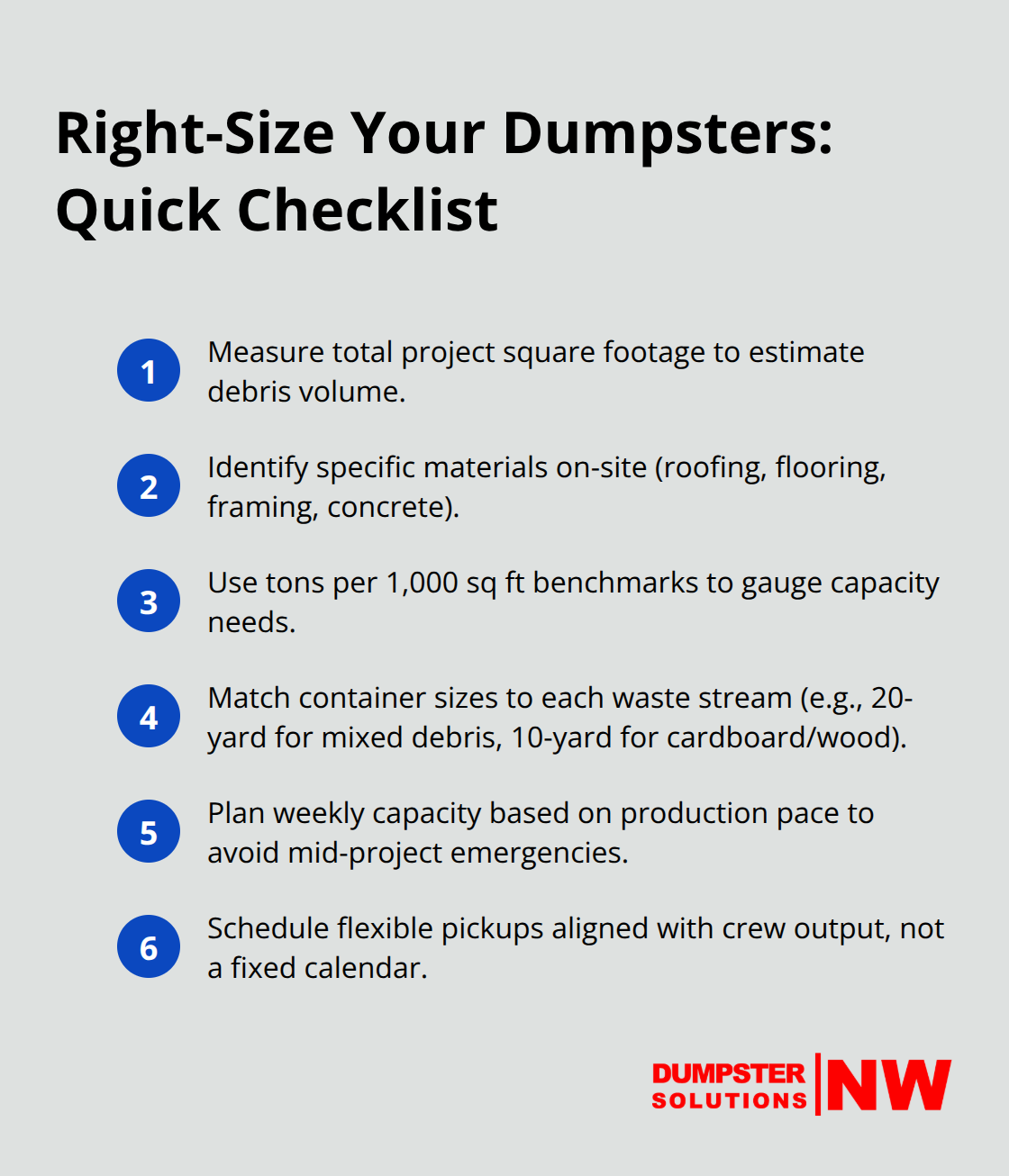
Start by measuring your project scope in square footage and identifying exactly what materials you’ll handle. A 5,000-square-foot demolition generates vastly different waste volumes than a 5,000-square-foot renovation. Demolition projects produce roughly 4 to 8 tons of debris per 1,000 square feet, depending on building age and construction type. Renovations typically run 2 to 4 tons per 1,000 square feet. New construction generates less overall waste but demands separate streams for cardboard, wood scraps, and metal. Walk your jobsite and document what’s actually there-old roofing, flooring, framing, concrete-rather than guessing. This assessment directly determines how many dumpsters you need and prevents the costly mistake of undersizing your containers and paying for emergency pickups mid-project.
Match Container Sizes to Your Waste Stream
Most jobsites benefit from a mix of sizes rather than identical containers. A 20-yard dumpster works well for general demolition and mixed debris, while 10-yard containers suit source-separated materials like cardboard or clean wood. Forty-yard dumpsters make sense only for massive projects with continuous high-volume output. The math is straightforward: if you generate 8 tons over a 4-week project, you need roughly 2 tons of capacity per week. Two 20-yard dumpsters-each holding about 4 to 5 tons-gives you flexibility to swap out full containers without project delays. Right-sizing your dumpster selection matters because heavy materials like concrete and brick fill containers faster than lightweight cardboard, so pairing a smaller dumpster for dense waste with larger containers for bulky items keeps your workflow efficient.
Schedule Pickups Around Your Actual Work Pace
Coordinate pickup timing with your crew’s production schedule, not a generic calendar. If your demolition crew removes 2 tons daily, a 20-yard dumpster fills in roughly 10 days. Schedule pickups for day 9, not day 14, to avoid overflow and the associated overage charges that can hit 50 percent above your base rental cost. For projects spanning 8 weeks or longer, rotating pickups every 10 to 14 days keeps costs predictable and prevents the bottleneck of a full dumpster halting work. Weather also matters-rain slows demolition in some phases, so build flexibility into your pickup schedule rather than locking in fixed dates months ahead. Adjusting your schedule as the project evolves prevents unnecessary delays and keeps your team productive.
Organizing Placement and Workflow on the Jobsite
Designate Specific Zones for Different Waste Types
Placement determines whether your crew works efficiently or wastes time hauling debris across the site. Position each dumpster within 50 feet of where the waste originates-not 100 feet away in a corner that seemed convenient during planning. A demolition crew removing framing on the second floor shouldn’t have to carry materials down two flights and across the lot to reach a dumpster. That’s lost productivity multiplied across weeks.
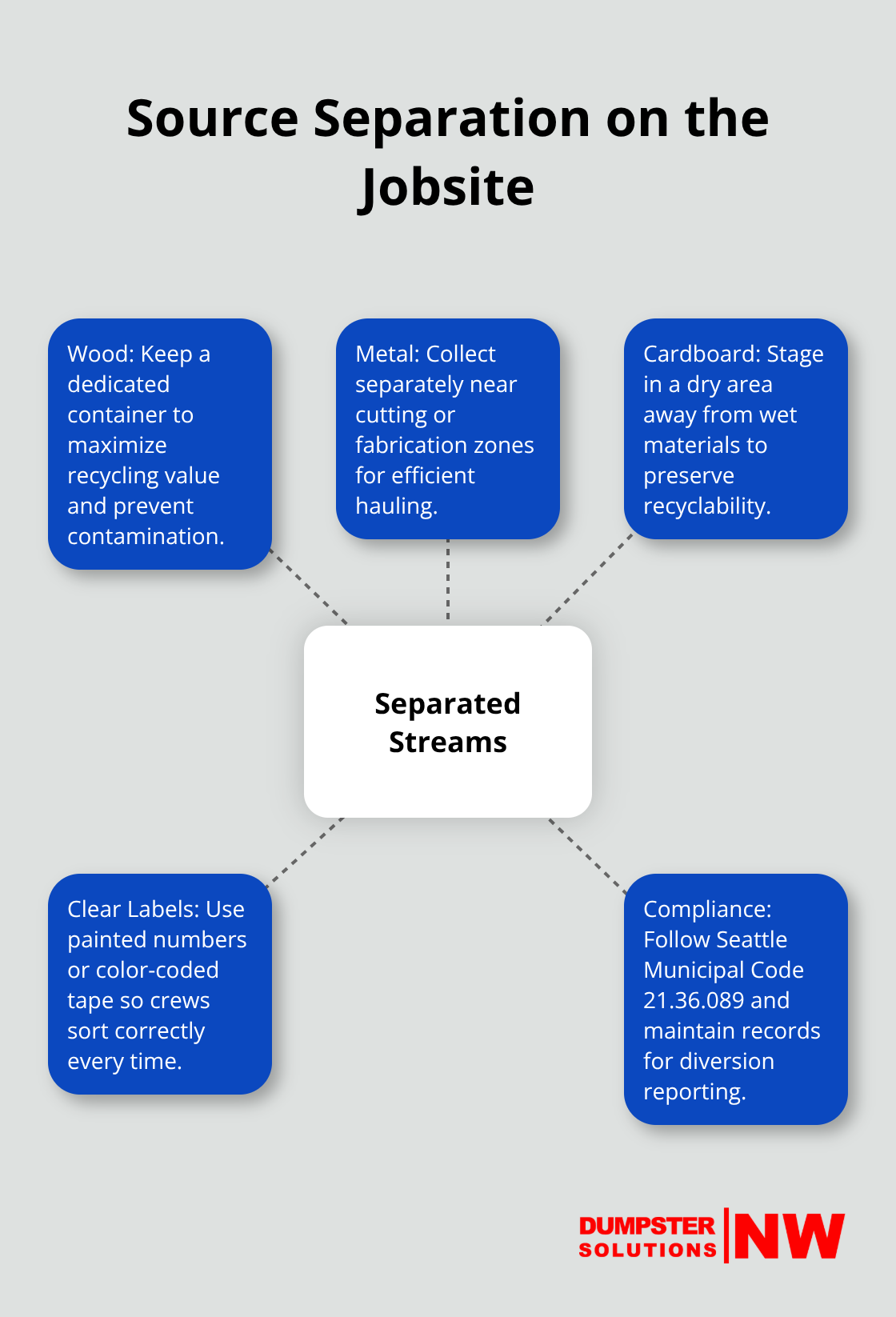
Source separation directly reduces your disposal costs and simplifies waste diversion reporting, especially for demolition projects requiring a Waste Diversion Report under Seattle Municipal Code 21.36.089. Keep your wood dumpster separate from your metal container, and maintain a dedicated cardboard bin away from wet materials that compromise recycling value. Label each dumpster clearly with painted numbers or color-coded tape so your crew knows exactly which container accepts which materials.
Position Dumpsters for Easy Access and Safety
Measure your jobsite layout and mark zones before delivery. Place your general debris dumpster closest to the main work area, position source-separated containers (wood, metal, cardboard) near secondary work zones, and keep concrete or heavy material dumpsters on reinforced ground that won’t sink or create drainage problems. Soft ground or asphalt that hasn’t been properly prepared will shift under a loaded 40-yard dumpster, creating safety hazards and access problems. Pour temporary pads or place plywood under dumpster feet on sensitive surfaces to prevent settling.
Ensure each dumpster has a clear 3-foot clearance on all sides for pickup equipment, and never position containers where they’ll block emergency exits, fire lanes, or equipment access routes. Seattle jobsites fall under Seattle Municipal Code requirements for site safety, so verify your placement doesn’t violate local regulations before material arrives. If you’re managing dumpsters across multiple buildings or floors, assign crew members specific drop-off points to prevent confusion and contamination of separated waste streams.
Coordinate Logistics Between Multiple Locations
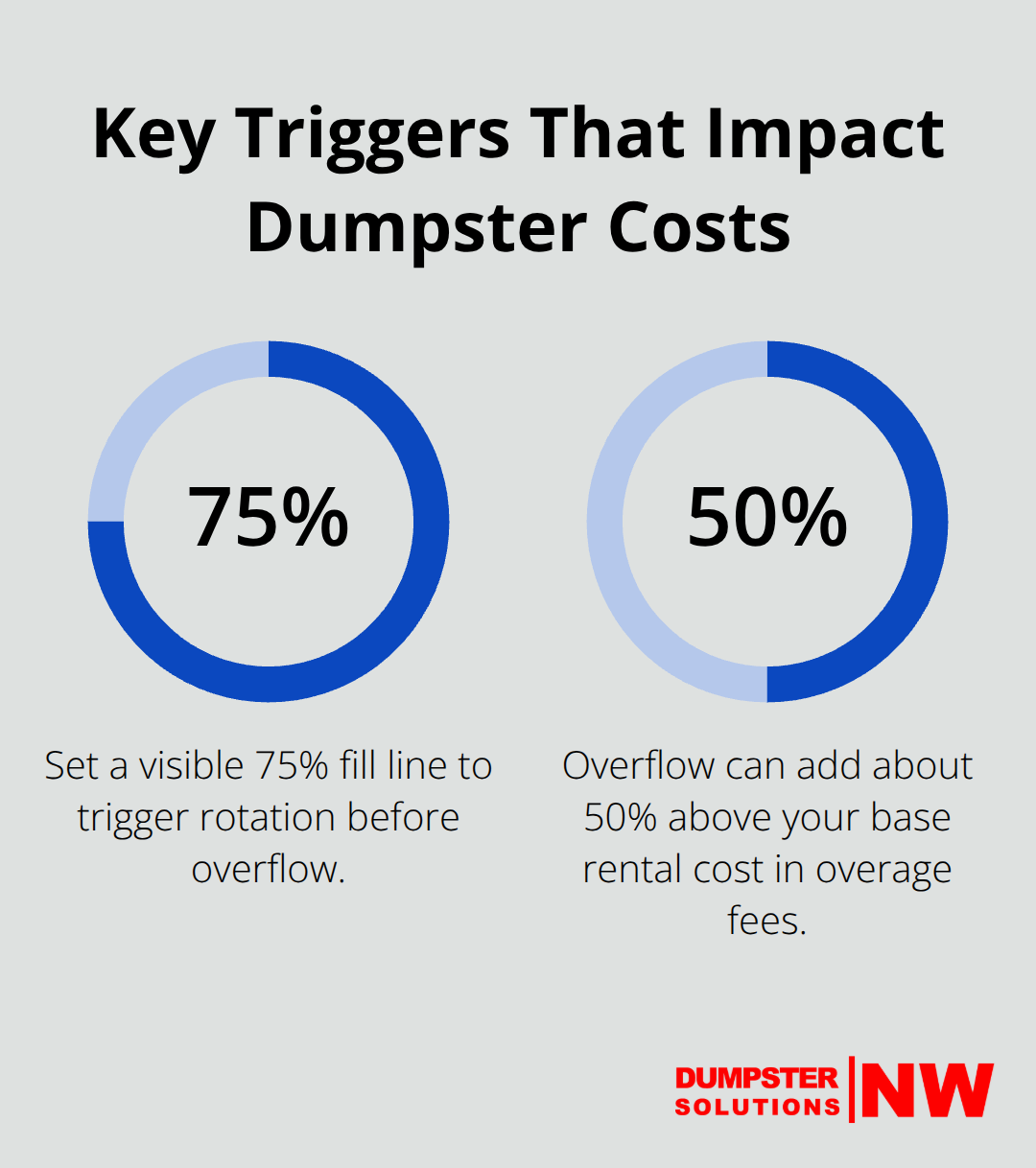
Coordinate pickups across all dumpsters to optimize hauler routes and reduce per-load costs. If you’re managing five separate dumpsters filling at different rates, scheduling them all for pickup on the same day cuts your delivery fees and reduces site disruption. Track fill levels weekly-mark containers at 75 percent capacity so you can schedule pickups before overflow occurs.
Many projects fail to account for the fact that concrete and brick fill a 20-yard dumpster in half the time of mixed framing debris. Rotate smaller containers for dense materials and reserve larger dumpsters for bulky, lightweight waste. Document which dumpster holds what material and when you picked it up. This record supports your compliance and protects you against audits. If your project spans multiple locations or phases, maintain a pickup calendar visible to your entire crew so nobody orders unnecessary emergency removals.
With your dumpsters positioned strategically and your waste streams organized, the next critical step involves tracking fill levels, monitoring compliance, and controlling costs throughout your project lifecycle.
Tracking, Monitoring, and Cost Control
Document Fill Levels and Schedule Pickups Strategically
Track dumpster fill levels weekly using a simple spreadsheet or photo log tied to your pickup schedule. Mark each container at the 75 percent capacity line with spray paint or tape so your crew alerts you when rotation becomes necessary. This prevents the costly mistake of overflow, which triggers overage fees averaging 50 percent above your base rental cost according to industry standards.
Create a pickup calendar visible to your entire team showing which dumpsters fill fastest and when rotations occur. For dense materials like concrete and brick, a 20-yard dumpster reaches capacity in 7 to 10 days, while bulky framing debris might take 14 to 21 days. Track actual fill dates against your projections weekly to catch problems early. If a dumpster fills faster than expected, you’ll have time to schedule an early pickup rather than paying emergency removal fees.
Maintain Records for Compliance and Audits
Keep weight tickets or pickup receipts organized by material type and dumpster number. This documentation becomes critical if your project requires a Waste Diversion Report under Seattle Municipal Code 21.36.089, which mandates that demolition projects and new construction submit detailed diversion records within 60 days of final inspection approval. The SPU may audit your records, so maintain clear pickup dates, material descriptions, and receiving facility information to protect yourself against penalties for non-compliance.
Enforce Source Separation to Meet Disposal Bans
Seattle disposal bans prohibit placing asphalt paving, bricks, concrete, metal, cardboard, new construction gypsum, and untreated wood in standard landfill dumpsters, so source-separated streams aren’t optional-they’re regulatory requirements. Position your separated material dumpsters near work zones and label them explicitly to prevent contamination that forces entire loads into disposal instead of recycling. Assign one crew member responsibility for verifying that each dumpster receives only approved materials before pickup.
Coordinate Pickups and Monitor Spending
If your project spans multiple phases or locations, coordinate all pickups on the same day to reduce per-load delivery fees and site disruption. Contact your hauler weekly with fill-level updates rather than waiting for containers to overflow, which demonstrates planning and often qualifies for scheduling discounts. Monitor your actual spending against your initial estimate by tracking the number of pickups, material types, and any overage charges. Projects that undershoot their dumpster budget typically separated waste streams effectively and scheduled pickups ahead of overflow, while those that exceed budget often paid emergency fees or failed to rotate containers appropriately for different material densities.
Final Thoughts
Managing multiple jobsite dumpsters successfully hinges on three core practices: sizing containers to match your actual waste output, positioning them strategically within 50 feet of work zones, and tracking fill levels weekly to prevent costly overages. The teams we work with at Dumpster Solutions NW across Washington State-from Seattle to Tacoma to Bellevue-consistently report that projects run smoother when they plan pickups around their crew’s production schedule rather than arbitrary calendar dates. A demolition crew removing 2 tons daily needs a pickup scheduled for day 9, not day 14, to avoid the 50 percent overage fees that derail budgets.
Proper organization delivers measurable benefits beyond cost control. Source-separated waste streams reduce your disposal costs and simplify compliance with Seattle’s disposal bans and Waste Diversion Report requirements. When you label dumpsters clearly and position them near their respective work zones, your crew wastes less time hauling materials and stays productive.
The difference between a project that stays on budget and one that spirals into emergency fees comes down to planning before material arrives. Walk your jobsite, measure square footage, identify waste types, and calculate realistic pickup schedules based on your crew’s actual pace. Contact Dumpster Solutions NW to arrange 10, 20, 30, and 40-yard dumpsters throughout the Seattle and Puget Sound region with transparent, flat-rate pricing and same-day or next-day delivery for your multiple jobsite dumpsters.
Disclaimer: The information provided in this blog is for general informational purposes only and does not constitute legal, financial, or insurance advice. Coverage options, terms, and availability may vary. Please consult with a licensed professional for advice specific to your situation