
Construction waste management can make or break your project timeline. When contractor site disposal needs aren’t handled properly, delays pile up fast and costs spiral.
We at Dumpster Solutions NW have seen firsthand how the right waste management strategy keeps jobs running smoothly across the Puget Sound region. This guide shows you exactly how to handle on-site disposal without derailing your schedule.
Why Your Job Site Wastes Time and Money on Disposal
Construction debris accumulates faster Than You Plan
Most contractors underestimate how quickly debris piles up on job sites. Kitchen renovations generate 2-3 cubic yards per linear foot of cabinetry plus 3-4 cubic yards per 40 square feet of flooring, yet many crews don’t arrange proper disposal until the pile becomes unmanageable. When debris sits on-site without a plan, workers waste 15 to 20 minutes daily navigating around waste instead of completing actual work. Accumulated debris also creates safety hazards-tripping risks, blocked exits, and unstable piles that endanger your team and expose you to liability.
Poor Planning Drives Up Costs and Delays
Scrambling for last-minute dumpster rentals drives up costs and often results in smaller containers that require multiple pickups. Seattle’s construction and demolition recycling rules add another layer of complexity. The city requires readily recyclable materials like wood, metal, concrete, and cardboard to be collected separately, which means you either comply with proper sorting or face fines. If you don’t designate your containers correctly before work starts, you’ll spend hours re-sorting materials or pay surcharges for contaminated loads.
Hazardous Materials Demand Advance Planning
Regulatory compliance turns into a money pit when contractors skip the planning phase. Asbestos, lead, and other hazardous materials in older buildings demand EPA notification at least 10 working days before demolition-miss that deadline and your entire project stalls. The site owner remains legally responsible for hazardous waste disposal, even if contractors or waste services handle the actual removal, which means you need verified, qualified partners.
Weather and Weight Limits Create Hidden Costs
Rain adds significant weight to debris, which can push loads over the 14,000-pound limit on debris boxes, forcing expensive off-loading at your cost. Without solid-lid containers or tarps, your disposal costs spike while your timeline slips.
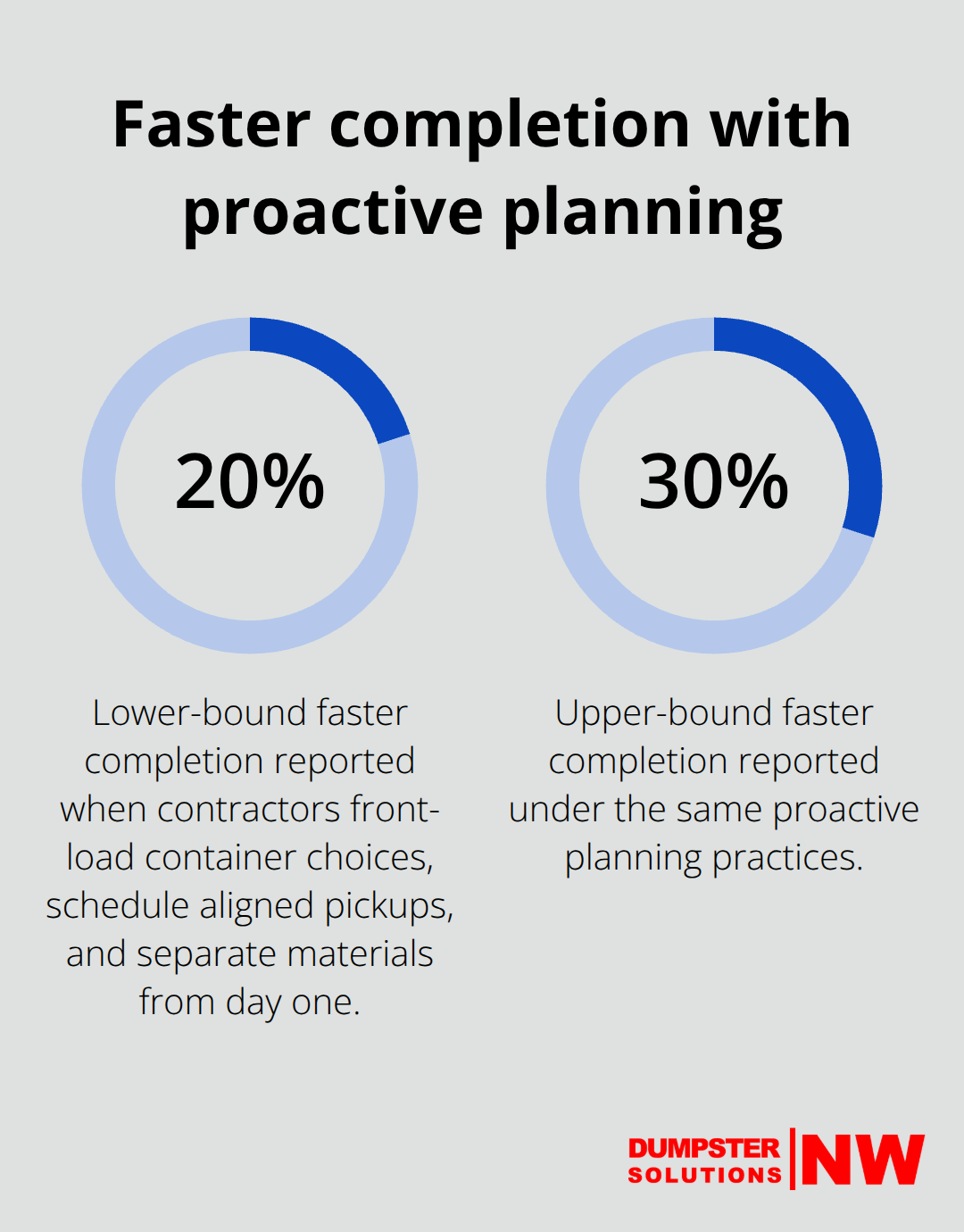
Contractors who front-load these decisions (choosing the right dumpster size upfront, scheduling pickups that sync with your work phases, and separating materials from day one) report 20 to 30 percent faster project completion because crews stay focused on work instead of managing chaos. The next section shows you exactly how to implement these strategies on your job site.
How to Size, Schedule, and Sort Your Waste
Choose the Right Container Size for Your Project
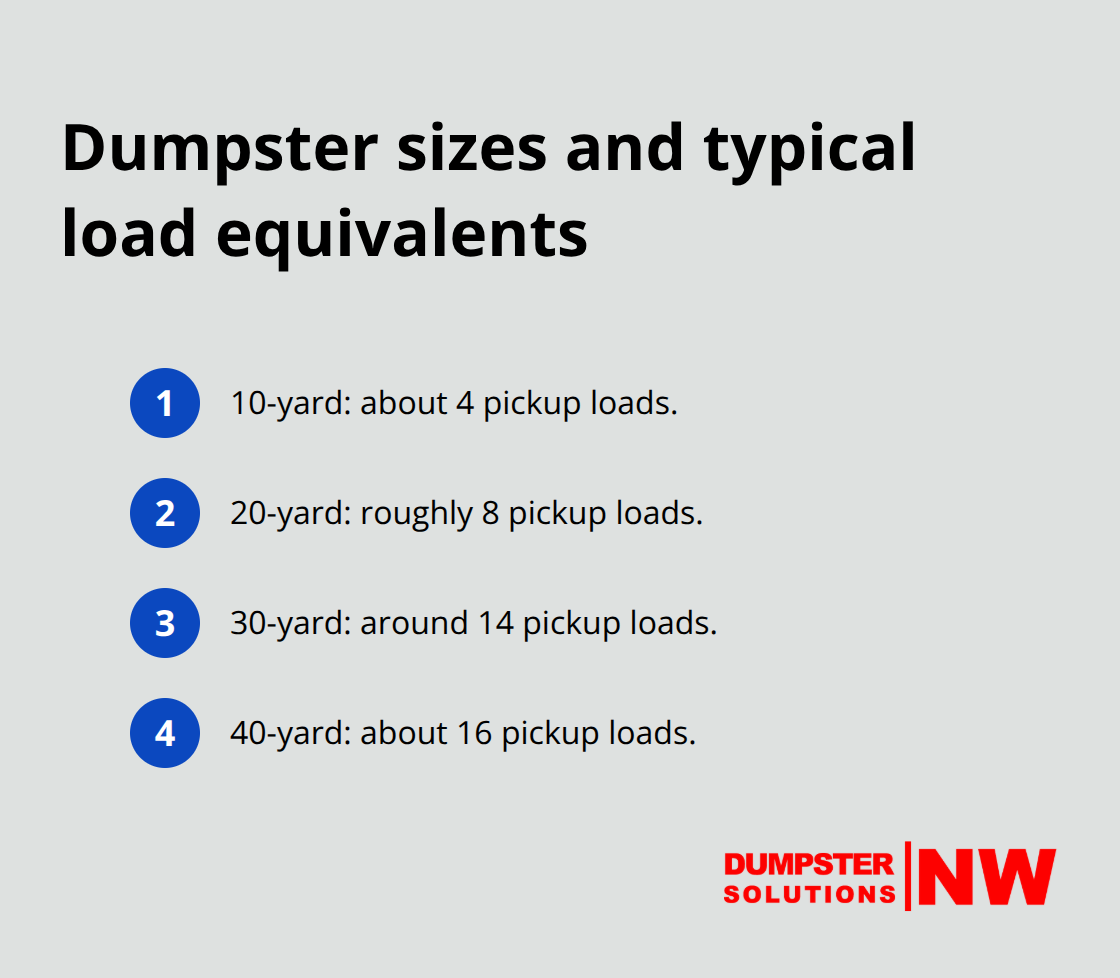
A 10-yard dumpster holds about 4 pickup loads and works well for small kitchen remodels or bathroom renovations where debris stays manageable. A 20-yard fits roughly 8 loads and handles moderate roofing projects or whole-home cleanouts without requiring multiple hauls. For larger renovations, a 30-yard holds around 14 loads, while a 40-yard accommodates 16 loads and tackles major construction debris from extensive remodels or demolition work. Most contractors make the mistake of choosing too small-they think they’ll save money upfront, then pay premium rates for emergency pickups mid-project.
Oversizing by one category costs less than scrambling for a second container when your timeline tightens.
Measure Your Space Before You Order
A typical 20-yard dumpster measures about 22 feet long by 8 feet wide by 4 feet high, and a 40-yard runs 22 feet long by 8 feet wide by 8 feet high. Measure your driveway or project space before ordering to confirm the container fits. If space is tight on your property, Seattle allows placement on the street with a permit from the Street Use Permit Counter at 206-684-5283. This simple step prevents costly delays when delivery arrives and your crew realizes the container won’t fit.
Align Pickups With Your Work Phases
Scheduling pickups around your work phases keeps crews productive and prevents the debris-pile chaos that kills timelines. Request pickup dates that align with major work transitions-after framing is complete, after roofing, after interior demolition-rather than waiting until the container is completely full. A 7-day rental window gives you time to plan, but don’t assume you need the full week; coordinate with your crew’s pace so debris removal happens when work naturally slows.
Protect Against Weight Overages and Weather
Containers have a strict 14,000-pound limit, and rain adds significant weight fast. Use solid-lid containers or tarps on rainy days in the Seattle area to prevent overages that force expensive off-loading at your cost. Weight matters enormously because exceeding limits derails your budget and schedule simultaneously.
Separate Materials to Meet Local Recycling Rules
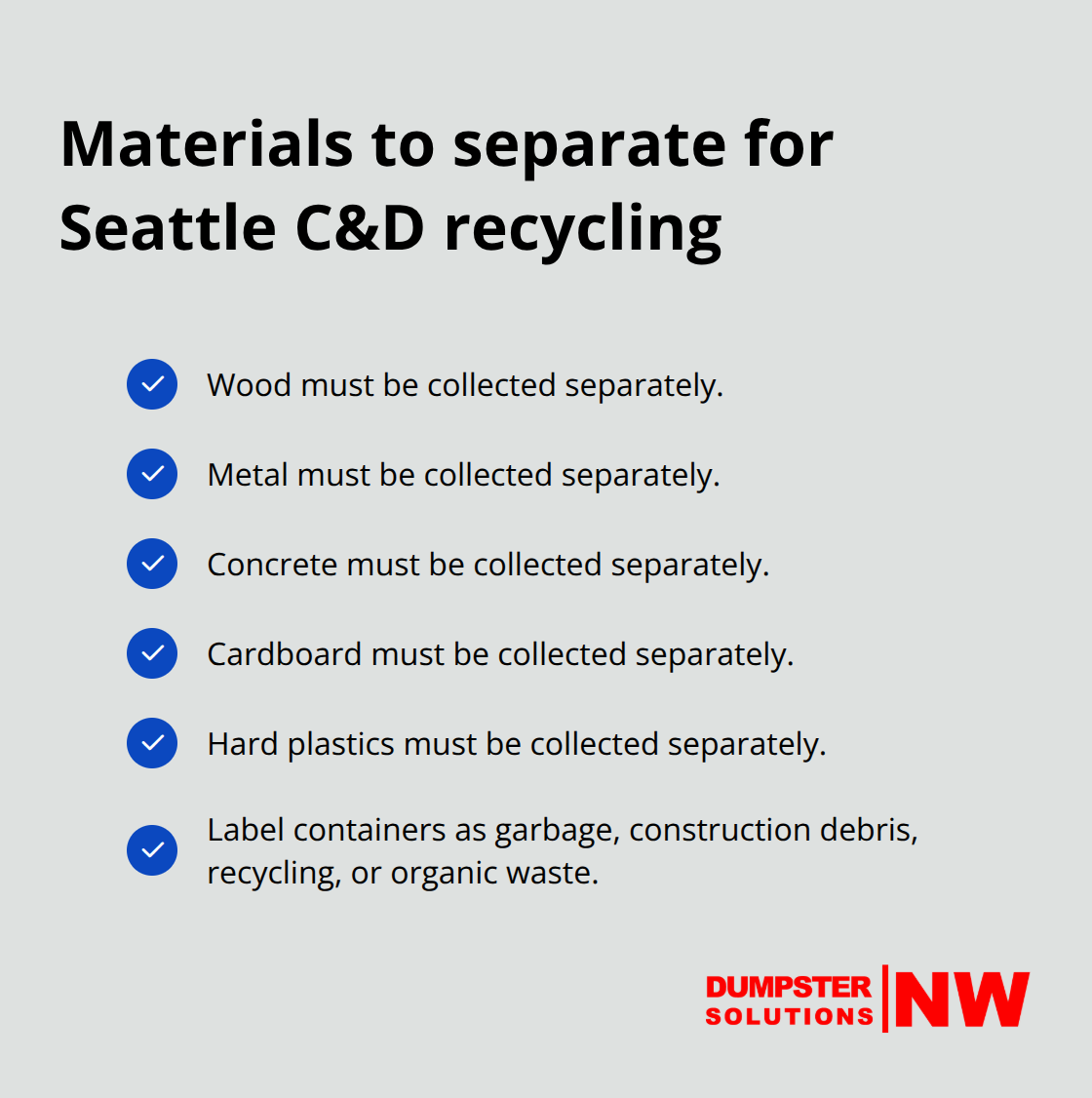
Construction and demolition recycling rules require wood, metal, concrete, cardboard, and hard plastics to be collected separately from general debris. Designate your containers at rental time as garbage, construction debris, recycling, or organic waste so the hauler knows exactly where materials go. This single step eliminates re-sorting on-site and avoids contamination surcharges that spike your final bill. Proper material separation from day one transforms your disposal process from a source of friction into a streamlined operation that supports both your budget and your schedule.
Why Speed and Transparency Matter on Your Timeline
Fast Delivery Keeps Your Crew Productive
Same-day or next-day delivery across the Seattle and Puget Sound region means your crew doesn’t wait around for a container to arrive-they start loading debris immediately after a work phase ends. This speed matters because every day a dumpster sits empty costs you productivity, and every day debris piles up without a removal plan forces workers to navigate around obstacles instead of completing tasks. When your team can move waste off-site quickly, they stay focused on the work that actually moves your project forward.
Transparent Pricing Eliminates Budget Surprises
We at Dumpster Solutions NW focus on transparent, flat-rate pricing so you know exactly what you’ll pay before work begins. No hidden fees appear on your final invoice, no surprise surcharges sneak in after pickup, and no guessing games about total cost. This clarity lets you budget accurately and prevents the budget overruns that plague contractors who work with services that nickel-and-dime them for weight overages, late fees, or contamination charges. When you understand your costs upfront, you control your project finances instead of reacting to unexpected bills.
Dumpster Sizes Match Any Project Scope
We offer 10, 20, 30, and 40-yard sizes to match any project scope, from small garage cleanouts to large construction demolition. Choose your size based on the work phases discussed earlier, and we’ll deliver it on your schedule. Once you’ve filled the container, we handle the hauling and responsible disposal according to Seattle’s construction and demolition recycling rules and Washington hazardous waste regulations. Our process is designed around your convenience, not around rigid corporate scheduling windows that force you to work around our availability.
Local Support Understands Your Region’s Rules
Local support means you’re not navigating a national call center when questions arise mid-project-you’re talking to people who understand the specific conditions and regulations across Auburn, Bothell, Edmonds, Bellevue, Federal Way, Issaquah, Kenmore, Kent, Kirkland, Mountlake Terrace, Puyallup, Redmond, Renton, Sammamish, Seattle, Shoreline, and Tacoma. Dependability and professionalism aren’t just words; they’re the foundation of keeping your job running smoothly when waste management could otherwise derail your timeline and budget.
Final Thoughts
A clean job site directly impacts your project timeline and bottom line. When debris sits unmanaged on-site, your crew loses productivity, safety risks multiply, and costs climb. The contractors who finish on schedule and within budget treat contractor site disposal needs as a core part of their planning, not an afterthought.
Professional waste management removes friction from your operation. Choosing the right dumpster size upfront, scheduling pickups around your work phases, and separating materials according to local recycling rules eliminates the chaos that derails timelines. You also avoid surprise costs that come from weight overages, contamination surcharges, and last-minute scrambling for containers.
We at Dumpster Solutions NW understand that your time is money. Request a quote today and let us know your project scope, timeline, and location so we can recommend the right size and confirm delivery availability for your job site.
Disclaimer: The information provided in this blog is for general informational purposes only and does not constitute legal, financial, or insurance advice. Coverage options, terms, and availability may vary. Please consult with a licensed professional for advice specific to your situation