
Picking the wrong dumpster size wastes money and creates headaches. Too small, and you’re stuck with overflow; too large, and you’re paying for space you don’t need.
We at Dumpster Solutions NW help customers across Washington get this decision right the first time. This guide walks you through the simple method to size a dumpster that matches your project perfectly.
What Size Dumpster Do You Actually Need
Dimensions and Volume Matter More Than You Think
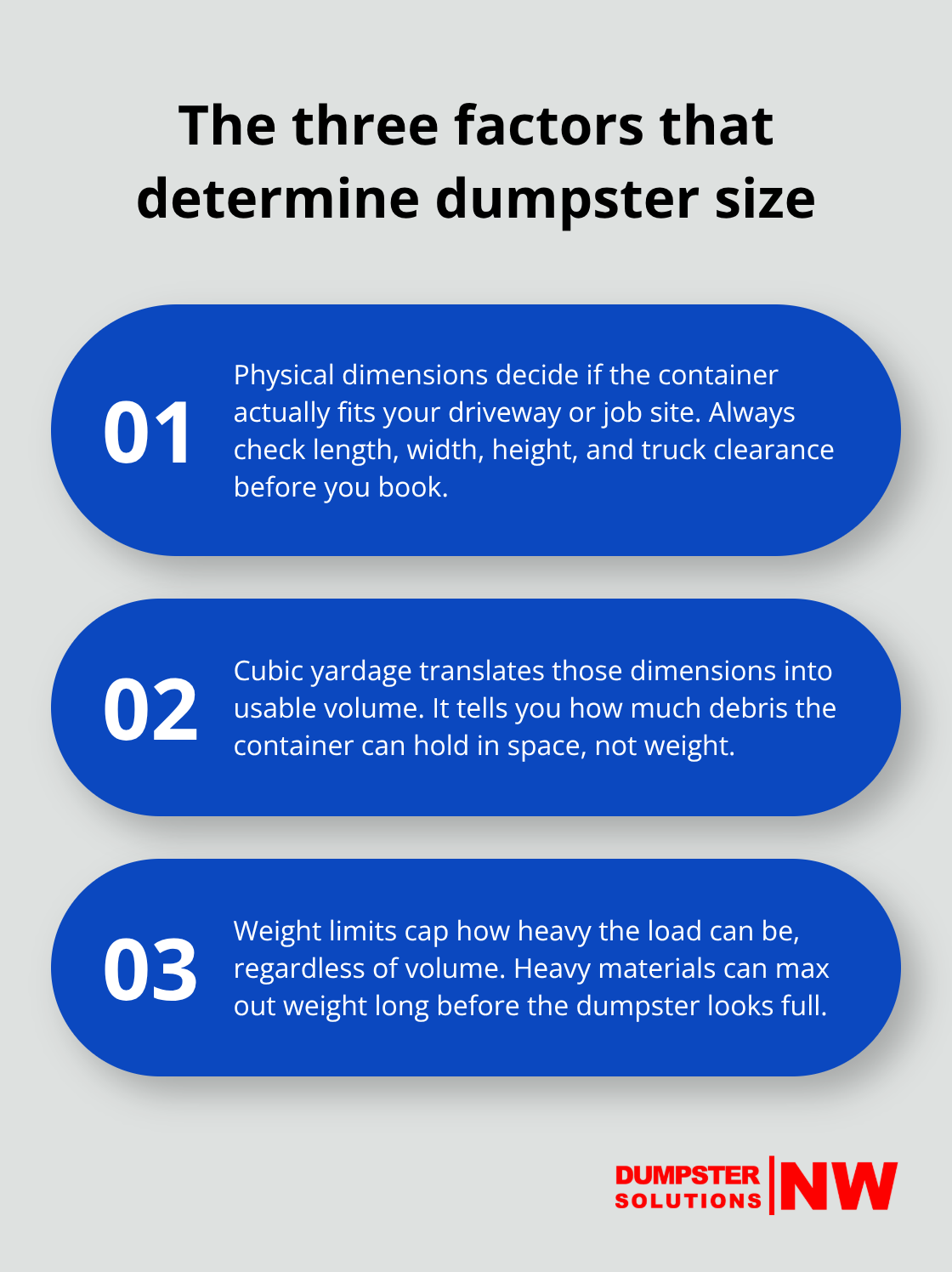
Dumpster sizing comes down to three concrete factors: the physical dimensions of the container, how much cubic yardage that translates to, and whether your debris will exceed the weight limit. We at Dumpster Solutions NW offer 10, 20, 30, and 40-yard dumpsters, and each one has specific dimensions that matter for your driveway or job site.
A 10-yard dumpster measures roughly 15 feet long, 8 feet wide, and 2 feet high-think of it as fitting in a tight residential space without dominating your front yard. The 20-yard jumps to about 22 feet long and 3.5 feet high, while a 30-yard stretches to 22 feet long and over 5 feet high. The 40-yard is the heavyweight, designed for major construction debris and demolition work. These dimensions matter because delivery trucks need clearance, and you need to confirm the dumpster actually fits where you plan to put it.
Cubic yardage measures volume: one cubic yard equals 27 cubic feet, so a 10-yard dumpster holds roughly 270 cubic feet of material. This is why material type drastically changes what you can actually fit. Concrete and brick are deceptively heavy-a 10-yard dumpster maxes out at about 2 tons before weight becomes the limiting factor, not volume.
Weight Limits Control What You Can Actually Haul
Roofing debris, asphalt, and soil follow the same pattern. A homeowner doing a kitchen remodel might fill a 10-yard with drywall, cabinets, and flooring and stay well under the weight limit. That same 10-yard filled with broken concrete from a patio job hits the weight ceiling fast, sometimes after just a few cubic yards of actual material. Understanding weight limits prevents surprise fees and failed pickups.
Your project’s material composition dictates whether volume or weight becomes the limiting factor first. Lightweight debris like cardboard, packaging, or yard waste lets you fill a dumpster closer to its rim without worry. Heavy materials require you to think smaller and plan for multiple loads or a larger container rated for heavier waste.
Know What Cannot Go in Your Dumpster
Hazardous materials like paints, solvents, batteries, electronics, and asbestos never go in a standard dumpster regardless of size or weight capacity. Tires and appliances with refrigerants are also prohibited. These restrictions exist because disposal facilities charge extra handling fees or outright refuse contaminated loads, and you’ll face penalties if prohibited items are discovered. The rule is simple: if you’re unsure whether something belongs in the dumpster, ask before dropping it in. A quick call saves thousands in fines and project delays.
Standard acceptable items include household junk, construction debris, wood, drywall, tile, brick, plumbing fixtures, and landscaping waste. Overfilling above the rim creates safety hazards during transport and often triggers additional charges or a refusal to haul. The fill line exists for a reason-it keeps the load stable and legal on public roads.
Choosing Between Volume and Weight Constraints
When you contact us at Dumpster Solutions NW, we recommend discussing your specific debris type-concrete jobs, roofing tearoffs, and interior demolition each have different weight profiles. This conversation helps you avoid the common mistake of selecting a dumpster that looks big enough but can’t handle your material’s actual weight. The right size balances both factors, not just one.
Sizing Your Project Before You Order
The fastest way to pick the wrong dumpster size is guessing. You need actual numbers, not instinct. Start by measuring the space where your debris will accumulate. If you’re gutting a kitchen, measure the cabinet run, the countertop depth, and estimate how high the pile will stack. A standard kitchen remodel produces roughly 150 to 200 cubic feet of waste-that’s well under a 10-yard dumpster’s 270-cubic-foot capacity. A full-home interior demolition, by contrast, generates 800 to 1,200 cubic feet easily, pushing you toward a 30 or 40-yard container. The math is straightforward: length times width times height, divided by 27, gives you cubic yards. Most people underestimate volume by 40 to 50 percent because they forget about wall cavities, flooring underlayment, and insulation. Concrete and masonry projects flip the equation entirely-weight becomes the limiting factor almost immediately, so a 10-yard dumpster rated for 2 tons might only hold 40 to 60 cubic feet of broken concrete before hitting that ceiling.

What Your Project Type Really Tells You
Roofing tearoffs are deceptively bulky. A 2,000-square-foot roof generates roughly 400 to 500 cubic feet of shingles and tar paper, but that material compresses poorly, so you lose usable volume fast. Most contractors need a 20 or 30-yard dumpster for a full roof replacement, not the 10-yard many homeowners assume will work. Basement and attic cleanouts are the opposite-lightweight cardboard, old furniture, and miscellaneous junk pack efficiently into smaller spaces, so a 10-yard often handles a full basement purge. Construction debris from framing, drywall removal, and flooring follows the roofing pattern: it’s voluminous but not terribly heavy, so oversizing slightly costs less than renting twice. Soil, gravel, and dirt jobs demand the most planning because weight dominates. One cubic yard of soil weighs roughly 1.5 tons, so a 10-yard dumpster hits its 2-ton weight limit after just one and a third cubic yards of actual material. If you’re removing fill from a foundation or grading a lot, try a 20 or 30-yard container specifically rated for heavy loads, or expect multiple trips.
Breaking Down Material Density Changes Everything
Drywall and insulation are your friends in a dumpster-they’re lightweight and stack reasonably well, so a 10-yard handles interior renovation debris efficiently. Wood framing and hardwood flooring are moderately dense but still fit comfortably within weight limits on standard containers. Brick, concrete, tile, and stone are the killers. A cubic yard of brick weighs roughly 3.5 tons, making a single yard of brick debris exceed most 10-yard dumpster weight limits entirely. This is why discussing material type matters before ordering. Compaction barely helps with heavy materials-concrete doesn’t compress, and neither does brick. With lighter waste like cardboard or yard debris, compaction can squeeze 20 to 30 percent more material into the same space, but don’t count on it to save you from undersizing. The safest approach is to size up one container if you’re uncertain, especially on construction sites where material composition often changes mid-project and surprises emerge from walls or crawlspaces.
Matching Material Weight to Container Capacity
Heavy materials require you to think smaller and plan for multiple loads or a larger container rated for heavier waste. Roofing debris, asphalt, and soil follow the same weight-limiting pattern as concrete. A homeowner doing a kitchen remodel might fill a 10-yard with drywall, cabinets, and flooring and stay well under the weight limit. That same 10-yard filled with broken concrete from a patio job hits the weight ceiling fast, sometimes after just a few cubic feet of actual material. Understanding weight limits prevents surprise fees and failed pickups. Your project’s material composition dictates whether volume or weight becomes the limiting factor first. Lightweight debris like cardboard, packaging, or yard waste lets you fill a dumpster closer to its rim without worry.
Know What Cannot Go in Your Dumpster
Hazardous materials like paints, solvents, batteries, electronics, and asbestos never go in a standard dumpster regardless of size or weight capacity. Tires and appliances with refrigerants are also prohibited. These restrictions exist because disposal facilities charge extra handling fees or outright refuse contaminated loads, and you’ll face penalties if prohibited items are discovered. The rule is simple: if you’re unsure whether something belongs in the dumpster, ask before dropping it in. A quick call saves thousands in fines and project delays. Standard acceptable items include household junk, construction debris, wood, drywall, tile, brick, plumbing fixtures, and landscaping waste. Overfilling above the rim creates safety hazards during transport and often triggers additional charges or a refusal to haul.
Now that you understand how material type and weight affect your sizing decision, the next step is learning how to measure your specific debris and calculate the exact cubic yardage your project will produce.
Matching Your Project to the Right Container
Size Selection for Common Residential Projects
A 10-yard dumpster works for a kitchen remodel, basement cleanout, or light landscaping project where debris stays under 2 tons and fits within roughly 270 cubic feet. This size handles homeowners tackling single-room renovations, attic purges, or yard waste removal effectively. The 20-yard container serves as the workhorse for most residential projects-roofing tearoffs, full bathroom and kitchen remodels combined, or garage cleanouts all fit comfortably here. This size handles approximately 540 cubic feet and works well when your project spans multiple rooms or involves bulkier materials like shingles or framing lumber.

The 30-yard dumpster enters commercial territory and handles large-scale interior demolition, full-home renovations, or construction debris from new builds. At roughly 810 cubic feet, this size absorbs surprises (hidden wall cavities, extra insulation, or material volume underestimates that would overflow a 20-yard). The 40-yard is reserved for major demolition, large commercial projects, or jobs where contractors know they’re producing serious volume and weight. Most residential customers in the Seattle and Puget Sound region choose between 10 and 30 yards based on scope, and undersizing by one category costs far more in return trips than sizing up costs in extra rental fees.
How Material Type Shifts Your Size Decision
Material type determines whether you should move up a size tier. Drywall and framing debris compress reasonably well, so a 10-yard handles a full kitchen remodel’s waste efficiently. Roofing shingles and tar paper are your warning sign-a 2,000-square-foot roof produces 400 to 500 cubic feet of material that refuses to compress, making a 20-yard the realistic minimum despite what the volume math suggests. Concrete and brick jobs demand a full category jump: a 10-yard dumpster rated for 2 tons holds roughly 40 to 60 cubic feet of broken concrete before hitting the weight ceiling, so contractors removing a patio or driveway need a 20 or 30-yard container specifically. Soil and fill dirt follow the same brutal math-one cubic yard weighs 1.5 tons, so a foundation excavation job that produces 3 cubic yards of dirt maxes out a 10-yard weight limit after just 2 yards of actual material.
The Weight-Limiting Factor for Heavy Materials
Heavy materials require you to think smaller and plan for multiple loads or a larger container rated for heavier waste. Roofing debris, asphalt, and soil follow the same weight-limiting pattern as concrete. A homeowner doing a kitchen remodel might fill a 10-yard with drywall, cabinets, and flooring and stay well under the weight limit. That same 10-yard filled with broken concrete from a patio job hits the weight ceiling fast, sometimes after just a few cubic feet of actual material. Understanding weight limits prevents surprise fees and failed pickups. Your project’s material composition dictates whether volume or weight becomes the limiting factor first. Lightweight debris like cardboard, packaging, or yard waste lets you fill a dumpster closer to its rim without worry.
Strategic Sizing for Project Success
Try this practical rule: if your project involves roofing, concrete, masonry, or heavy soil, skip the size you think you need and order the next one up. The extra cost is negligible compared to the frustration and expense of a failed pickup or a second rental trip. We offer 10, 20, 30, and 40-yard dumpsters to accommodate any project, from a small garage cleanout to a large construction site, with transparent pricing and dependable service to ensure your project runs smoothly.
Final Thoughts
Sizing a dumpster correctly saves money, prevents project delays, and eliminates the frustration of overflow or wasted rental space. Material type and weight matter far more than volume alone, so a 10-yard dumpster filled with concrete behaves completely differently than one filled with drywall. Heavy materials like concrete and brick demand sizing up one category, while lightweight debris like cardboard and yard waste compress efficiently into smaller containers.
We at Dumpster Solutions NW ask the right questions when you contact us about your project: what are you removing, how much space will it occupy, and what materials are involved. This information lets us recommend the exact size that prevents both undersizing headaches and overpaying for unused capacity. We offer 10, 20, 30, and 40-yard dumpsters with transparent, flat-rate pricing and no hidden fees, with delivery happening fast-often same-day or next-day.
Visit Dumpster Solutions NW to select your dumpster size and schedule delivery for your project. Tell us about your debris, confirm the dimensions work for your space, and we handle the rest. Your project deserves the right container from the start.
Disclaimer: The information provided in this blog is for general informational purposes only and does not constitute legal, financial, or insurance advice. Coverage options, terms, and availability may vary. Please consult with a licensed professional for advice specific to your situation