
Your driveway shouldn’t become a storage unit during home renovations or cleanups. A curbside dumpster rental keeps waste out of your way while you work.
At Dumpster Solutions NW, we’ve helped thousands of homeowners across the Puget Sound region tackle projects without the hassle of managing debris. This guide walks you through everything you need to know about getting the right dumpster in the right spot.
What Curbside Dumpster Rental Actually Is
A curbside dumpster rental is a temporary waste container placed at the edge of your property-typically along the street or at the end of your driveway-where you load debris directly without hauling it across your yard. The container arrives at your location, you fill it at your pace, and it gets picked up when the job is done. This setup eliminates the need to cart heavy materials through your home or across landscaping. For Seattle and Puget Sound homeowners, this matters significantly because most residential lots have limited space, and a curbside dumpster keeps your yard functional while work happens. A typical 20-yard dumpster holds roughly 8 pickup truck loads of mixed debris, making it practical for everything from kitchen remodels to deck removals. The 7-day rental period gives you flexibility to work at your own speed without pressure to finish in a weekend.
Why Street Placement Changes Everything
Curbside placement works because it keeps traffic patterns clear inside your property. When debris sits in your driveway or yard, you lose parking, create tripping hazards, and make it harder for family members to move around safely. Construction professionals know that easier access to the waste container accelerates the actual work. Workers move directly from the work area to disposal without extra steps, which saves time and effort. For homeowners tackling kitchen renovations, bathroom remodels, or roof replacements, the curbside position means crews can operate efficiently. Weather also plays a role-a dumpster on the street rather than on grass prevents ground damage and sinking, which matters especially in the Seattle area where wet conditions are common.
Projects Where Curbside Access Shines
Home renovations benefit most from curbside dumpsters because they produce steady debris throughout the project. Roof replacements create heavy loads of shingles and wood that are awkward to move by hand-roofing crews can toss materials directly down without setup time. Garage cleanouts and attic purges often surprise homeowners with how much debris accumulates (old boxes, forgotten items, and structural materials add up fast). Landscaping projects like removing trees, shrubs, or old hardscaping work well with curbside placement because you’re moving bulky, awkward items that don’t fit neatly in a truck bed. Even smaller projects like replacing windows, updating siding, or removing old fencing benefit from a dedicated container at the curb rather than making repeated trips to a landfill or transfer station.
Sizing Your Dumpster for the Job
The right dumpster size depends on what you’re throwing away and how much space you have. A 10-yard dumpster works for light cleanouts and small renovation projects, while a 20-yard handles moderate jobs like kitchen remodels or deck removals. Larger projects (30 or 40-yard containers) suit major renovations, construction debris, or significant landscaping work. Most homeowners underestimate their waste volume, so it’s better to rent a slightly larger container than to run out of space mid-project. Dumpster Solutions NW offers all these sizes with transparent pricing and same-day delivery, so you can match the container to your actual needs without guessing.
Understanding what size works for your specific project sets you up to choose the right container when it’s time to order.
Why Curbside Placement Speeds Up Your Entire Project
Direct Access Cuts Out Wasted Motion
A curbside dumpster eliminates the worst part of any cleanup job: hauling materials across your property. When the container sits at street level or your driveway edge, workers move straight from the demolition area to disposal without extra steps. This matters more than it sounds. A kitchen remodel that produces 200 pounds of drywall, cabinets, and flooring becomes a nightmare if you carry it 50 feet through your home to reach a backyard container. Curbside placement removes that friction entirely.
Roofing crews working on Seattle-area homes understand this advantage well. They toss shingles and wood directly from the roof into a street-level dumpster instead of managing multiple ground-level staging areas. The same principle applies to deck removals, siding replacements, and window installations. Workers spend more time on actual work and less time moving materials.
Speed Translates to Real Savings
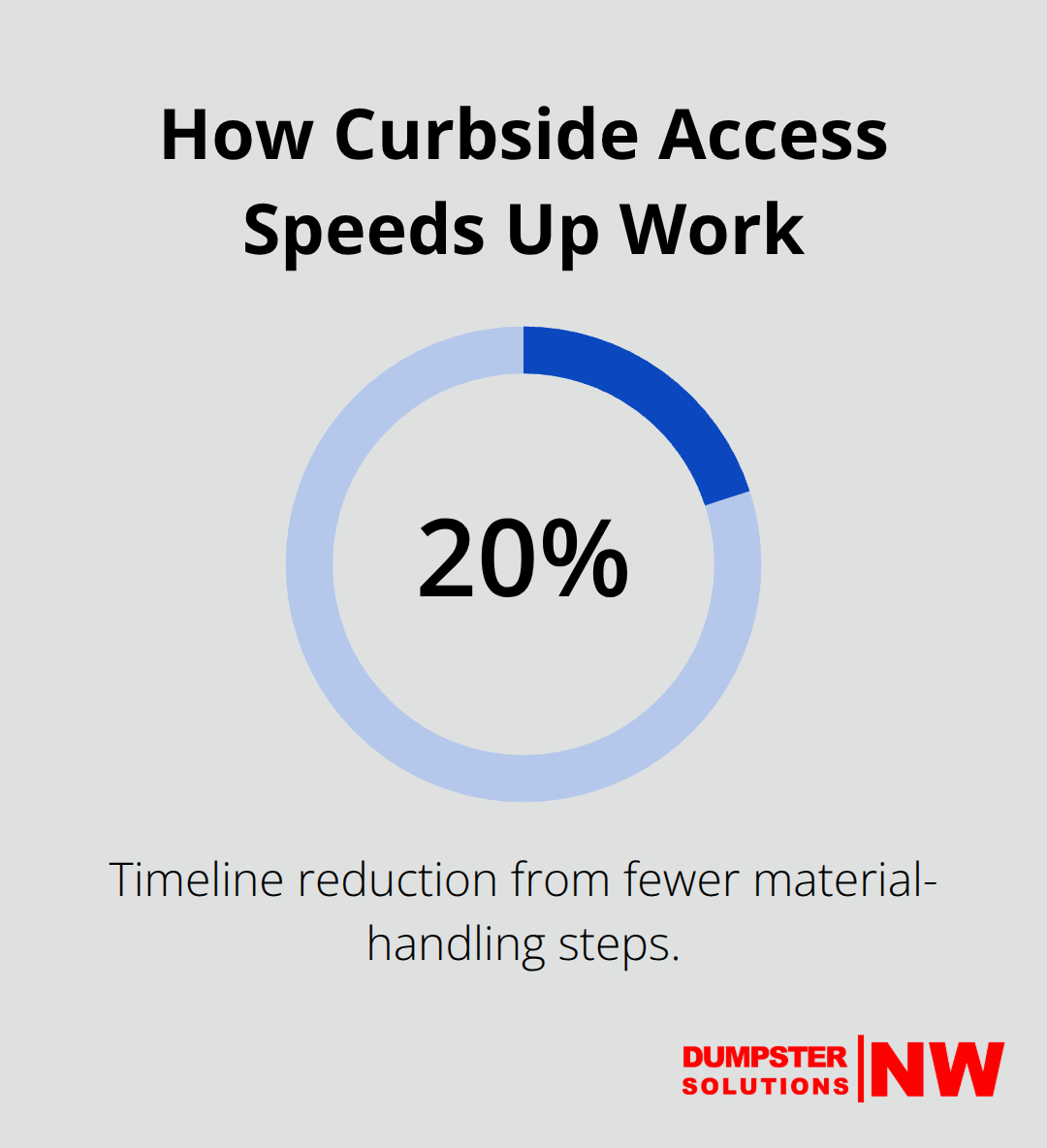
Construction efficiency studies show that reducing material handling steps can cut project timelines by 20 percent. For homeowners, this translates to crews finishing faster, which means lower labor costs if you hire professionals. Even if you tackle the work yourself, the convenience factor keeps you motivated to push through without taking unnecessary breaks. A project that might stretch across three weekends with a backyard dumpster could wrap up in one or two with curbside access.
Your Yard Stays Functional and Protected
Curbside placement protects what matters most around your home. Your yard stays accessible for family movement, parking, and normal use. A dumpster in your driveway blocks vehicle access and creates a safety hazard for kids playing nearby. Wet Seattle winters make this even more critical-debris sitting on grass for a week can kill sections of lawn, and soft ground becomes damaged or muddy under the weight of a loaded container.
Placing the dumpster at the curb prevents ground sinking, keeps your yard functional, and avoids the cleanup work after the project ends. Your neighbors also appreciate not having a large container blocking their street view or parking access for days on end. The seven-day rental window means you work steadily without the stress of cramming everything into a weekend to avoid extra fees.
Street Placement Works With Local Conditions
Seattle’s wet climate makes curbside placement especially practical. Rain-soaked grass cannot support a heavy, loaded dumpster without damage. A container at the curb sits on pavement or compacted soil, which handles the weight without sinking or creating muddy patches you’ll need to repair later. This simple positioning choice saves you from unexpected yard restoration costs once your project wraps up.
Understanding how curbside placement protects both your timeline and your property sets the stage for selecting the right size and managing placement logistics with your local regulations.
How to Choose the Right Curbside Dumpster for Your Project
Match Dumpster Size to Your Waste Volume
The first mistake homeowners make is guessing at dumpster size instead of measuring their waste. A 10-yard dumpster holds roughly 4 pickup truck loads and works for light cleanouts like attic purges or single-room renovations where you remove old furniture, boxes, and miscellaneous items. A 20-yard dumpster, which holds about 8 pickup loads, handles moderate projects including kitchen remodels, bathroom renovations, and deck removals where you deal with cabinetry, flooring, drywall, and structural materials. The 30-yard container fits large home renovations, major landscaping overhauls, or significant junk removal from multiple rooms, holding roughly 14 pickup loads of mixed debris. A 40-yard dumpster, designed for approximately 16 pickup loads, belongs on major construction sites, whole-home renovations, or demolition projects where volume is genuinely massive.
Account for Weight Limits and Material Type
The weight limit matters more than you think-a 10 yard dumpster typically holds 1 to 2 tons of debris, while heavy materials like concrete require a heavy debris dumpster with a weight limit of up to 10 tons. Most homeowners underestimate volume because they picture their trash at home, but construction debris expands significantly once you start removing cabinets, flooring, and structural elements. Overflowing a dumpster triggers overage fees and creates safety hazards, so choosing one size larger than you think you need costs less than managing overflow.
Verify Local Regulations and Site Conditions
Your street and driveway also dictate what works practically. Seattle area regulations typically allow temporary containers on residential streets for 7 days without permits, but some neighborhoods have specific rules about placement distance from driveways, fire hydrants, or utility lines. Contact your city’s public works department before delivery-a quick phone call prevents the driver from arriving to find the location blocked or non-compliant. Soft ground common in the Puget Sound region requires plywood or boards under the dumpster to prevent sinking and ground damage, which adds cost and hassle if discovered after delivery. Check for overhead power lines, tree branches, or other obstacles that could prevent the delivery truck from positioning the container safely.
Prepare Your Property for Delivery
Know your lot dimensions, driveway width, and any access restrictions beforehand to make the entire process smoother and faster. Clear the drop zone of parked cars, bikes, and outdoor items that could block placement. Ensure the surface is flat and sturdy-if only soft ground is available, lay plywood or boards to create a stable base. Align with everyone involved on what materials are allowed, the container size, and loading safety rules to avoid surprises when the dumpster arrives.
Final Thoughts
Curbside dumpster rental removes the complexity from cleanup work by placing the container exactly where you need it. You stop worrying about debris logistics, yard damage, or whether your property will function normally during the project. The container arrives at your property edge, you fill it on your schedule, and professionals handle pickup and disposal.
For Seattle and Puget Sound residents, this approach solves real regional challenges. Wet winters destroy grass and create muddy conditions when containers sit on soft ground, but curbside placement protects your yard entirely. Limited lot space means your driveway and yard stay accessible for parking and movement throughout the project. Tight street parking requires efficient solutions that don’t block neighbors’ access, and a curbside setup delivers exactly that without compromise.
Your project moves faster because workers spend time on actual work instead of hauling materials across your property, which translates to lower labor costs and faster completion. Contact Dumpster Solutions NW to assess your project, select the right dumpster size, and schedule delivery for your next renovation or cleanup.
Disclaimer: The information provided in this blog is for general informational purposes only and does not constitute legal, financial, or insurance advice. Coverage options, terms, and availability may vary. Please consult with a licensed professional for advice specific to your situation