
Construction site dumpsters are one of the biggest headaches on any job-but they don’t have to be. We at Dumpster Solutions NW help contractors across Washington State handle waste disposal the right way, saving time and money in the process.
The difference between a smooth project and a chaotic one often comes down to planning. This guide walks you through everything from picking the right dumpster size to navigating local regulations and cutting costs.
Matching Waste Type to the Right Dumpster Size
Heavy Demolition Debris Demands Serious Capacity
Concrete, asphalt, and brick rank among the densest materials on any construction site, and they fill dumpsters fast by weight rather than volume. Heavy demolition debris weight limits mean that 10 to 20-yard dumpsters are most commonly used for concrete work. For major demolition work across Washington, the 30-yard and 40-yard sizes become practical necessities when projects exceed typical weight thresholds. Most contractors underestimate how quickly heavy debris accumulates. If your project involves tearing out concrete foundations or removing asphalt, sizing up prevents overfill fees that typically run $5 to $15 per additional day in Washington State.
Lighter Materials Consume Space Faster
Wood, drywall, and insulation materials behave differently than concrete. These waste streams are bulkier but lighter, meaning they consume space faster than weight. A 20-yard dumpster works well for roof tearouts, bathroom remodels, or interior demolition where drywall dominates. Drywall dust also matters-it spreads across job sites and creates safety hazards for your crew.
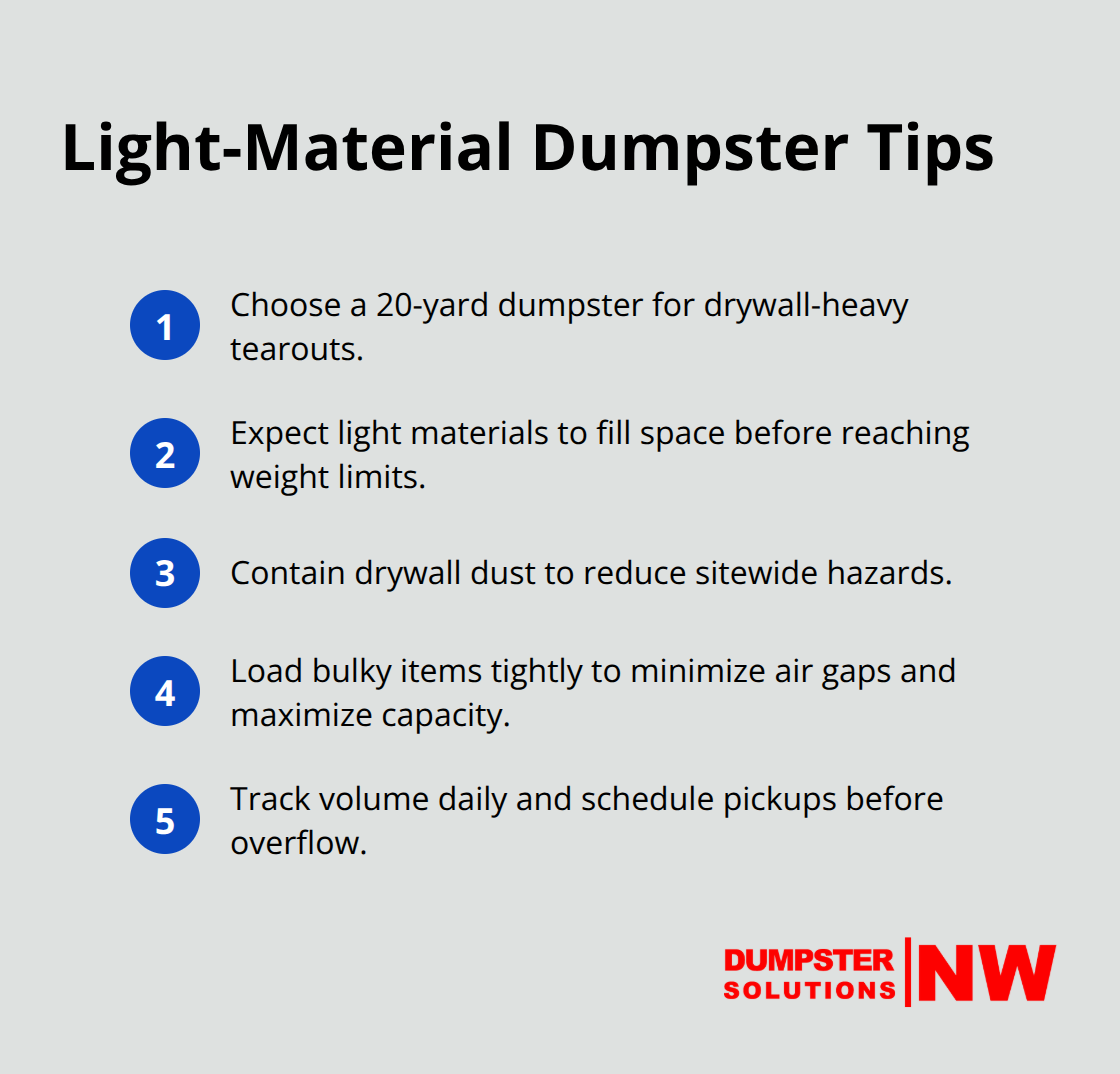
Containing it properly keeps workers safer and cleaner throughout the project.
Metals and Mixed Debris Require Strategic Separation
Copper wiring, steel beams, aluminum framing, and miscellaneous materials often carry resale value at scrap yards. Separating metals early prevents them from getting buried under general debris, where recovery becomes impossible. Some haulers in the Seattle and Puget Sound region offer specialty containers specifically for concrete or clean fill at different pricing tiers, which saves money if your project produces large volumes of a single material type.
Choosing the Right Size for Your Project
Washington construction sites most commonly use 10, 15, 20, 30, and 40-yard containers, with 20-yard sizes proving most popular for mid-range residential and commercial projects. Honest assessment matters: measure your project scope, estimate debris volume week by week, and choose a container that handles one week’s output comfortably. Undersizing forces multiple pickups and labor time shuffling waste around. Oversizing costs more upfront but eliminates operational headaches and keeps your timeline predictable. Once you’ve selected the right dumpster size, your next challenge involves understanding the local rules that govern how you dispose of that waste.
Regulations and Compliance for Construction Waste Disposal in Washington State
Local Permitting Requirements Vary by City
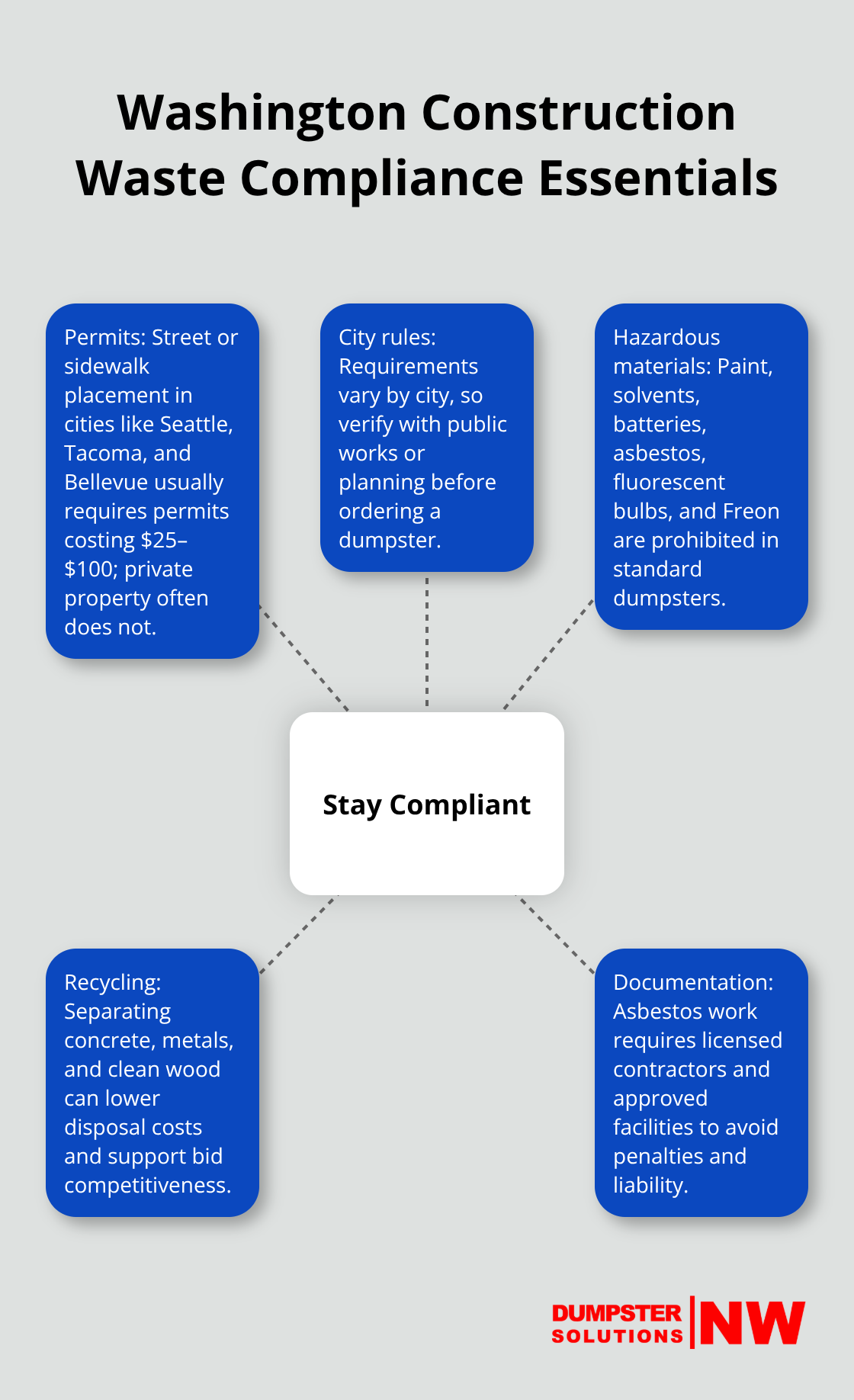
Washington State doesn’t impose a statewide construction waste mandate, but individual cities control their own permitting and disposal rules, which means your project requirements shift depending on location. In Seattle, Tacoma, and Bellevue, street or sidewalk dumpster placement requires a permit costing $25 to $100, while private property placement typically avoids permits entirely. Federal Way, Kirkland, and Redmond follow similar patterns but with varying fee structures and approval timelines.
Contact your city’s public works or planning department directly before ordering a dumpster-don’t assume your neighbor’s project followed the same rules. Many contractors waste time and money discovering permit requirements mid-project when a dumpster sits illegally on a street corner. Construction and demolition projects benefit from understanding local hauling requirements and disposal rules upfront, preventing fines or forced removal later.
Hazardous Materials Demand Strict Handling
Hazardous materials create the biggest compliance headache on construction sites, and Washington State treats them seriously. Paint, solvents, batteries, asbestos, fluorescent bulbs, and materials containing Freon cannot enter standard dumpsters under any circumstances. Asbestos removal specifically requires licensed contractors and documented disposal at approved facilities-cutting corners invites regulatory penalties and liability that destroys project budgets.
Mixed debris streams often hide hazardous materials, so train your crew to identify and segregate problem items before they contaminate an entire dumpster load. One contaminated load can force expensive remediation and halt your entire project timeline.
Recycling Regulations Create Cost Opportunities
Recycling regulations in Washington push contractors toward waste separation, and the economics favor it. Concrete, metals, and clean wood command resale value at local recycling facilities, offsetting disposal costs when separated properly. King County and Pierce County both track construction waste diversion rates, and contractors who document their recycling efforts gain competitive advantages on municipal bids.
Separating recyclables reduces your overall disposal volume, lowering dumpster size requirements and rental costs simultaneously. Discuss waste streams with your hauler before project start-specialty containers for concrete, dirt, or metals often cost less than consolidating everything into one oversized dumpster. This strategic approach to waste separation transforms compliance from a burden into a profit center for your project.
How to Cut Dumpster Costs Without Compromising Your Project
Right-Size Your Container to Match Actual Waste Output
Dumpster rental costs in Washington typically range from $250 to $600 depending on size, duration, and debris type, but most contractors overspend by selecting containers that don’t match their actual waste output. The math is straightforward: a 40-yard dumpster costs significantly more than a 20-yard, yet many projects waste money renting oversized containers out of caution rather than calculation. Start by tracking your debris volume for the first few days of work, then project that rate across your full project timeline. If you generate two cubic yards per day, a 20-yard container handles ten days comfortably without overfilling, while a 30-yard wastes money sitting half-empty. The most common sizes available for rental are 10-yard, 20-yard, 30-yard, and 40-yard dumpsters, each serving different project scales.
Schedule Multiple Pickups Instead of Oversizing
Washington haulers charge $5 to $15 per additional day for extensions, making it cheaper to schedule a second pickup midway through longer projects than to rent an oversized container upfront. This strategy works especially well for renovations lasting three to four weeks, where two appropriately-sized pickups cost less than one bloated rental. Plan your pickup schedule around your actual debris accumulation rate rather than your worst-case scenario. Most contractors discover that two smaller rentals eliminate both overfill fees and the waste of paying for unused capacity.
Separate Waste Streams to Unlock Recycling Value
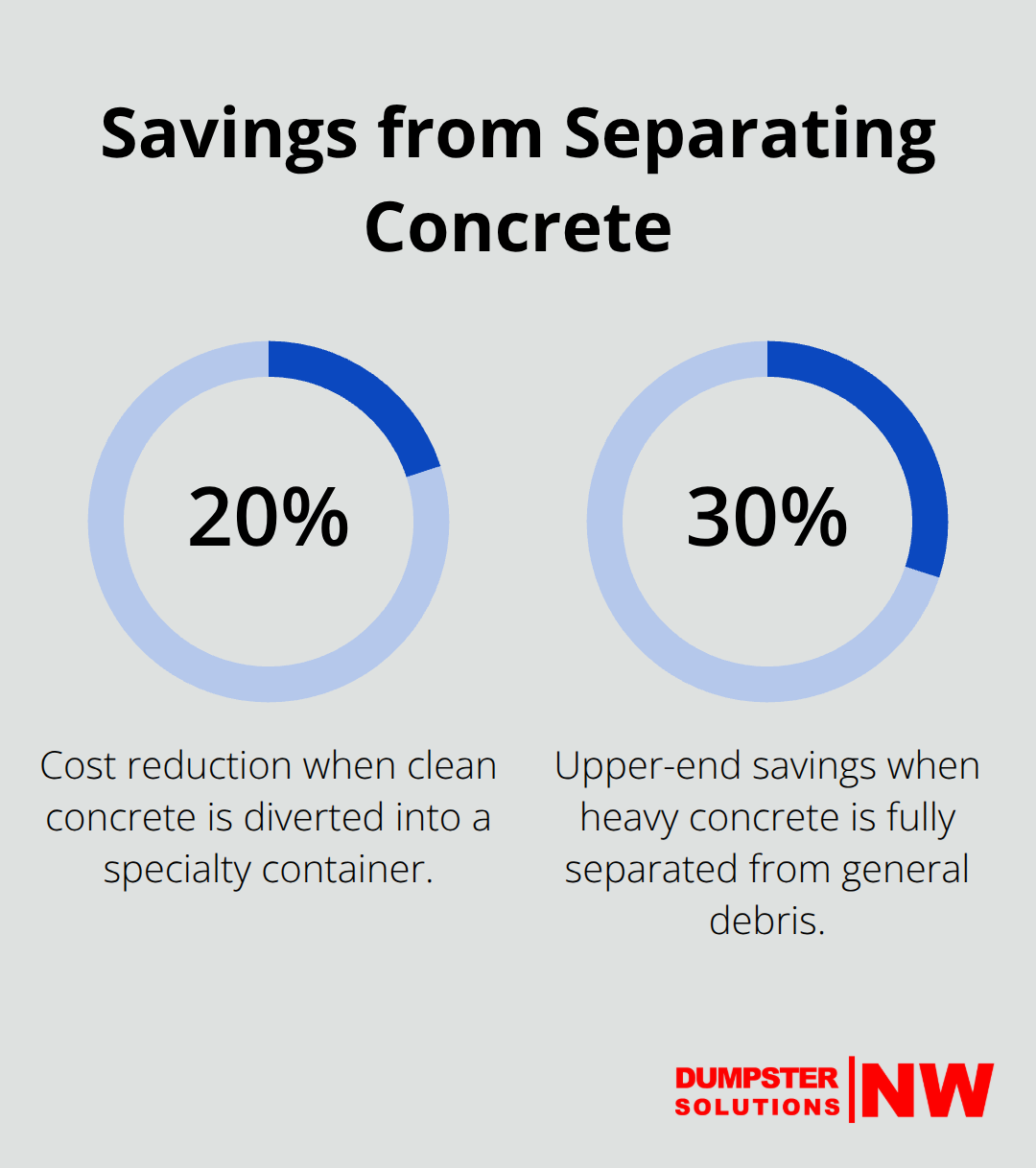
Concrete, metals, and clean wood carry resale value at Washington recycling facilities, and many haulers offer specialty containers for these materials at lower rates than general debris disposal. Concrete specifically commands attention because it’s heavy and expensive to dispose of, yet recycling facilities pay for clean loads. If your demolition project generates five tons of concrete, moving it to a specialty container instead of mixing it with general debris can reduce your overall dumpster costs by 20 to 30 percent.
King County recyclers actively accept separated construction materials, and the price difference between disposing mixed debris versus sorted materials often justifies the labor cost of separation. Train your crew to identify recyclables daily, designate a staging area for metals and wood, and coordinate with your hauler about pickup timing for specialty containers. This approach transforms waste management from a cost center into a revenue opportunity, offsetting rental fees while keeping your site organized and compliant with Washington’s recycling standards.
Final Thoughts
Efficient construction site dumpsters come down to three core principles: matching your container size to actual debris output, understanding local regulations before your project starts, and separating recyclables to cut costs. The contractors who succeed in Washington State treat waste planning as seriously as they treat scheduling and budgeting, measuring debris volume early and contacting their city’s permitting office before ordering equipment. This approach prevents the expensive mistakes that derail projects: overfill fees, permit violations, contaminated loads, and wasted capacity.
Professional dumpster rental removes the guesswork from this equation. We at Dumpster Solutions NW handle the logistics so you focus on construction, offering flat-rate pricing that eliminates surprise charges and same-day or next-day delivery that keeps your project on schedule. Our range of sizes from 10 to 40 yards accommodates any scope, and we manage responsible disposal and recycling so you stay compliant with Washington’s environmental standards without the administrative burden.
Assess your project scope, estimate your weekly debris output, and contact Dumpster Solutions NW for a transparent quote. Provide your location within the Seattle and Puget Sound region, your project timeline, and your primary waste streams, and our team delivers the right container at the right time. We handle pickup when you finish and keep your site clean and compliant throughout the process.
Disclaimer: The information provided in this blog is for general informational purposes only and does not constitute legal, financial, or insurance advice. Coverage options, terms, and availability may vary. Please consult with a licensed professional for advice specific to your situation