
Picking the right dumpster disposal options can make or break your project budget and timeline. We at Dumpster Solutions NW know that one wrong choice leads to wasted money, missed deadlines, or environmental headaches.
This guide walks you through every factor that matters: dumpster sizes, disposal methods, pricing, and how to get fast delivery across the Seattle and Puget Sound region.
What Size Dumpster Do You Actually Need?
The difference between renting a 10-yard dumpster and a 40-yard dumpster isn’t just about money-it’s about whether your project moves forward smoothly or stalls halfway through. Most people either overestimate and pay for capacity they never use, or underestimate and face the nightmare of scheduling a second pickup mid-project. This outcome is entirely preventable with the right approach.
Start with Your Actual Project Scope
A 10-yard dumpster holds roughly 3 pickup truck loads and measures 15 feet long by 8 feet wide by 2 feet high. This works for small decluttering jobs, attic cleanouts, or minor bathroom renovations where you’re dealing with drywall scraps and old fixtures. A 20-yard dumpster doubles the capacity to about 6 pickup truck loads and fits medium projects like kitchen remodels or roofing work. The jump matters because many homeowners in Seattle and the Puget Sound region start with a 10-yard thinking it’s enough, then realize halfway through that they need to remove old appliances, flooring, and cabinets simultaneously. The 20-yard prevents that scramble.
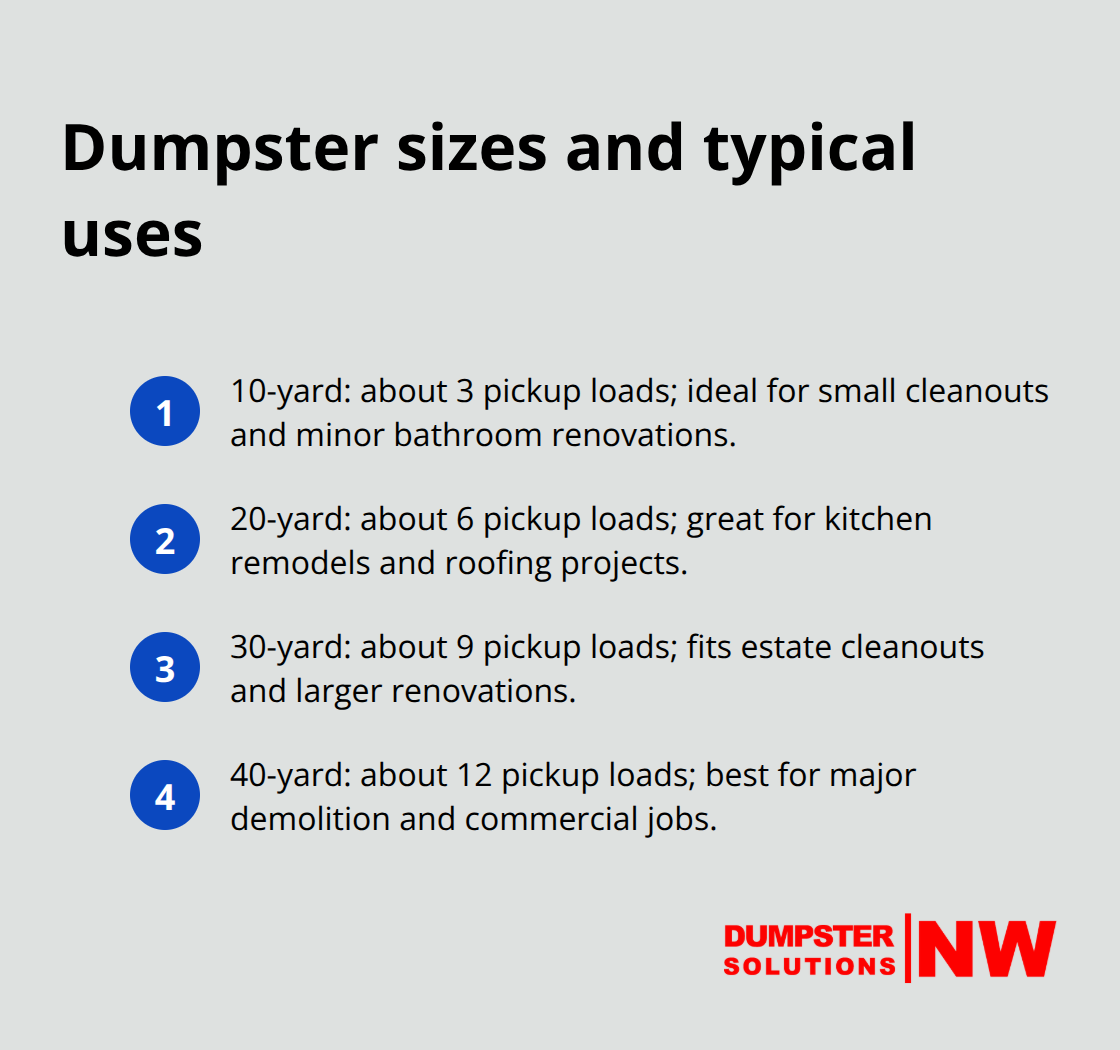
For larger renovations, a 30-yard dumpster holds roughly 9 pickup truck loads and handles estate cleanouts or significant construction debris. A 40-yard dumpster, holding about 12 pickup truck loads, is reserved for major demolition, new construction sites, or large commercial projects. Most residential projects in Auburn, Bellevue, Tacoma, and surrounding areas fall into the 10 to 20-yard range, but underestimating by one size category costs you time and frustration.
Weight Matters More Than Volume
Here’s what catches people off guard: a dumpster can look empty but hit weight limits before you finish loading. Concrete, brick, and asphalt are deceptively heavy. A single cubic yard of concrete weighs about 4,000 pounds, so if you tackle any demolition with masonry or foundation work, volume alone won’t tell you whether you need a 20 or 30-yard dumpster. Lighter materials like drywall, insulation, or furniture take up space without adding weight, so your project type drives the decision more than square footage does. A roofing project produces heavy shingles and wood that fill a 20-yard faster than a kitchen remodel with the same volume of debris. Before ordering, identify what materials you’ll dispose of and ask about weight limits for each size. This step prevents surprises on pickup day or unexpected overage charges.
Account for Space and Timing Constraints
Driveway width matters. A 40-yard dumpster won’t fit down a narrow residential drive in Kirkland or Sammamish, and forcing it creates liability issues. Measure your space before calling. Also, longer projects justify larger containers because multiple pickups add cost and coordination headaches. If your kitchen remodel stretches over six weeks, a single 30-yard pickup at the end beats scheduling two 20-yard pickups. Conversely, a single-weekend garage cleanout paired with a 30-yard dumpster wastes money on unused capacity. Time your delivery to match when debris starts accumulating, which prevents paying for idle rental days, and coordinate pickup for right after project completion to keep costs down.
Material Type Determines Your Real Needs
Different projects produce different waste streams, and each one demands different container sizes. A roofing project with heavy shingles and wood fills space quickly, while a furniture removal or estate cleanout involves bulky but lighter items that consume volume without weight. Construction debris from drywall, insulation, or framing creates moderate weight and volume, whereas concrete or brick demolition hits weight limits fast. Identify your primary waste material before you call, and discuss capacity with your rental provider. They can recommend the right size based on what you’re actually throwing away, not just the square footage of your project.
Ask the Right Questions Before You Order
Talk to your rental provider about weight limits, acceptable materials, and whether your driveway can accommodate the size you need. Ask about delivery timing and whether they offer same-day or next-day service in your area. Confirm what happens if you exceed weight limits and whether overage fees apply. These conversations take five minutes and save you hundreds in wasted capacity or surprise charges. With Dumpster Solutions NW, we handle this upfront so you know exactly what to expect. Once you’ve settled on the right size, disposal methods and environmental responsibility become your next consideration.
Disposal Methods and Environmental Responsibility
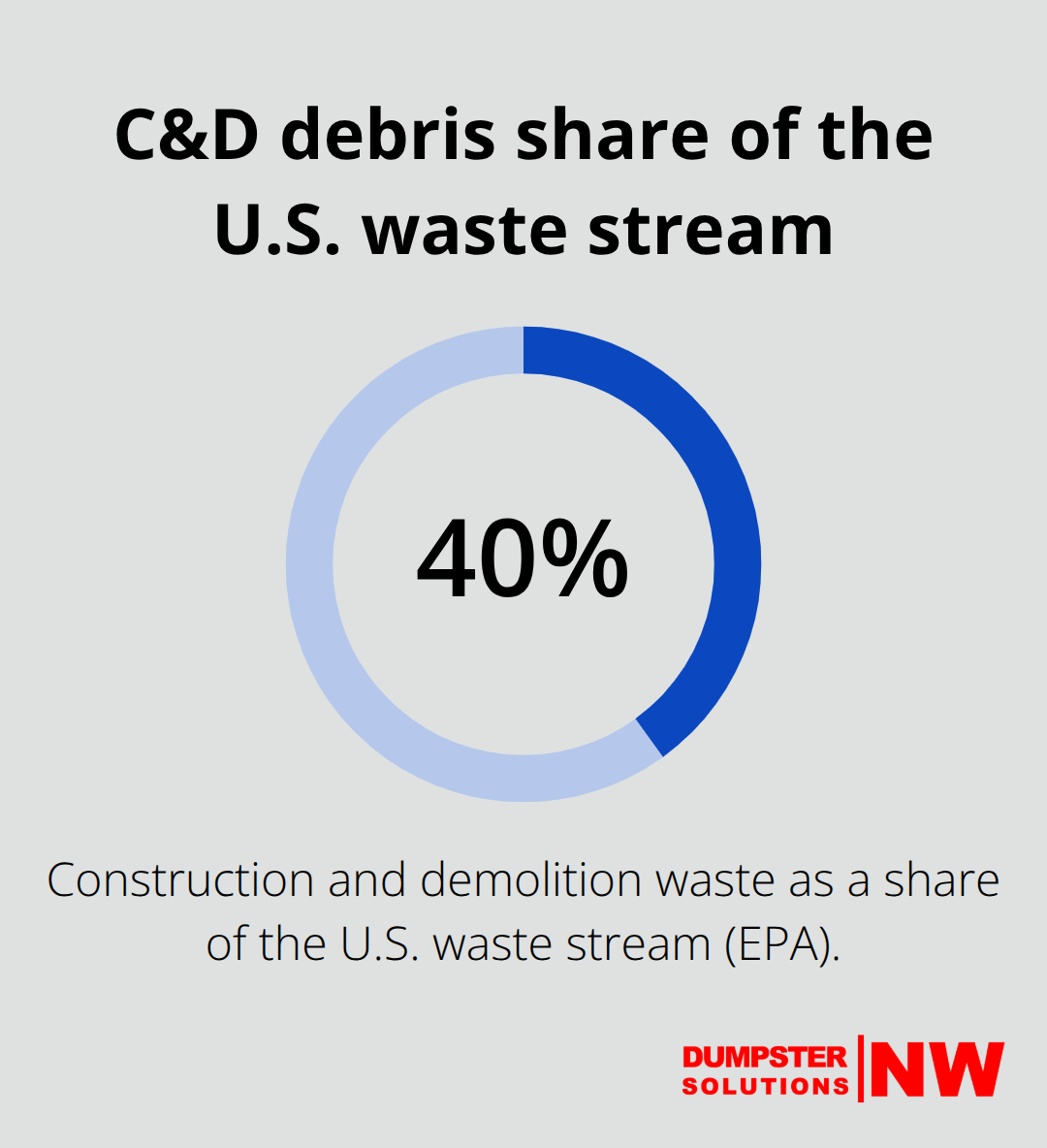
Construction and demolition waste accounts for roughly 40 percent of the U.S. waste stream according to EPA data, which means how you dispose of your debris matters beyond just your project site. Waste segregation isn’t an environmental luxury-it’s a practical step that reduces your disposal costs and keeps your project compliant with Washington State regulations. When you separate concrete, wood, metals, and general debris into different streams, recycling facilities can actually process these materials instead of sending everything to landfill.
This matters financially because recycled concrete and asphalt cost less to dispose of than mixed construction waste.
Create an On-Site Sorting Plan
Before your dumpster arrives, establish a simple on-site sorting plan with labeled areas for recyclables, concrete, wood, and trash. This takes minimal effort during your project but prevents contamination that forces haulers to charge higher disposal fees. Heavy materials like concrete and brick travel to dedicated recycling facilities throughout the Puget Sound region, while wood and metal have active markets for reclamation. Ask your rental provider whether they accept clean fill and offer concrete disposal options-most professional services in Seattle, Tacoma, and surrounding areas do, but confirming upfront prevents confusion on pickup day.
Understand Washington State Placement and Hazardous Material Rules
Washington State requires permits for most residential dumpster placements, and curbside positioning often triggers additional regulations depending on your city. Hazardous materials create the biggest compliance headache: batteries, oils, tires, electronics, chemicals, and asbestos cannot go in standard dumpsters and require specialized disposal at licensed facilities. A single car battery or paint can left in your dumpster can trigger environmental violations and unexpected fees. Contact your local city or county authority before renting to confirm placement rules for your address-this matters especially in Bellevue, Issaquah, and other communities with stricter codes.
Protect Your Property During Transport and Cleanup
Keep the dumpster load stable during transport (place heavier items at the bottom and keep the lid closed to prevent windblown debris). Use site protection like boards or mats under the dumpster to prevent driveway damage and staining, which landlords and property managers require and local regulations often mandate. After project completion, conduct a quick cleanup check and schedule final pickup promptly to avoid lingering charges and ensure your site stays tidy and compliant. Once you’ve handled disposal responsibly, understanding your pricing options and how to budget for your specific project type becomes the next critical step.
What You’ll Actually Pay for Your Dumpster Rental
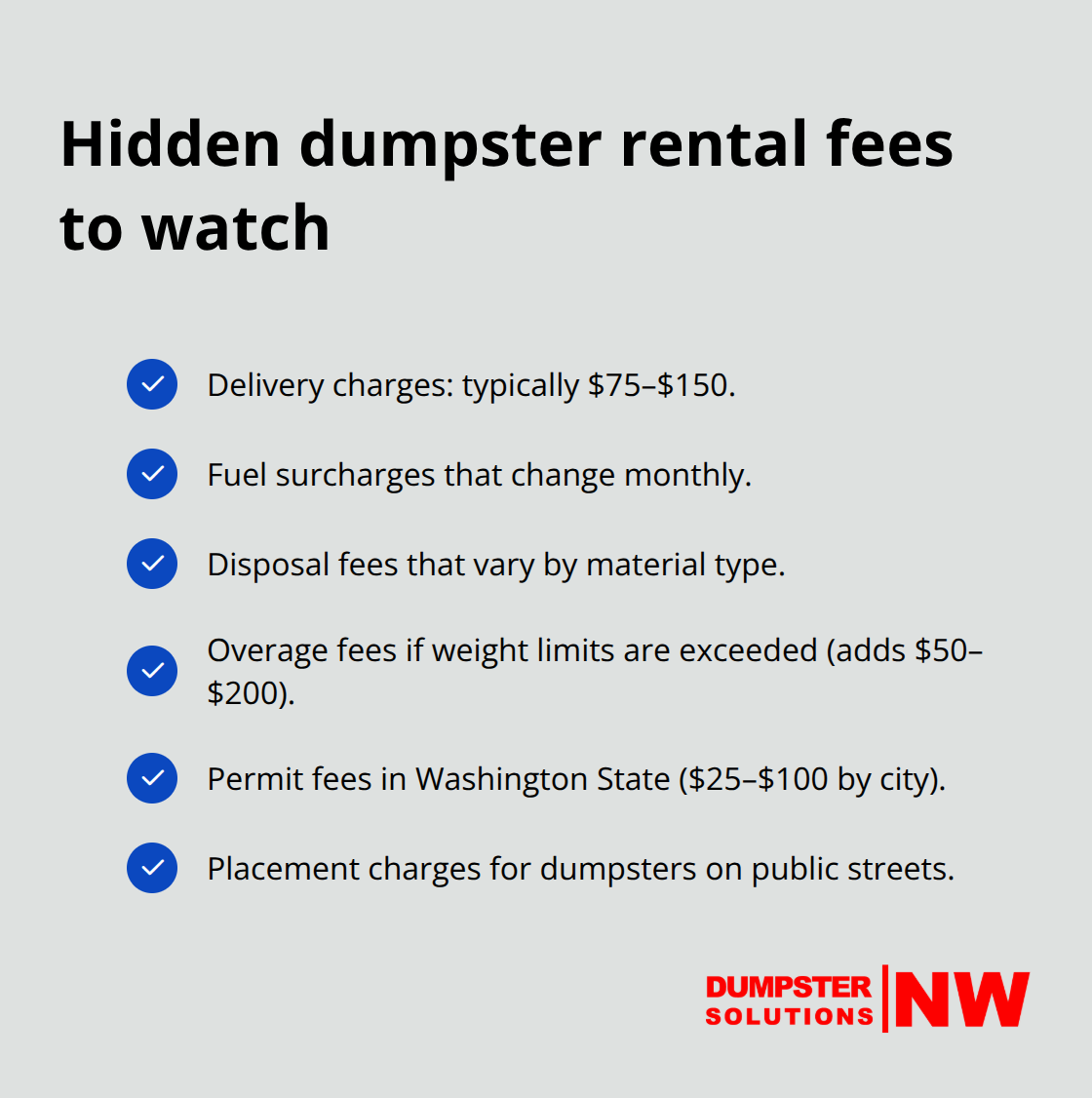
Most dumpster rental companies bury fees in fine print and spring surprises at checkout. We at Dumpster Solutions NW operate differently with flat-rate pricing that covers everything upfront-delivery, pickup, and disposal-so you know your total cost before you commit. Hidden fees from competitors typically include delivery charges ranging from $75 to $150, fuel surcharges that fluctuate monthly, and disposal fees that vary by material type. Some companies charge overage fees if your load exceeds weight limits by even 10 percent, which adds $50 to $200 to your final bill. Washington State projects often face additional permit fees ($25 to $100 depending on your city) and placement charges if your dumpster sits on a public street rather than private property.
When you add these up across a typical home renovation, hidden fees can inflate your final cost by 30 to 40 percent beyond the advertised rental price.
Transparent Pricing Prevents Budget Shock
A 20-yard dumpster quoted at $350 can easily become $500 or more once all charges stack up. The solution is straightforward: request an itemized quote that breaks down delivery, pickup, disposal, and any location-specific fees before you sign anything. Ask whether weight limits apply to your project and what happens if you exceed them. In the Seattle and Puget Sound region, professional providers publish transparent pricing upfront so you can budget accurately without surprises on invoice day.
Budget by Project Type and Material Weight
Your project type determines your realistic budget more than dumpster size alone. A small garage cleanout using a 10-yard dumpster typically costs $250 to $400 all-inclusive, while a 20-yard for a kitchen remodel runs $350 to $550 depending on material weight and local disposal costs. Larger projects involving concrete demolition or construction debris cost more because heavy materials drive up disposal fees-concrete and asphalt recycling centers charge per ton, with dump fees around $200 per ton in Washington State.
Identify Materials First, Then Request Quotes
To budget smartly, identify your primary waste material first and contact your rental provider with specifics. Tell them you’re removing concrete, roofing shingles, or drywall, and ask for a quote that reflects actual disposal costs for that material stream. This conversation takes minutes but prevents cost surprises later.
Optimize Pickup Schedules to Cut Costs
Multi-week projects justify larger dumpsters because a single 30-yard pickup at the end costs less than scheduling two 20-yard pickups two weeks apart-each additional pickup adds $100 to $200 in delivery fees. Plan your project timeline around waste accumulation so you minimize the number of pickups required. If you’re coordinating multiple trades on a construction site, a larger container reduces coordination headaches and keeps subcontractors from working around debris piles. Conversely, a weekend decluttering project doesn’t justify paying for a 30-yard dumpster when a 10 or 20-yard fits your actual volume. The key is matching container size to your real waste volume and project duration, then confirming all fees upfront so your budget stays intact from start to finish.
Final Thoughts
Selecting the right dumpster disposal options requires you to ask the right questions before you commit. Confirm what materials your project will produce, then discuss weight limits and acceptable items with your rental provider. Ask about delivery timing in your specific area (same-day or next-day service matters for tight schedules), verify that your driveway fits the size you need, and check whether permits apply in your city.
Speed matters when you manage a renovation or cleanout, and we at Dumpster Solutions NW deliver across the Seattle and Puget Sound region often on the same or next day. Our flat-rate pricing eliminates surprises when your invoice arrives, and our team handles hauling and responsible disposal so you focus on your work. Whether you operate in Auburn, Bellevue, Tacoma, or anywhere else in our service area, local support connects you with people who understand Washington State regulations and your community’s specific requirements.
Contact Dumpster Solutions NW to discuss your project details and receive a transparent quote that covers everything upfront. Our range of sizes-10, 20, 30, and 40-yard dumpsters-fits any project scope, and our commitment to dependability means your cleanup stays on track from start to finish.
Disclaimer: The information provided in this blog is for general informational purposes only and does not constitute legal, financial, or insurance advice. Coverage options, terms, and availability may vary. Please consult with a licensed professional for advice specific to your situation