
Picking the wrong dumpster size wastes money and creates headaches. Too small, and you’ll need a second rental. Too large, and you’re paying for space you don’t use.
We at Dumpster Solutions NW help customers across Washington State get this decision right the first time. This guide walks you through selecting dumpster size based on your actual project needs, not guesswork.
Understanding Dumpster Sizes Available
10-Yard Dumpsters for Small Projects
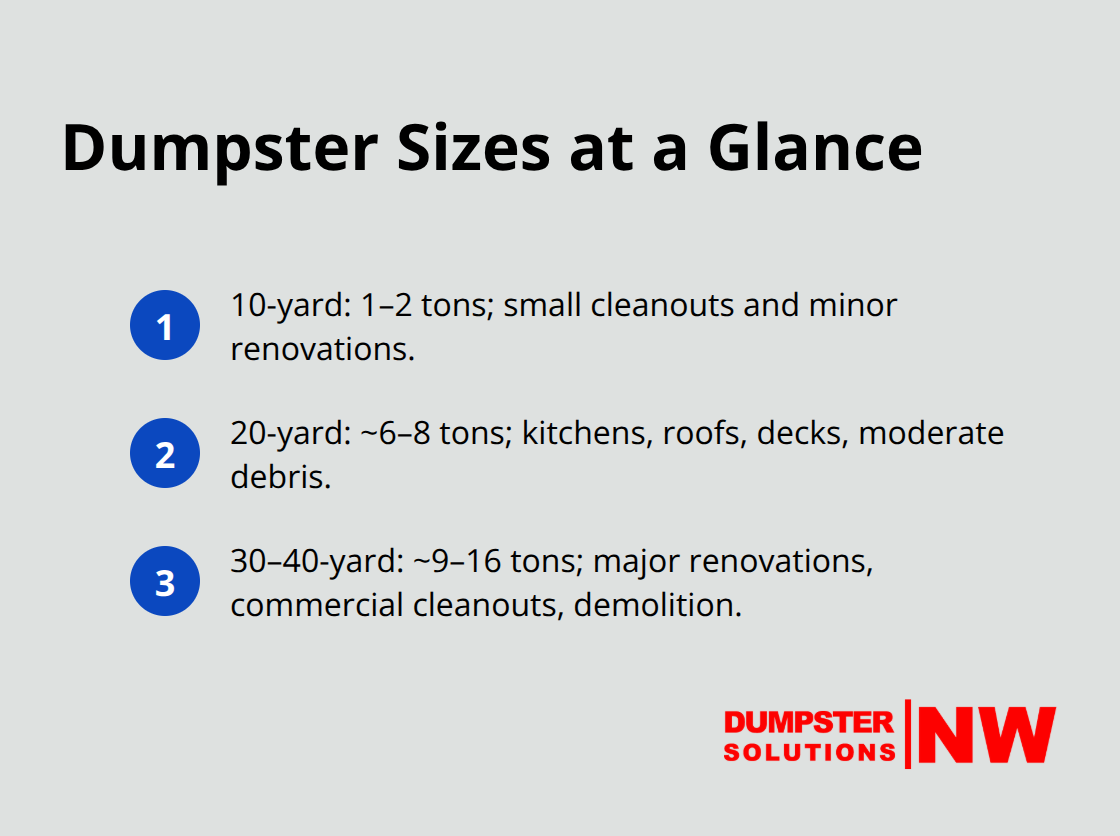
A 10-yard dumpster typically holds 1 to 2 tons of debris and works best for small residential cleanouts like garage purges, basement decluttering, or minor bathroom renovations. If you’re clearing out a single room or handling a modest landscaping project, a 10-yarder fits your needs perfectly. Most homeowners in Seattle and the surrounding Puget Sound region use this size for projects that take a weekend or two. The cost sits at the lowest end of the rental spectrum, which matters if you’re budget-conscious. However, underestimating and renting a 10-yard when you need something larger creates frustration and extra expense.
20-Yard Dumpsters for Medium Projects
A 20-yard dumpster doubles the capacity to roughly 6 to 8 tons and handles medium-scale projects that most contractors and homeowners tackle regularly. Kitchen renovations, roof replacements, deck removals, and moderate construction debris fit comfortably here. This is the workhorse size that balances cost and capacity better than any other option. Many properties in Auburn, Bellevue, Tacoma, and other Washington communities find that 20-yard rentals cover their actual needs without paying for unused space.
30-Yard and 40-Yard Dumpsters for Large Projects
The 30-yard and 40-yard dumpsters serve serious projects. A 30-yarder holds approximately 9 to 12 tons and works for major renovations, commercial cleanouts, or substantial demolition work. A 40-yard dumpster, the largest standard option, accommodates roughly 12 to 16 tons and handles major construction sites, large-scale estate cleanouts, or significant commercial projects. These larger sizes make sense when your debris pile genuinely fills a significant area.
Weight Matters as Much as Volume
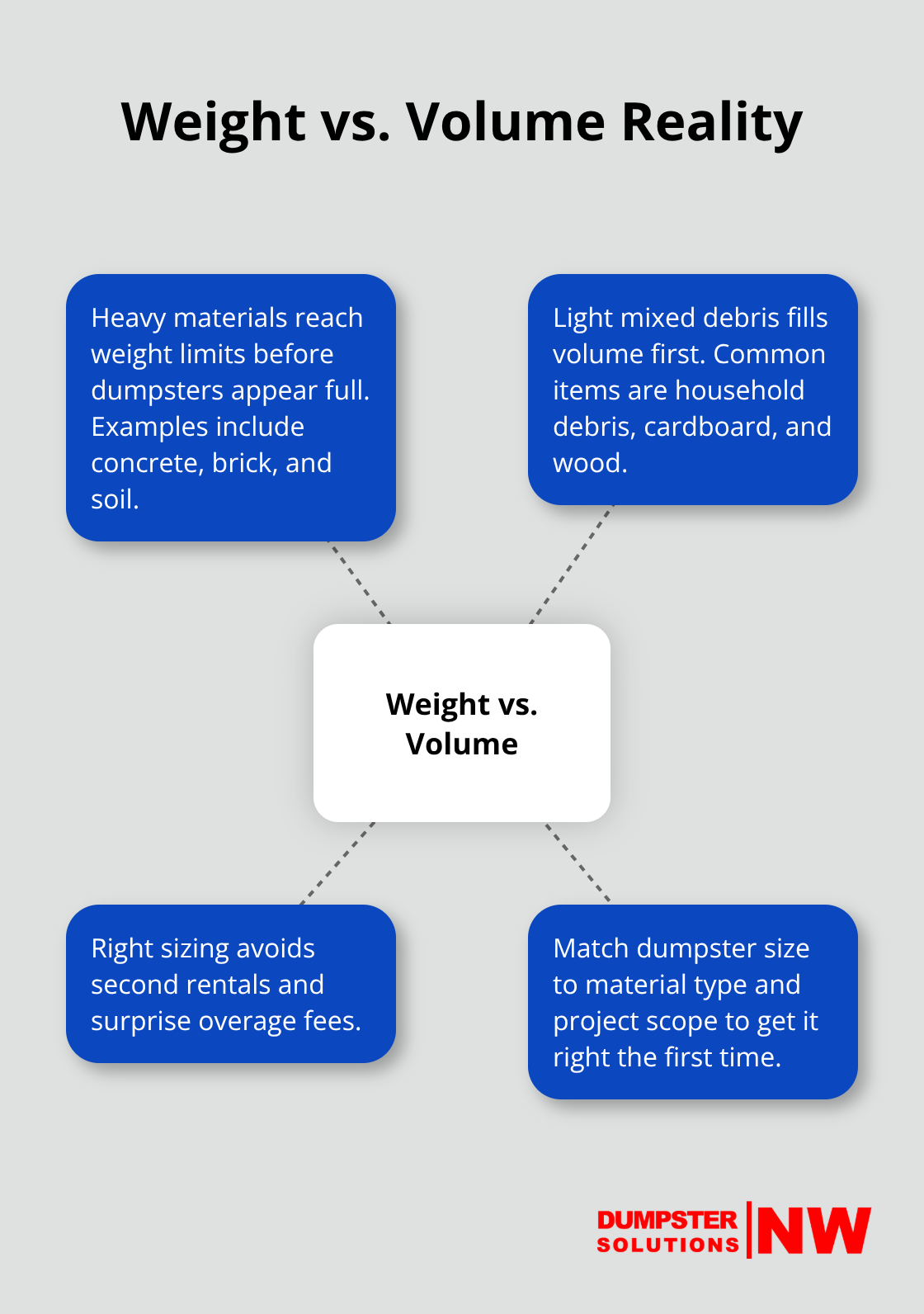
Renting a 40-yard for a small project wastes hundreds of dollars, but renting a 20-yard for a major renovation forces you to make a second rental call, which costs more overall. The weight limit matters as much as volume. Concrete, brick, and soil are heavy materials that fill a dumpster’s weight capacity before it’s visually full. Mixed household debris, cardboard, and wood fill the volume capacity first. Understanding what you’re throwing away prevents rental disasters and helps you select the right size on your first attempt.
Getting the Right Size for Your Situation
The dumpster industry loves to complicate sizing, but it doesn’t have to be. Your project type, the materials involved, and your timeline all influence which size works best. Dumpster Solutions NW serves customers across communities including Edmonds, Federal Way, Issaquah, Kent, Kirkland, Redmond, Renton, and Shoreline with straightforward sizing guidance and same-day or next-day delivery options. Once you understand the basic capacity of each size and what materials you’re actually throwing away, the next step involves calculating your specific project’s volume and weight to confirm your selection.
How to Estimate the Right Size for Your Project
List Your Materials, Don’t Guess
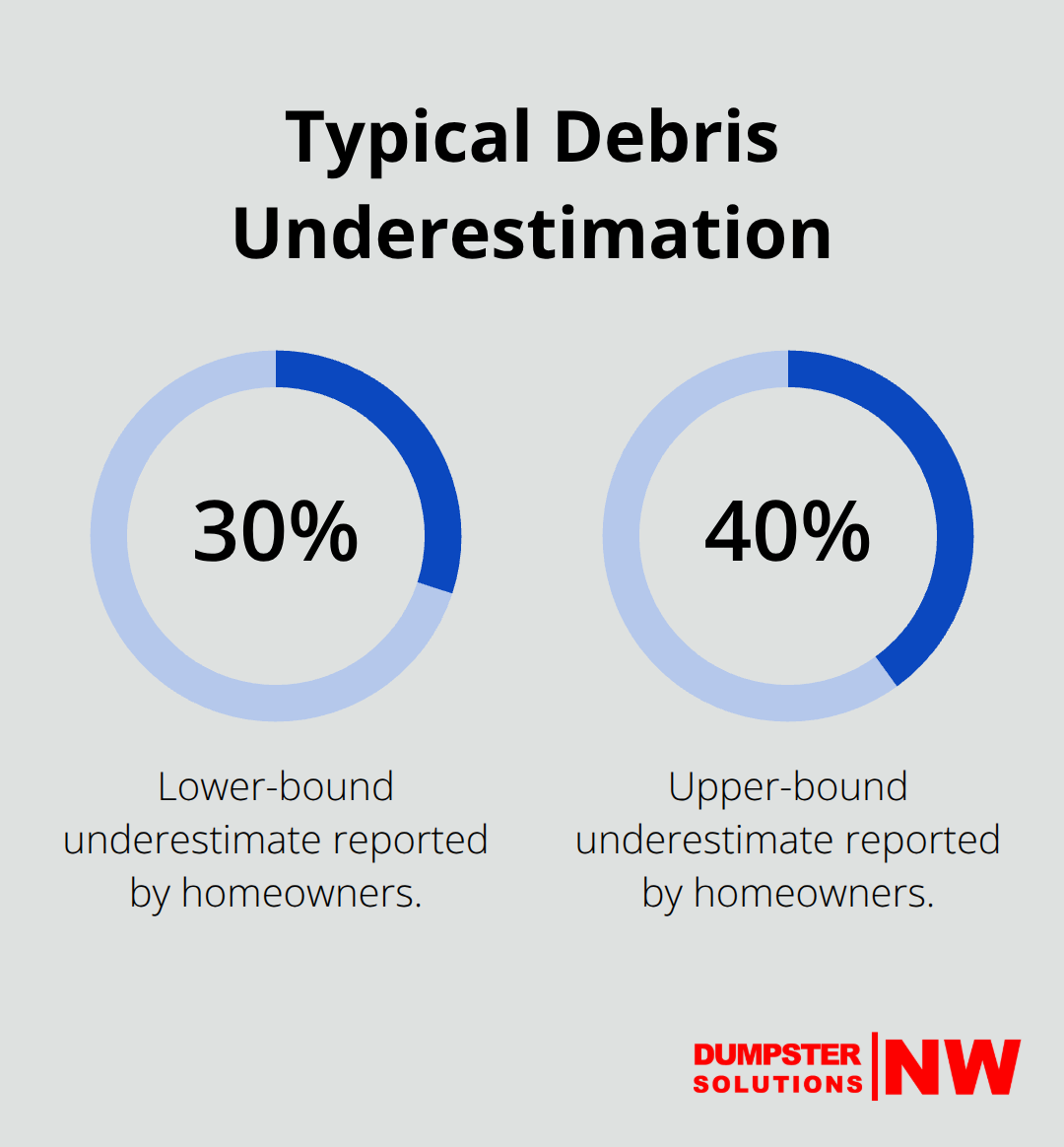
Start by listing exactly what you’ll throw away, not what you think you might throw away. Homeowners consistently underestimate debris volume by 30 to 40 percent according to waste management data. A kitchen renovation produces more waste than most people anticipate-cabinets, countertops, flooring, drywall, and appliances add up fast. Roof replacement debris surprises people too; a single-story home generates roughly 3 to 5 tons of roofing material alone.
Understand Weight Limits for Heavy Materials
Concrete removal is deceptive because it’s heavy but doesn’t look like much. One cubic yard of concrete weighs about 4,000 pounds, so a driveway removal quickly exceeds weight limits on smaller dumpsters. Brick, soil, and asphalt carry similar weight penalties. Mixed household debris, cardboard, and wood fill the volume capacity first, but heavy materials hit the weight limit before you fill the space visually.
Calculate Your Project’s Volume
Measure your project area in square feet, multiply by the depth of debris you expect, and convert to cubic yards by dividing by 27. For example, a 10-by-15-foot room with 4 feet of stacked debris equals 600 square feet times 4 feet, which is 2,400 cubic feet divided by 27, yielding roughly 89 cubic yards. That single room needs a 30-yard dumpster, not a 20-yard. Most people in Seattle, Tacoma, Bellevue, and surrounding Washington communities find that writing down the actual materials-not estimating-prevents expensive mistakes.
Real Projects Show Real Sizing Needs
A single-bathroom renovation with new fixtures, tile, drywall, and flooring typically fills a 10-yard dumpster completely, though weight from tile and fixtures sometimes hits the limit first. A full kitchen remodel, including cabinet removal, countertop replacement, and flooring work, consistently requires a 20-yard dumpster and sometimes pushes toward 30 yards if you’re also removing walls or appliances. Deck removal from a 16-by-20-foot structure generates approximately 2 to 3 tons of wood and fasteners, fitting comfortably in a 10-yard. Major roof replacement on a 2,000-square-foot home produces 4 to 5 tons of shingles and underlayment, requiring a 20-yard to be safe. Estate cleanouts vary wildly depending on the home’s age and contents, but most 3-bedroom homes generate 15 to 20 tons of furniture, boxes, and miscellaneous items, pushing you toward a 30-yard.
Account for Project Duration and Accumulation
Project duration matters significantly; if your work stretches across six weeks, materials accumulate differently than a two-week intensive project. Commercial demolition work and major construction sites almost always demand 30 or 40-yard dumpsters. Once you’ve matched your materials to actual dumpster capacity, you’ll want to consider how local regulations and space constraints affect your rental decision.
Factors That Impact Your Dumpster Selection
Project Duration Changes Your Rental Strategy
Project duration directly impacts your rental strategy and cost. A kitchen renovation finishing in three weeks allows one dumpster placement and pickup, but a phased renovation spreading across three months requires two or three separate rentals as you work through different stages. Homeowners in Bellevue, Redmond, and Seattle often underestimate how long projects actually take. If your work extends beyond two weeks, ask yourself whether you’ll continue adding debris or if you’ll hit a natural stopping point where a pickup and replacement makes sense.
Heavy materials like concrete or roofing typically get removed in one intensive phase, fitting a single rental perfectly. Interior demolition and finish work produce debris gradually, sometimes benefiting from a mid-project swap. Weather delays, contractor schedules, and permit timelines all stretch projects beyond initial estimates. Check with your rental company about their swap or extension policies before you book, because extending a rental often costs less than renting a second dumpster.
Local Regulations and Space Constraints
Local regulations in Washington communities create real constraints that change your sizing decision. Many cities including Tacoma, Auburn, and Federal Way require permits for dumpster placement on public streets or sidewalks. Larger dumpsters need more space to position safely, and some neighborhoods physically cannot accommodate a 40-yard unit without blocking traffic or encroaching on neighbor property.
Homeowners associations in communities like Sammamish, Issaquah, and Mountlake Terrace often restrict dumpster visibility or placement duration. Check your local city ordinances and HOA rules before selecting your size, because discovering a permit requirement or placement restriction after you’ve rented creates expensive delays. Your driveway, alley, or lot dimensions determine what physically fits. A 40-yard dumpster measures roughly 22 feet long and 8 feet wide, requiring clear space without overhead wires or overhanging branches. Measure your available space honestly and confirm with your rental provider that the size you want actually fits your location.
Budget Reality and Cost Trade-Offs
Budget reality sometimes forces compromise between ideal sizing and what you can afford. A 30-yard dumpster costs substantially more than a 20-yard, and if your project barely stretches between the two sizes, the price difference might push you toward renting the smaller size and accepting a potential second rental if needed. This is where your debris estimate matters most.
If your materials genuinely fit in a 20-yard with room to spare, paying for a 30-yard wastes money. If you’re borderline, calculate whether a second 10 or 20-yard rental costs more or less than upgrading to the larger size upfront. Most projects in the Seattle and Puget Sound region fall clearly into one size category once you’ve honestly assessed your materials, making this decision straightforward. Transparent, flat-rate pricing with no hidden fees lets you compare costs accurately before you commit to a rental size.
Final Thoughts
Selecting dumpster size correctly saves money, prevents project delays, and eliminates the frustration of renting twice. The process boils down to three steps: list your actual materials instead of guessing, understand the weight and volume limits of each dumpster size, and match your project honestly to the right capacity. Most homeowners and contractors in Washington communities from Seattle to Tacoma find that this straightforward approach works every time.
We at Dumpster Solutions NW have helped thousands of customers across the Puget Sound region make this decision right on their first rental. Our transparent, flat-rate pricing means no hidden fees surprise you after you’ve committed to a size, and we deliver 10, 20, 30, and 40-yard dumpsters on the same or next day in most cases. Once your project finishes, we handle the hauling and responsible disposal so you can focus on what matters.
Visit Dumpster Solutions NW to choose your dumpster size based on the guidance in this article, confirm it fits your space and local regulations, and schedule your delivery. Our team handles the rest, and your project deserves a rental partner who shows up on time, charges fairly, and makes the process friction-free from start to finish.
Disclaimer: The information provided in this blog is for general informational purposes only and does not constitute legal, financial, or insurance advice. Coverage options, terms, and availability may vary. Please consult with a licensed professional for advice specific to your situation