
Home renovation debris piles up fast, and most homeowners underestimate how much waste a single project generates. The good news is that managing it doesn’t have to be stressful or complicated.
We at Dumpster Solutions NW help Washington homeowners tackle cleanup efficiently, so you can focus on enjoying your newly renovated space. This guide walks you through practical strategies for handling debris from start to finish.
What Waste Actually Comes Out of Home Renovations
Home renovations generate far more debris than most homeowners anticipate. A kitchen remodel alone produces 3,000 to 5,000 pounds of waste, while a full bathroom renovation typically creates 1,500 to 2,500 pounds. Drywall is the heavyweight champion of renovation debris-a single 4-by-8-foot sheet weighs about 70 pounds, and most renovation projects use dozens of them. Plaster waste from older homes in Seattle, Tacoma, and Bellevue adds even more volume because plaster is denser and bulkier than drywall. Old flooring materials stack up quickly too. Removing hardwood, tile, or laminate means hauling away the flooring itself plus the underlayment beneath it, and these materials don’t compress well. Carpet removal from a 500-square-foot room generates roughly 400 to 600 pounds of waste that takes up significant space. Fixtures, cabinets, and miscellaneous materials round out the load-old kitchen cabinets weigh 50 to 150 pounds each, and bathroom vanities add another 100 to 300 pounds depending on material and size.
Drywall and Plaster Create Volume, Not Weight
Drywall waste is deceptive because it takes up enormous space relative to its weight. A standard drywall sheet occupies 32 square feet but only weighs 70 pounds, so a renovation bedroom that needs drywall on four walls generates roughly 15 to 20 sheets of waste. Plaster from pre-1980s homes in Auburn, Kirkland, and Sammamish presents the opposite problem-it’s heavy, dense, and difficult to break down. Plaster waste cannot go in standard recycling streams, which limits your disposal options and makes a dedicated dumpster essential.
Flooring and Underlayment Demand Space
Flooring materials are awkward to dispose of because they’re rigid and won’t compress. Tile and grout create sharp edges that damage standard trash containers, making dumpster rental the safer choice for workers and cleanup crews. Underlayment (whether plywood, cement board, or foam padding) adds significant volume even though individual pieces are lightweight. A 1,000-square-foot flooring project generates enough underlayment to fill a small room.
Fixtures and Cabinets Need Strategic Removal
Old kitchen and bathroom cabinets are heavy and bulky, making them poor candidates for standard trash pickup. Vanities, medicine cabinets, and built-in shelving take up disproportionate space in any dumpster. Planning ahead for these large items matters because they require proper placement in the dumpster to maximize available space and prevent damage to other materials during transport. Understanding what your project will produce sets you up for the next critical step: choosing the right disposal method for each material type.
How to Handle Renovation Debris the Right Way
Sort Materials to Avoid Disposal Problems
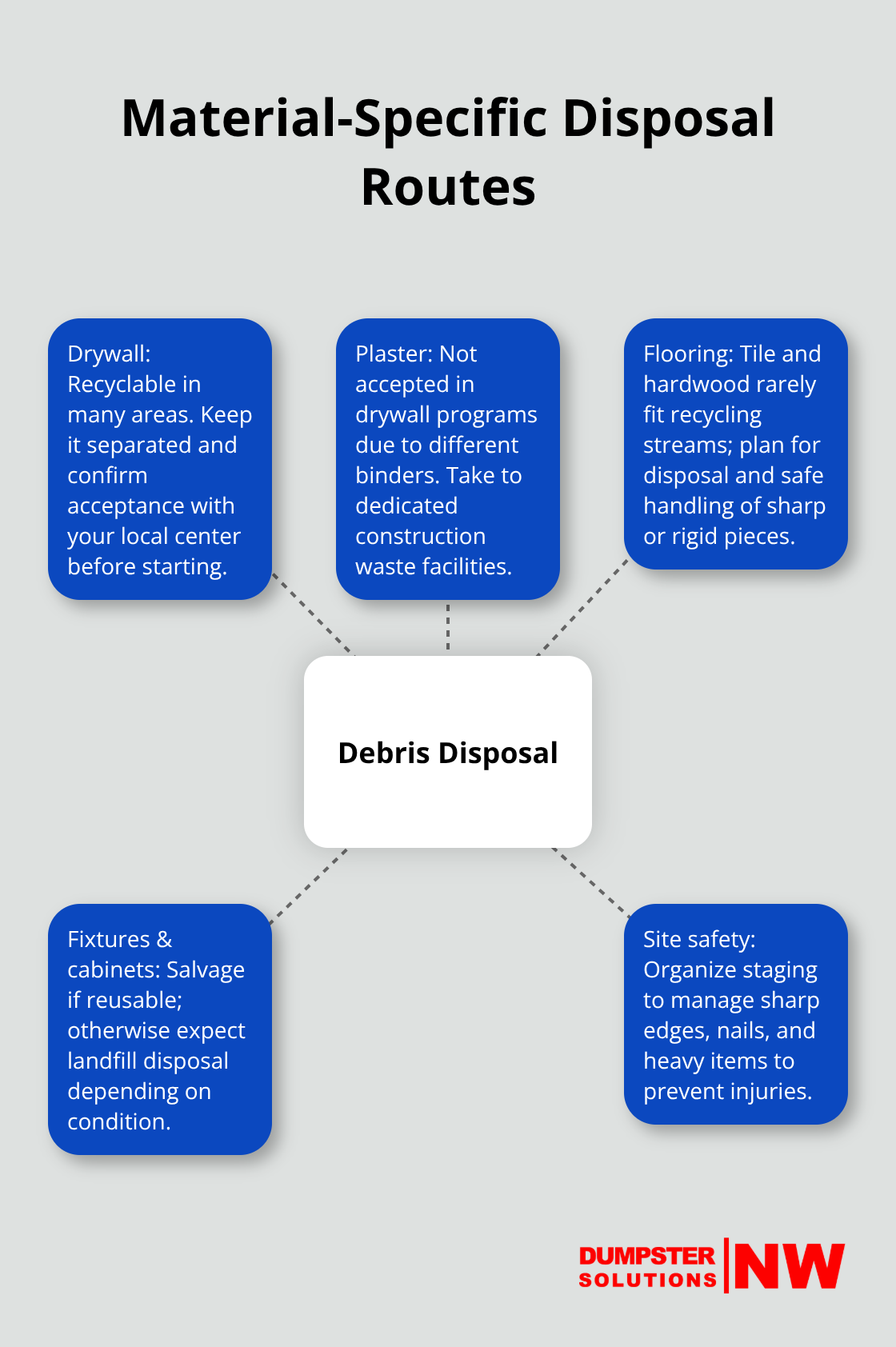
Sorting materials during your renovation prevents costly mistakes at the landfill and eliminates premium disposal fees. Drywall, plaster, flooring, and fixtures each require different disposal pathways, and mixing them creates rejection issues. Drywall waste is recyclable, with construction generating significant amounts of scrap estimated at roughly 12% of all gypsum board used, yet many homeowners toss it in regular trash because they lack information. Separate drywall immediately into its own pile and confirm your local recycling center accepts it before the project starts. Plaster from older homes in Seattle, Tacoma, and Bellevue cannot go through standard drywall programs because it contains different binders and contaminants-it must reach dedicated construction waste facilities instead.
Understand Material-Specific Disposal Routes
Flooring materials like tile and hardwood rarely fit into recycling streams across Washington State, making disposal your only realistic option. Fixtures and cabinets fall into a gray area-some contractors salvage reusable pieces for resale, but most go straight to the landfill. Without a plan for each material type, you waste money and time figuring out disposal on the fly. Sharp tile edges, protruding nails in flooring, and heavy cabinet pieces create injury risks when stacked haphazardly in your yard or driveway.
Streamline Cleanup With a Single Dumpster Rental
A single dumpster rental eliminates the chaos of coordinating multiple disposal trips. Dumpster Solutions NW serves homeowners throughout the Seattle and Puget Sound region with 20 and 30-yard dumpsters that handle the full spectrum of renovation debris without requiring you to sort materials before pickup. Our team manages the separation at our facility, which saves time during your project when you’re already stressed about timelines and costs. Professional dumpster rental also prevents safety hazards on your property and stops debris from spilling onto neighboring properties, which can trigger liability issues. For a typical kitchen renovation generating 3,500 pounds of mixed debris, a single 20-yard dumpster costs significantly less than coordinating multiple disposal trips while protecting your property and workers from accidents.
The next step involves calculating exactly how much space your project needs and timing your rental to match your renovation schedule.
Right-Sizing Your Dumpster and Timeline
Calculate Your Dumpster Size Accurately
Getting the dumpster size wrong costs money and creates project delays. A 20-yard dumpster holds roughly 8 tons of material and works well for kitchen renovations or bathroom overhauls where debris stays under 4,000 pounds. A 30-yard dumpster accommodates 12 tons and handles larger projects like whole-home remodels, room additions, or multiple-room updates simultaneously. Most homeowners in Seattle, Tacoma, Bellevue, and surrounding areas underestimate their debris volume by 30 to 40 percent, which leads to overage fees or the need for a second rental.
Calculate your dumpster size by identifying each material type from your project and adding up the weights. A kitchen remodel at 3,500 pounds fits easily in a 20-yard, but add a flooring replacement generating 2,000 additional pounds and you’re pushing into 30-yard territory. Drywall creates the most confusion because it occupies space without adding much weight-a bedroom drywall project might generate 1,200 pounds but consume more volume than heavier materials like tile or plaster.
Choose Between 20-Yard and 30-Yard Options
Single-room projects work best with a 20-yard dumpster, while any renovation touching more than two rooms or involving structural demo work calls for a 30-yard. Order your dumpster for delivery one day before work starts to avoid paying rental fees while waiting for arrival. This timing prevents unnecessary costs and keeps your project on schedule.
Coordinate Pickup With Your Project Phases
Renovation schedules shift constantly, so schedule your dumpster rental with flexibility built in. A 7-day rental period costs less than paying daily overage fees for an extra week. Most projects run 2 to 4 weeks longer than initial estimates, and this buffer protects your budget.
Coordinate with your contractor about the exact demo and cleanup timeline because debris removal often happens in phases rather than all at once. Early-stage demo work produces the bulk of your waste, while finishing work generates minimal debris, so positioning your dumpster during weeks one and two of a longer project makes financial sense.
Establish Daily Debris Management Practices
Create a cleanup schedule that assigns specific team members responsibility for moving debris into the dumpster daily rather than letting it pile up in work areas. Sharp tile edges, protruding nails, and heavy cabinet pieces create serious injury risks when stacked haphazardly in your home, so establishing a dedicated debris zone with clear pathways prevents accidents and keeps your project organized. This approach protects workers and maintains site safety throughout your renovation.
Dumpster Solutions NW delivers throughout Washington State’s major communities (Auburn, Bothell, Edmonds, Federal Way, Issaquah, Kenmore, Kent, Kirkland, Mountlake Terrace, Puyallup, Redmond, Renton, Sammamish, and Shoreline) with same-day or next-day availability, which means you can adjust your rental timing right up until your project starts.
Final Thoughts
Home renovation debris requires straightforward planning: estimate your volume accurately, select the right dumpster size, and time your rental around your project phases. A 20-yard dumpster handles most single-room renovations, while a 30-yard works better for multi-room projects or structural demolition. Professional disposal facilities process mixed construction waste efficiently, so you don’t need to separate materials perfectly during your project.
Professional dumpster rental eliminates the stress of coordinating multiple landfill trips while your renovation proceeds. Safety improves dramatically when debris sits in a designated dumpster rather than accumulating in your yard or driveway, protecting your family, workers, and neighbors from injury risks caused by sharp edges, protruding nails, and unstable stacks. You focus on the renovation itself while the dumpster company handles the logistics and heavy lifting.
We at Dumpster Solutions NW serve homeowners across the Seattle and Puget Sound region with transparent pricing, same-day or next-day delivery, and flat-rate fees that include no hidden charges. Our 20 and 30-yard dumpsters work for virtually any home renovation debris situation across Auburn, Bothell, Edmonds, Bellevue, Federal Way, Issaquah, Kenmore, Kent, Kirkland, Mountlake Terrace, Puyallup, Redmond, Renton, Sammamish, Seattle, Shoreline, and Tacoma. Get a quote from Dumpster Solutions NW to schedule your delivery and start your renovation with confidence.
Disclaimer: The information provided in this blog is for general informational purposes only and does not constitute legal, financial, or insurance advice. Coverage options, terms, and availability may vary. Please consult with a licensed professional for advice specific to your situation