
Construction waste piles up fast, and without a solid plan, it derails your entire project. A jobsite dumpster rental keeps debris organized, your crew safe, and your timeline on track.
We at Dumpster Solutions NW know that contractors across Washington State need dependable waste management solutions. This guide walks you through sizing, placement, and scheduling strategies that actually work on the ground.
Why Contractors Need Reliable Jobsite Dumpster Rentals
Construction Waste Creates Real Problems on Your Jobsite
Construction debris accumulates fast, and without a system, it derails your entire project. Construction waste accounts for roughly 600 million tons annually in the United States, with poor waste handling directly impacting project costs and timelines. When debris piles up on your jobsite without organization, your crew wastes time navigating around materials instead of working productively. Safety hazards multiply quickly-tripping risks, blocked emergency exits, and unstable debris stacks create liability exposure that no contractor wants.
A Dumpster Rental Solves Multiple Problems at Once
A dedicated dumpster rental eliminates these issues immediately. Your team knows exactly where to dispose of materials, walkways stay clear, and your project maintains momentum. Beyond safety and efficiency, organized waste management protects your reputation with clients and municipal inspectors who increasingly scrutinize jobsite conditions. Most contractors underestimate how much time crew members lose to inefficient waste disposal, but the National Association of Home Builders data shows that poor site organization costs contractors an average of 3 to 5 percent of total project budgets.
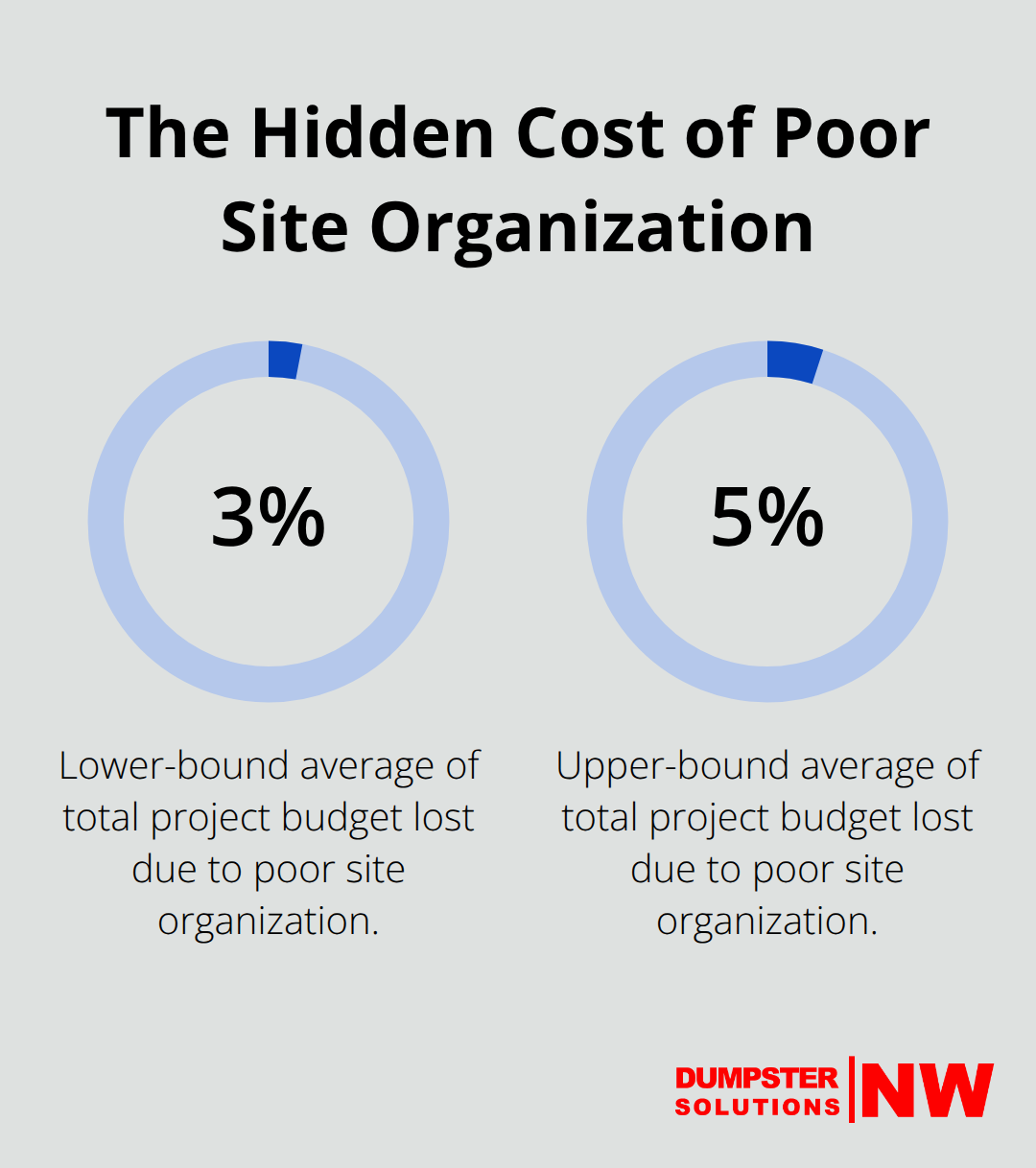
A properly sized and positioned dumpster prevents this drain on profitability while keeping your timeline intact.
Flexibility Matters When Timelines Shift
Construction projects rarely follow perfectly linear timelines-weather delays, permit holds, and material delivery issues shift your waste volume needs constantly. A reliable dumpster rental partner allows you to adjust pickup schedules to match your actual progress rather than guessing weeks in advance. This flexibility prevents the scenario where debris piles force work stoppages or where you’ve paid for pickups you didn’t need. Contractors operating across Washington State communities like Seattle, Tacoma, Bellevue, and Federal Way face varying local regulations around waste storage and disposal. Your dumpster choice directly influences how efficiently your crew operates and how professionally your jobsite appears to clients, inspectors, and neighboring properties-which is why selecting the right size matters more than most contractors realize.
How to Choose the Right Dumpster Size for Your Project
Guessing at Size Costs You Money
Guessing at dumpster size wastes money and creates headaches mid-project. Most contractors rent either too small and pay overage fees, or too large and throw away rental capacity. The solution is calculating waste volume based on your specific scope, not industry averages that don’t match your jobsite.
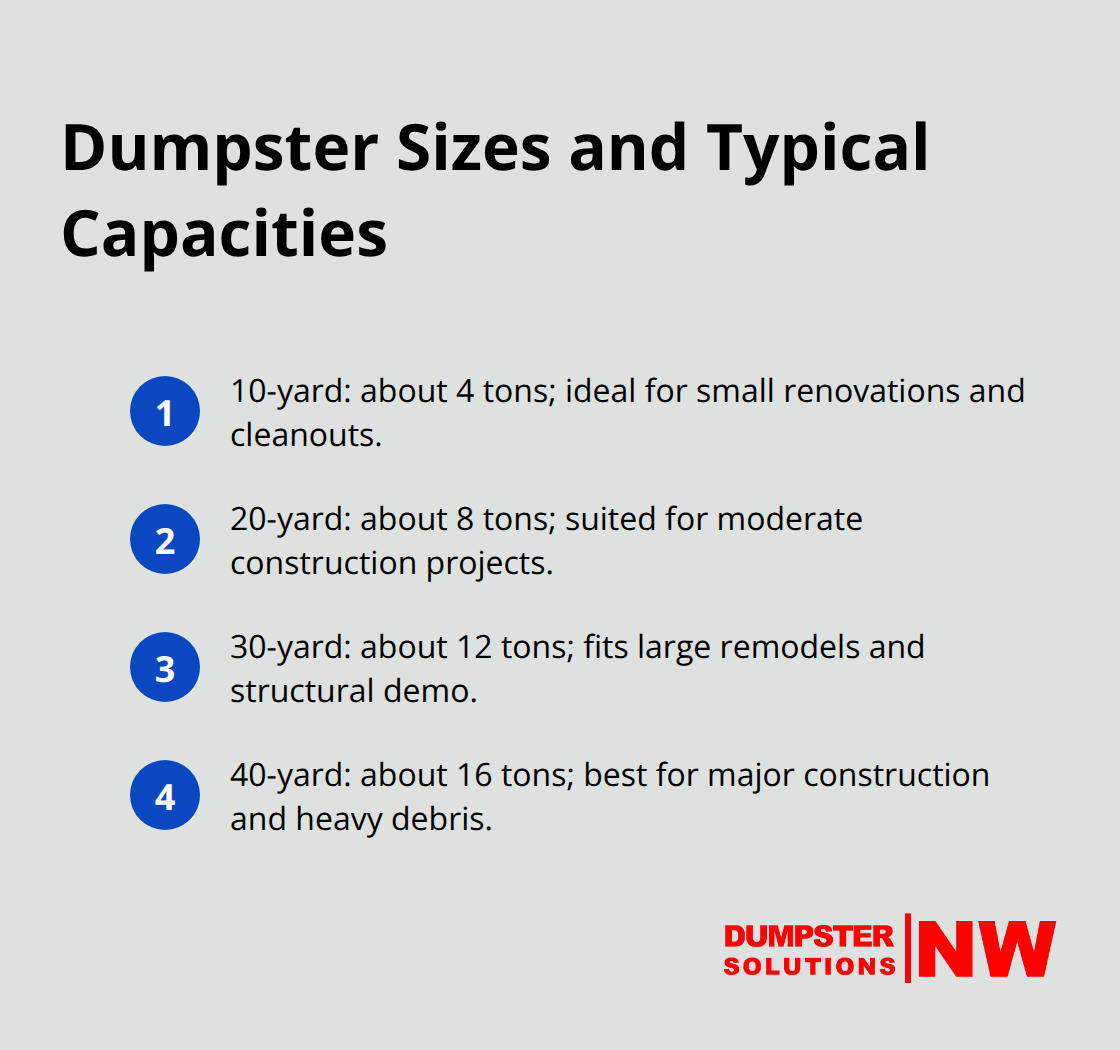
Start by identifying what materials you dispose of-demolition debris weighs significantly more than framing waste, and that weight directly impacts which size works. A 10-yard dumpster holds roughly 4 tons of material and works for small renovations or cleanouts, while a 20-yard handles moderate construction projects and averages 8 tons capacity. For larger jobs involving structural demolition or extensive remodeling, 30 and 40-yard dumpsters provide 12 and 16 tons respectively.
Calculate Your Actual Waste Volume
The mistake contractors make most often is underestimating volume, which leads to overfilling penalties that typically run 50 to 150 dollars per additional ton. Calculate your expected debris by measuring the square footage of affected areas and multiplying by typical waste density for your project type-a full kitchen remodel in a 200-square-foot space generates roughly 2 to 3 tons of combined materials, cabinetry, flooring, and drywall. This calculation prevents the expensive surprise of discovering mid-project that your dumpster can’t hold what you’re generating.
Position Your Dumpster Before Delivery Arrives
Position your dumpster placement decision before delivery, not after. Most jobsites in Seattle, Tacoma, Bellevue, and surrounding Washington communities have space constraints that force difficult positioning choices. A dumpster placed 50 feet from your work area doubles the time your crew spends hauling debris instead of completing actual work. Verify access with your property owner or facility manager-confirm that driveway weight limits allow the delivery truck, that overhead clearance accommodates the dumpster height, and that placement won’t block emergency routes or neighbor access.
Schedule Pickups Around Your Project Phases
Schedule your pickup to align with major project phases rather than random intervals. If you complete demolition work over two weeks, request pickup on day 10 rather than day 7, reducing unnecessary rental days. Overfilled dumpsters create safety violations and attract penalties from waste management facilities-keep fill levels below the rim and organize heavier materials at the bottom with lighter debris on top to maximize usable capacity without exceeding weight limits.
Proper Loading Prevents Problems Later
Organizing waste by material type during loading prevents complications at disposal facilities and maximizes your dumpster’s efficiency. Separate heavy items like concrete and metal from lighter materials, and avoid mixing hazardous waste with standard construction debris. This approach protects your crew’s safety and ensures your rental investment delivers real value throughout your project timeline.
Managing Your Jobsite Dumpster for Maximum Efficiency
Position Your Dumpster Where Your Crew Actually Works
Placement determines whether your dumpster works for your crew or against them. The worst mistake contractors make is positioning the dumpster in a convenient spot for the delivery truck rather than where your team actually needs it. A dumpster placed 100 feet from your work area costs you real time and money-crew members waste 10 to 15 minutes per trip hauling debris instead of completing productive work. Position your dumpster within 50 feet of your primary work zone, on level ground that supports the truck’s weight during delivery and pickup.
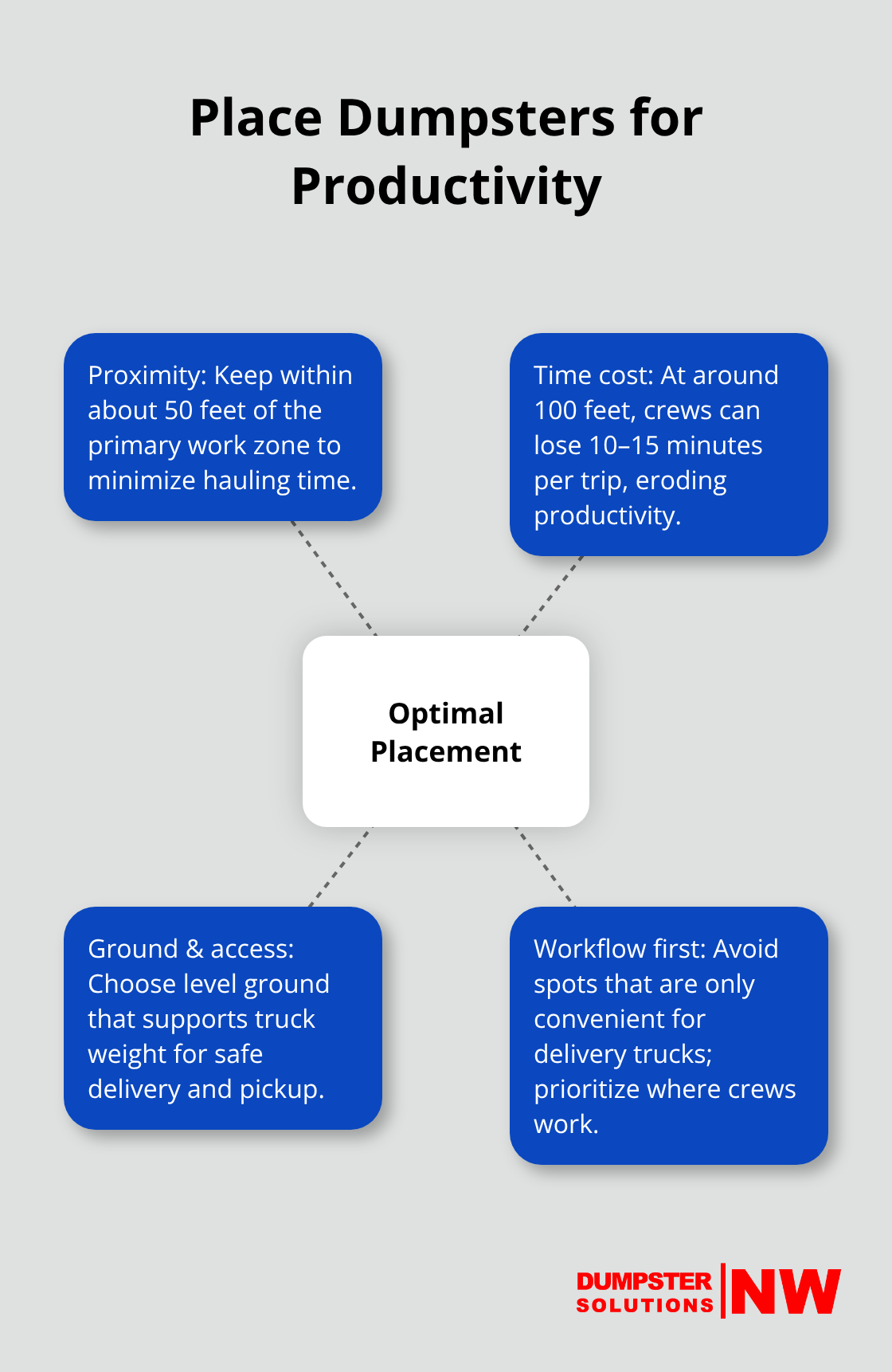
Verify that placement doesn’t block emergency exits, fire lanes, or neighbor access roads-municipalities across Washington State enforce these regulations strictly, and violations result in fines or forced relocation that halts your project. Check overhead clearance for power lines and building overhangs before delivery arrives. On jobsites in Seattle, Tacoma, Bellevue, and surrounding communities, narrow driveways and tight property lines force difficult decisions, so confirm access routes with your property manager before committing to placement.
Separate Materials to Avoid Rejection Fees
Organize materials during loading to prevent disposal facility rejections and maximize your dumpster’s usable space. Separate concrete and masonry from wood framing, metal from drywall, and keep hazardous materials completely isolated. Load heavy materials like concrete and metal at the bottom of the dumpster, distributing weight evenly across the floor rather than stacking everything on one side, which creates tipping hazards during transport.
Place lighter materials like drywall and insulation on top, and never exceed the fill line-overfilled dumpsters violate safety regulations and trigger additional charges. This approach prevents costly mistakes and keeps your worksite safe and clean, ensuring your project moves forward without unexpected delays or penalties.
Align Your Pickup Schedule With Project Phases
Coordinate your pickup schedule with your project phases rather than following a preset calendar. If you’re mid-demolition and generating maximum debris, request pickup every 5 to 7 days; during finishing work when waste slows dramatically, extend your pickup interval to 10 to 14 days. This approach prevents paying for unused rental days while guaranteeing you never run out of space mid-phase. Your waste management adapts as your work progresses rather than forcing your timeline around a rigid rental schedule.
Final Thoughts
Efficient jobsite dumpster rental management directly impacts your bottom line and project timeline. Contractors who calculate waste volume accurately, position their dumpster strategically, and schedule pickups around actual project phases avoid costly overfilling fees and safety violations. Your crew stays productive instead of wasting time hauling debris across sprawling jobsites.
Partnering with a local dumpster rental company matters more than most contractors realize. A local partner understands Washington State regulations, knows the specific constraints of jobsites in Seattle, Tacoma, Bellevue, and surrounding communities, and adjusts service quickly when your project timeline shifts unexpectedly. You avoid the frustration of dealing with national companies that treat your jobsite as just another ticket in their system.
We at Dumpster Solutions NW provide transparent, flat-rate pricing with no hidden fees, same-day or next-day delivery, and a full range of sizes from 10 to 40-yard dumpsters (whether you’re managing a small renovation or a large construction project). Contact Dumpster Solutions NW for your next project and experience the difference that local, dependable service delivers to your jobsite.
Disclaimer: The information provided in this blog is for general informational purposes only and does not constitute legal, financial, or insurance advice. Coverage options, terms, and availability may vary. Please consult with a licensed professional for advice specific to your situation