
Construction waste piles up fast, and poor management kills contractor efficiency. When debris isn’t handled right, crews waste hours sorting, hauling, and cleaning instead of building.
We at Dumpster Solutions NW know that the difference between a project that runs on schedule and one that stalls often comes down to one thing: how well waste is managed. The right dumpster strategy keeps sites organized and teams productive.
Where Waste Management Plans Fall Apart
Mixed Materials Create Sorting Bottlenecks
Construction waste accumulates faster than most contractors anticipate, and poor management kills productivity before crews realize what happened. On a typical job site, mixed waste piles create sorting nightmares. Concrete, drywall, wood, and metal end up in the same pile, forcing crews to separate materials by hand before disposal-a process that consumes hours every week. When materials lack presort systems, recycling becomes impossible, and everything lands in the landfill instead. Recycled construction debris saves contractors $8–$12 per ton compared to landfill disposal. Without a clear sorting system from day one, contractors lose this savings and waste labor hours crews could spend on actual construction work.
Coordination Failures Trigger Cascading Delays
Coordination failures compound the problem fast. Many sites operate without a documented waste removal schedule, so crews don’t know when pickups happen or how much capacity remains. This leads to overflow situations where debris spills beyond designated areas, creating safety hazards and forcing emergency cleanups that derail the work schedule. Sites without advance planning also miss the window to schedule pickups around project milestones, resulting in dumpsters sitting full while work halts.
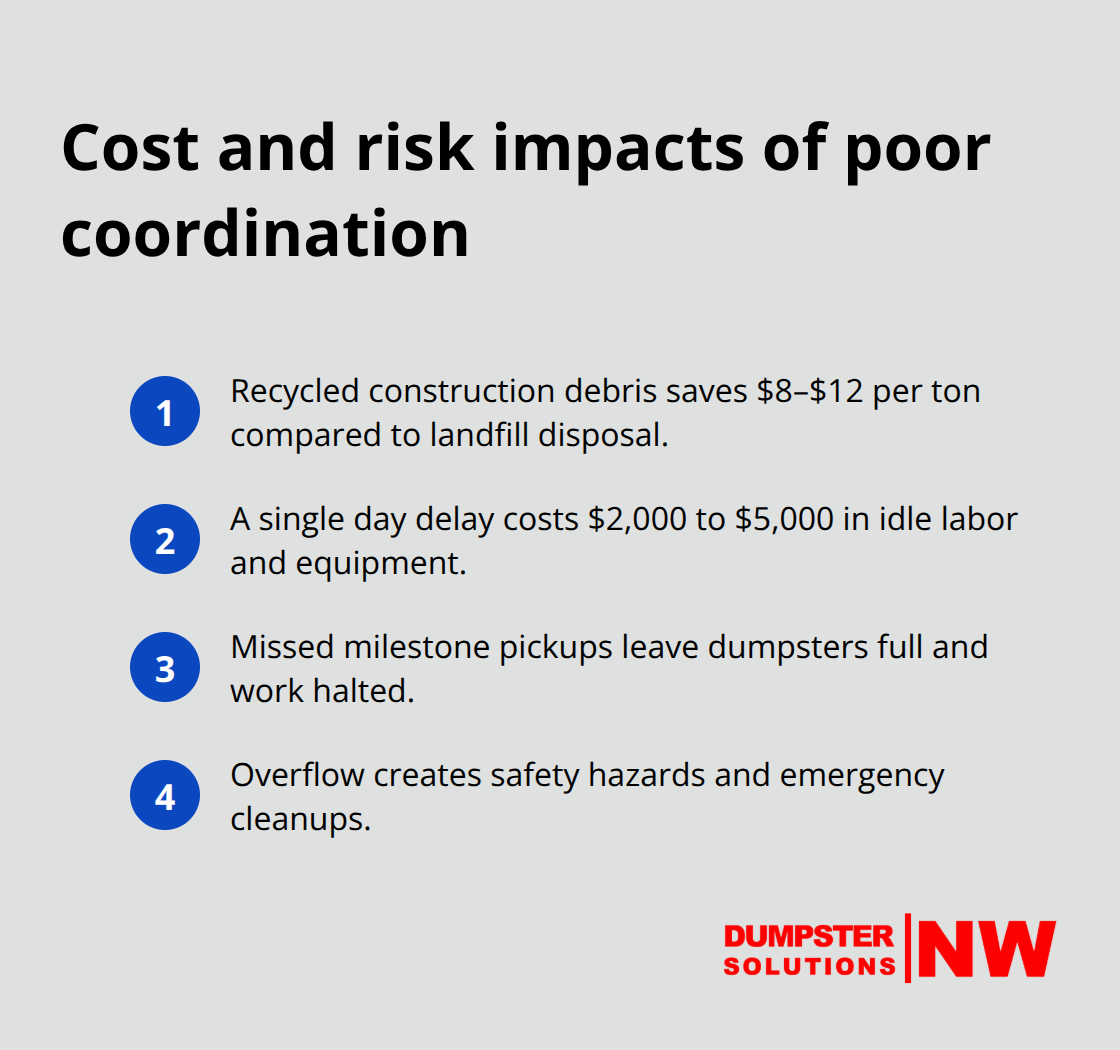
A single day delay on a medium-sized renovation costs $2,000 to $5,000 in labor and equipment idle time-money that vanishes the moment crews stop working.
The Cost of Disorganization Adds Up Fast
The real expense isn’t the rental fee itself; it’s the crew downtime that follows poor planning. When waste management lacks structure, teams spend time managing debris instead of building. Overflow situations force safety interventions that pull workers away from their primary tasks. Unscheduled pickups create uncertainty about site capacity, leading crews to work around full dumpsters rather than removing obstacles. These friction points (small delays, safety concerns, coordination gaps) compound across a project timeline and transform into significant schedule slips.
Reliable dumpster rental services eliminate these coordination gaps through flexible scheduling and dependable delivery windows. With proper logistics handled by professionals, your team stays focused on construction work rather than waste logistics.
Planning Waste Removal Before Work Starts
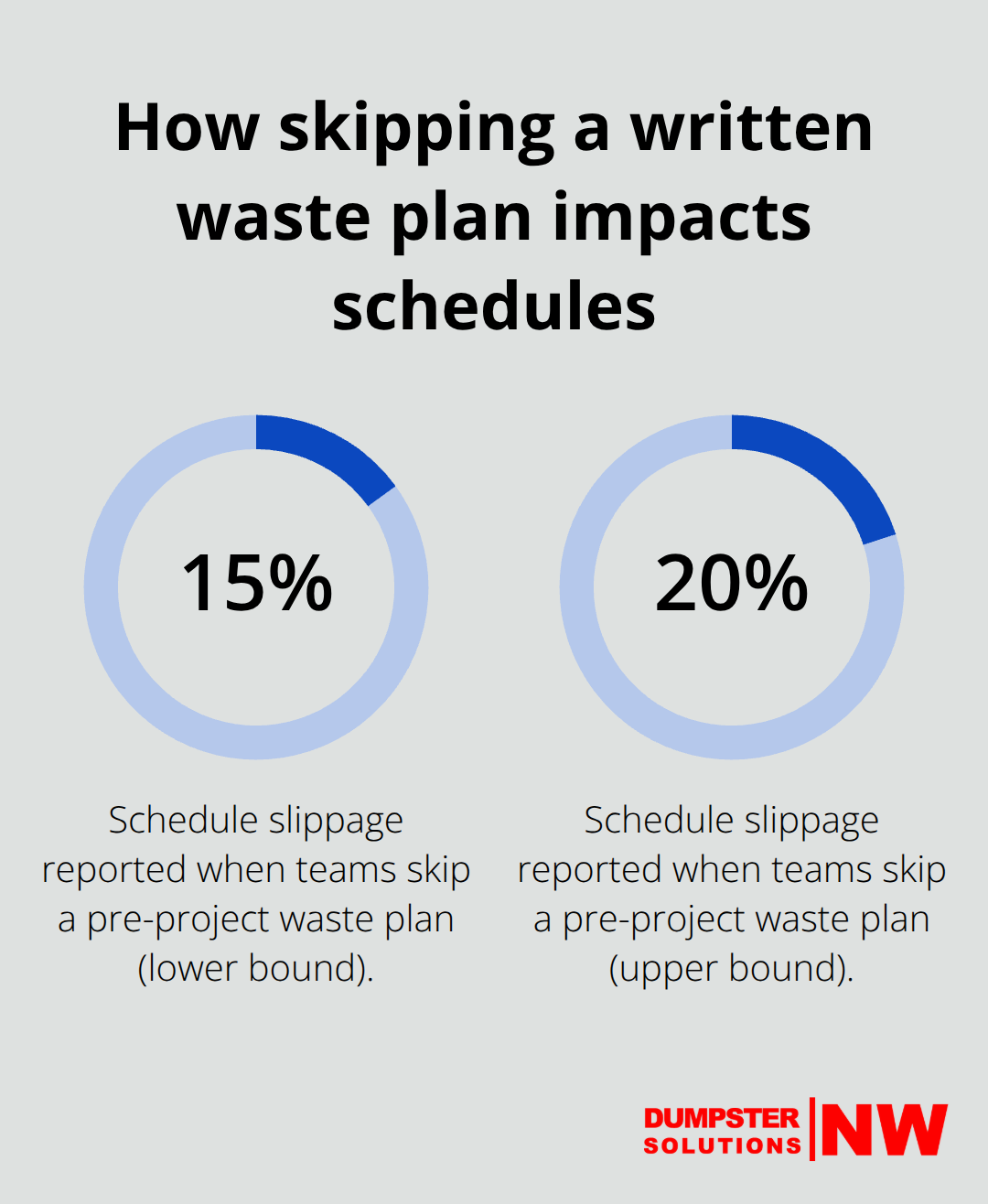
A documented waste plan written before the first nail is driven separates projects that finish on time from those that spiral into delays. The plan should identify which materials your project will generate, how much volume you expect, and when you’ll need pickups scheduled around major work phases. This isn’t theoretical-contractors who skip this step consistently report 15 to 20 percent schedule slippage.
Start by walking the site and listing every waste stream: concrete, drywall, lumber, metal, asphalt, or hazardous materials like treated wood or old roofing. Next, estimate volume per phase. A 2,000 square foot renovation generates roughly 40 to 50 tons of mixed debris. A 10-yard dumpster holds about 10 tons, so you’ll need four to five pickups across the project timeline. Without this math done upfront, crews either overflow dumpsters mid-week and halt work, or they underestimate and scramble for emergency pickups that cost premium rates.
Right-Sizing Your Dumpster Selection Matters
Picking the wrong dumpster size wastes money and creates logistical friction. Too small, and you’ll pay for extra pickups or rush fees. Too large, and you’re renting unused capacity. Contractors often guess instead of calculating. For heavy demolition or concrete removal, a 30 or 40-yard dumpster typically proves more cost-effective than multiple 20-yard pickups, even though the upfront rental looks higher. For framing and drywall work, a 20-yard dumpster often handles one to two weeks of debris before pickup. The key is matching dumpster capacity to your material type and project timeline. Dense materials like concrete fill dumpsters faster than light framing waste. A pre-project assessment of material type and volume prevents the false economy of undersizing.
Scheduling Pickups Around Project Milestones
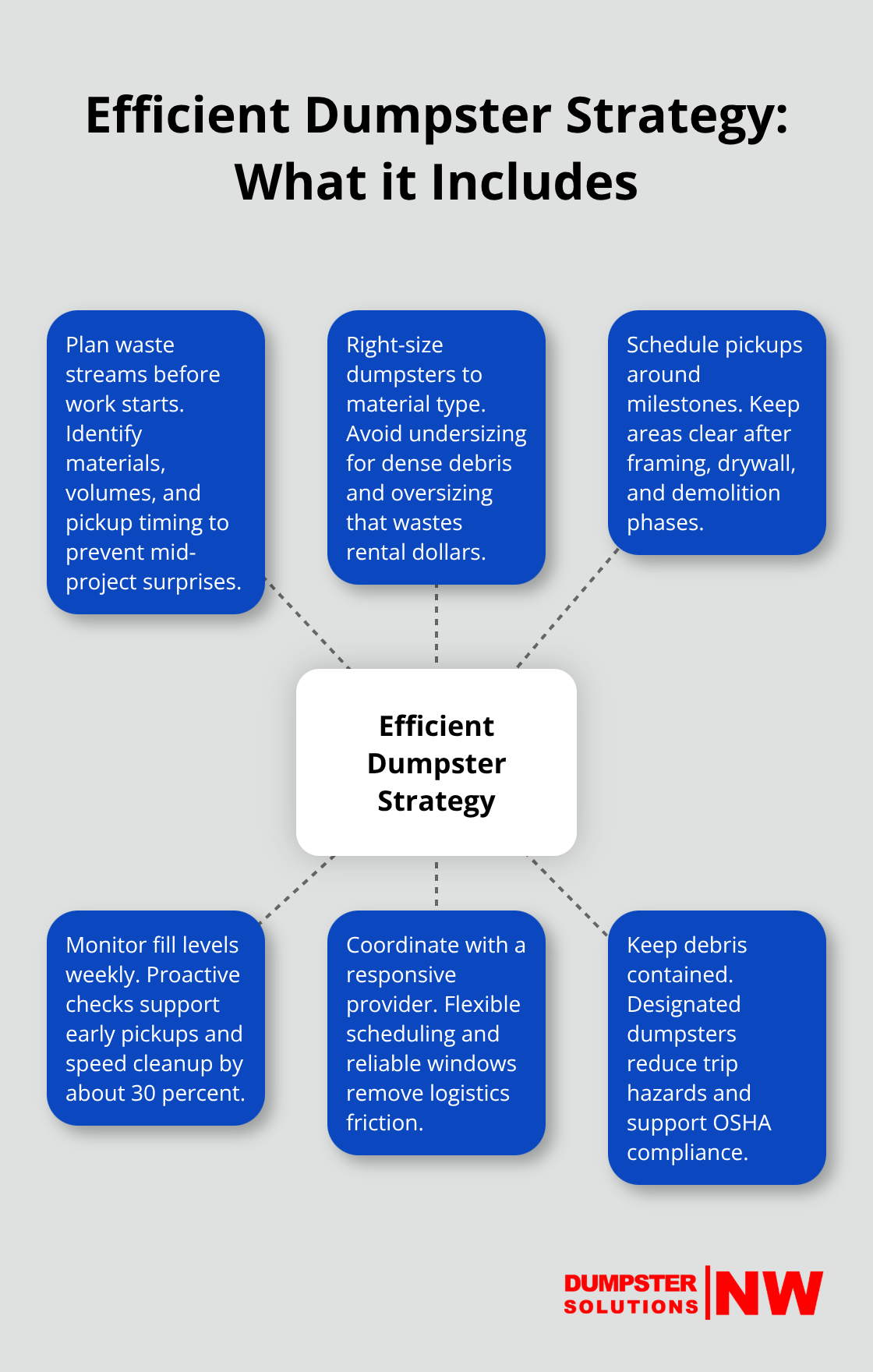
Coordination between your waste removal schedule and actual work phases prevents the most common delay: crews working around full dumpsters. Schedule pickups to align with natural project breaks-after framing is complete, after drywall is done, after demolition wraps. This keeps work areas clear and eliminates the safety hazards that overflow creates. Most reliable dumpster services offer flexible scheduling and can adjust pickup dates with notice, so build this flexibility into your plan. Document your pickup schedule in writing and share it with crew leads so everyone knows when capacity resets. Sites that monitor dumpster fill levels weekly and coordinate pickups accordingly report 30 percent faster cleanup cycles than those that wait until overflow forces action. The discipline of tracking fill and scheduling proactively costs nothing but eliminates the friction that kills schedules.
Monitoring Fill Levels Prevents Overflow Surprises
Weekly fill-level checks transform waste management from reactive scrambling into predictable logistics. Assign one crew member to inspect the dumpster and report capacity status to the project manager. This simple habit (taking five minutes per week) prevents the scenario where crews arrive Monday morning to find a full dumpster blocking the work area. When you track fill levels, you can call for an early pickup before overflow happens, keeping work flowing without interruption. Sites that implement this practice avoid the safety incidents and schedule friction that full dumpsters create. The data shows that proactive monitoring reduces unplanned delays by roughly 30 percent compared to sites that wait for problems to surface.
Coordinating with Your Dumpster Service Provider
Your dumpster rental partner should offer flexible scheduling and responsive communication. When you need to adjust a pickup date or request an extra haul, the service should accommodate the change without penalty or excessive fees. Transparent pricing (no hidden charges) and reliable delivery windows matter more than you might think-they eliminate the uncertainty that forces crews to work around logistics instead of focusing on construction. A service that delivers on time and picks up when scheduled removes one major source of project friction. This partnership approach to waste management keeps your timeline intact and your crew productive.
With the right plan in place and a dependable dumpster service handling logistics, your team can focus entirely on the work that matters. The next step is understanding how this organized approach translates into real time savings and safety improvements on the job site.
How Dumpster Rentals Transform Job Site Efficiency
Organized Waste Removal Cuts Labor Hours
Organized waste removal directly cuts labor hours spent on cleanup and hauling. When a dumpster sits on-site, crews toss debris immediately rather than stacking it for later removal, and work flows without the friction that kills schedules. A crew member walks ten feet to the dumpster instead of spending thirty minutes hauling a wheelbarrow of drywall scraps to a distant pile, then returns to framing. Multiply that across a week, and you recover full work days that would otherwise vanish. On a 2,000 square foot renovation generating 40 to 50 tons of debris, four to five pickups spaced across the project timeline keep work areas functional throughout. Sites that implement on-site dumpsters report faster completion than those relying on manual hauling or distant disposal points.
Material Type Determines Pickup Frequency
Dense materials like concrete and asphalt fill dumpsters faster than light framing waste, so understanding your material type helps schedule pickups correctly and keeps the work area clear. A 10-yard dumpster holds roughly 10 tons and prevents the scenario where crews work around obstacles. The mathematics are straightforward: match your dumpster capacity to your material type and project timeline, then space pickups accordingly. This prevents the false economy of undersizing and the wasted rental fees that come from oversizing.
Safety Improves When Waste Stays Contained
Safety improves dramatically when waste stays contained in a designated dumpster. Overflow debris creates trip hazards, blocks pathways, and forces crews to navigate around obstacles. A designated dumpster eliminates these hazards and keeps OSHA compliance straightforward. Crew injuries from tripping or falling on scattered debris cost contractors far more than dumpster rental fees-medical expenses, lost productivity, and potential liability add up quickly.
Clean work areas also reduce the mental load on project managers, who spend less time addressing safety concerns and more time coordinating actual construction work.
Waste Accumulation Derails Timelines Without a System
Waste accumulation without a removal system is one of the fastest ways to derail a project timeline. When a dumpster isn’t available and debris piles grow unchecked, crews eventually face a choice: stop work to clean up, or work around the clutter and sacrifice efficiency. Either option kills the schedule. Dumpster rental services that offer flexible scheduling and responsive communication eliminate this friction entirely. When you can call for an early pickup or adjust a delivery date without penalty, you maintain control over your timeline instead of working around logistics.
Predictable Workflows Prevent Emergency Situations
Contractors who schedule pickups around project milestones and monitor dumpster fill levels weekly experience predictable workflows and avoid the emergency situations that inflate costs. The difference between a project that finishes on schedule and one that slips often comes down to whether waste removal is treated as a planned utility or an afterthought. Coordinating waste removal with your dumpster service provider transforms cleanup from a source of delay into a system that supports faster completion. Transparent pricing (no hidden fees) and reliable delivery windows matter more than you might think-they eliminate the uncertainty that forces crews to work around logistics instead of focusing on construction. A service that delivers on time and picks up when scheduled removes one major source of project friction.
Final Thoughts
Streamlined waste management forms the foundation that keeps projects on schedule and budgets intact. Contractors who finish on time treat waste removal as a planned system, not an afterthought-they document waste streams before work starts, right-size dumpsters to match material types, and schedule pickups around project milestones to eliminate the friction that kills contractor efficiency. The math proves the value: a single day of crew downtime costs $2,000 to $5,000 in idle labor and equipment, overflow debris forces safety interventions that pull workers away from productive tasks, and unscheduled pickups create uncertainty that forces teams to work around obstacles instead of building.
The solution requires proper planning paired with dependable equipment. Your waste plan identifies material types, estimates volume per phase, and coordinates pickups with actual work schedules, while your dumpster service handles the logistics so your team stays focused on construction. We at Dumpster Solutions NW offer 10, 20, 30, and 40-yard dumpsters sized for any project, from small renovations to large construction sites, with flat-rate pricing that eliminates hidden fees and same-day or next-day delivery that keeps your timeline intact.
When you partner with a reliable dumpster rental service, you remove one major source of project uncertainty and transform waste management from a source of stress into a system that supports faster completion. Contact Dumpster Solutions NW to discuss your project needs and get started with a service built for contractor success.
Disclaimer: The information provided in this blog is for general informational purposes only and does not constitute legal, financial, or insurance advice. Coverage options, terms, and availability may vary. Please consult with a licensed professional for advice specific to your situation