
Bad dumpster scheduling can derail your entire project. You order too early and waste money on rental fees, or too late and watch your crew sit idle waiting for a bin to arrive.
We at Dumpster Solutions NW have seen countless projects in Seattle, Tacoma, and across Washington State stumble because the dumpster timing was off. Getting this right means your work flows smoothly, your budget stays intact, and your team stays productive.
What Should You Plan for Before Ordering a Dumpster
Size Your Project Correctly
The first step is sizing your project correctly. A 10-yard dumpster works for small bedroom cleanouts and fits roughly 50 to 70 bags of household waste, according to industry capacity standards. A 20-yard dumpster handles mid-size renovations and holds about 110 to 130 bags. A 30-yard bin tackles major remodels and construction debris, containing roughly 170 to 190 bags. A 40-yard dumpster is your heavy hitter for demolition work and can hold 230 to 250 bags.
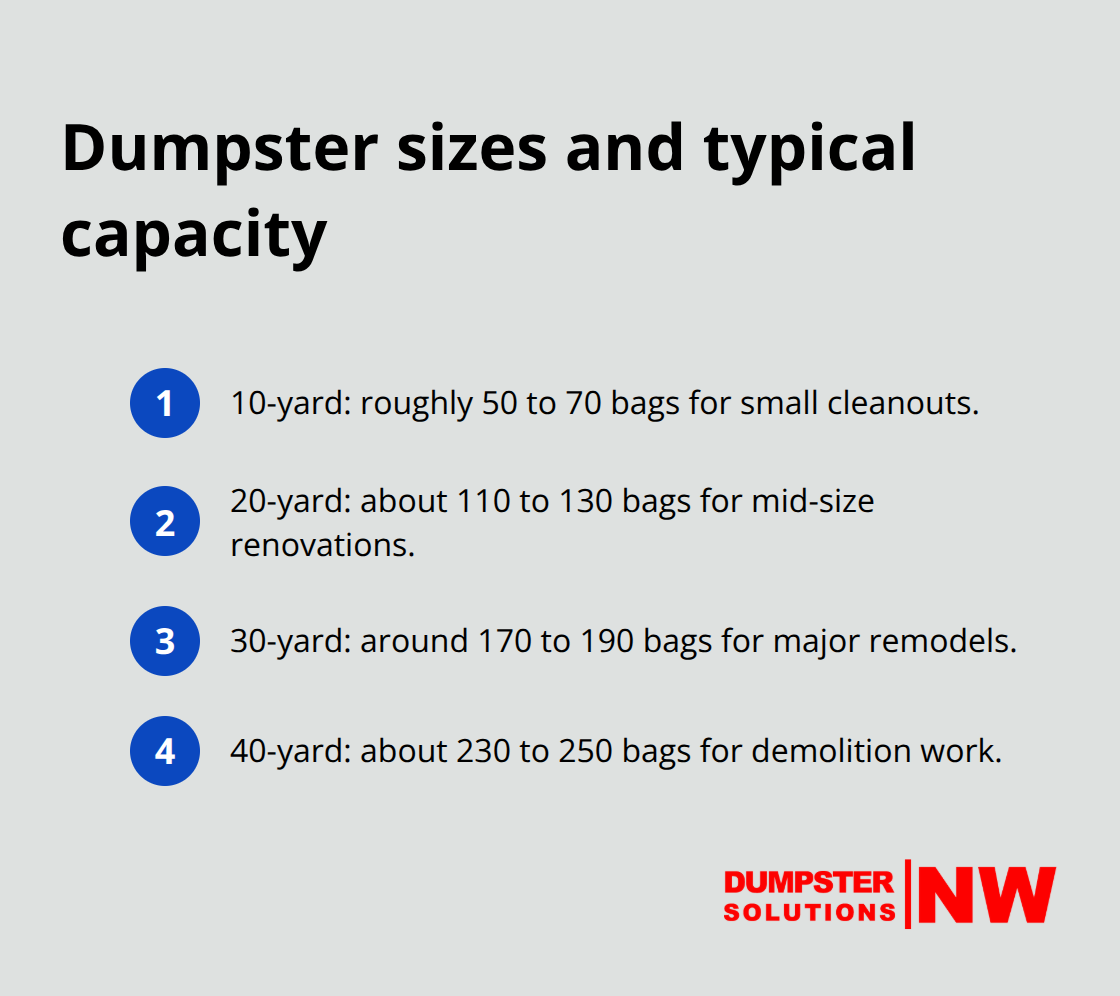
Most homeowners and contractors make the mistake of guessing at size rather than calculating actual waste volume.
Match Dumpster Size to Your Work Phases
If you’re doing a kitchen remodel, expect 4 to 6 weeks of framing and finish work that produces substantial drywall, insulation, and trim debris-that’s a 20 or 30-yard situation. A garage cleanout requires a 10-yard dumpster that arrives and leaves within days. Foundation work takes 2 to 3 weeks and produces excavation waste, formwork, and concrete debris that needs dedicated dumpster access. Mechanical installations span 3 to 4 weeks with old piping, electrical materials, and component disposal. The finishing phase runs 6 to 8 weeks and is often underestimated because drywall dust and cabinet installation create more debris than people anticipate. Plan for a second dumpster or extended rental during finishing-this is where projects actually bog down.
Account for Washington’s Weather and Seasonal Patterns
Weather in Washington State directly impacts your timeline and dumpster needs. The rainy season from October through April slows exterior work significantly, which means you’ll produce less roofing and siding debris during those months. Peak building season runs June through September when dry conditions accelerate exterior work and debris accumulation. If you start a project in spring, book your dumpster service early because scheduling bottlenecks happen during May and June when contractors rush to launch summer work.
Plan for Site-Specific Challenges
Rural or steep sites require careful dumpster placement planning-you may need a smaller bin that fits your site access, or you’ll pay for extended delivery routes. Projects involving well or septic improvements produce extra debris that most people forget about, so allocate additional capacity upfront. Site prep debris alone runs 4 to 6 weeks, meaning you need continuous dumpster service from day one, not a few days in. Permits can take time to process, and some jurisdictions require inspections that halt work temporarily.
Schedule Your Delivery Before Work Starts
This is critical: schedule your initial dumpster delivery 2 to 3 weeks before site prep starts so you’re ready when work actually begins. The worst timing mistake is waiting until you see the debris pile growing to call for a dumpster-by then, your crew stands around waiting for pickup, and your costs multiply. Once you understand your project’s scope, phases, and site conditions, you can move forward with confidence to coordinate your delivery and pickup schedules with precision.
Timing Delivery to Match Your Project Phases
Align Delivery with Your Work Phases
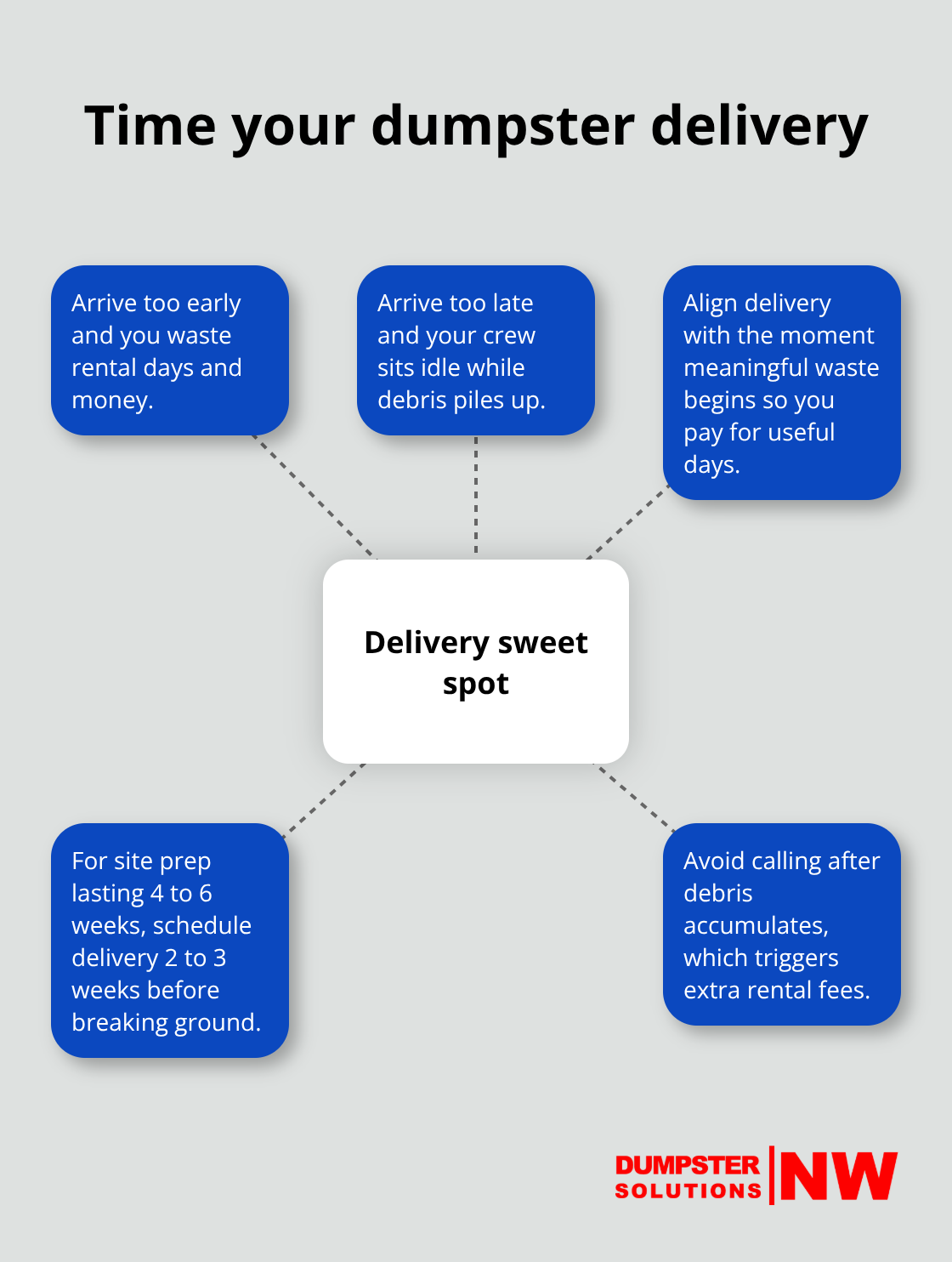
Arrive too early and you waste rental days and money. Arrive too late and your crew sits idle while debris piles up, killing momentum and blowing your timeline. The sweet spot is aligning your delivery with the exact moment your project generates meaningful waste. For site prep work that runs 4 to 6 weeks, schedule your initial dumpster 2 to 3 weeks before you break ground so it’s ready when the first trees get cleared or soil gets excavated. This prevents the common trap of calling for a dumpster after debris is already accumulating on the ground, which costs you extra days of rental fees.
Time Delivery to Specific Construction Phases
Foundation work produces concentrated waste over 2 to 3 weeks, so time your delivery to arrive just as excavation begins, not weeks earlier when you’re paying rent on an empty container. Framing generates tremendous wood and packaging waste over 4 to 6 weeks, making this phase ideal for a second dumpster or a swap midway through. Mechanical installations running 3 to 4 weeks need dedicated access for old piping and electrical components, so coordinate delivery with your HVAC and electrical contractor schedules rather than guessing. The finishing phase spanning 6 to 8 weeks consistently surprises project managers because drywall, insulation, and cabinet installation create far more debris than anticipated-plan for either a larger bin or a swap at the 4-week mark to stay ahead.
Schedule Pickups Around Project Completion
Schedule your final pickup only after your punch list is complete and inspections pass, not before. Many projects in Washington State face unexpected permit hold-ups or inspection delays that can add 1 to 2 weeks to the timeline, so build in a 2-week buffer before committing to your final pickup date. If weather delays your exterior work-and rainy season from October through April almost always does-communicate this shift to your dumpster provider immediately so they can adjust your pickup without penalty.
Coordinate Multi-Phase Pickups with Transitions
For multi-phase projects, schedule pickups to align with phase transitions rather than arbitrary calendar dates. A kitchen remodel that spans 12 weeks might need a pickup at week 6 when framing wraps and finishing begins, then a final pickup after all trim and cabinet work is done. Communicate your revised timeline to your dumpster provider as soon as you know delays are coming-don’t wait until pickup day to call with bad news.
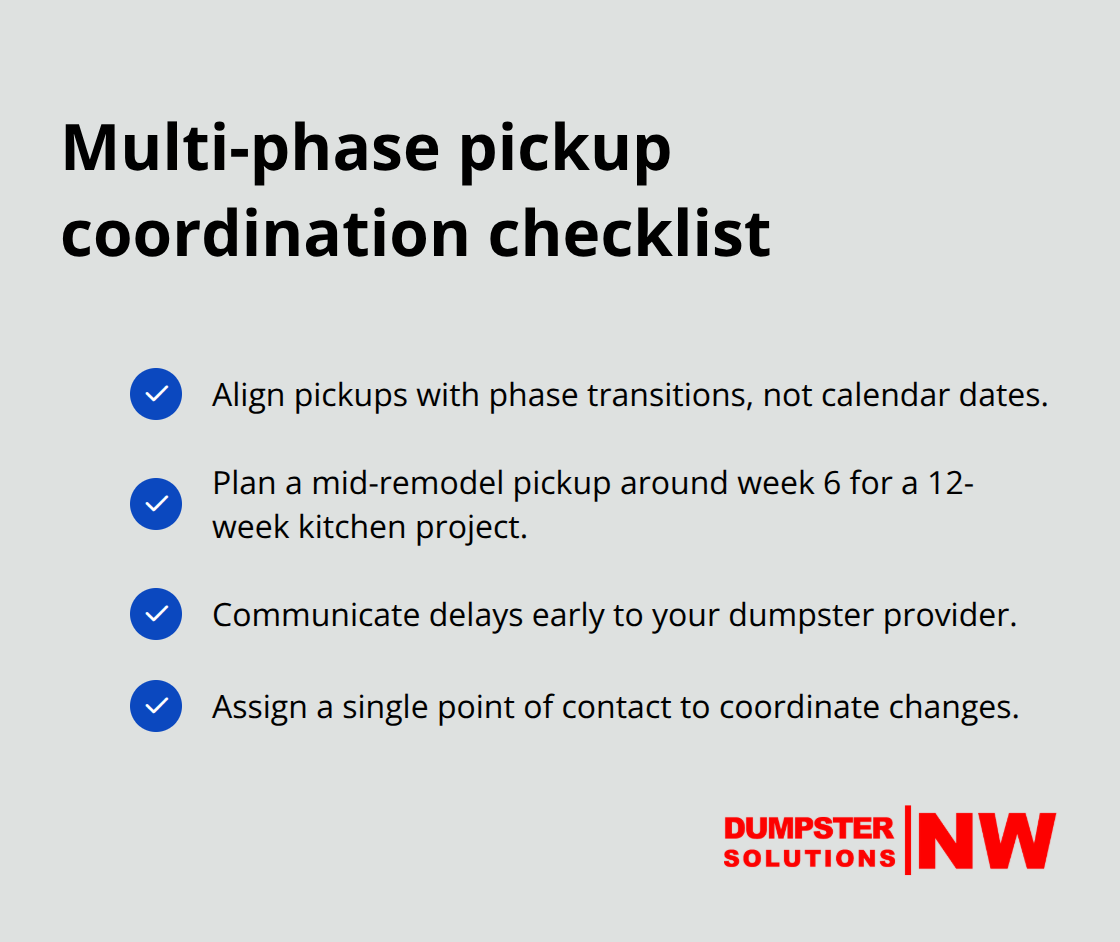
Projects rarely run exactly on schedule, so designate one person on your team as the single point of contact for dumpster coordination to prevent confusion and ensure pickups happen when your project actually needs them.
Prepare for Timing Adjustments
Weather impacts your schedule more than most contractors anticipate. Rainy season from October through April slows exterior work significantly, which means you’ll produce less roofing and siding debris during those months and may need to extend your rental period. When unexpected delays hit-and they will-your dumpster provider needs to know immediately so they can adjust your schedule without creating additional costs or complications. At Dumpster Solutions NW, we work with homeowners and contractors throughout the Seattle and Puget Sound region to handle these real-world adjustments, ensuring you’re not stuck paying extra fees when weather or inspections throw your timeline off.
Now that you understand how to time your delivery and pickups, the next critical step is avoiding the scheduling mistakes that derail projects before they even start.
Common Timing Mistakes to Avoid
Ordering Too Early Wastes Money and Ties Up Cash Flow
The biggest timing error we see across Seattle, Tacoma, and Washington State is placing a dumpster order weeks before actual work starts. Contractors call in March for a May project, and the dumpster sits idle for weeks while they pay rental fees on an empty bin. This wastes hundreds of dollars and ties up your cash flow before any real work happens. The opposite mistake is equally destructive: waiting until debris piles up on your site to call for a dumpster. Your crew then loses momentum standing around, and you end up paying premium rates for emergency same-day delivery. Try ordering 2 to 3 weeks before work actually starts-not months ahead and not after the mess begins.
Site Prep Timing Requires Continuous Dumpster Service
Site prep debris runs 4 to 6 weeks continuously, so your dumpster needs to arrive just as excavation or clearing begins, not when you’re still waiting for permits or inspections to clear. Calculate your actual start date based on when permits will be approved and inspections scheduled, then work backward 2 to 3 weeks from that date to place your delivery order. This approach prevents the trap of paying rental fees on an empty container while you wait for approvals.
Project Duration Gets Underestimated Constantly
Homeowners and contractors consistently misjudge how long each phase actually takes. A kitchen remodel that’s supposed to run 10 weeks stretches to 14 weeks because drywall finishing and cabinet installation create far more debris than anticipated, yet the dumpster pickup was already scheduled for week 10. Foundation work produces concentrated excavation waste over 2 to 3 weeks that needs immediate removal, but framing debris spreads across 4 to 6 weeks and requires either a second dumpster or a swap midway through. Mechanical installations running 3 to 4 weeks produce old piping, electrical components, and HVAC materials that pile up faster than expected.
Weather and Permit Delays Shift Your Timeline
Weather delays are the real killer in Washington State-rainy season from October through April slows exterior work significantly, which means your roofing and siding debris timeline shifts by weeks. Permit hold-ups and inspection delays add 1 to 2 weeks that most project managers never budget for, leaving them scrambling for dumpster extensions at the last minute. Build a 2-week buffer into your final pickup date, and communicate any timeline changes to your dumpster provider immediately rather than hoping the schedule corrects itself.
Successful Projects Plan for Extensions
The contractors who succeed are the ones who plan for 12-week projects to actually take 14 weeks and adjust their dumpster schedule accordingly. When unexpected delays hit-and they will-your dumpster provider needs to know immediately so they can adjust your schedule without creating additional costs or complications.
Final Thoughts
Getting dumpster scheduling right transforms how your project runs. The timing mistakes we’ve covered-ordering too early, underestimating duration, ignoring weather delays, and missing permit hold-ups-cost thousands in wasted rental fees and lost productivity. The contractors and homeowners who succeed are the ones who calculate their actual project phases, account for Washington’s rainy season, and build in buffer time before committing to pickup dates.
Your dumpster scheduling strategy should start with understanding your specific work phases. Site prep runs 4 to 6 weeks continuously, foundation work spans 2 to 3 weeks, framing takes 4 to 6 weeks, mechanical installations run 3 to 4 weeks, and finishing stretches 6 to 8 weeks. Schedule your initial delivery 2 to 3 weeks before work actually begins, not months ahead and not after debris piles up. Coordinate pickups with phase transitions and project completion, not arbitrary calendar dates.
When delays hit-and weather or inspections will cause them-contact your dumpster provider immediately so adjustments happen without penalty. Visit Dumpster Solutions NW to choose your size and schedule delivery for your next project.
Disclaimer: The information provided in this blog is for general informational purposes only and does not constitute legal, financial, or insurance advice. Coverage options, terms, and availability may vary. Please consult with a licensed professional for advice specific to your situation