
A severe storm can leave your Seattle-area home buried under storm debris and structural damage that feels overwhelming. The cleanup process involves tough decisions about what to salvage, what to remove, and how to handle everything safely.
We at Dumpster Solutions NW know that having a clear action plan makes recovery faster and less stressful. This guide walks you through assessing damage, removing debris efficiently, and protecting your home from future storms.
Assessing Storm Damage to Your Home
What to Check First After a Storm Hits
Start your damage assessment indoors before you touch any debris outside. Walk through each room and look for water stains on ceilings and walls, soft spots in drywall, and any signs of roof leaks. Check your gutters and downspouts immediately-clogged gutters from leaves and pine needles after a storm increase flood risk dramatically. If you see water pooling in your basement or crawl space, that’s your priority. Take photos and videos of every damaged area with your phone, including wide shots and close-ups. This documentation matters for insurance claims.
Separating and Sorting Debris
King County requires that you separate yard waste from regular garbage, so keep branches, leaves, and plant matter in a pile away from household debris. Don’t burn debris, even if it seems convenient-burning wet wood produces heavy smoke and violates air quality regulations.
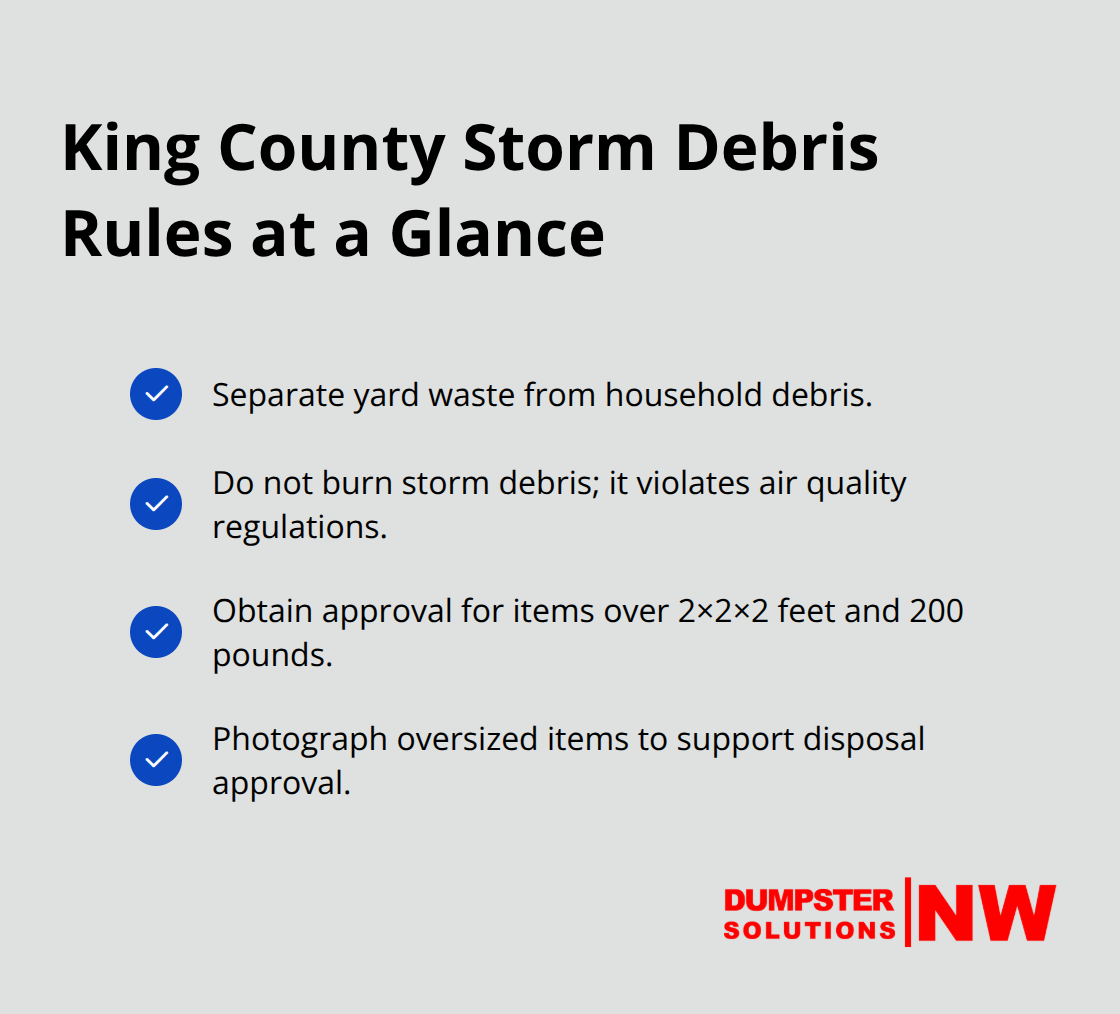
If debris is larger than two feet by two feet by two feet and weighs more than 200 pounds, you’ll need storm debris disposal regulations in King County Washington approval before disposal, so photograph these items too.
Identifying What Must Go
Structural damage decisions are straightforward: if wood is rotting, if insulation is soaked, or if drywall is crumbling, it needs removal. Fallen branches and limbs should come down immediately because they create tripping hazards and can cause further damage if another storm hits. Toppled fences and damaged garden structures are safety hazards that require professional removal. Uprooted plants and displaced mulch destabilize landscape beds and increase erosion, so these aren’t optional cleanup tasks.
Salvaging What You Can
Most storm-damaged items cannot be salvaged-wet furniture, soggy boxes, and water-logged carpeting create mold risks that make them worthless. For anything valuable that got wet, dry it within 24 to 48 hours to prevent permanent damage. This narrow window means you need to act fast on items worth saving.
Planning Your Debris Removal
For large-volume debris removal, renting a dumpster gives you a dedicated space to load everything efficiently. A 20-yard dumpster works well for moderate debris like branches and yard waste, while a 30-yard handles larger volumes. With the right container on-site, you’ll move through cleanup faster and keep your property organized as you work through the recovery process.
Clearing Storm Debris Efficiently
Choosing the Right Dumpster Size
The fastest way to reclaim your property after a storm is renting a dumpster and loading it on-site. A 20-yard dumpster holds roughly 15 feet long by 5 feet high by 7.5 feet wide, making it ideal for moderate debris like fallen branches and yard waste. If you’re dealing with a larger storm that toppled trees or damaged multiple structures, a 30-yard dumpster measuring approximately 20.5 feet long by 6.5 feet high by 8 feet wide handles bigger volumes without requiring multiple trips to a transfer station.
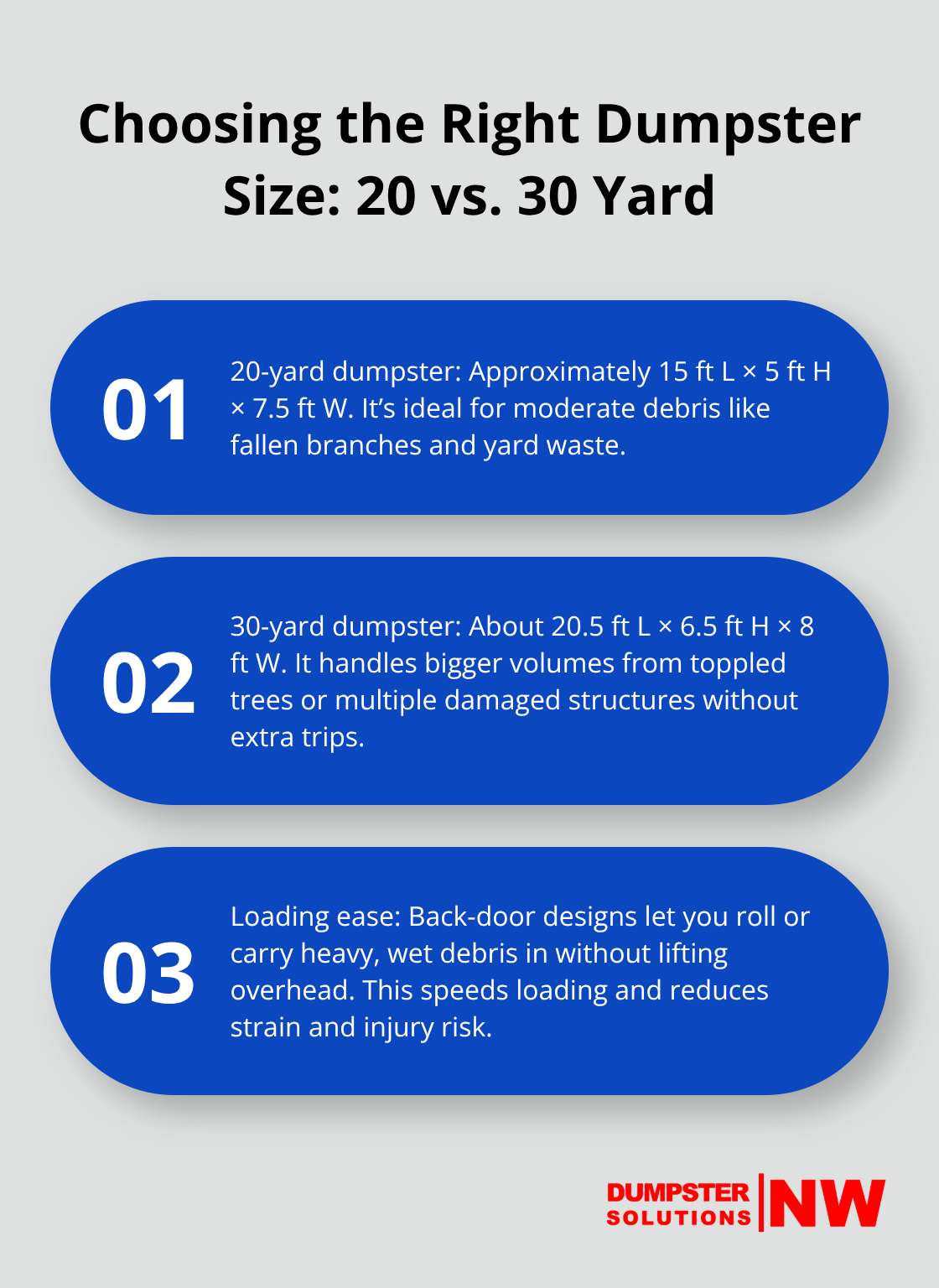
The back door design on most dumpsters lets you load heavy limbs and wet debris easily without lifting everything overhead.
Dumpster Rental vs. Transfer Station Hauling
King County transfer stations accept yard waste at Bow Lake, Enumclaw, Factoria, Shoreline, and Vashon locations, but hauling debris yourself means multiple vehicle trips, potential weather delays, and hours of labor that a dumpster rental eliminates entirely. Dumpster Solutions NW delivers containers throughout the Seattle and Puget Sound region with transparent, flat-rate pricing and no hidden fees, often getting dumpsters to your property the same day or next day. Easily rent a dumpster for your disaster debris removal by choosing a size and scheduling delivery.
When to Hire Professional Cleanup Services
Professional cleanup services make sense if you lack the physical ability or time to handle debris removal yourself. These crews bring commercial-grade equipment like chainsaws, chippers, and dump trailers that compress work into days rather than weeks. They handle the dangerous work of removing hazardous branches and toppled structures while you focus on water damage restoration and insurance documentation.
DIY Cleanup Safety and Best Practices
DIY cleanup works best for smaller storms with light debris, but you’ll need heavy-duty work gloves rated for sharp wood, sturdy boots with ankle support, and safety glasses for flying debris. Never pile debris above the dumpster side walls for safety reasons, and avoid cutting branches near power lines unless you’ve contacted the utility company first. If you’re handling cleanup yourself, clear gutters and downspouts immediately after removing large debris because clogged systems create serious water intrusion and foundation damage. Wet debris from Seattle storms is deceptively heavy-a pile of waterlogged branches weighs far more than the same pile of dry wood-so rent a container larger than you think you’ll need rather than overfilling it.
Planning Your Next Steps
Once you’ve removed the visible debris and cleared your gutters, you’ll face decisions about structural repairs and long-term damage prevention that shape your home’s resilience against future storms.
Protecting Your Home From the Next Storm
Annual tree maintenance prevents hazards
Tree trimming should happen every year, not just after a disaster. Branches within 6 to 10 feet of your roof create serious hazards during high winds, and dead limbs can snap without warning. An arborist will inspect your trees annually and identify dangerous branches before they become liabilities. Remove any limbs touching or overhanging power lines immediately by contacting your utility company; never attempt this yourself. This preventive work stops problems before the next storm arrives.
Secure Outdoor Items Against High Winds
Anything that weighs more than 5 pounds becomes a projectile in 40-plus mph winds. Patio furniture, grills, trash cans, and garden equipment all need anchoring or storage. Store seasonal items in your garage or shed rather than leaving them exposed, and use straps or brackets to secure permanent fixtures like AC units or deck railings. This simple step eliminates a major source of storm damage and flying debris hazards.
Reinforce Your Home’s Exterior
Your home’s exterior is your first line of defense against water intrusion and structural damage. Inspect your roof annually for missing or damaged shingles because even small gaps allow water intrusion during storms. Clear gutters and downspouts at least twice yearly-Seattle’s frequent rain means debris accumulates faster than you’d expect. Install or maintain a sump pump with backup power if your property has a basement or crawl space; sump pumps reduce water damage risk significantly by actively removing water during heavy rainfall. Test your sump pump quarterly to verify it functions when you need it most, especially heading into storm season from fall through spring.
Create an Emergency Preparedness Plan
An emergency preparedness plan gives you clarity when storms hit and stress runs high. Document your home’s condition now with photos and video of every room, exterior, roof, and landscape-this documentation becomes invaluable for insurance claims if damage occurs. Know your home’s weak points: which windows leak, where water enters during heavy rain, and which trees pose hazards. Keep important documents in a waterproof container, including insurance policies, mortgage information, and photos of valuables. Identify a safe room in your home where your family can shelter if severe weather approaches, and stock it with bottled water, first aid supplies, and a battery-powered radio. Have contact information for emergency services, your insurance agent, and a trusted contractor readily available.
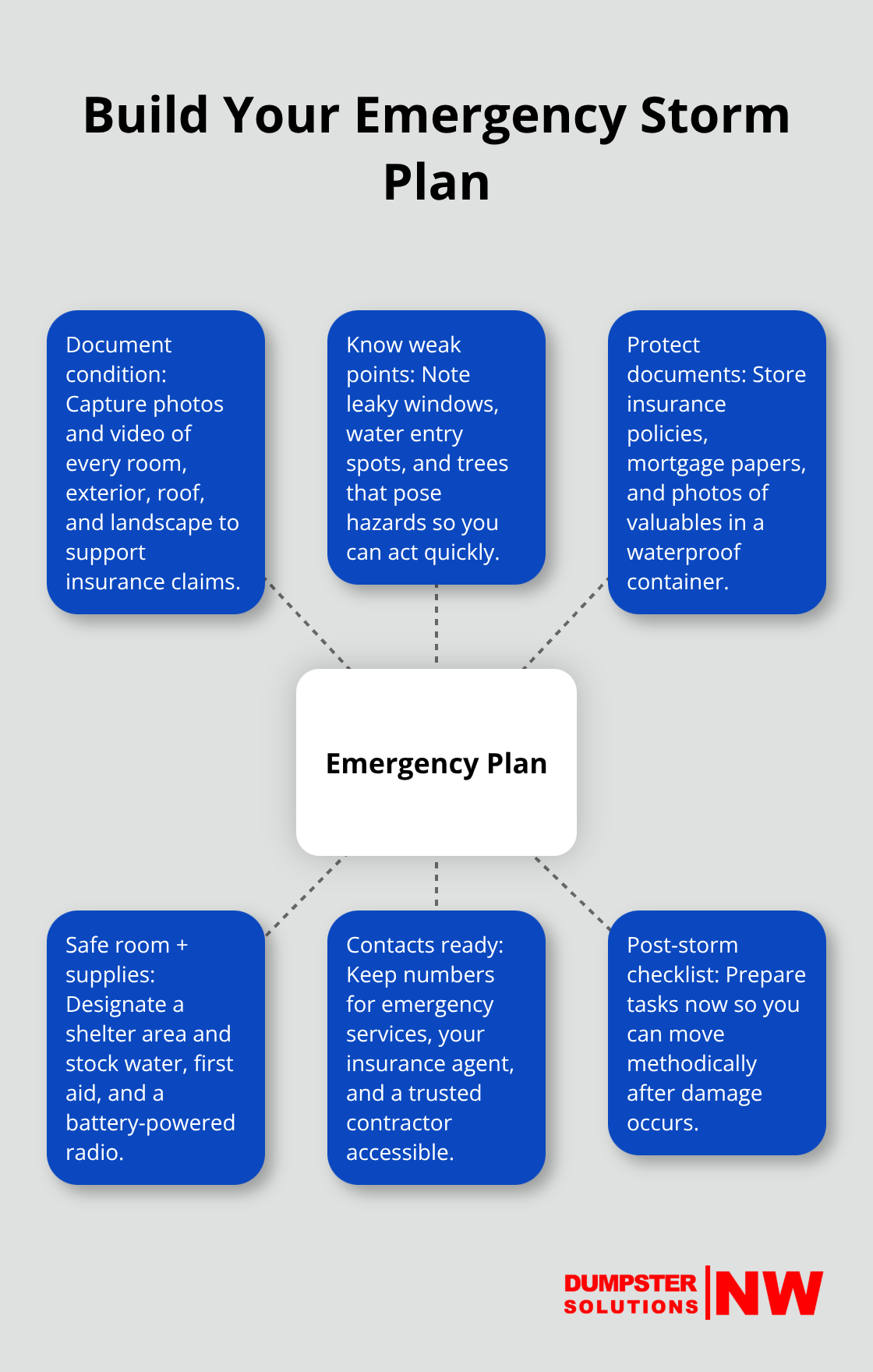
Create a post-storm action checklist now so you’re not scrambling to priorities after damage occurs.
Prepare for Rapid Debris Removal
When the next storm passes and cleanup begins, you’ll move through recovery faster because you’ve already planned your response. Identify a dumpster rental company before disaster strikes so you can arrange debris removal immediately rather than waiting days for service. We at Dumpster Solutions NW deliver containers throughout the Seattle and Puget Sound region with transparent, flat-rate pricing and no hidden fees, often getting dumpsters to your property the same day or next day (we offer 10, 20, 30, and 40-yard sizes to fit any cleanup scale). Having this resource identified in advance means you’ll reclaim your property faster when the next storm passes.
Final Thoughts
Storm recovery moves faster when you act decisively on damage assessment, debris separation, and hazardous removal. A dumpster rental streamlines the entire process by providing a dedicated container on-site, eliminating multiple trips to transfer stations and keeping your property organized throughout cleanup. We at Dumpster Solutions NW deliver containers throughout the Seattle and Puget Sound region with transparent, flat-rate pricing and no hidden fees, often getting dumpsters to your property the same day or next day.
Prevention strategies reduce future storm damage significantly more than reactive cleanup ever will. Annual tree trimming, gutter maintenance, roof inspections, and sump pump testing all lower your risk before the next storm arrives, while creating your emergency preparedness plan now ensures you respond quickly when disaster strikes. Document your home’s condition with photos, identify your dumpster rental company in advance, and stock your emergency supplies so you can act immediately when storm debris accumulates on your property.
Contact Dumpster Solutions NW to arrange storm debris removal before you need it, and reclaim your property with confidence when the next storm passes.
Disclaimer: The information provided in this blog is for general informational purposes only and does not constitute legal, financial, or insurance advice. Coverage options, terms, and availability may vary. Please consult with a licensed professional for advice specific to your situation