
A bathroom renovation generates far more debris than most homeowners expect. From old tiles and fixtures to drywall and flooring materials, the waste piles up quickly and needs a solid disposal plan.
We at Dumpster Solutions NW help Washington homeowners tackle this challenge head-on. The right dumpster rental keeps your project on track and your property organized throughout the remodel.
How Much Debris Will Your Bathroom Remodel Actually Generate
Measure Your Space and List Every Item
Start with your bathroom’s square footage and list every single item you plan to remove. A standard bathroom vanity (36 to 48 inches) generates about 1 to 2 cubic yards of debris once demolished. Built-in cabinets along a wall add 2 to 3 cubic yards per linear foot of cabinetry. Granite or quartz countertops typically produce 3 to 4 cubic yards of waste per 40 square feet, while laminate countertops yield around 1 to 2 cubic yards for the same area. Walk through your bathroom and photograph each surface you’re changing, then measure twice. This eliminates guesswork and prevents you from renting a container that’s either too small or wastefully oversized.
Flooring and Wall Materials Create the Biggest Volume
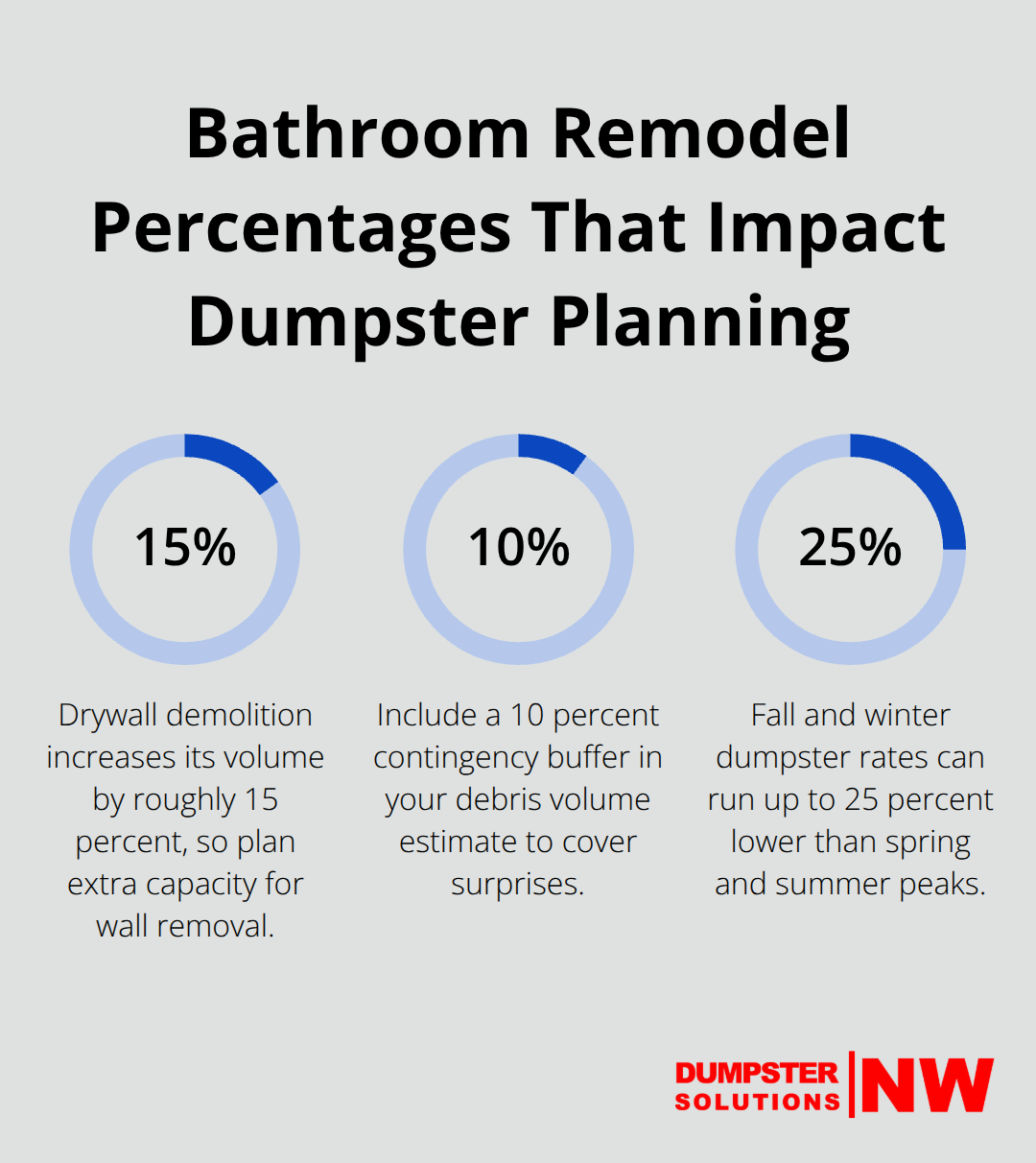
Flooring removal is where volume explodes. Tile removal adds substantial mass due to mortar and substrate underneath-estimate 1 to 2 cubic yards per 40 square feet, plus extra for adhesives and old backing materials. Drywall weighs about 50 to 60 pounds per sheet, and demolition increases its volume by roughly 15 percent as it breaks apart. These materials alone can fill a standard dumpster faster than you’d expect, so account for them separately in your planning.
Account for Hidden Materials and Structural Work
Many homeowners forget about insulation, old plumbing materials, and substrate layers hiding behind walls and under floors. If your bathroom sits on a concrete slab versus a wooden subfloor, you might be removing additional concrete or floor decking. Asbestos-containing materials in older homes complicate disposal and require certified professionals, so have a pre-remodel inspection done if your home was built before 1980. Structural changes like moving walls or removing load-bearing elements generate far more debris than cosmetic updates.
Build in a Safety Buffer for Surprises
Include a 10 to 15 percent contingency buffer in your volume estimate to cover unexpected discoveries. Construction waste disposal costs vary by location and dumpster size, so underestimating debris directly impacts your budget. Taking photos and measurements helps you communicate the scope of your project accurately when you’re ready to select a dumpster size and avoid overage fees or the frustration of running out of space mid-project.
Choosing the Right Dumpster Size and Rental Duration
Size Selection Depends on Material Weight, Not Just Volume
For a typical bathroom remodel in Seattle or the surrounding Puget Sound region, two sizes dominate the conversation: the 10-yard and the 20-yard dumpster. A 10-yard container measures 12 feet 6 inches by 6 feet 8 inches by 3 feet 5 inches and holds roughly 4 pickup truck loads with a 2 to 3 ton weight limit, making it ideal for smaller bathrooms where you remove a vanity, flooring, and wall materials without structural changes. A 20-yard dumpster stretches to 13 feet by 7 feet 8 inches by 5 feet 6 inches, holds about 8 pickup truck loads, and features a walk-in loading door that eliminates the need to hoist heavy fixtures overhead. The 20-yard option suits full bathroom demolitions including tile, drywall, cabinets, and structural debris.
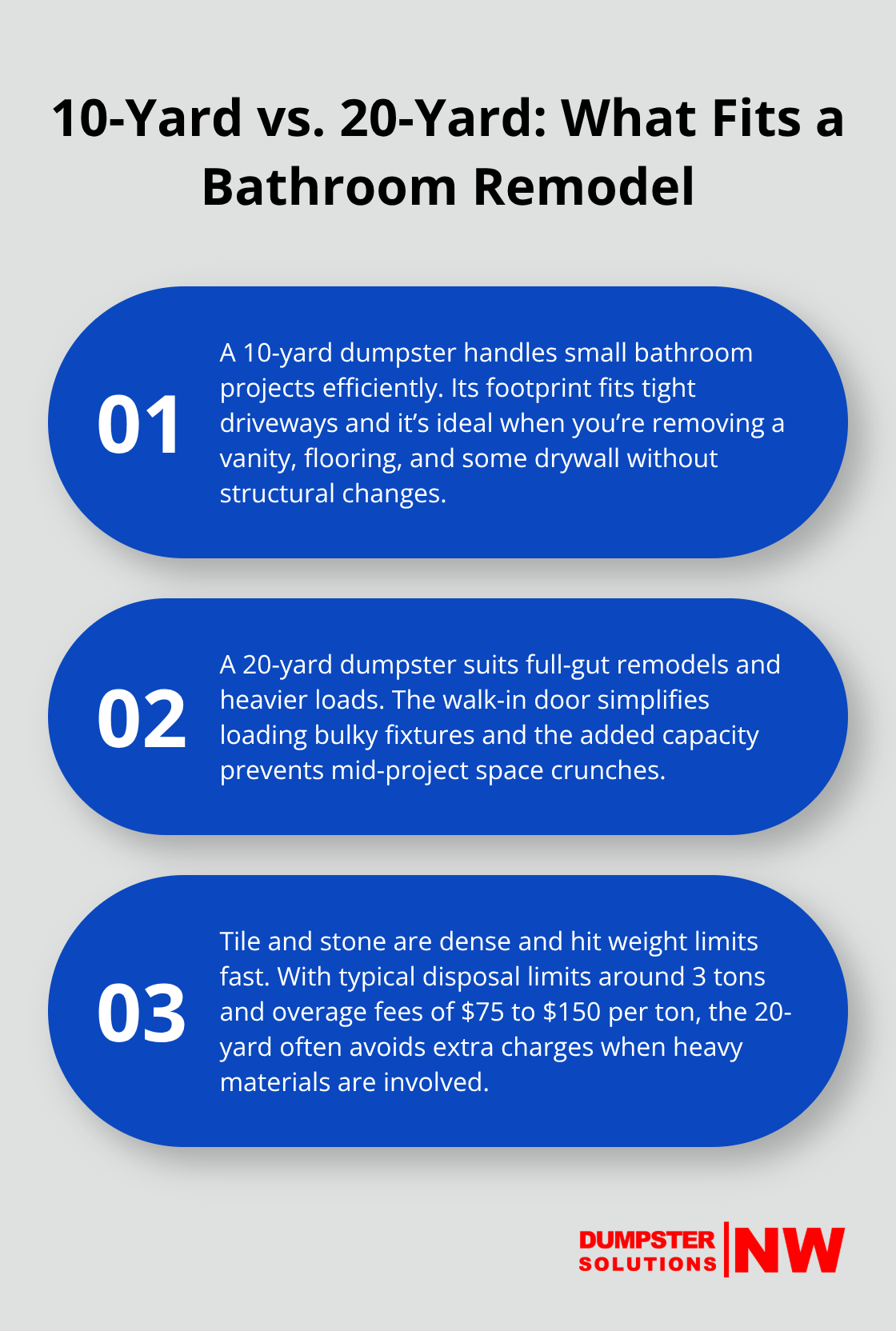
Your choice hinges on one critical fact: tile and heavy materials weigh far more than you expect. Ceramic tile weighs 125 lb/ft³, meaning you’ll hit the weight limit before filling the space on a smaller container. Most dumpster rental agreements include a 3 ton disposal weight, and exceeding this triggers overage fees ranging from $75 to $150 per ton. The practical takeaway is straightforward-if your bathroom has significant tile work, granite countertops, or structural changes, the 20-yard dumpster saves money by avoiding overage charges and frustration from running short on space.
Plan Your Rental Period Around Your Project Timeline
Standard rental periods run seven to fourteen days, and this window directly impacts your project cost. Schedule your dumpster delivery one to two days before demolition starts, not weeks ahead, to avoid paying for unused rental time. If your project timeline stretches beyond two weeks, extending the rental typically costs less than ordering a second container, though fall and winter rates often run 15 to 25 percent lower than spring and summer peaks.
Phased demolition works well with dumpster rentals because you control the timing and loading pace-fill it gradually, get it picked up, and start fresh if needed. However, if your bathroom work spans multiple phases with gaps between them, bundle the entire project into one continuous rental to beat multiple separate orders. For bathroom projects that run longer than expected due to weather delays or contractor scheduling issues, a slightly larger dumpster upfront prevents extension fees and the headache of coordinating extra pickups.
Calculate Total Cost to Avoid Budget Surprises
The math is simple: a 20-yard dumpster for three weeks costs less than a 10-yard for two weeks plus extension fees or a second container. When you factor in overage charges (which accumulate quickly with heavy materials like tile), the larger container often delivers better value. Choosing the right dumpster size ensures you stay within weight limits and avoid unnecessary costs. Whether you choose a 10-yard or 20-yard unit, knowing your rental period and material weight prevents costly surprises and keeps your remodel budget on track.
Efficient Debris Management and Sorting Strategies
Separate Materials Now to Avoid Disposal Headaches Later
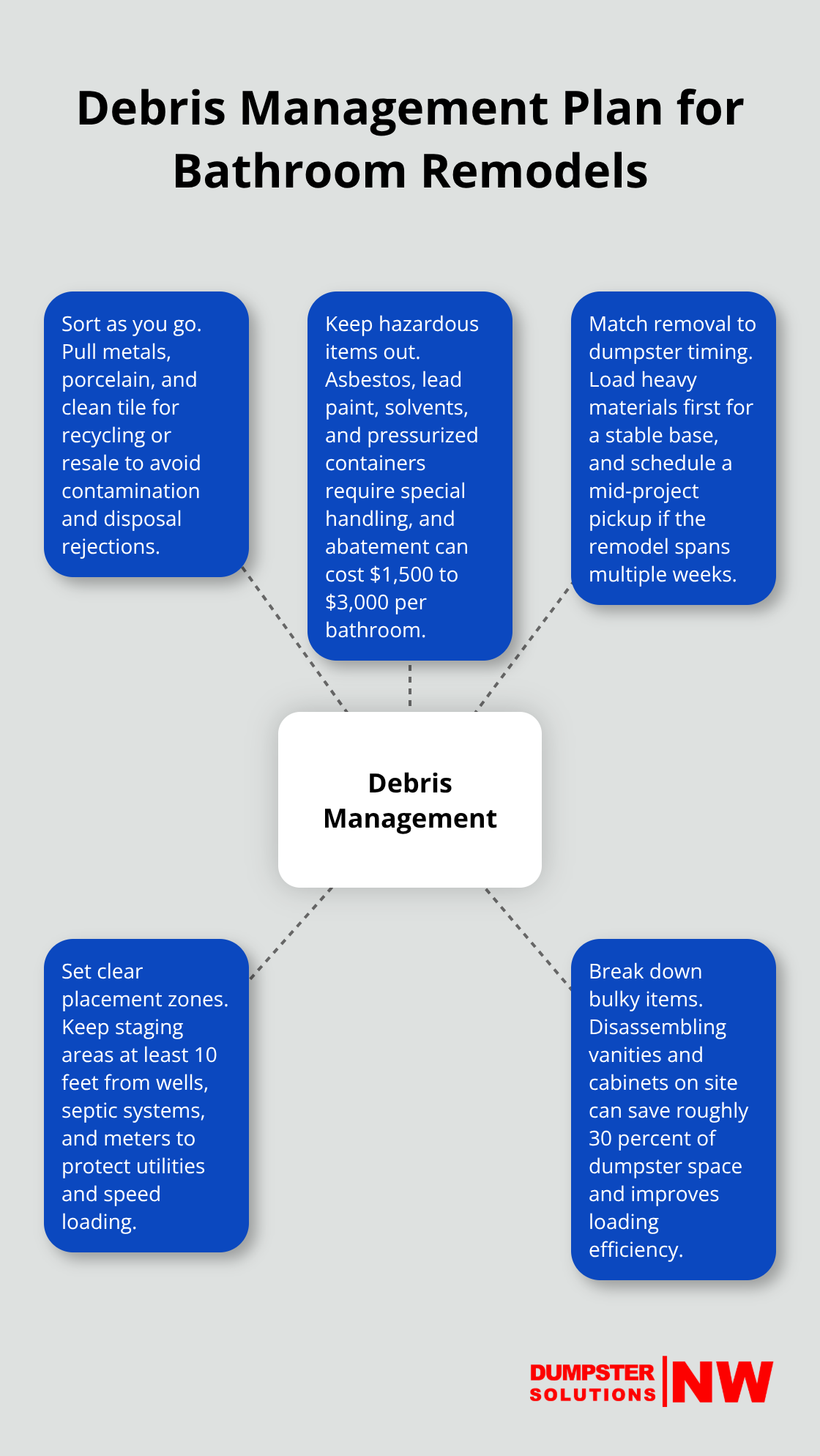
Sorting debris as you demolish saves thousands in disposal costs and prevents contamination that triggers rejection at landfills. Metal fixtures like copper pipes, brass fittings, and steel frames have real resale value-copper scrap has significant market value, so removing it from general waste rewards your effort. Porcelain toilets and sinks can be recycled at facilities across Washington, and clean ceramic tile often finds buyers for reuse projects rather than ending up in a landfill. The moment your contractor removes a fixture, you should decide immediately: recycling bin, donation pile, or general debris container. This discipline prevents the frustrating scenario where a dumpster gets rejected at the disposal site because hazardous materials contaminated the load.
Asbestos-containing drywall, lead-based paint, chemical solvents, and pressurized containers absolutely cannot mix with standard construction waste. If your home was built before 1980, you should assume asbestos exists in insulation, pipe wrapping, and some drywall products-professional abatement costs $1,500 to $3,000 per bathroom but protects your health and keeps your dumpster compliant. Most disposal facilities enforce strict rules against prohibited materials, so you must separate these items upfront to prevent project delays and additional expenses.
Coordinate Your Removal Schedule with Your Dumpster’s Availability
You should coordinate your removal schedule to match your dumpster’s availability and your contractor’s pace. Heavy materials like tile and fixtures should be removed first and loaded immediately into the dumpster to establish a stable base, then lighter materials like drywall fill the remaining space efficiently. If your bathroom remodel spans three weeks, you can arrange dumpster pickup halfway through rather than waiting until the end-this keeps your property organized and prevents debris from piling up in a corner where it blocks access or becomes a safety hazard.
Establish Clear Debris Placement Zones Before Demolition Starts
You should talk directly with your contractor about debris placement zones before demolition starts. Designate a specific area where contractors stack materials before loading the dumpster, and keep this zone at least 10 feet away from septic systems, wells, and water meters to prevent contamination. Many contractors work faster when they’re not constantly repositioning debris around your property, so a clear loading plan accelerates the entire project.
Break Down Bulky Items to Maximize Space
You should request that your contractor break down bulky items like vanities and cabinets on site-disassembling a vanity before loading saves roughly 30 percent of dumpster space compared to stuffing it in whole. This coordination between you, your contractor, and your dumpster rental company transforms a chaotic demolition into a streamlined operation that keeps costs down and your home accessible throughout the remodel.
Final Thoughts
Your bathroom renovation generates significant debris, but the right planning eliminates stress and keeps costs predictable. Start by measuring your space and listing every item you’re removing, then account for hidden materials and structural work that often surprise homeowners. Choose between a 10-yard dumpster for smaller bathrooms or a 20-yard unit for full demolitions, keeping weight limits in mind since tile and heavy materials fill containers faster than volume alone suggests.
Schedule your rental one to two days before demolition begins, coordinate with your contractor on debris placement zones, and separate recyclable materials immediately to avoid disposal complications. We at Dumpster Solutions NW understand that bathroom remodels demand reliable waste management, and our transparent, flat-rate pricing means no hidden fees or surprise charges when you exceed weight limits. We deliver quickly across the Seattle and Puget Sound region, often on the same or next day, and handle all hauling and responsible disposal so you focus on your project.
Contact Dumpster Solutions NW for a quote tailored to your bathroom project scope. Tell us your square footage, the materials you’re removing, and your timeline, and we’ll recommend the right size and rental period. Our local team knows Washington’s disposal regulations and can answer questions about permits, prohibited materials, and recycling options specific to your area.
Disclaimer: The information provided in this blog is for general informational purposes only and does not constitute legal, financial, or insurance advice. Coverage options, terms, and availability may vary. Please consult with a licensed professional for advice specific to your situation