
Picking the wrong dumpster size wastes money and creates headaches. We at Dumpster Solutions NW help customers across Washington State match their projects to the right container every single time.
This guide breaks down dumpster sizes and how much they hold, so you know exactly what fits your job. Whether you’re cleaning out a garage or managing a construction site, you’ll find the answers here.
What Size Dumpster Do You Actually Need
Dumpster sizes range from 10 to 40 cubic yards, and the number directly tells you the container’s interior volume. One cubic yard equals 27 cubic feet-roughly the size of a standard washing machine. A 10-yard dumpster holds about 50 to 70 trash bags (33-gallon bags), while a 40-yard dumpster can handle 230 to 250 bags. The 20-yard dumpster sits in the sweet spot for most homeowners and contractors, holding roughly 110 to 130 bags and serving as the most popular choice for whole-house cleanouts and large landscaping jobs.
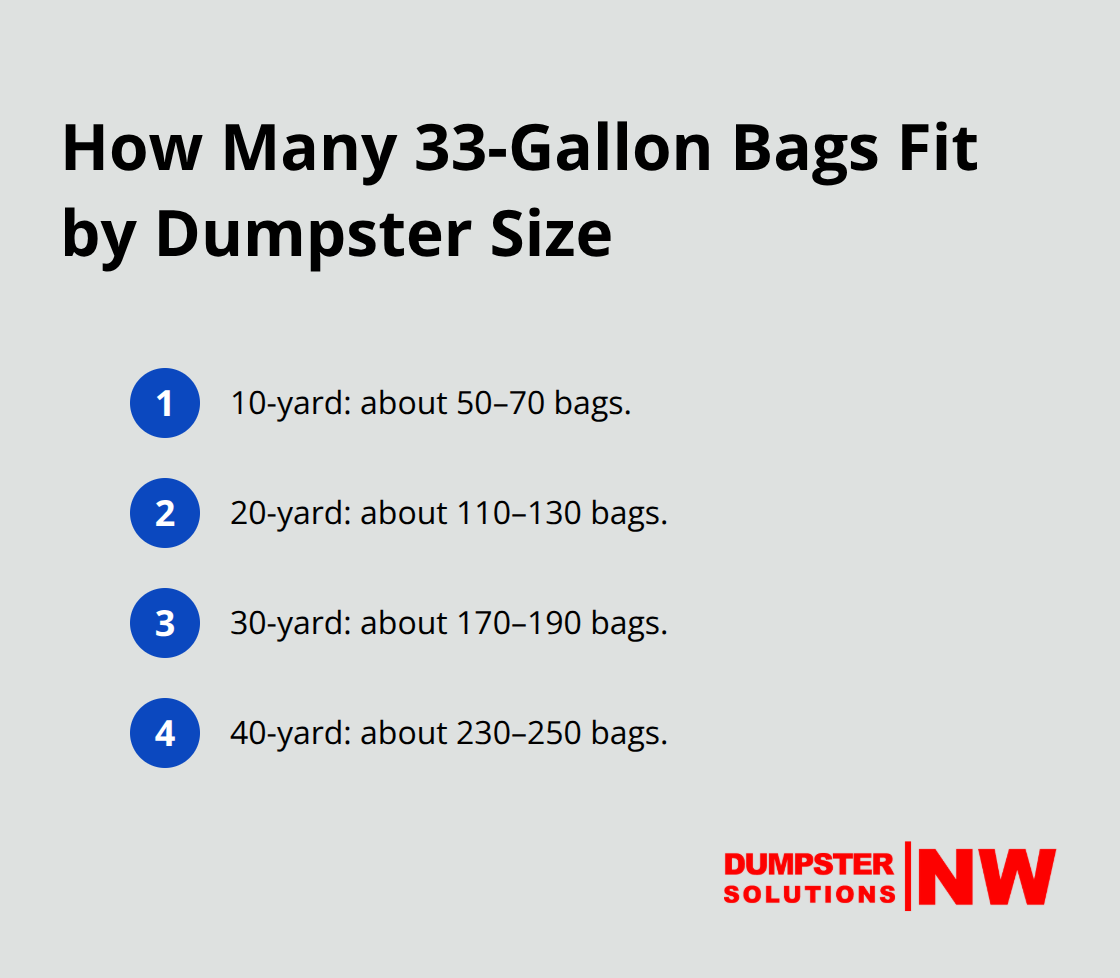
A 30-yard dumpster bridges the gap between medium and large projects, with capacity for 170 to 190 bags. These numbers matter because they directly affect your project timeline and costs. If you underestimate and fill a 10-yard dumpster when you need a 20-yard, you’ll either pay extra for a second haul or leave debris behind.
Weight Limits Change Everything
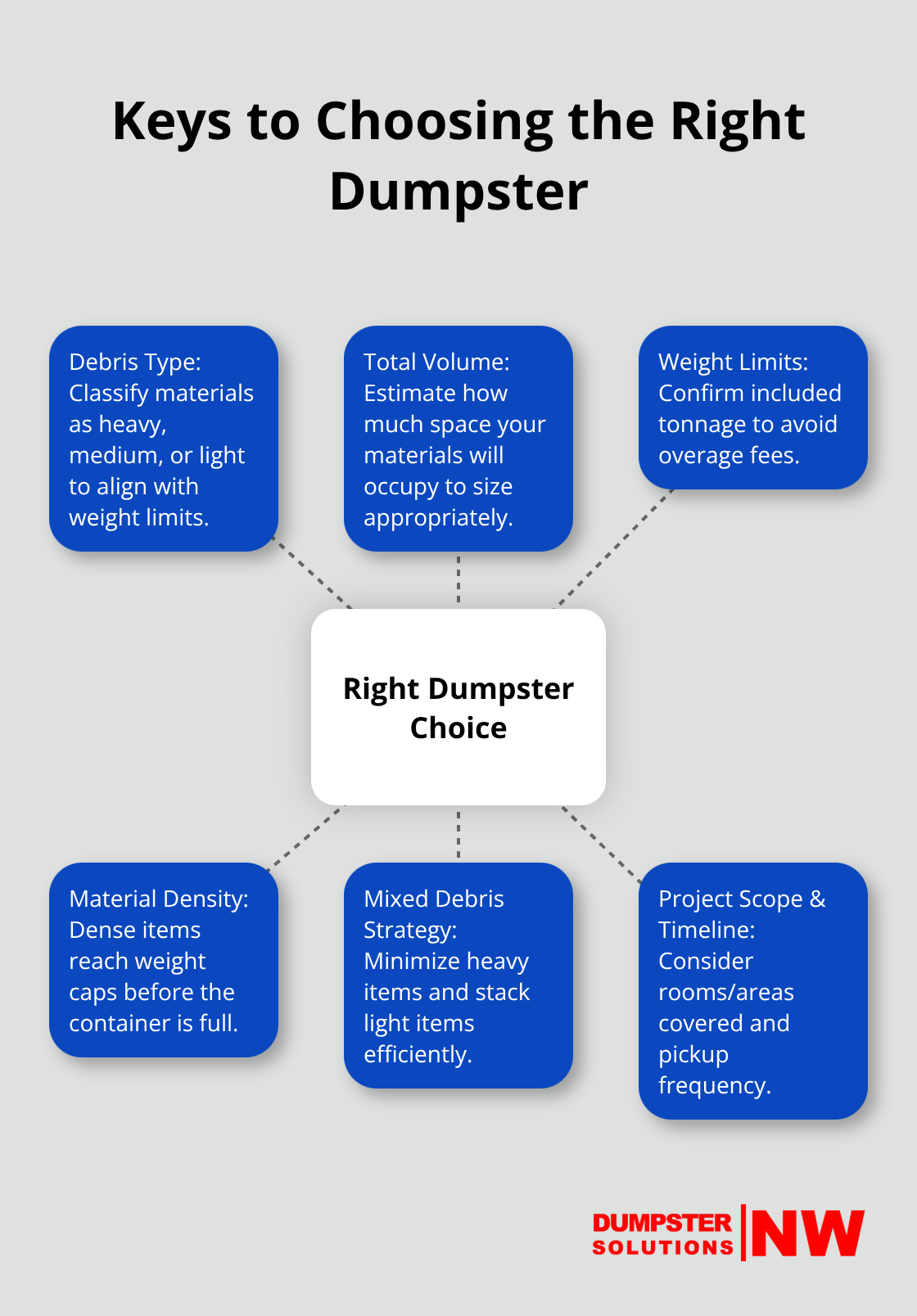
Capacity in bags means nothing if your debris weighs too much. Every dumpster size comes with weight limits included in your quoted price, and exceeding that limit triggers extra fees. Heavy materials like concrete, dirt, and bricks can max out a dumpster’s weight allowance long before it fills to the top. A 10-yard dumpster works best for heavy debris precisely because its smaller size prevents you from overloading it. Renovation debris like drywall and old flooring falls somewhere in the middle, while yard waste and furniture take up more space without adding much weight.
Calculate Your Material Weight First
Use a dumpster weight calculator to estimate your material’s weight before you place your order. This step prevents surprise charges and ensures you select a container that actually works for your specific project, not just your volume estimate. Different materials pack differently-concrete and asphalt demand respect for weight limits, while lighter items like insulation or cardboard let you fill containers more completely. Knowing your debris type upfront (heavy, medium, or light) helps you avoid costly overages and keeps your project on budget.
Match Your Project to the Right Dumpster Size
Small Projects Need 10-Yard Dumpsters
A 10-yard dumpster handles small, focused jobs where weight matters more than volume. Attic cleanouts, garage purges, and roofing projects fit perfectly here because these jobs produce heavy debris like shingles, concrete, or old flooring that would quickly exceed weight limits in larger containers. If you’re removing a small deck or handling a single-room renovation, a 10-yard stays affordable and prevents you from paying for unused space. The real advantage appears when your debris is dense-concrete weighs roughly 150 pounds per cubic foot, so a 10-yard dumpster fills fast by weight, not volume, making it the smart choice for projects where density matters more than square footage of junk. Attic and garage work typically generates 3 to 4 pickup truck loads, which aligns perfectly with a 10-yard’s actual capacity.
The 20-Yard: The Goldilocks Option
The 20-yard dumpster represents the goldilocks choice for most homeowners and contractors across the Seattle and Puget Sound region. Whole-house cleanouts, kitchen and bathroom renovations, and moderate landscaping projects fit this size without wasting money on excess capacity. A 20-yard holds roughly 6 pickup truck loads and works well when you mix debris types-some heavy drywall, some lighter furniture, some yard waste. This flexibility makes it the most popular size because it handles the widest range of residential and light commercial work without forcing you to upgrade unnecessarily.
Stepping Up to 30 and 40-Yard Dumpsters
The 30-yard steps up for larger renovation projects involving multiple rooms, roofing removal with structural work, or construction debris from additions and major remodeling. This size accommodates 9 pickup truck loads and becomes necessary when your project spans several areas of a home or involves demolition work. Large construction sites and major cleanouts demand the 40-yard dumpster, which handles 12 pickup truck loads and represents the maximum standard size available. Commercial demolition, extensive site debris removal, and projects generating construction waste across multiple locations require this capacity.
Weight Limits Still Apply at Every Size
The weight limits still apply at every size, so heavy materials like concrete or asphalt may require stepping down to ensure you stay within allowances, even if volume suggests a larger container would fit. Understanding your debris type before you order prevents costly overages and keeps your project on budget. Once you’ve identified your project scope and debris weight, the next step involves understanding what specific items actually take up in your chosen dumpster.
What Actually Fits Inside Your Dumpster
Household items pack differently than construction debris, and that difference directly affects whether your chosen dumpster size works or leaves you scrambling for a second rental. Furniture, appliances, and general garage clutter occupy significant volume but weigh relatively little, making them ideal for larger containers where weight limits rarely become an issue. A typical couch occupies roughly 50 cubic feet, while a refrigerator takes about 25 cubic feet-both manageable in a 20-yard dumpster alongside other household items. Mattresses present a particular challenge because they’re bulky yet lightweight; a queen mattress consumes approximately 40 cubic feet but weighs only 80 to 100 pounds. If you’re tackling a whole-house cleanout in Seattle or the surrounding communities, plan on a 20-yard dumpster holding furniture from multiple rooms, old electronics, and general junk without approaching weight limits. Most homeowners underestimate how much space items actually consume when stacked-a garage full of boxes, old sports equipment, and seasonal decorations fills a 10-yard dumpster faster than expected.
Renovation Debris Demands Different Planning
Drywall, flooring, and roofing materials behave completely differently from household junk. Renovation debris like wood, drywall, and cardboard make up 60 to 80% of jobsite waste on residential construction and renovation projects. Old hardwood flooring weighs approximately 5 to 8 pounds per square foot, so removing flooring from a 200-square-foot kitchen creates 1,000 to 1,600 pounds of debris before you add drywall, trim, and cabinetry. Roofing shingles weigh about 2.5 to 3.5 pounds per square foot, making a 1,500-square-foot roof removal potentially 3,750 to 5,250 pounds of material. These materials pack densely and hit weight limits quickly, which explains why a 10-yard dumpster often works better for heavy renovation projects than a 20-yard that would exceed weight allowances. Demolition work involving concrete, brick, or asphalt requires even more caution-concrete weighs roughly 150 pounds per cubic foot, so even a modest patio removal of 100 square feet at 4 inches deep produces approximately 2,000 pounds of debris. Start with a weight calculator before you order for any renovation project, since renovation debris catches more customers off-guard than any other project type.
Yard Waste Fills Space Without Adding Weight
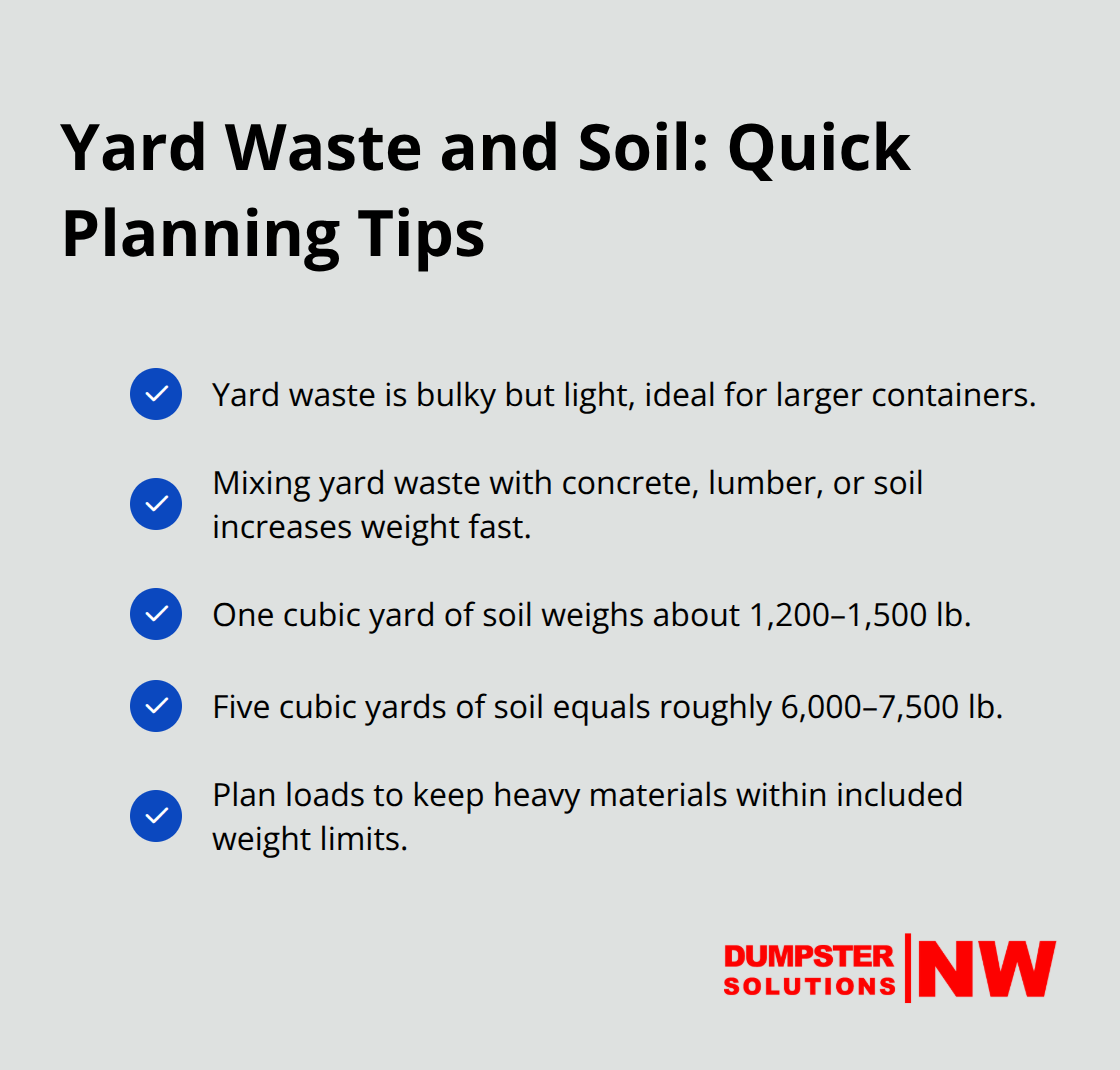
Branches, leaves, grass clippings, and tree removal debris occupy enormous volumes while remaining surprisingly light. A large tree removal can produce 300 to 500 cubic feet of branches and debris, which sounds like it demands a 30-yard dumpster until you consider that loose wood and leaves weigh far less than compacted construction materials. Landscaping projects across Bellevue, Redmond, and other communities typically work well with 15-yard or 20-yard dumpsters because yard waste compresses significantly during transport. The challenge appears when you mix yard waste with heavier items-adding concrete pavers, old deck lumber, or soil to your landscaping debris shifts the weight equation entirely. Soil especially presents problems; one cubic yard of soil weighs roughly 1,200 to 1,500 pounds, so a modest yard regrading project involving 5 cubic yards of soil consumes 6,000 to 7,500 pounds before you add landscape debris. Yard-only projects suit larger dumpsters well, but mixed projects require careful weight consideration to avoid overage charges.
Final Thoughts
Matching your project to the right dumpster size comes down to three factors: debris type, total volume, and weight limits. A 10-yard dumpster works perfectly for heavy materials like concrete or roofing shingles, while a 20-yard handles most residential cleanouts and renovations without forcing you to pay for unused capacity. The 30 and 40-yard sizes tackle larger construction sites and demolition work where volume and scope demand serious hauling power.
Maximizing your rental means you pack strategically and know your material weights before delivery day. Dense items like soil and concrete demand respect for weight limits, so use a weight calculator upfront rather than discovering overages after the dumpster arrives. Lighter materials like yard waste and household furniture let you fill containers more completely, but mixing debris types requires careful planning to stack items efficiently and avoid overfilling beyond the container’s rim.
We at Dumpster Solutions NW offer 10, 20, 30, and 40-yard dumpsters across the Seattle and Puget Sound region with transparent, flat-rate pricing and no hidden fees. You choose your size based on your project scope and debris type, and we deliver it on time, often the same or next day. Once you fill it, we handle the hauling and responsible disposal so your project runs smoothly from start to finish.
Disclaimer: The information provided in this blog is for general informational purposes only and does not constitute legal, financial, or insurance advice. Coverage options, terms, and availability may vary. Please consult with a licensed professional for advice specific to your situation