
Picking the wrong dumpster size wastes money and creates headaches. Whether you’re tackling a kitchen remodel or clearing out a garage, understanding different dumpster sizes helps you rent exactly what you need.
We at Dumpster Solutions NW serve communities across Washington State, and we’ve seen firsthand how the right size makes projects run smoother. Let’s walk through your options so you can make a confident choice.
When to Rent a 10-Yard or 20-Yard Dumpster
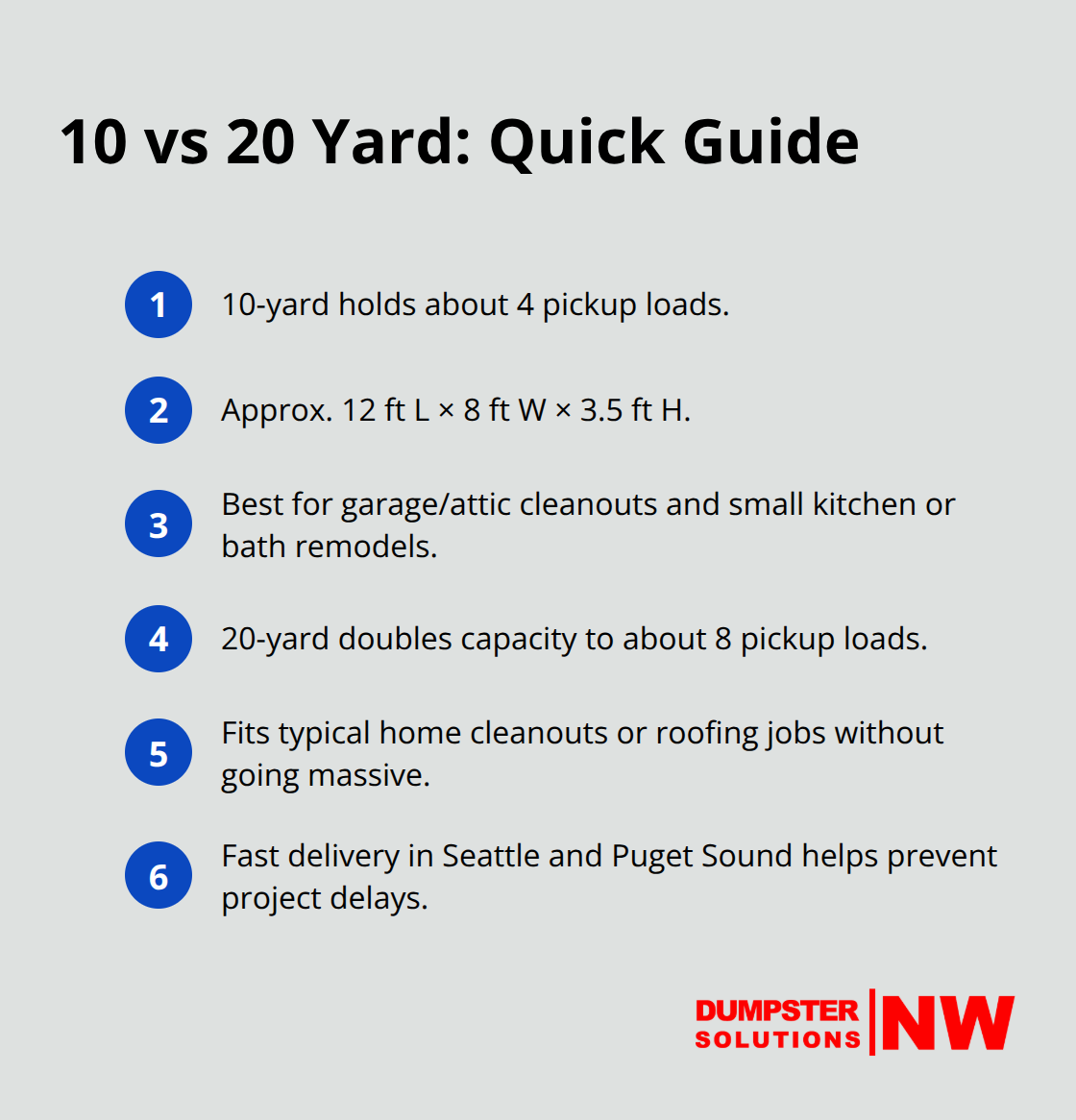
A 10-yard dumpster holds about 4 pickup truck loads and measures roughly 12 feet long by 8 feet wide by 3.5 feet high. This size works well for small residential cleanouts-clearing out a garage, basement, or attic. If you tackle a modest kitchen or bathroom remodel, a 10-yard container handles the drywall scraps, old fixtures, and general debris without consuming your entire driveway. The 20-yard option doubles the capacity to about 8 pickup loads and fits typical home cleanouts or roofing jobs where you need more room but don’t want to rent something massive. Dumpster Solutions NW delivers these sizes quickly across the Seattle and Puget Sound region, often the same day or next day, so your project doesn’t stall waiting for equipment.
Which Projects Fit a 10-Yard
Garage decluttering, attic cleanouts, and small renovation debris are perfect matches. A homeowner in Bellevue clearing out years of stored items finds a 10-yard container more than sufficient. The weight limit is typically 10 tons per load, so you can confidently toss old furniture, broken electronics, and general household junk without worrying about overfilling too quickly. Small landscaping cleanups-removing dead branches, old mulch, or yard waste from a routine refresh-also fit comfortably in this size.
When You Need to Step Up to 20-Yard
Roofing projects, kitchen or bathroom renovations, and whole-room cleanouts demand the extra space. A 20-yard dumpster prevents the frustration of running out of room midway through your project. If you remove old flooring, cabinetry, and walls, the debris adds up fast. Homeowners in Tacoma or Issaquah tackling moderate-scale remodels consistently choose 20-yard rentals to avoid multiple hauls or paying overage fees.
The larger footprint also means you can toss bulky items like old doors, window frames, and cabinet boxes without playing Tetris.
Weight Limits and What They Mean
Both sizes carry a 10-ton weight limit per load, which covers most residential and light commercial projects. Heavy materials like concrete, asphalt, or dirt can consume that capacity quickly. Understanding this limit helps you avoid surprise overage charges and plan your disposal strategy upfront.
Moving Forward to Larger Projects
If your project scope exceeds what these two sizes offer, the 30-yard and 40-yard options provide the additional capacity you need.
Scaling Up for Major Projects
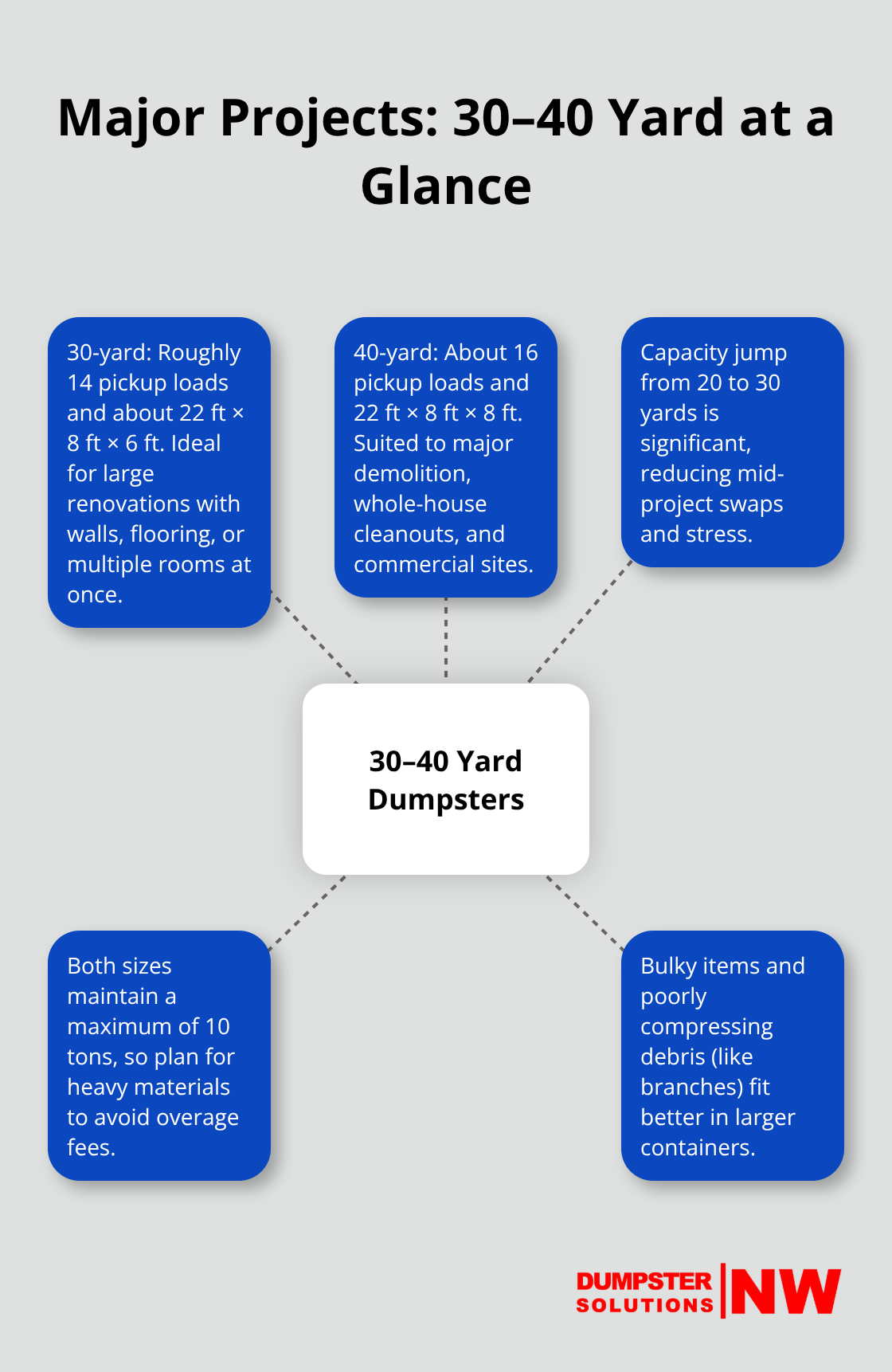
A 30-yard dumpster holds roughly 14 pickup truck loads and measures about 22 feet long by 8 feet wide by 6 feet high. This size tackles large-scale home renovations where you remove walls, replace entire flooring systems, or gut kitchens and bathrooms simultaneously. The jump from 20 to 30 yards is significant-you gain nearly double the capacity, which matters when debris piles up faster than you expect. Contractors in Seattle and Kirkland doing full-house remodels consistently choose 30-yard rentals to avoid mid-project stress and the cost of renting a second container. A 40-yard dumpster is the largest option available, holding about 16 pickup loads and measuring 22 feet long by 8 feet wide by 8 feet high. This size handles major demolition work, whole-house cleanouts, and commercial construction sites where waste volume reaches industrial scale. Both sizes maintain a maximum tonnage of 10 tons, so concrete, brick, and heavy construction materials still require planning to avoid overage fees.
Full-Home Renovations and Demolition Work
Full-home renovations involving structural changes demand 30 or 40-yard containers. When you remove load-bearing walls, replace roofing systems, and strip out old HVAC infrastructure, the debris becomes overwhelming fast. Homeowners in Federal Way and Renton tackling these projects report that undersizing costs them thousands in overage charges or emergency second rentals. A 30-yard works for comprehensive single-home projects, while 40-yard rentals suit properties with multiple structures or extensive demolition phases. Commercial construction sites in Bellevue and Redmond routinely use 40-yard dumpsters because job sites generate waste continuously-drywall scraps, metal framing, packaging materials, and old fixtures accumulate daily.
Landscaping and Site Clearing
Large-scale yard work produces surprising volume. Tree removal, brush clearing, and landscape debris from properties across Tacoma and Puyallup often require 30 or 40-yard containers. Tree removal alone produces massive quantities of wood chips and branches that compress poorly and consume space inefficiently. A 30-yard dumpster handles a typical residential lot clearance, while 40-yard rentals suit commercial properties or multi-lot projects. Unlike smaller dumpsters, these sizes accommodate bulky organic waste without forcing you to make multiple trips to disposal facilities.
Weight Considerations for Heavy Materials
Heavy debris (concrete, brick, asphalt) fills a 10-ton capacity quickly, sometimes faster than you anticipate. Plan your material sorting upfront to avoid hitting weight limits mid-project. Separating heavy items from lighter debris helps you maximize space and stay within weight allowances without triggering overage charges.
When your project involves mixed waste streams or uncertain volume, the right size prevents costly mistakes. Understanding what fits in each container and how weight limits apply sets you up for success-and that’s where choosing the right partner matters.
Which Size Fits Your Project
Inventory Your Actual Waste
Start with a detailed list of what you’ll actually remove, not what you think might go. Homeowners in Sammamish clearing out a basement often discover they need less space once they sort items into keep, donate, and discard piles. Write down the major debris categories: old furniture, drywall, flooring, roofing material, or yard waste. This inventory prevents you from renting a 30-yard when a 20-yard handles the job. The difference between estimated and actual waste volume can save you hundreds of dollars.
Measure Your Space and Access Points
Check your available space carefully. A 40-yard dumpster measures 22 feet long by 8 feet wide, which won’t fit in every driveway. Properties in Edmonds with narrow driveways or limited street access may need a 20-yard instead, even if project volume suggests otherwise. Verify that you have a level surface for placement and confirm that utility lines, overhead wires, or low-hanging branches won’t interfere with delivery. Contact your local waste provider to verify exact dimensions and confirm placement before committing to a rental.
Account for Weight Limits
Weight capacity deserves serious attention because it’s where most people face surprises. Weight limits range from 1 ton to 10 tons depending on dumpster size. Heavy materials fill weight limits faster than volume limits, and overage charges run $50–$200 per ton depending on your location. If your project involves demolition or heavy construction debris, plan conservatively and consider renting a larger dumpster to avoid hitting weight limits mid-project. Separating heavy items from lighter debris helps you maximize space and stay within weight allowances.
Plan Your Timeline and Rental Duration
Timeline matters significantly. A standard 7-day rental period works fine for small projects, but full-home renovations often need longer. Most dumpster providers offer flexible rental periods because projects rarely finish on schedule. Extending a rental for a few extra days costs far less than rushing to remove debris or paying emergency hauling fees. Get quotes from multiple providers using your project details, then compare not just price but delivery speed and flexibility.
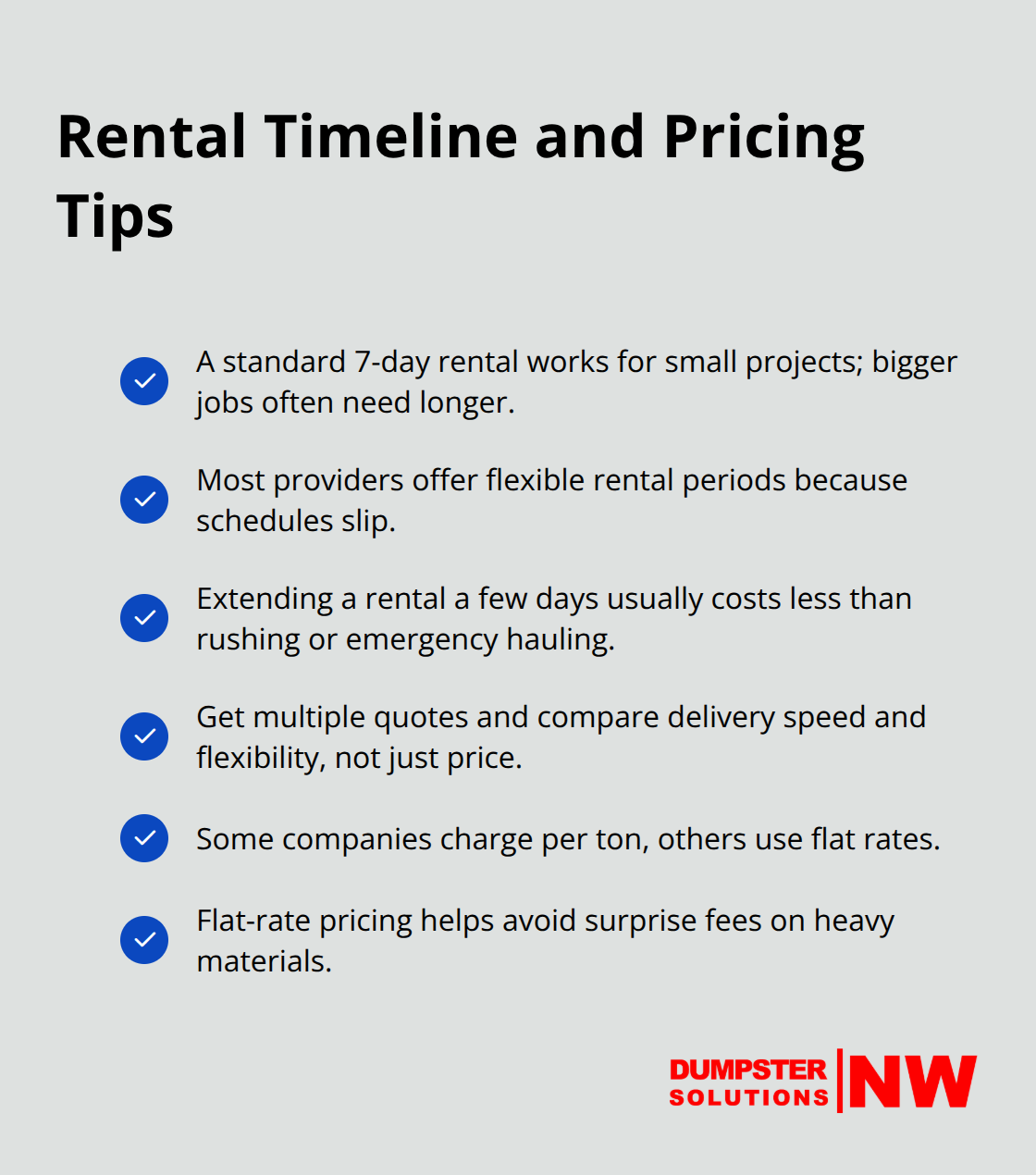
Some companies charge per ton, others use flat rates. Flat-rate pricing means no surprise fees when your concrete turns out heavier than expected.
Final Thoughts
Selecting the right dumpster size directly impacts your project’s success and your bottom line. A 10 or 20-yard container works perfectly for residential cleanouts and modest renovations, while 30 and 40-yard dumpsters handle major demolition and commercial construction. The key is matching capacity to your actual waste volume, available space, and weight limits rather than guessing.
We at Dumpster Solutions NW understand that different dumpster sizes serve different needs, and we make renting straightforward. We offer 10, 20, 30, and 40-yard dumpsters across the Seattle and Puget Sound region with transparent, flat-rate pricing and no hidden fees (same-day or next-day delivery keeps your project moving). Whether you’re clearing a garage in Bellevue, renovating a kitchen in Tacoma, or managing a construction site in Redmond, we handle the hauling and responsible disposal so you can focus on your work.
Ready to move forward? Contact Dumpster Solutions NW today to discuss your project details and receive a quote. Our team will help you choose the right size and schedule delivery that fits your timeline.
Disclaimer: The information provided in this blog is for general informational purposes only and does not constitute legal, financial, or insurance advice. Coverage options, terms, and availability may vary. Please consult with a licensed professional for advice specific to your situation