
Metal waste from construction, demolition, and manufacturing projects adds up fast. We at Dumpster Solutions NW know that choosing the right metal recycling dumpster can save you money while protecting the environment.
The right dumpster makes all the difference-it handles your volume, fits your space, and keeps costs down. This guide walks you through everything you need to know.
What Metal Recycling Dumpsters Actually Do
How Metal Recycling Dumpsters Work
Metal recycling dumpsters are open-top containers designed specifically to handle ferrous metals like steel and iron, as well as non-ferrous metals like aluminum, copper, and brass. They collect metal waste on-site, then trucks haul the containers to a processing facility where magnets separate ferrous from non-ferrous materials, and further sorting happens based on metal type and grade. The key difference between a standard dumpster and a metal recycling dumpster is the container’s reinforced floor and walls-metal is dense and heavy, so these dumpsters need structural integrity to handle the weight without buckling. Roll-off dumpsters in 10, 20, 30, and 40-yard sizes are the most common option for metal projects because their open-top design lets you load irregularly shaped metal pieces without forcing them into tight spaces.
Choosing the Right Size for Your Project
A 20-yard dumpster, the most popular size for metal work, holds roughly eight pickup truck loads and measures around 22 feet long and 8 feet wide. Smaller dumpsters like 10-yard units work well for garage cleanouts or light renovation waste, while 40-yard containers handle large demolition sites and industrial cleanouts. Weight limits matter here-most standard roll-off dumpsters max out around 10 tons, so dense materials like solid steel beams or machinery parts will fill your dumpster by weight before filling it by volume. For dumpster rentals throughout the Seattle and Puget Sound region, transparent pricing and same-day or next-day delivery options fit most project timelines.
Separating Metal Types for Maximum Value
Different metals pass through the same dumpster, but separation at the facility determines their value and reuse path. Ferrous metals-steel, iron, and their alloys-make up the bulk of metal waste from construction and demolition and are worth less per pound than non-ferrous metals, but recycling them still keeps them out of landfills and back into manufacturing. Non-ferrous metals like aluminum, copper, brass, and stainless steel command higher prices at scrap yards and recyclers, which is why some operations keep them in separate containers to preserve premium pricing. Mixed metal programs require clear labeling on your dumpster to prevent cross-contamination, since processing facilities sort materials more efficiently when types stay apart.
Environmental and Economic Impact
The environmental upside is substantial: recycling one ton of steel saves 2,500 pounds of iron ore, 1,400 pounds of coal, and 120 pounds of limestone from being mined, according to the Steel Recycling Institute. Aluminum recycling alone saves 95% of the energy needed to produce new aluminum from raw ore, making recycled metal cheaper for manufacturers to buy than virgin material. This demand means scrap metal has consistent market value, so larger projects with significant metal waste can actually offset some rental costs through scrap proceeds if your recycler pays for material. Understanding these benefits helps you see that metal recycling dumpsters do more than solve a logistics problem-they create real environmental and financial returns.
What Size and Budget Actually Work
Calculate Your Metal Weight First
Metal waste volume determines your dumpster size more than anything else, and overestimating costs you money. A 10-yard dumpster holds about four pickup truck loads and works for small projects like removing old HVAC units or metal shelving from a garage, while a 20-yard dumpster handles eight loads and fits most residential renovations and small commercial jobs. If you demolish an entire metal structure or clear a manufacturing facility, a 30 or 40-yard dumpster prevents multiple hauls that waste time and money.
The critical mistake most people make is picking size based on visual guesswork instead of actual weight. Dense materials like solid steel beams, machinery parts, or cast iron will hit the 10-ton weight limit on a standard roll-off dumpster long before the container fills visually, leaving you with overage charges or forcing you to rent a second dumpster. Calculate your metal type first: ferrous metals (steel and iron) are heavier and denser, so they fill by weight quickly, while aluminum and copper take up more space for the same weight.
If your project mixes metal types, assume the ferrous materials will dominate your weight calculation. Ask your recycler or contractor for a weight estimate based on the metal types and quantities involved, then add 20 percent as a buffer.
Space and Placement Shape Your Options
Space constraints and placement rules eliminate certain dumpster sizes from consideration before cost even enters the picture. A 40-yard dumpster needs roughly 22 feet of length and 8 feet of width on level, stable ground, plus clearance for the truck to position it safely. If your driveway is narrower than 10 feet or you lack a level surface, you’re limited to smaller containers or must negotiate placement on a street or parking lot, which requires local permits in most Washington communities.
Seattle’s Clear Alleys Program prohibits storing waste containers in public rights-of-way in central areas like Belltown, Downtown, and Pioneer Square, so verify placement rules with your city before signing a rental agreement. Placement also affects loading efficiency and safety: positioning the dumpster close to your work area cuts labor time significantly and reduces the risk of worker strain from carrying heavy metal pieces long distances.
Compare Pricing and Rental Terms
Rental costs vary by location, season, and provider. We at Dumpster Solutions NW offer flat-rate pricing with no hidden fees across the Seattle and Puget Sound region, with same-day or next-day delivery on most sizes. Smaller projects benefit from rental models since you pay only for what you use, while long-term operations lasting months may find purchase more economical if the metal recovery value offsets the upfront investment.
Request detailed quotes that separate delivery, rental duration, pickup, and any overage charges so you understand exactly what you’re paying for. Compare at least two providers to confirm pricing fairness and service reliability. The provider you select will guide your next decision: evaluating their credentials and environmental practices to ensure your metal waste reaches responsible processing facilities.
Who Should You Trust With Your Metal Recycling
Picking the right dumpster provider matters more than most people realize because your choice determines whether your metal actually gets recycled responsibly or ends up in a landfill despite good intentions. You should evaluate any provider on three concrete criteria: their track record handling metal projects in your specific area, their willingness to itemize costs upfront without hidden fees, and whether they work with licensed recycling facilities.
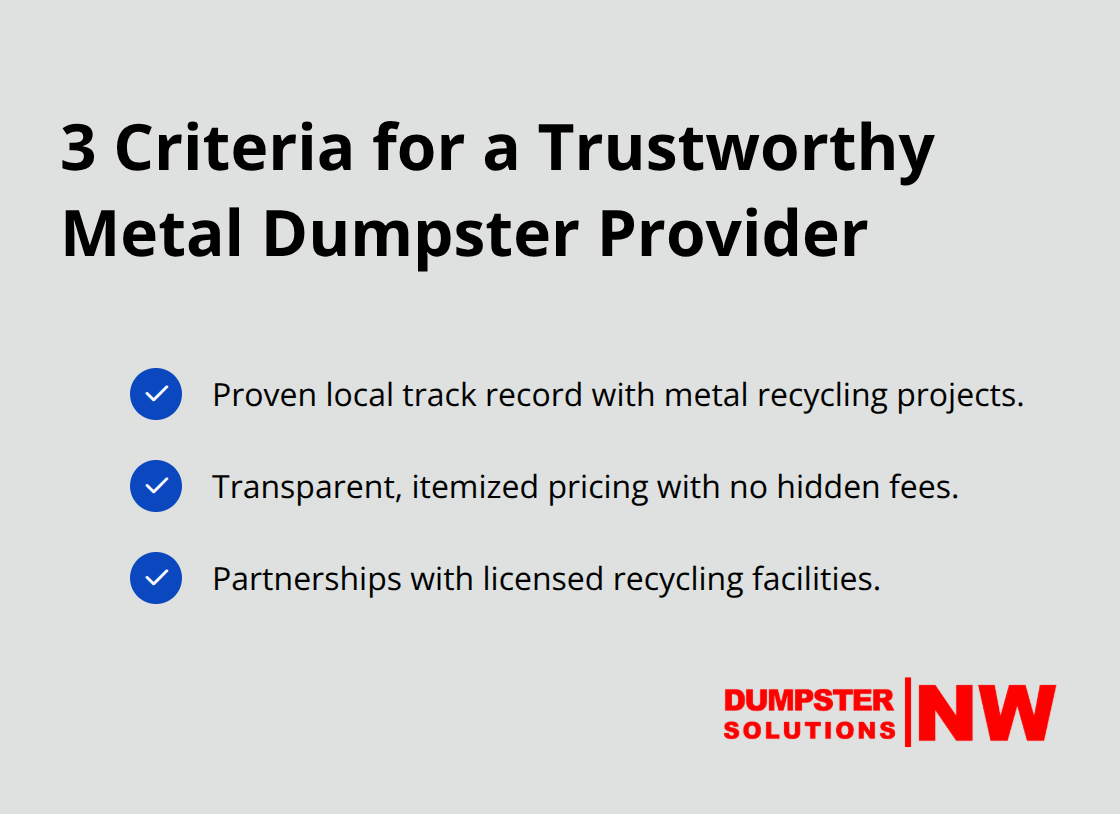
Ask potential providers directly how many metal recycling projects they’ve completed in your city over the past year and request references from recent customers with similar project sizes.
Demand Transparent Pricing From the Start
Pricing transparency matters immensely because some providers quote a base rental fee but then charge overage fees, fuel surcharges, or environmental handling fees that weren’t mentioned initially. Request a detailed quote that breaks down delivery cost, rental period cost, pickup cost, and any per-pound overage charges if you exceed weight limits. Compare quotes from at least two providers in your area to establish a baseline for fair pricing, then verify that the lower quote doesn’t come from cutting corners on facility partnerships or environmental compliance. Dumpster rentals should offer flat-rate pricing with no hidden fees, providing the transparency you should expect from any reputable provider.
Verify Facility Partnerships and Environmental Standards
The facility where your metal ends up determines whether recycling actually happens or whether your material gets stockpiled or exported to countries with poor environmental standards. Your provider should name the specific facility where your metal goes and explain their sorting and processing methods. Ask whether the provider partners with facilities that meet OSHA and DOT safety requirements, maintain leak-proof operations to prevent contamination, and can document material recovery rates. Reputable providers like Lautenbach Recycling in Bellingham and Mount Vernon-the largest family-owned recycler in Washington State-publish their commitment to sustainable demolition practices and material recovery maximization, setting a standard you should expect elsewhere. If a provider can’t or won’t name their facility partners or explain their environmental practices, that signals they may not prioritize responsible recycling.
Evaluate Service Reliability and Local Presence
Providers with established operations in your specific Washington community, whether that’s Tacoma, Bellevue, Kent, or Seattle, understand local placement regulations, seasonal challenges like winter drainage, and typical project timelines better than national chains operating from call centers. Check online reviews specifically for metal recycling projects or construction dumpster rentals rather than general dumpster reviews, since different project types reveal different service strengths. Call the provider directly and listen to how they answer questions: do they explain your weight limits clearly, ask about your metal types to recommend appropriate container sizes, or do they rush you toward the largest available dumpster regardless of your actual needs? Providers who ask clarifying questions demonstrate they want to right-size your rental and avoid overage charges that frustrate customers. Local presence also means faster response times if your pickup gets delayed or your dumpster needs repositioning mid-project, which happens more often than most people anticipate on active job sites.
Final Thoughts
Selecting the right metal recycling dumpster comes down to three practical decisions: matching container size to your actual metal weight, confirming your dumpster fits your physical space and local regulations, and choosing a provider whose facility partnerships align with responsible recycling. Most projects in the Seattle and Puget Sound region succeed when you calculate weight first rather than guessing volume, verify placement rules with your city before rental, and demand transparent pricing that itemizes every cost upfront. The provider you select shapes whether your metal actually gets processed responsibly or stockpiled indefinitely, so verify their facility partnerships and ask for references from similar projects in your community.
Gather weight estimates for your metal types, measure your available space, and request detailed quotes from at least two local providers. We at Dumpster Solutions NW offer flat-rate pricing with no hidden fees and same-day or next-day delivery across the Seattle and Puget Sound region, with sizes ranging from 10 to 40 yards to fit any project scope. Request a quote tailored to your specific metal recycling dumpster needs.
Proper metal waste management delivers lasting benefits beyond your immediate project. Recycling metal keeps valuable materials out of landfills, reduces mining pressure on natural resources, and supports local processing facilities that employ skilled workers.
Disclaimer: The information provided in this blog is for general informational purposes only and does not constitute legal, financial, or insurance advice. Coverage options, terms, and availability may vary. Please consult with a licensed professional for advice specific to your situation