
Running a contracting business means juggling multiple projects, timelines, and waste streams. Contractor disposal needs are real, and getting them wrong costs time and money.
We at Dumpster Solutions NW know that the right dumpster rental transforms how you manage job sites across the Seattle and Puget Sound region. This guide walks you through sizing, scheduling, and maximizing your waste management strategy.
Why Contractors Need Reliable Dumpster Solutions
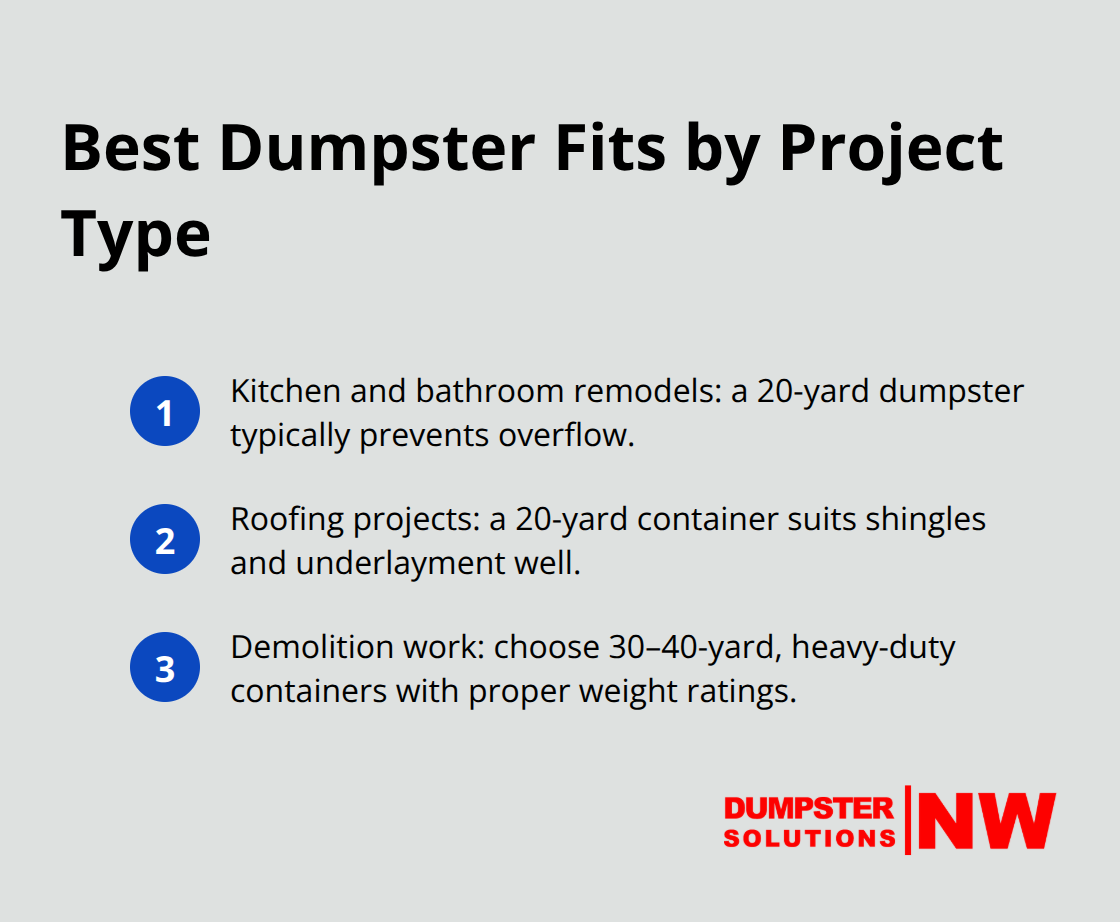
Debris management directly impacts your bottom line on every job site. Kitchen and bathroom remodels generate drywall, tile, fixtures, and cabinetry waste that piles up fast-a typical 20-yard dumpster handles these materials without overflow issues. Roofing projects create different challenges: shingles, underlayment, and felt require proper containment to prevent wind scatter and site contamination. Demolition work involves brick, concrete, glass, and flooring that demand heavy-duty containers with appropriate weight ratings. Without the right disposal setup, your crew wastes time hauling debris to landfills, creating safety hazards from scattered materials and risking OSHA violations.
A clean job site reduces trip hazards and falling debris, directly lowering worker injury risk. Site clutter from unmanaged debris blocks access routes, slows material flow, and frustrates crews trying to work efficiently. Contractors in the Seattle and Puget Sound region know that project timelines are tight-every day of downtime costs real money.
Unmanaged Debris Drains Your Labor Budget
Uncontained debris forces your team to spend 30–40 minutes per shift cleaning pathways, moving scrap, or making extra trips to disposal sites. That adds up to lost labor hours across a multi-week project. Heavy materials like concrete and brick overload standard dumpsters, triggering weight surcharges or rejection at transfer stations. Hazardous waste contamination-paint cans mixed with wood, batteries near drywall-creates disposal delays and regulatory headaches.
Right-Sizing Prevents Project Disruptions
Undersized containers fill halfway through a project, forcing emergency swaps or costly rush pickups. Match your container capacity to your actual waste volume before work starts. A 15-yard dumpster fits small remodels; 20-yard handles most renovation and roofing jobs; 30 or 40-yard containers support demolition and large commercial builds (these weight limits vary by location). Proper sizing prevents overflow, reduces site clutter, and keeps crews productive without interruption.
Your next step involves understanding exactly which dumpster size matches your specific project scope and budget constraints.
What Size Dumpster Actually Works for Your Job
Picking the wrong dumpster size tanks your project timeline and budget faster than any other decision you’ll make on a job site. Too small and you’re calling for emergency swaps mid-project; too large and you’re throwing money at unused capacity. Contractors make this mistake constantly, and it’s completely avoidable with the right approach upfront.
Weight Limits Matter More Than Cubic Yards
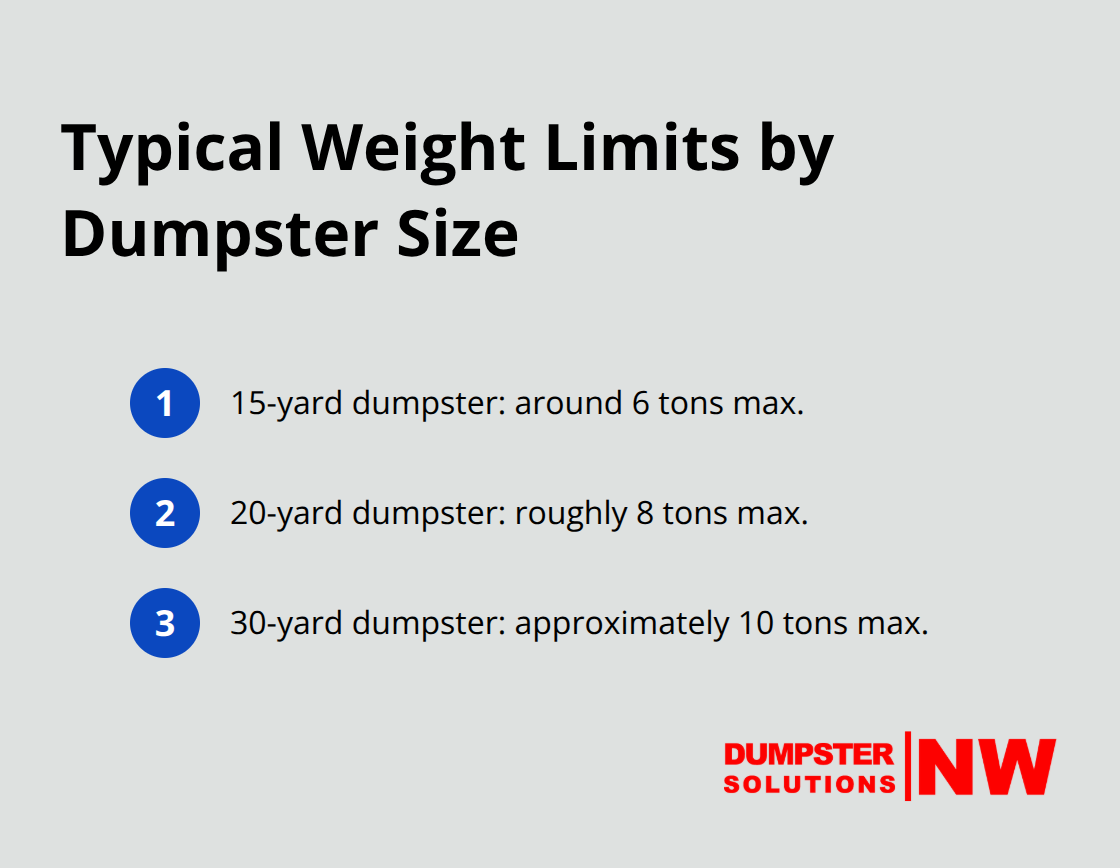
Start with weight limits, not just cubic yard capacity. A 15-yard dumpster maxes out around 6 tons of debris, a 20-yard hits roughly 8 tons, and a 30-yard container holds approximately 10 tons (depending on location and material type). Weight limits matter more than cubic yards when handling heavy debris such as concrete, soil, or roofing shingles. Concrete, brick, and asphalt are heavy hitters-they’ll fill a 20-yard dumpster by volume long before you hit the weight ceiling, but dense materials like soil and stone will max out your weight allowance first.
Kitchen and bathroom remodels typically stay under weight limits in a 20-yard container because drywall, tile, fixtures, and cabinetry spread out across the space without crushing it. Roofing projects also fit neatly into 20-yard dumpsters since shingles and underlayment pack light relative to volume. Demolition work demands more scrutiny: if you pull brick walls, concrete slabs, or asphalt, a dedicated concrete dumpster prevents weight rejections at transfer stations and avoids surcharges that can spike your disposal costs by 40 percent or more.
Calculate Your Debris Volume Upfront
Estimate debris volume before ordering by calculating square footage times depth. A kitchen remodel in a 200-square-foot space with full gut-down generates roughly 300–400 cubic feet of waste, fitting comfortably in a 15-yard dumpster. A roofing job on a 2,000-square-foot home with single-layer shingles produces around 600–800 cubic feet; add underlayment and you’re at 1,000 cubic feet, which means a 20-yard container is your safest bet.
Demolition work is messier because debris doesn’t pack efficiently, so add 20 percent extra capacity to your estimate. A 30-yard dumpster handles small demolitions; 40-yard containers support major commercial teardowns. Contractors working on multiple sites simultaneously in the Seattle and Puget Sound region should order slightly oversized containers rather than risk swap-outs that disrupt crew productivity.
Flat-Rate Pricing Changes the Math
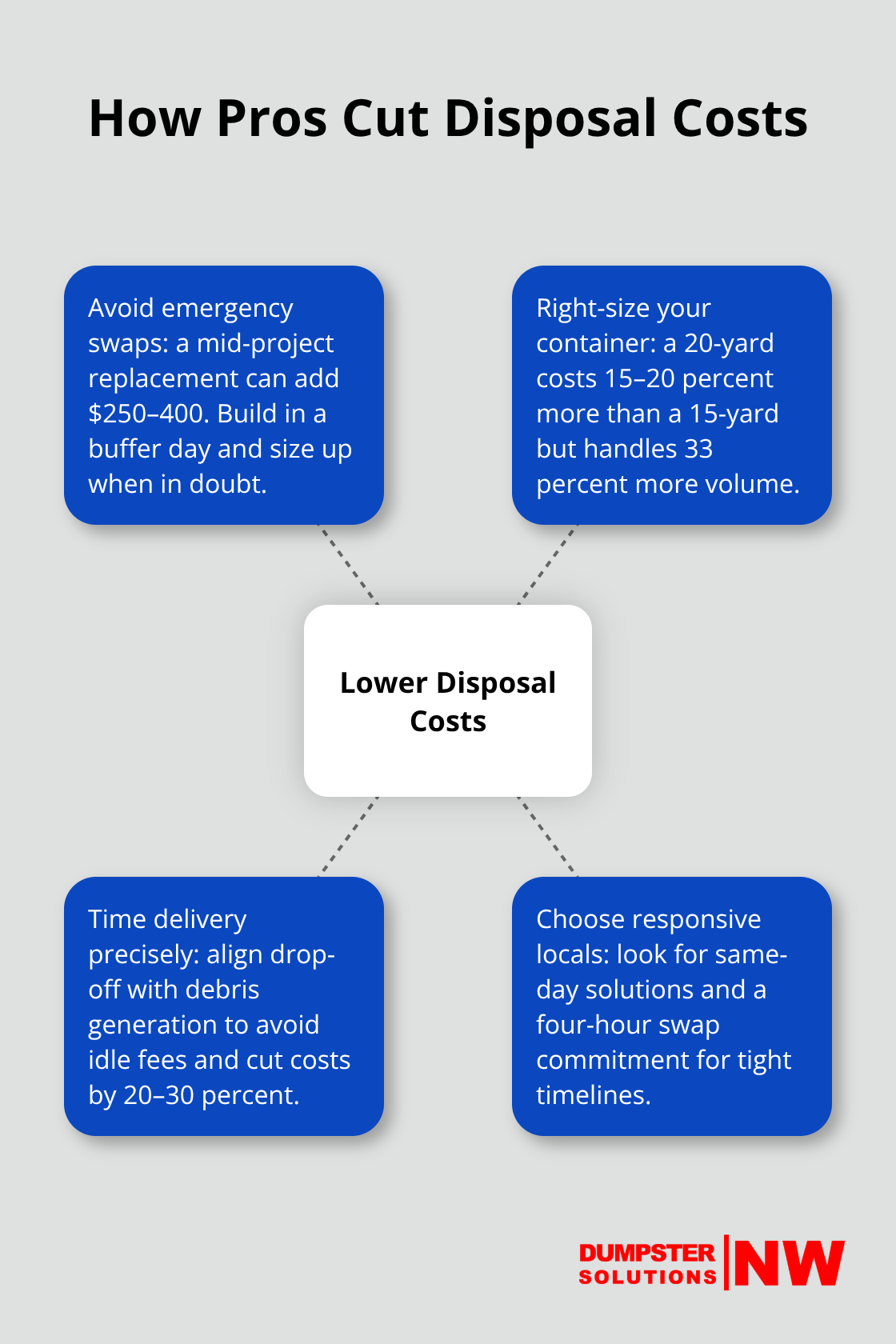
Dumpster rental pricing runs flat-rate across most providers, meaning you pay the same whether the container is half-full or overflowing. That eliminates per-ton surcharges but makes right-sizing a financial decision, not an afterthought. A 20-yard dumpster costs roughly 15–20 percent more than a 15-yard option but handles 33 percent more volume, making it the better value for anything beyond a simple bathroom remodel. Conversely, renting a 30-yard container for a small job wastes money on unused space.
The real cost driver is emergency swaps: if your 20-yard fills faster than expected and you need an immediate replacement, you’re paying a swap fee plus the new rental period, easily adding $200–400 to your project cost. Professional contractors in the region build in one extra day of disposal buffer and order the next size up rather than risk that scenario.
Schedule Your Delivery to Match Your Timeline
Once you’ve selected your dumpster size, coordinate delivery with your actual work start date. Ordering too early means paying rental fees while the container sits empty; ordering too late creates delays that push back your crew’s schedule. Most providers in the region offer same-day or next-day delivery, so you can time placement precisely to when your team starts generating debris. If your project spans multiple phases (framing, then drywall, then finishing), plan for dumpster swaps between phases rather than one oversized container that occupies your site for weeks.
Timing, Swaps, and Local Support
Align Delivery with Your Work Schedule
Coordinating dumpster delivery with your actual work schedule separates contractors who stay on budget from those who bleed money on idle rental fees. Order your container to arrive the day before your crew starts generating debris, not a week early. Most providers across the Seattle and Puget Sound region offer same-day or next-day delivery, so you avoid paying rent on an empty bin. If your project spans three weeks but heavy debris generation only happens during the first ten days, schedule your dumpster accordingly and arrange a second delivery for the cleanup phase rather than keeping one container on-site the entire time. This single decision cuts disposal costs by 20–30 percent on typical remodels.
Plan for Swaps Before They Become Emergencies
Emergency swaps happen when you miscalculate volume, and they’re expensive. A mid-project swap can cost an extra $250–400 depending on your location and the provider. Professional contractors build in one buffer day and order the next size up rather than gamble on a swap fee later. If you’re running multiple job sites simultaneously across the region, coordinate pickups and deliveries on the same day with your provider to reduce logistics costs and free up your schedule for actual project management instead of chasing dumpsters around town.
Choose a Local Provider Over National Chains
Working with a local provider matters more than most contractors realize. National chains route your calls through call centers that don’t know your typical project scope, your preferred dumpster placement locations, or your crew’s work pace. A local provider in the Seattle and Puget Sound region learns your business after the first two or three projects and anticipates your needs without lengthy phone conversations. That relationship translates into faster scheduling, fewer miscommunications, and genuine flexibility when unexpected debris volumes force you to adjust your plans mid-project.
Demand Fast Response Times and Transparent Pricing
When you call with a problem at 8 a.m., local providers answer immediately and solve it that day, not three days later. Ask potential providers about their swap response time-if they can’t guarantee a replacement within four hours, they’re too slow for professional contracting work. Flat-rate pricing from a reputable local company eliminates per-ton surcharges that catch contractors off-guard at the end of a job, so you know your total disposal cost before work starts.
Final Thoughts
Contractor disposal needs boil down to one reality: the right dumpster rental keeps your projects moving and your budget intact. You’ve learned that sizing matters more than most contractors realize, that weight limits trump cubic yardage, and that timing your delivery prevents wasted rental fees. A local provider who understands your typical project scope, your crew’s work pace, and your preferred placement locations becomes a genuine business partner, not just a vendor you call when debris piles up.
Flat-rate pricing from a reputable local company removes the guesswork from your disposal costs and eliminates per-ton surcharges that catch contractors off-guard at the end of a job. National chains route your calls through call centers that don’t know your business, but a local provider answers immediately and solves problems the same day they occur. That responsiveness saves you time on scheduling, eliminates miscommunications, and gives you real flexibility when unexpected debris volumes force mid-project adjustments.
We at Dumpster Solutions NW serve contractors throughout the Seattle and Puget Sound region with fast, fair, and friction-free service. Our process is straightforward: choose your dumpster size from 10, 20, 30, or 40-yard options, we deliver on time, you fill it, and we handle the hauling. Contact Dumpster Solutions NW today to simplify your contractor disposal needs on your next project.
Disclaimer: The information provided in this blog is for general informational purposes only and does not constitute legal, financial, or insurance advice. Coverage options, terms, and availability may vary. Please consult with a licensed professional for advice specific to your situation