
Renovation debris piles up fast, and without a proper plan, it becomes a headache that slows down your entire project. A renovation debris dumpster isn’t just about cleanup-it’s about keeping your site organized, safe, and moving forward on schedule.
We at Dumpster Solutions NW help homeowners and contractors across Washington State manage debris removal efficiently. This guide walks you through sizing, scheduling, and maximizing your dumpster so nothing gets in the way of finishing strong.
Why Renovation Debris Piles Up Faster Than You Think
Types of Materials From Renovations
Renovation projects create debris in ways that catch most homeowners off guard. A kitchen remodel isn’t just about removing old cabinets and countertops-it includes drywall dust, flooring underlayment, insulation, plumbing fixtures, electrical wiring, and packaging materials. A bathroom renovation adds tile, grout, old fixtures, and moisture-damaged wood. A full home renovation compounds everything: roofing materials, siding, framing lumber, concrete, asphalt, dirt, and countless smaller items that accumulate throughout the project.
Volume Estimates Based on Project Size
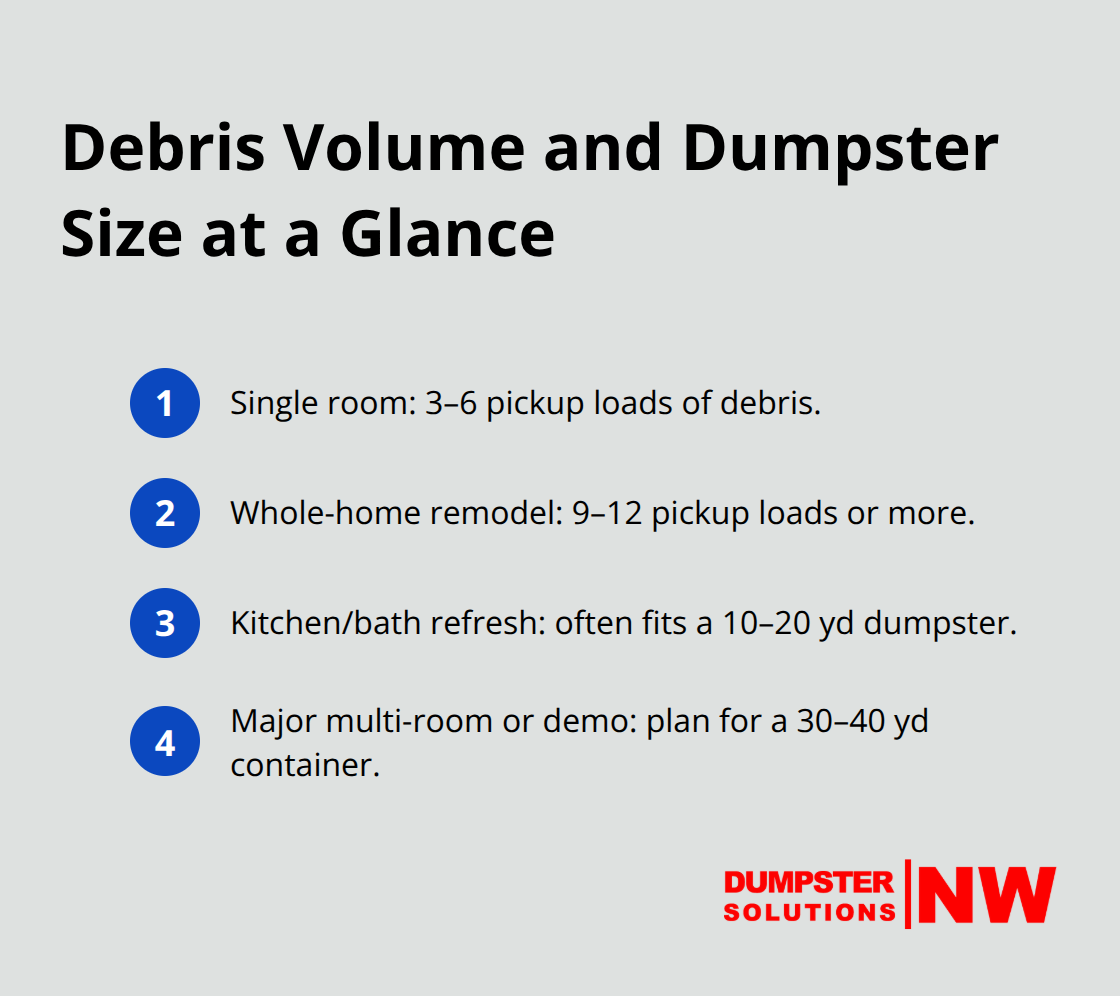
The volume depends heavily on the scope. A single-room renovation typically generates 3 to 6 pickup truck loads of debris, while a whole-home remodel can easily produce 9 to 12 loads or more. A kitchen or bathroom refresh might fill a 10 or 20-yard dumpster comfortably. Major renovations involving multiple rooms, structural changes, or demolition work demand 30 to 40-yard containers to prevent delays and multiple trips to disposal sites.
Hidden Costs of Improper Debris Disposal
Improper debris management creates hidden expenses that exceed the cost of a dumpster rental. Renting a pickup truck multiple times to haul debris yourself costs between $50 and $100 per trip, and a major renovation requires 8 to 15 trips-that’s $400 to $1,500 in rental fees alone. Landfill or transfer station fees add another $20 to $50 per load.

Project delays caused by debris blocking work areas cost time and money. Workers stand idle while the site gets cleared, and that idle time adds up fast. Uncontrolled debris piles create safety hazards: tripping risks, puncture wounds from nails or sharp edges, and unstable stacks that collapse. Contractors often face liability issues when debris isn’t managed properly, and some municipalities impose fines for debris left on streets or in prohibited areas.
Proper planning with a single, appropriately sized dumpster eliminates these problems. A 20-yard dumpster rental typically costs $400 to $600 for a week-long project, far less than the combined cost of multiple truck rentals, landfill fees, potential fines, and lost productivity. The right dumpster size makes all the difference-and that’s where understanding your project’s actual needs becomes essential.
What Size Dumpster Do You Actually Need
Match Container Capacity to Your Debris Volume
Picking the wrong dumpster size derails your entire project timeline. Too small, and you’ll overfill it within days, triggering overage fees or forcing you to rent a second container. Too large, and you waste money on unused capacity while a massive bin dominates your driveway. The key is matching the container to your actual debris volume, not guessing.
Small Projects: 10 and 20-Yard Dumpsters
For smaller projects like a kitchen or bathroom renovation, a 10-yard dumpster handles roughly 3 to 4 pickup truck loads of material, while a 20-yard dumpster accommodates 6 to 8 loads. A 10-yard unit measures approximately 14 feet long by 7.5 feet wide by 3.5 feet tall and works well for heavy materials like concrete or dirt because dumpster weight limits cap out around 10 tons per container. Use a 10-yard if you remove old flooring, cabinets, and fixtures from a single room. A 20-yard dumpster, measuring about 22 feet long by 7.5 feet wide by 4.5 feet tall, is the most popular choice for whole-home cleanouts and light remodeling because it balances capacity with driveway space. Most homeowners find the 20-yard sweet spot for kitchen and bathroom projects combined.
Large Projects: 30 and 40-Yard Dumpsters
For major renovations involving multiple rooms or structural demolition, a 30-yard dumpster holds around 9 pickup truck loads and measures approximately 22 feet by 7.5 feet by 6 feet tall, making it ideal when you tackle demolition debris, old fixtures, and framing materials simultaneously. A 40-yard dumpster, the largest option at roughly 22 feet by 7.5 feet by 8 feet tall, holds about 12 truck loads and suits large-scale construction phases, whole-home demolition, or multi-room gut renovations where debris volume is genuinely massive.
Weight Limits and Material Density
Weight matters as much as volume. All dumpster sizes hold up to 10 tons, so if your project involves heavy materials like concrete, asphalt, or demolition rubble, you’ll hit weight limits before filling the container. A 10-yard dumpster filled with concrete reaches capacity quickly; a 30-yard dumpster loaded with drywall and light framing takes longer to max out by weight. Estimate your debris by material type: drywall and insulation are light and fluffy, while concrete and roofing materials are dense and heavy.
Get Expert Guidance for Accurate Sizing
If you’re uncertain, contact a local provider to discuss your specific project scope, debris type, and site constraints. They can recommend the right size based on actual renovation details rather than guesswork. Many providers also offer empty-and-return service, which swaps in a larger unit if your first dumpster fills before the project finishes, keeping work moving without interruption. This flexibility prevents the common mistake of underestimating volume and discovering mid-project that you need a second rental. Once you’ve selected the right size, the next step is timing your delivery and pickup to keep your site organized and your schedule on track.
Managing Debris Removal During Your Project
Schedule Delivery When Work Actually Starts
Timing your dumpster delivery around your actual work schedule makes the difference between a renovation that flows smoothly and one that stalls mid-project. Most renovations take longer than homeowners expect, so order your dumpster for the day you actually start removing materials, not the day you plan to start. If your contractor estimates the demolition phase will take five days, schedule delivery for day one of demolition, not day one of the overall project. This prevents paying rental fees while your dumpster sits empty for a week. The standard seven-day rental period most providers offer covers the demolition and heavy debris removal phase for most residential projects. If your timeline extends beyond seven days, communicate that upfront so you can arrange a longer rental or plan a mid-project swap.
Load Strategically to Maximize Space
Loading efficiency determines whether you finish on schedule or run out of space mid-project. Place heavier items like concrete and roofing materials at the bottom, then layer lighter materials on top like drywall, insulation, and wood framing. Avoid creating air gaps-load densely rather than toss items in randomly. If you remove old cabinets or fixtures, disassemble them when possible to reduce wasted space. A disassembled cabinet takes roughly half the space of an intact one. Designate a staging area near the dumpster where workers deposit debris temporarily, then load the container during designated times rather than have constant individual trips.
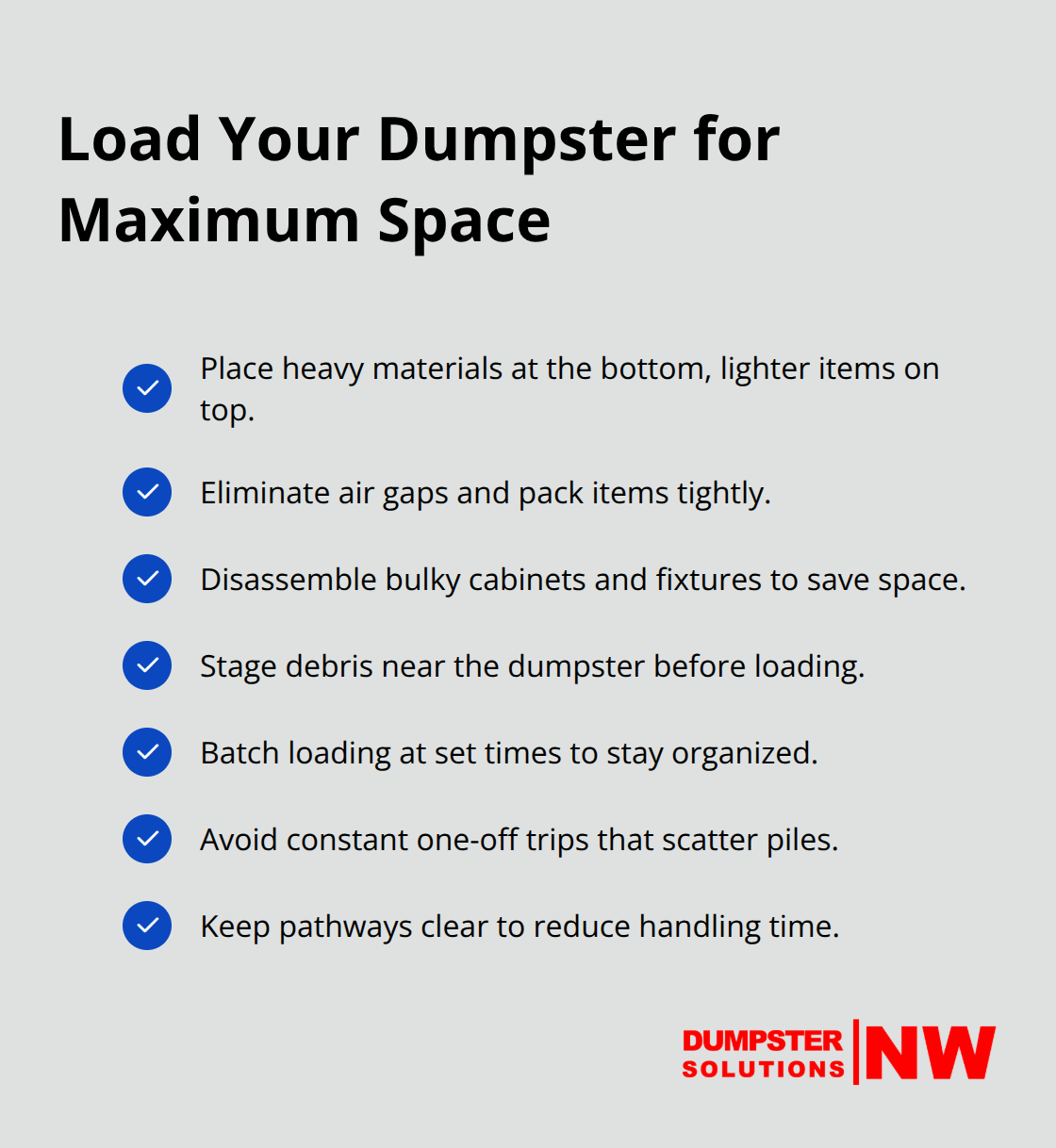
This batched approach prevents scattered piles and keeps the site organized.
Coordinate Pickup Before Overage Fees Accumulate
Coordinate pickup promptly once your project reaches the final cleanup phase. Leaving a full dumpster on your property beyond the rental period costs extra, and an overstuffed container creates safety hazards during pickup. If you’re uncertain whether debris will fit comfortably, contact your provider before the pickup date to discuss options like an empty-and-return swap that brings a fresh container and hauls away the full one. This prevents last-minute scrambling to move overflow debris or paying unexpected overage fees.
Handle Multi-Phase Projects With Multiple Containers
For major renovations spanning multiple phases, rent two dumpsters simultaneously-one for demolition debris and another for construction waste (keeping materials separated and work moving without waiting for pickups between phases). This approach prevents bottlenecks when one container fills before the next phase begins, and it maintains site safety by preventing debris from accumulating in work areas.
Final Thoughts
Renovation debris management doesn’t have to be complicated. Match your renovation debris dumpster size to your actual debris volume, schedule delivery when work begins, and coordinate pickup before overage fees accumulate. A properly sized container eliminates the stress of multiple trips to landfills, prevents safety hazards on your site, and keeps your project moving forward without unnecessary delays.
We at Dumpster Solutions NW understand that renovation timelines are tight and budgets are tighter. We offer 10, 20, 30, and 40-yard dumpsters to fit any project size, with flat-rate pricing so you know exactly what you’re paying upfront. Our delivery arrives quickly, often the same day or next day, and our pickup process is equally straightforward-you fill the container, we handle the hauling and responsible disposal.
Assess your debris volume based on the project type and scope discussed in this guide, then contact Dumpster Solutions NW to reserve your dumpster. Our team confirms the right size for your specific renovation and schedules delivery around your timeline. With proper planning and the right dumpster in place, your renovation stays on track, your site stays safe, and your project finishes strong.
Disclaimer: The information provided in this blog is for general informational purposes only and does not constitute legal, financial, or insurance advice. Coverage options, terms, and availability may vary. Please consult with a licensed professional for advice specific to your situation