
A 40 yard dumpster rental handles the biggest, messiest projects without breaking a sweat. Whether you’re gutting a house, clearing a construction site, or demolishing a commercial building, this size gets the job done.
We at Dumpster Solutions NW know that picking the right dumpster size makes or breaks your project timeline and budget. This guide walks you through when you need this capacity, what actually fits inside, and what you’ll pay in the Seattle and Puget Sound region.
When You Need a 40 Yard Dumpster
A 40 yard dumpster handles projects that generate serious volume. Home renovations exceeding 3,000 square feet-like full kitchen and bathroom overhauls combined with structural changes-produce enough debris to fill this container. Large roofing jobs covering 4,500 square feet of asphalt shingles fit comfortably, along with the underlying wood and felt. Deck removals spanning 1,000 square feet generate substantial waste when you factor in concrete footings, pressure-treated lumber, and fasteners.
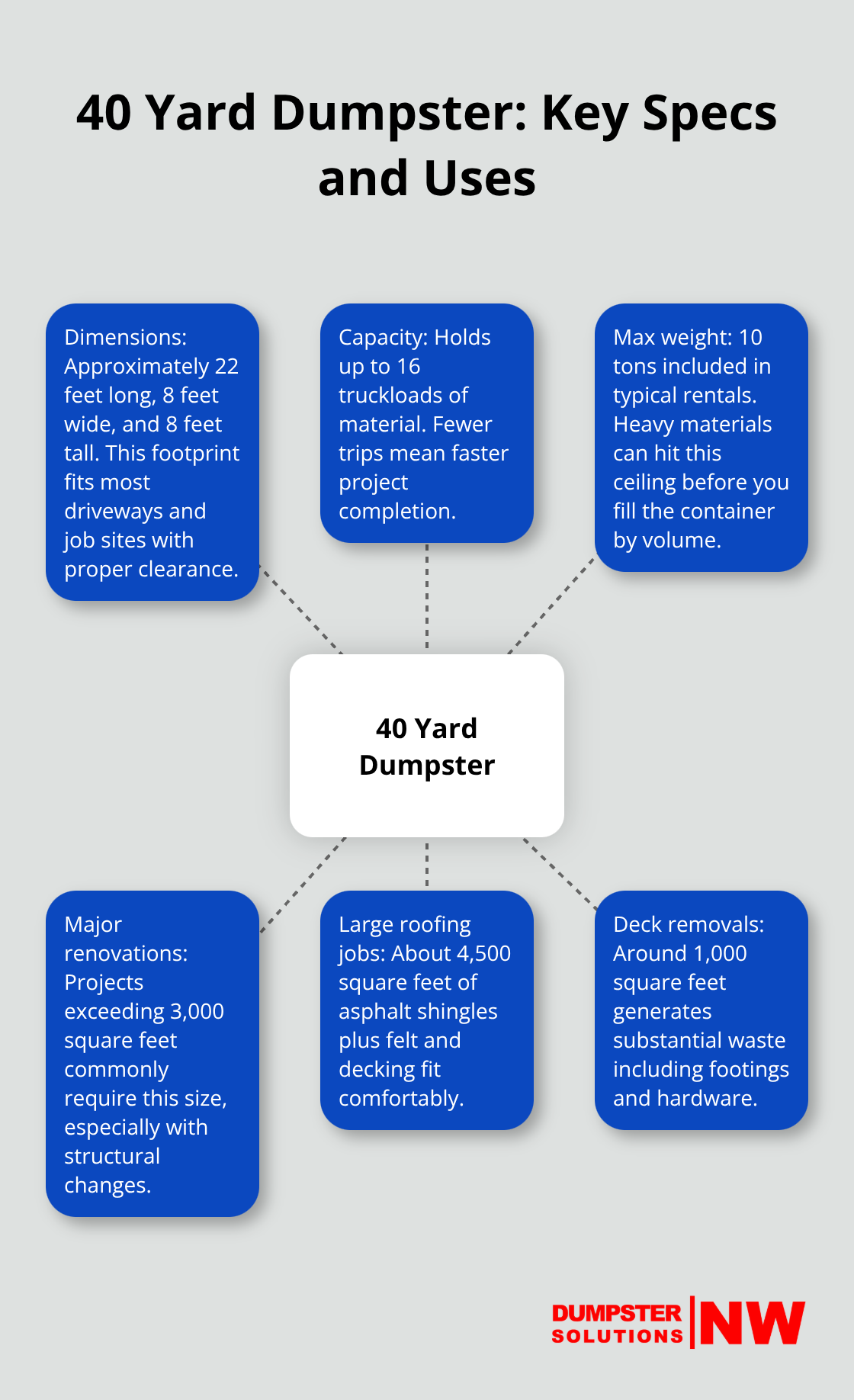
These aren’t small jobs. A smaller container forces you to rent twice, wasting time and money. Construction site cleanups for residential builds or significant commercial projects regularly hit the 40 yard threshold, especially when you clear land, remove old structures, or manage debris from foundation work. Commercial demolitions demand this size because they involve concrete, drywall, metal studs, and mixed materials that add weight quickly. A 40 yard dumpster can hold up to 16 truckloads of material, which means fewer pickup trips and faster project completion.
Weight Limits Hit Faster Than Volume
Most people underestimate what they’ll generate and overestimate how much fits by weight. A 40 yard dumpster carries a maximum weight of 10 tons, which sounds substantial until you load heavy materials. Concrete, asphalt, and wet drywall consume your tonnage fast. A single cubic yard of concrete weighs roughly 1.5 tons, so filling just seven cubic yards maxes you out. This is why planning matters. Estimate your debris type before renting. Heavy demolition projects often hit the weight limit before reaching full volume capacity. If your project involves significant concrete, asphalt, or brick, plan for weight overages or request guidance upfront. Exceeding the limit triggers overage charges that inflate your final bill.
Right-Sizing Prevents Budget Overruns
Renting a 40 yard when a 30 yard would suffice costs more for no benefit. Conversely, undersizing forces emergency rentals or multiple containers. The Seattle and Puget Sound region’s rental rates for 40 yard dumpsters typically start around $950 and vary based on debris type, location, and disposal facility access. Residential projects in Bellevue or Sammamish may differ from Tacoma or Renton due to transfer station proximity. A 7 day rental window is standard, with extensions available if your timeline stretches. Matching container size to actual project scope prevents wasted money and wasted time. If you’re uncertain whether a 40 yard fits your needs, contact Dumpster Solutions NW for a consultation. We serve communities across Washington including Auburn, Bothell, Edmonds, Federal Way, Issaquah, Kenmore, Kent, Kirkland, Mountlake Terrace, Puyallup, Redmond, Renton, Seattle, Shoreline, and surrounding areas. Our team can assess your project specifics to recommend the right container before you commit.
What Actually Fits Inside
The 40 yard dumpster measures approximately 22 feet long by 8 feet wide by 8 feet tall, giving you substantial space for mixed debris. You can load drywall, lumber, roofing materials, concrete chunks, metal studs, and general construction waste without issue. Heavy materials go on the bottom (concrete, drywall, lumber) while lighter items stack on top to maximize capacity. Distributing weight evenly prevents shifting during transport and protects the dumpster’s integrity. Place the dumpster on a level surface free of debris and obstructions like low-hanging wires or tree branches. Avoid areas near pedestrian walkways or vehicle traffic, and leave at least 100 feet of drop-off space for the delivery truck to maneuver safely.
Materials You Cannot Dispose Of
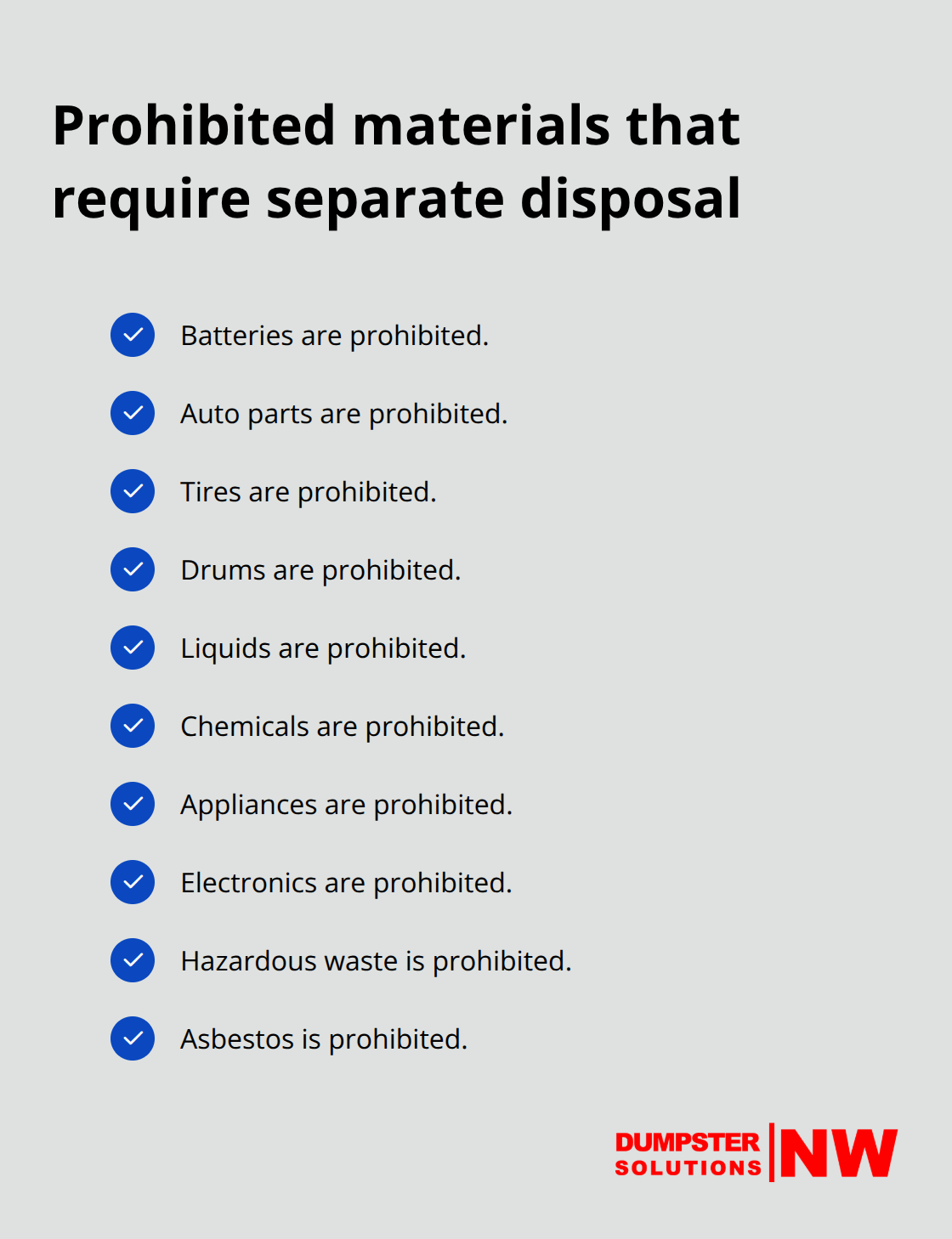
Certain materials require separate disposal and cannot go in your dumpster. Batteries, auto parts, tires, drums, liquids or chemicals, appliances, electronics, hazardous waste, and asbestos all need specialized handling. Violating these restrictions can result in additional fees and legal complications. Plan your project to separate prohibited items before the dumpster arrives, or arrange separate disposal through appropriate facilities. Understanding these restrictions upfront prevents delays and unexpected costs when the hauling crew arrives.
Understanding your project’s actual debris volume and weight sets you up for success. Once you know what you’re working with, the next step involves calculating your costs and identifying which materials drive your final bill.
What Actually Goes in a 40 Yard Dumpster
Volume Capacity Versus Weight Reality
A 40 yard dumpster measuring 22 feet long, 8 feet wide, and 8 feet tall holds approximately 16 truckloads of material. This translates to genuine capacity for serious projects, but volume tells only half the story. Your 10 ton weight limit becomes the limiting factor faster than you’d expect, especially on demolition and heavy construction work. Concrete debris weighs roughly 1.5 tons per cubic yard, meaning seven cubic yards of concrete alone maxes out your entire allowance.
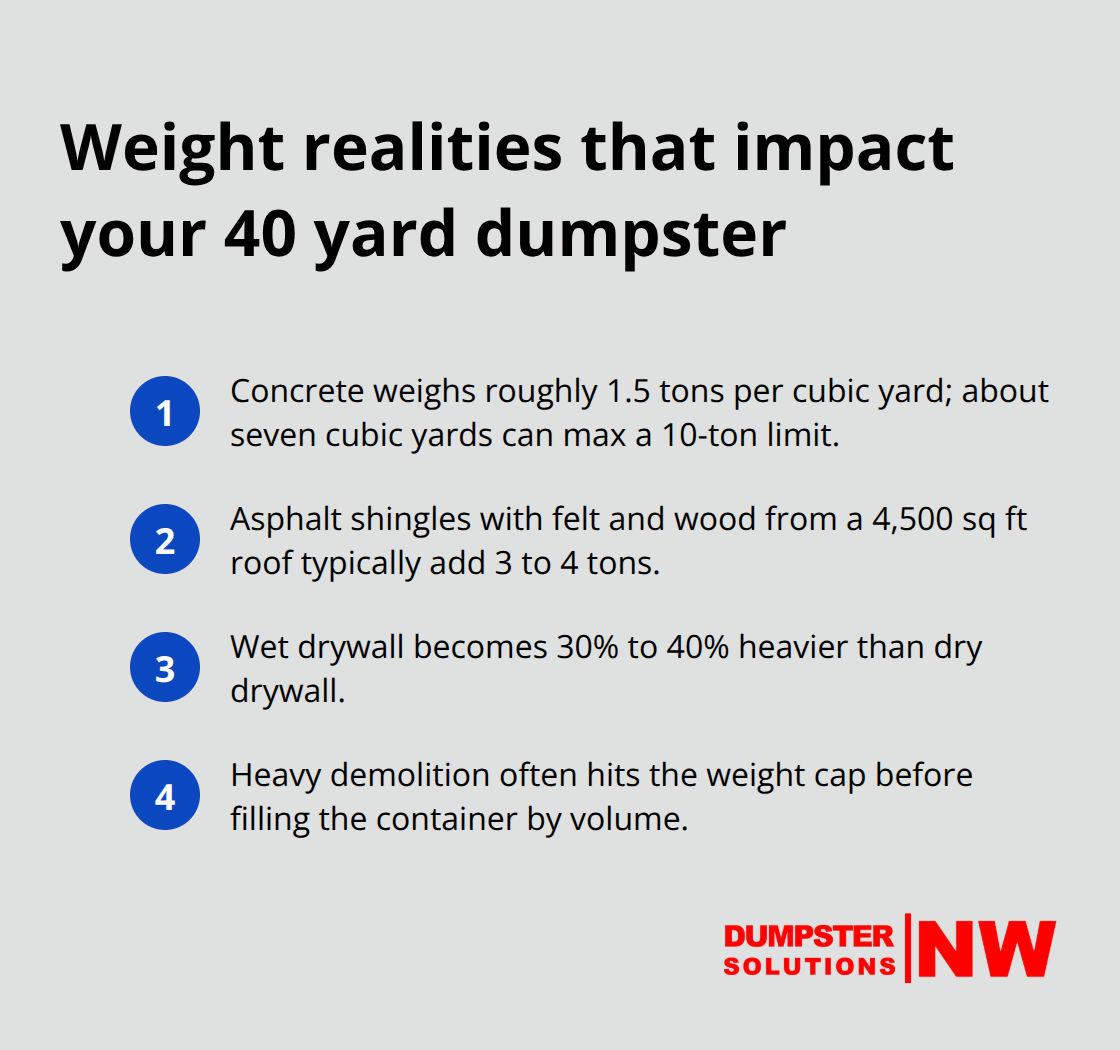
Asphalt shingles from a 4,500 square foot roof, combined with underlying felt and wood decking, easily consume 3 to 4 tons. Wet drywall becomes heavier than dry drywall by 30 to 40 percent, so a rainy project timeline inflates your weight faster than a dry one.
Strategic Loading Prevents Overages
Load strategically to maximize usable space and prevent weight from shifting during transport. Place heavy materials on the bottom-concrete chunks, drywall sheets, and dimensional lumber-while lighter items like insulation, roofing debris, and cardboard stack on top. This arrangement keeps your load stable and prevents damage to the dumpster. If your project involves primarily heavy demolition debris, anticipate hitting the weight ceiling before filling the container to capacity. Understanding your material mix upfront prevents surprise overage charges that typically range from $50 to $100 per ton beyond your included weight.
Prohibited Materials Demand Separate Planning
Batteries, auto parts, tires, drums, liquids, chemicals, appliances, electronics, hazardous waste, and asbestos cannot enter your dumpster under any circumstances. Construction projects frequently generate items from this list-old HVAC units, water heaters, electrical panels, and roofing containing asbestos in older homes built before the 1980s. Separating these materials before the dumpster arrives prevents costly rejections at the disposal facility and potential fines.
Create Dedicated Collection Zones
Establish three distinct areas at your job site: one for general debris entering the dumpster, another for recyclables like metals and cardboard, and a third for prohibited items destined for specialized facilities. This sorting system accelerates loading and prevents contamination issues. Seattle’s North and South Transfer Stations accept most construction debris from your dumpster, but certain materials require routing to specialized facilities. Planning your material separation at project start saves thousands in potential complications and keeps your timeline on track.
Understanding what weight you’re actually hauling and which materials require separate handling sets the stage for accurate cost projections. Your final bill depends on these factors, so let’s examine how pricing works in the Seattle and Puget Sound region.
What You’ll Actually Pay for a 40 Yard Dumpster
Base Pricing and What It Includes
In the Seattle and Puget Sound region, a 40 yard dumpster rental typically starts around $1,195 and includes 10 tons of waste disposal. That baseline price varies significantly based on your specific location, debris type, and which transfer station handles your load. Renton and Kent generally see lower rates than Bellevue or Sammamish because transfer station proximity affects hauling costs. A standard 7 day rental period comes with your initial quote, but extensions run approximately $5 to $15 per day if your project stretches longer.
Weight Overages Drive Your Final Bill
The real cost driver isn’t the base rental-it’s what happens after you fill the container. Exceeding your 10 ton weight limit triggers overage charges, which accumulates quickly on heavy demolition work. A single ton overage on a concrete-heavy project adds significant costs to your final bill. Multiple tons over compounds the expense rapidly. This is why understanding your debris composition before renting matters enormously.
Material Weight Determines Your True Costs
Wet drywall weighs more than dry drywall, so a rainy project timeline directly inflates your costs. Asphalt shingles from a roof combined with underlying wood and felt typically consume several tons alone, leaving limited tonnage for other materials. Concrete debris runs roughly 1.5 tons per cubic yard, meaning seven cubic yards maxes your entire allowance. Heavy demolition projects often hit the weight limit before reaching full volume capacity.
Strategies to Control Your Costs
Matching container size precisely to your project scope prevents wasted money on unused capacity. Underestimating weight leads to surprise overages; overestimating container size wastes money. Communities across Auburn, Bothell, Edmonds, Federal Way, Issaquah, Kenmore, Kent, Kirkland, Mountlake Terrace, Puyallup, Redmond, Renton, Seattle, Shoreline, and Tacoma experience different disposal costs based on local facility access and regional market conditions. Scheduling your rental during off-peak seasons sometimes yields better rates than peak demand periods. Separating recyclable materials like metals and cardboard before the dumpster arrives reduces your overall weight and prevents those materials from consuming your tonnage allowance. This separation strategy alone can save hundreds on overage fees while supporting local recycling programs.
Final Thoughts
A 40 yard dumpster rental makes sense when your project generates serious volume and weight. Major home renovations, large construction cleanups, and commercial demolitions all fit this category. Projects exceeding 3,000 square feet of renovation work, roofing jobs covering 4,500 square feet, or demolition sites with mixed heavy debris typically require this capacity. Undersizing forces emergency rentals or multiple containers, while oversizing wastes money on unused space.
Renting in Washington State involves understanding your local transfer station access and disposal costs. Communities throughout the Seattle and Puget Sound region experience different pricing based on facility proximity and regional market conditions. Your project timeline matters too-standard 7 day rental periods work for most jobs, but extensions remain available if your work stretches longer. Planning your material separation upfront prevents weight overages and keeps your final bill predictable.
We at Dumpster Solutions NW serve homeowners and contractors throughout the Seattle and Puget Sound region with transparent pricing and reliable service. When you’re ready to rent, contact Dumpster Solutions NW to get started. Our team provides real, local support to keep your project running smoothly from start to finish.
Disclaimer: The information provided in this blog is for general informational purposes only and does not constitute legal, financial, or insurance advice. Coverage options, terms, and availability may vary. Please consult with a licensed professional for advice specific to your situation