
Construction sites generate massive amounts of waste, and managing it poorly tanks your timeline and budget. Contractors waste removal isn’t just about hauling debris-it’s about keeping your project organized, safe, and profitable.
We at Dumpster Solutions NW have helped hundreds of contractors across Washington State eliminate cleanup headaches. The right waste management strategy transforms jobsite chaos into smooth operations.
What Waste Actually Ends Up on Your Job Site
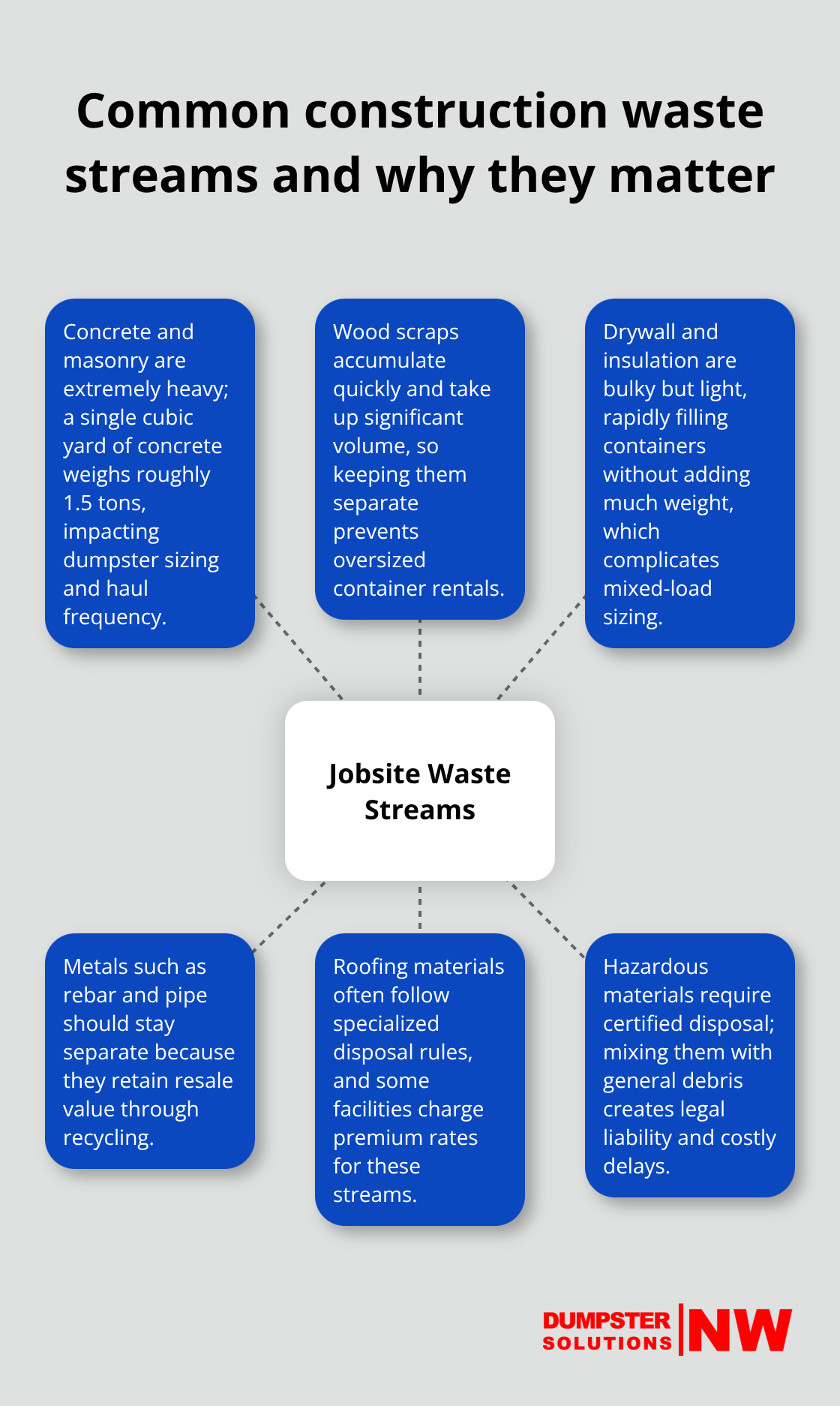
Every construction project produces a distinct mix of debris, and understanding what you’re dealing with determines your removal strategy and costs. Concrete and masonry waste from demolition or foundation work represents some of the heaviest material you’ll encounter-a single cubic yard of concrete weighs roughly 1.5 tons, which matters when calculating dumpster capacity and hauling frequency. Wood scraps from framing, demolition, and trim work accumulate fast and occupy significant volume, especially if you don’t separate them from other materials. Drywall and insulation materials produce lightweight but bulky waste that fills containers quickly without adding much weight, making size selection tricky if you mix them with heavier debris. Metal scraps including rebar, pipes, and fasteners should always stay separate because they hold genuine resale value. Roofing materials like shingles, underlayment, and flashing create specialized waste streams that many standard disposal facilities handle differently, sometimes charging premium rates. Hazardous waste such as asbestos, lead paint, and contaminated soil requires certified disposal and separate handling-mixing these materials with general construction debris creates legal liability and delays your project while authorities sort it out.
Segregation Prevents Costly Mistakes
Mixing waste streams on site costs you money and time. When concrete sits mixed with wood and metal, recycling facilities reject entire loads, forcing you to pay disposal fees instead of earning recycling credits. The practical approach involves establishing separate collection zones on your jobsite-one for concrete and masonry, another for wood and drywall, and a dedicated bin for metals. This separation takes minimal effort during demolition or construction but saves substantial cash at disposal. HomeAdvisor reports post-construction cleaning takes roughly one hour per 100 to 200 square feet, and that timeline extends significantly when crews waste hours sorting contaminated loads.
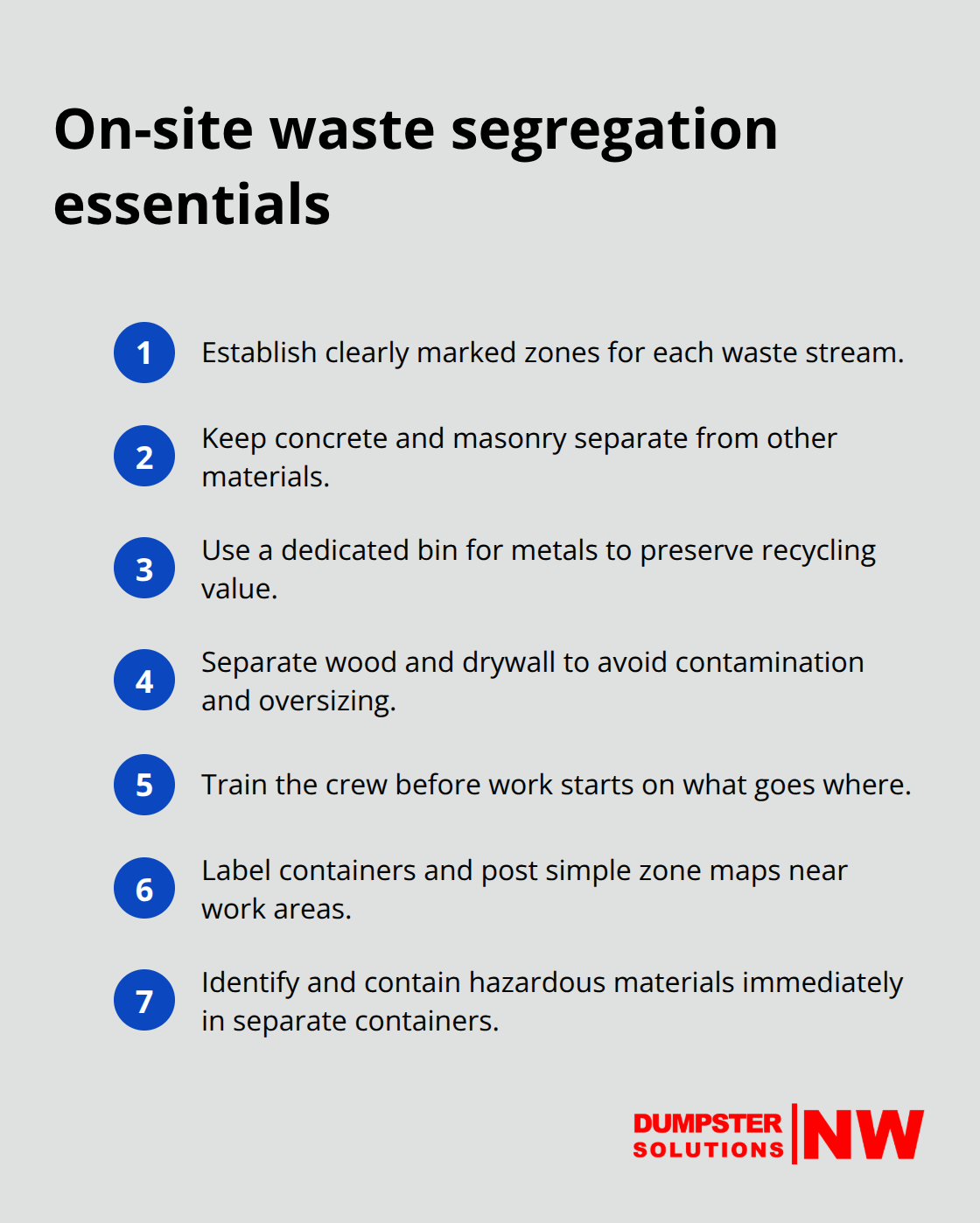
Train your team on proper segregation before work starts to prevent confusion and keep your timeline tight. Hazardous materials demand immediate identification and separate containment-never assume something is safe to mix with general waste.
Planning Your Waste Streams Early
Discuss your specific waste streams during rental planning so you can select appropriate container sizes and pickup schedules for each material type. Different projects produce different ratios of heavy versus light debris, and matching your dumpster choice to your actual waste profile prevents overpaying for capacity you don’t need or running short mid-project. Concrete-heavy demolition jobs benefit from smaller, high-capacity containers, while framing and drywall projects need larger volumes but lighter-duty bins. Identifying hazardous materials upfront protects your crew, your budget, and your project timeline-surprises during disposal cost far more than proper planning.
How to Keep Your Jobsite Clean Without Losing Momentum
Organized disposal systems help protect productivity, improve safety, support scheduling, and keep work areas functional throughout every phase of the project. Effective jobsite cleanup runs parallel to your work, not as an afterthought once debris piles up. Most contractors treat waste removal as a low priority until debris accumulates so high that crews spend hours navigating around it instead of working. That approach costs money and creates safety hazards. Consistent, intentional cleanup prevents project delays far more effectively than any other management tactic.
Match Your Cleanup Schedule to Your Waste Production
Establish a daily or weekly cleanup schedule based on your project’s pace and debris generation rate. Demolition jobs produce waste constantly, so daily or every-other-day pickups make sense. Framing or finishing work typically calls for a weekly schedule instead. The key is matching your pickup frequency to your actual waste production, not guessing at what you might need.
Coordinate with your waste removal partner to understand their response times in your area. Whether you operate in Tacoma, Seattle, Bellevue, or Kent, reliable providers offer same-day or next-day delivery and pickup, which means you never sit idle waiting for containers. A clean jobsite also means safer operations-fewer tripping hazards, better visibility, and less chance of materials getting damaged or lost under debris piles.
Organize Your Jobsite Into Dedicated Waste Zones
Set specific zones on your jobsite where each waste stream goes: concrete in one area, wood in another, metals in a third spot. Train your crew to use these zones from day one, and cleanup becomes automatic rather than something you must supervise constantly. This simple structure prevents contamination of recyclable materials and keeps your team focused on actual construction work.
Select a Partner Who Delivers Reliability and Transparency
Your waste removal partner should operate without constant back-and-forth communication. Verify upfront that they offer multiple dumpster sizes so you’re not forced to rent oversized containers for small projects or undersized ones for large ones. Transparent pricing matters enormously-you need a flat rate with no surprise delivery charges, fuel surcharges, or overage fees that blindside you mid-project.
Ask potential providers directly about their response times in your specific community and whether they handle hazardous materials separately or refuse them outright. Some providers create obstacles for anything remotely specialized, which kills your timeline. Also confirm whether they charge by weight or by volume-weight-based pricing can explode if you haul heavy materials like concrete or asphalt. Volume-based flat rates give you predictability and control over your budget.
Dumpster Solutions NW serves contractors throughout the Seattle and Puget Sound region with straightforward pricing, reliable same-day or next-day delivery, and a range of sizes from 10 to 40 yards depending on your actual needs. The right partnership transforms waste management from a headache into a background operation that simply works, freeing your crew to focus on actual construction rather than cleanup logistics. With your jobsite organized and your waste streams flowing smoothly, you’re ready to address the specific challenges that different project types present.
Why Speed and Size Flexibility Matter More Than You Think
Speed in dumpster delivery directly impacts your project schedule, and most contractors underestimate how much idle time costs. When you call a waste removal company on Monday morning and they can’t deliver until Thursday, your crew either works around scattered debris or sits idle waiting for the container to arrive. Concrete demolition crews cannot pause work for three days while waiting for a dumpster-that translates to lost wages, delayed subcontractors, and compressed timelines that create cascading problems. Fast delivery is not a convenience; it represents operational necessity.
Same-day and next-day dumpster delivery Keeps Projects Moving
Dumpster Solutions NW delivers on the same day or next day across the Seattle and Puget Sound region, which means your jobsite stays operational from the moment you need it. Your team avoids the frustration of scheduling around a provider’s limited availability windows. When you control the timing of your waste removal, you control your project momentum. Delays in container arrival ripple through your entire schedule, affecting labor costs, subcontractor coordination, and final completion dates.
Size Flexibility Prevents Budget Overruns
One-size-fits-all rental does not exist in construction. A residential kitchen remodel produces entirely different waste volumes than a commercial building demolition, yet many providers force you into standard containers regardless of your actual needs. Oversizing costs you money on rentals you do not need; undersizing creates multiple pickups and premium fees that balloon your disposal budget. Dumpster Solutions NW offers 10, 20, 30, and 40-yard dumpsters, which means you rent exactly what your project requires rather than rounding up to whatever your provider prefers.
Transparent Pricing Eliminates Financial Surprises
Transparent pricing without hidden fees separates honest operators from those who nickel-and-dime contractors during the project. Flat-rate pricing means you know your waste removal cost before work starts, not after discovering fuel surcharges, overage fees, or surprise delivery charges buried in fine print. Weight-based pricing creates unpredictability because concrete, asphalt, and metal loads vary dramatically by project, making budget forecasting impossible. Volume-based flat rates give you certainty and control-you pay one price regardless of whether your load weighs two tons or five tons.
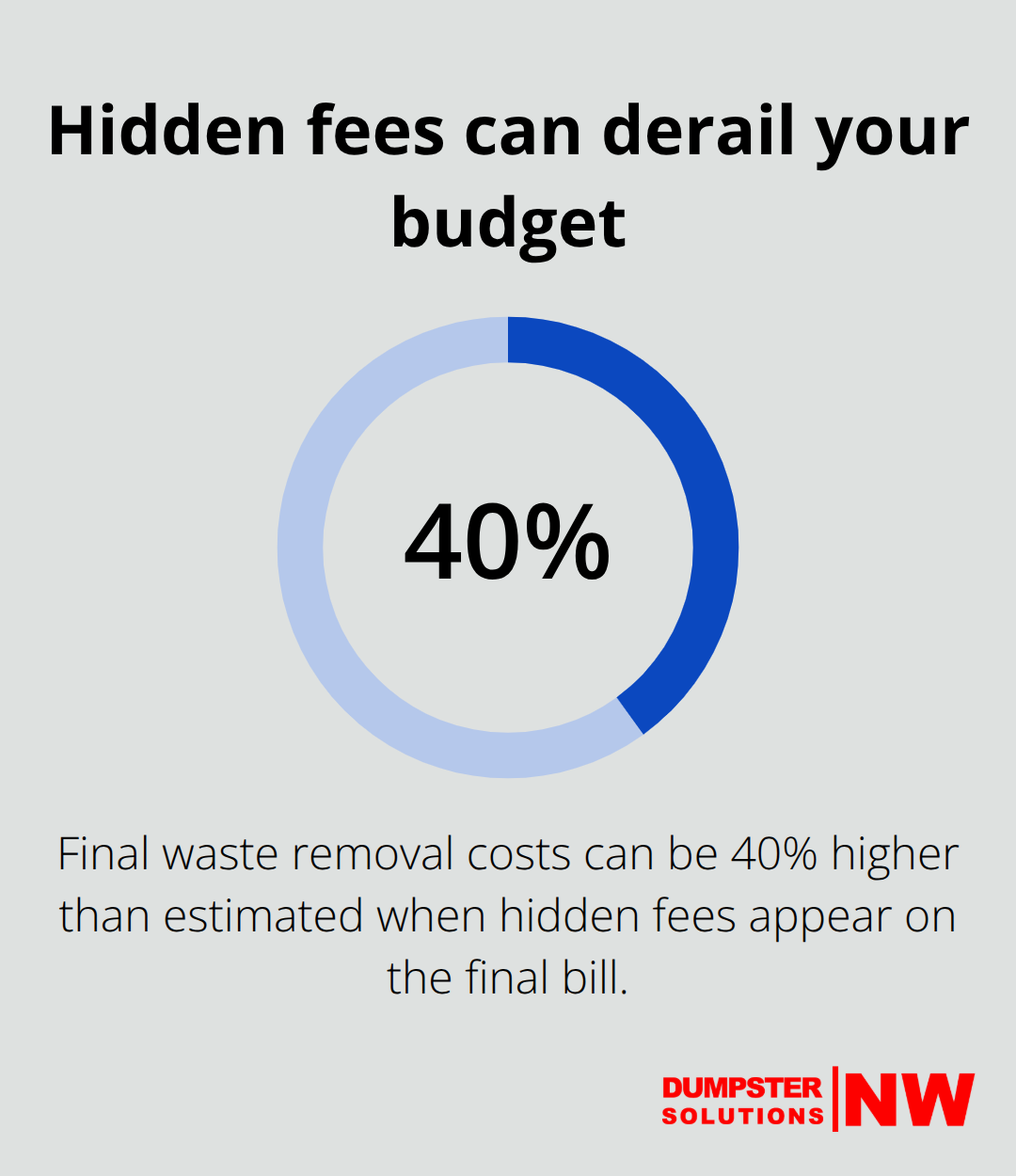
Ask any provider directly whether their quote includes delivery, pickup, fuel, and disposal, or whether additional charges appear on your invoice. Dishonest operators hide fees until the final bill arrives, which is when you realize waste removal consumed 40 percent more than estimated.
Dumpster Solutions NW quotes include everything upfront with no hidden fees, which means your budget stays accurate from planning through project completion.
Cost Predictability on Large Commercial Projects
This transparency matters most on large commercial projects where waste removal represents significant expense and multiple budget owners demand cost predictability. When you partner with a provider who delivers fast, offers appropriate sizes, and charges fairly, waste management stops being a frustrating obstacle and becomes a background operation that simply works.
Final Thoughts
Contractors waste removal transforms from a logistical burden into a competitive advantage when you approach it strategically. The difference between projects that run smoothly and those that hemorrhage time and money often comes down to waste management discipline. Organized jobsite cleanup keeps your crew productive, prevents safety hazards from accumulating debris, and maintains the professional appearance that protects your reputation with clients and subcontractors.
Professional waste management also protects your bottom line in ways that extend beyond disposal fees. Fast dumpster delivery prevents idle time that costs far more than the rental itself. Appropriate container sizes eliminate overpaying for capacity you don’t need or running short mid-project. Transparent pricing removes the financial surprises that derail budgets and damage client relationships (and these operational efficiencies compound across multiple projects, creating measurable savings that improve your margins and competitiveness).
We at Dumpster Solutions NW understand that contractors need waste removal partners who deliver reliability without friction. Our same-day or next-day delivery across the Seattle and Puget Sound region keeps your projects moving, while our range of sizes from 10 to 40 yards means you rent exactly what you need. Contact Dumpster Solutions NW today to transform waste management into a background operation that simply works.
Disclaimer: The information provided in this blog is for general informational purposes only and does not constitute legal, financial, or insurance advice. Coverage options, terms, and availability may vary. Please consult with a licensed professional for advice specific to your situation