
Your yard cleanup project generates more waste than you might expect. Tree trimmings, soil, branches, and mulch pile up fast, and figuring out how to handle it all takes real planning.
We at Dumpster Solutions NW help homeowners across Washington tackle landscaping waste solutions with the right equipment and strategy. This guide walks you through the waste types you’ll encounter, smart management practices, and how a dumpster rental fits into your cleanup plan.
What Waste Your Yard Cleanup Actually Produces
Green Waste from Tree Trimming and Pruning
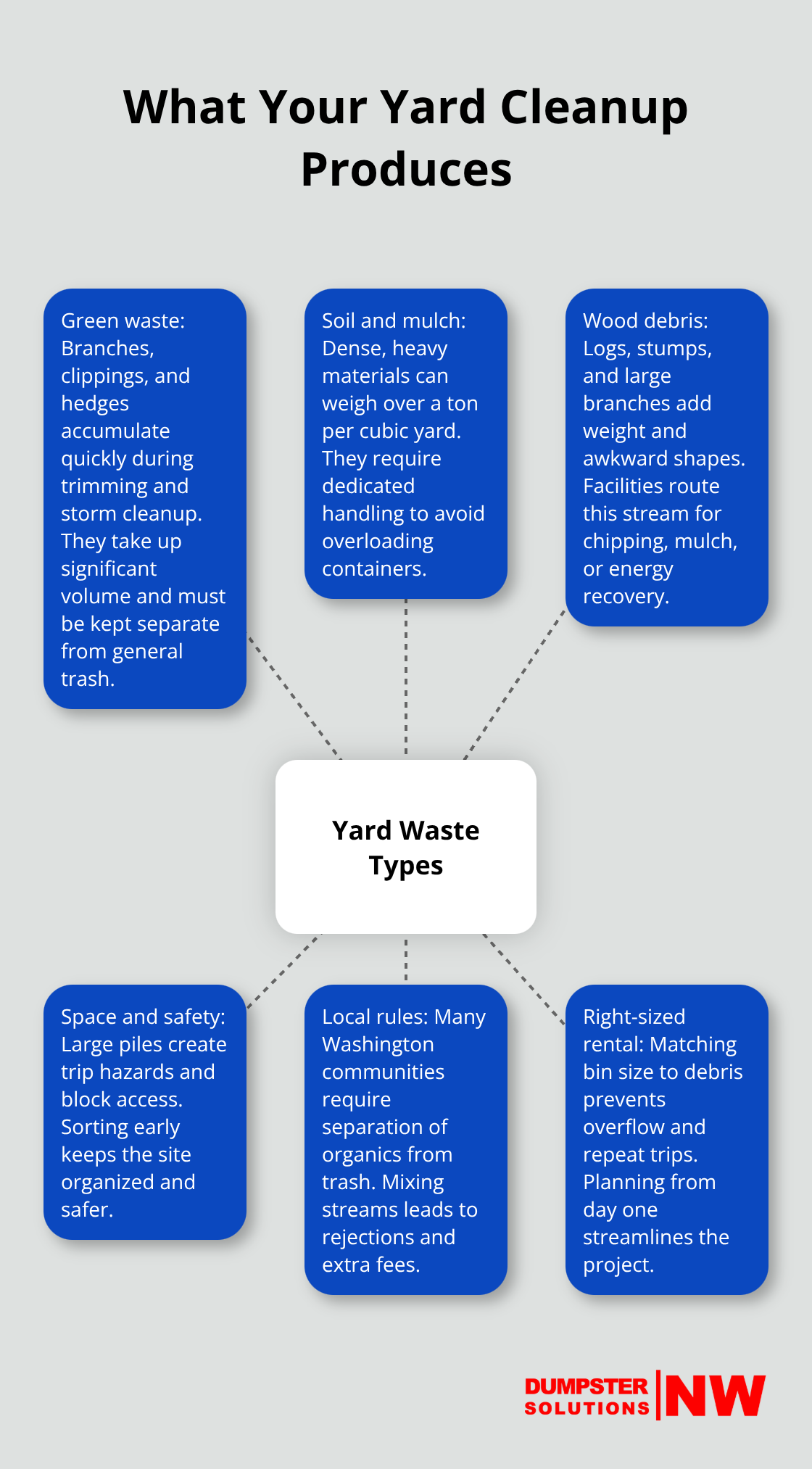
Tree trimming and pruning create green waste that accumulates faster than most homeowners anticipate. According to the U.S. Environmental Protection Agency, yard trimmings account for 12.1% of municipal solid waste, and a single mature tree generates hundreds of pounds of branches and clippings during a seasonal cleanup. When you remove dead limbs, cut back overgrown hedges, or clear storm damage, this material piles up quickly and takes up enormous space in standard trash containers. The key issue is that green waste cannot go into regular garbage pickup in most Washington communities-Bellevue, Seattle, Tacoma, and other cities in the Puget Sound region have strict regulations separating organic materials from general waste.
This means you need a dedicated solution from day one, not an afterthought when your yard sits buried under trimmings.
Soil, Mulch, and Heavy Materials
Soil, mulch, and decomposed materials present a different challenge because they’re heavy and dense. A cubic yard of soil weighs roughly 1.4 tons, so even modest landscaping projects involving soil removal or replacement demand serious hauling capacity. Most disposal facilities won’t accept these materials mixed with regular trash or yard waste, which means you must plan for separate handling from the start. Understanding the weight involved prevents you from overloading standard containers and creating safety hazards on your property.
Wood Debris and Tree Removal Challenges
Wood debris-branches, logs, and tree stumps-creates both volume and weight problems simultaneously. A fallen tree or major pruning job easily generates 2 to 4 tons of material that sits awkwardly in your yard, taking up space and creating safety risks. Responsible facilities separate wood debris for chipping, mulching, or energy recovery, so this material requires its own disposal stream. Sizing your rental appropriately from the start makes the entire project smoother and prevents the frustration of overstuffed containers or multiple trips to disposal sites.
How to Sort and Manage Your Yard Waste Properly
Separate Materials at the Source
Sorting landscaping waste before disposal saves time, money, and environmental headaches. Most Washington communities require separation at the source, meaning green waste, soil, and wood debris cannot pile into a single container. Seattle’s solid waste division reports that properly sorted yard materials divert landscaping waste from landfills when handled correctly. The practical reality is that separation takes minimal effort upfront but prevents rejection at disposal facilities, which costs you time and additional fees.
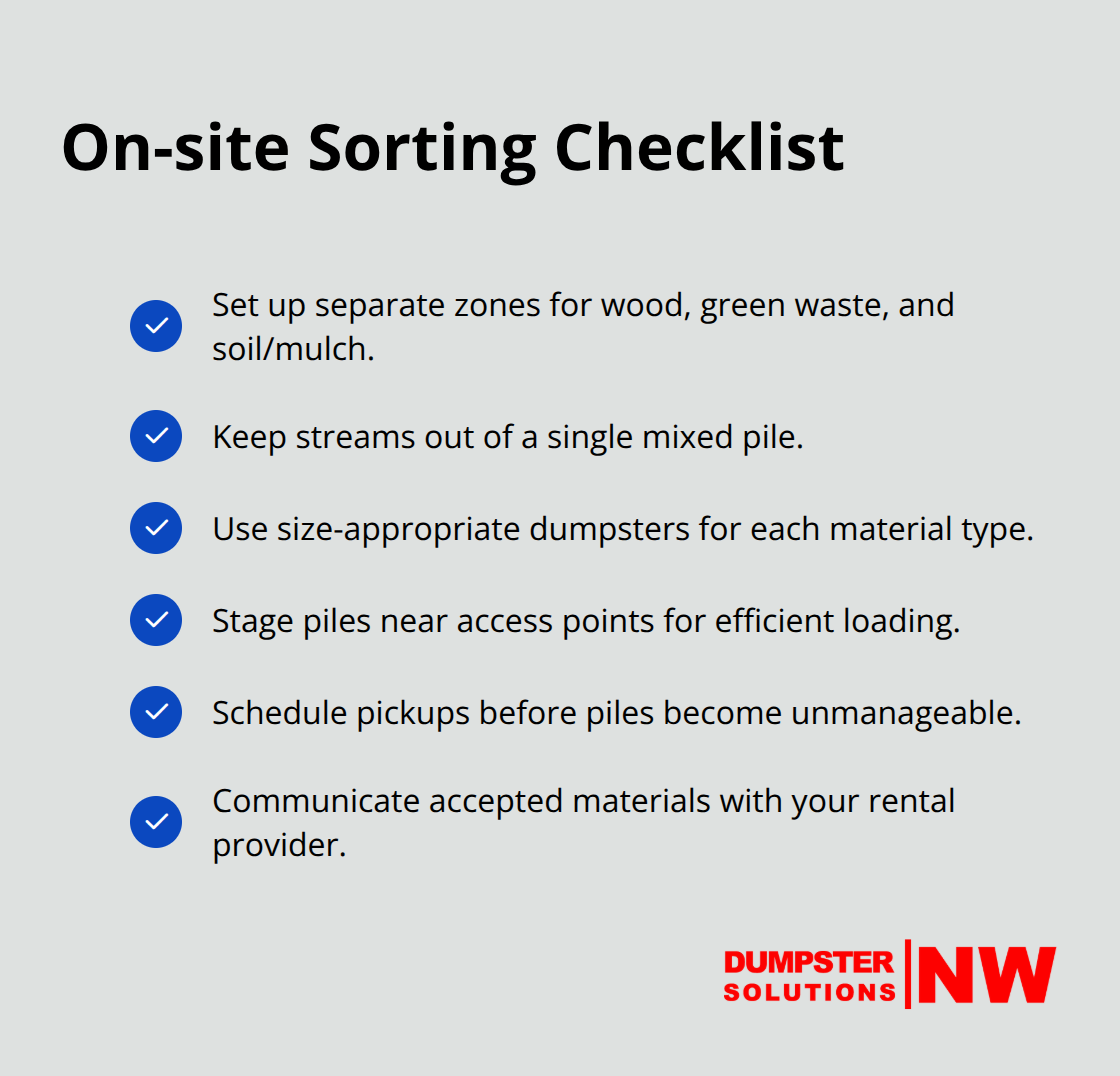
Start by designating separate areas on your property for each material type: one section for branches and logs, another for grass clippings and pruning debris, and a third for soil or mulch. This prevents the frustrating situation of having to manually sort a massive pile later. Many homeowners in Auburn, Renton, and Tacoma find that renting appropriately sized dumpsters for each waste stream costs less than paying separation fees at the facility or dealing with rejected loads.
Composting Works for Small Projects Only
Composting organic yard materials on-site works well for small-scale projects but becomes impractical for major cleanups involving hundreds of pounds of material. A standard residential compost bin handles roughly 4 to 6 cubic yards of green waste per year before reaching capacity, which means a single tree trimming project can overwhelm your system. If you compost, focus on grass clippings, small branches under 2 inches in diameter, and leaves rather than attempting to process thick logs or root systems.
For anything larger or more voluminous, scheduling regular cleanups prevents accumulation and keeps your property safe and organized. Waiting until debris piles dangerously high creates trip hazards, attracts pests, and makes the eventual cleanup exponentially harder.
Schedule Seasonal Pickups for Consistent Results
Scheduling yard waste pickups seasonally in spring and fall when growth peaks works far better than waiting for a crisis cleanup. A 20-yard dumpster handles most seasonal landscaping projects without overflow, and scheduling pickups quarterly keeps your property clear and manageable year-round. This approach (combined with proper sorting) eliminates the stress of managing massive accumulations and keeps your yard functional throughout the year.
The right dumpster size and pickup schedule transform yard maintenance from a dreaded chore into a manageable routine. With your waste properly sorted and a regular removal schedule in place, you’re ready to explore which dumpster rental solution fits your specific cleanup needs.
Picking the Right Dumpster Size for Your Yard Waste
Match Dumpster Capacity to Your Project Scale
Selecting the wrong dumpster size creates two expensive problems: you rent too small and need an emergency second haul, or you rent too large and waste money on unused capacity. Heavy debris like concrete or dirt requires a 10 yard dumpster due to weight limits, while bulky household items may need a larger bin for minor cleanups like clearing a few dead trees or seasonal hedge trimming. For serious projects involving multiple mature trees or complete yard overhauls, a 20-yard dumpster remains the most practical choice across Washington communities like Bellevue, Kirkland, and Redmond. The 30 and 40-yard sizes serve contractor-scale work and rarely apply to residential yard projects unless you’re clearing an entire property or managing commercial landscaping.
Measure Your Debris Before Renting
Start by measuring your debris pile: if it reaches waist-high across your yard, you’re already past 10-yard capacity. Most homeowners in Seattle, Tacoma, and surrounding areas find that a 20-yard dumpster covers seasonal cleanups without excess, and scheduling two annual pickups in spring and fall beats renting oversized equipment. Dumpster Solutions NW delivers in most cases on the same or next day, so you won’t sit waiting around or scramble to find alternative solutions when your project timeline tightens.
Separate Materials for Environmental and Financial Benefits
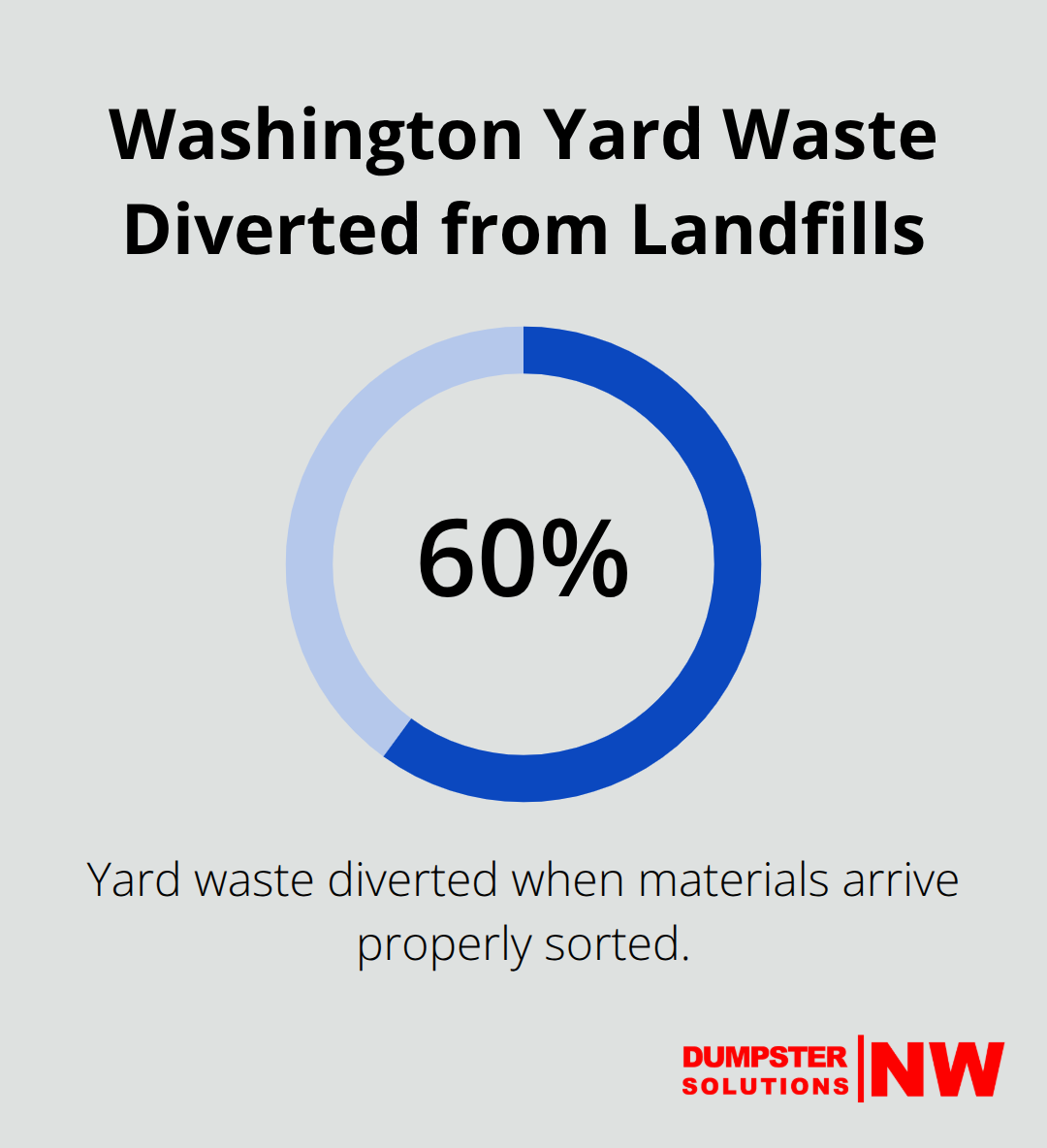
Responsible disposal separates landscaping waste from general trash at the disposal facility level, which means your sorting effort upstream directly reduces environmental impact and often lowers your overall costs. Washington State diverts roughly 60 percent of yard waste from landfills when materials arrive properly sorted, so separation genuinely matters for regional sustainability goals. Wood debris gets chipped into mulch or processed for energy recovery, green waste composts into soil amendments, and soil gets reused in construction or landscape projects rather than occupying landfill space indefinitely.
Avoid Contamination Fees at Disposal Facilities
Facilities across the Puget Sound region charge premium fees for contaminated loads, meaning a single bag of trash mixed into your yard waste can trigger rejection and force you to haul everything back for manual sorting. Schedule your rental with enough buffer time to sort materials properly before pickup, and communicate with your rental company about what goes into each container so there are no surprises at the facility. This approach transforms yard cleanup from an environmental liability into a circular process where your waste becomes someone else’s resource.
Wrapping Up
Efficient landscaping waste solutions require three core practices: sort materials at the source, match your dumpster size to your actual debris volume, and schedule regular pickups instead of waiting for crisis cleanups. When you separate green waste, soil, and wood debris from the start, you eliminate contamination fees, reduce environmental impact, and make the entire process faster. Washington communities from Seattle to Tacoma have strict regulations around yard waste disposal, so proper separation isn’t optional-it’s the foundation of responsible cleanup.
Professional dumpster rentals remove the guesswork and physical burden from yard projects. Rather than figuring out where to haul materials or renting equipment that doesn’t fit your needs, we at Dumpster Solutions NW handle the logistics so you focus on the actual cleanup work. Our flat-rate pricing means no surprise fees when your load arrives at the facility, and same-day or next-day delivery keeps your project moving forward without delays.
Contact Dumpster Solutions NW and describe your project to get started with landscaping waste solutions. Tell us whether you’re clearing a few dead trees, doing seasonal hedge trimming, or tackling a complete yard overhaul, and we’ll recommend the right dumpster size for your situation. We deliver 10, 20, 30, and 40-yard dumpsters throughout the Puget Sound region (Bellevue, Renton, Tacoma, and beyond), so we’ve got you covered wherever you are.
Disclaimer: The information provided in this blog is for general informational purposes only and does not constitute legal, financial, or insurance advice. Coverage options, terms, and availability may vary. Please consult with a licensed professional for advice specific to your situation