
Renovation projects generate massive amounts of waste, and most homeowners underestimate just how quickly it accumulates. Without a solid plan for renovation debris disposal, you’ll find yourself overwhelmed by materials scattered across your property.
We at Dumpster Solutions NW help homeowners throughout Washington State tackle this challenge efficiently. This guide walks you through proven strategies to manage your renovation waste and get your space cleaned up fast.
How Much Waste Your Renovation Actually Creates
Renovation debris accumulates faster than most homeowners anticipate, and the variety of materials involved makes the problem worse. A kitchen remodel alone generates drywall scraps, cabinet remnants, flooring waste, plumbing fixtures, and packaging materials-often filling a standard garage within days. Bathroom renovations produce similar volumes of tile, grout, old fixtures, and insulation.
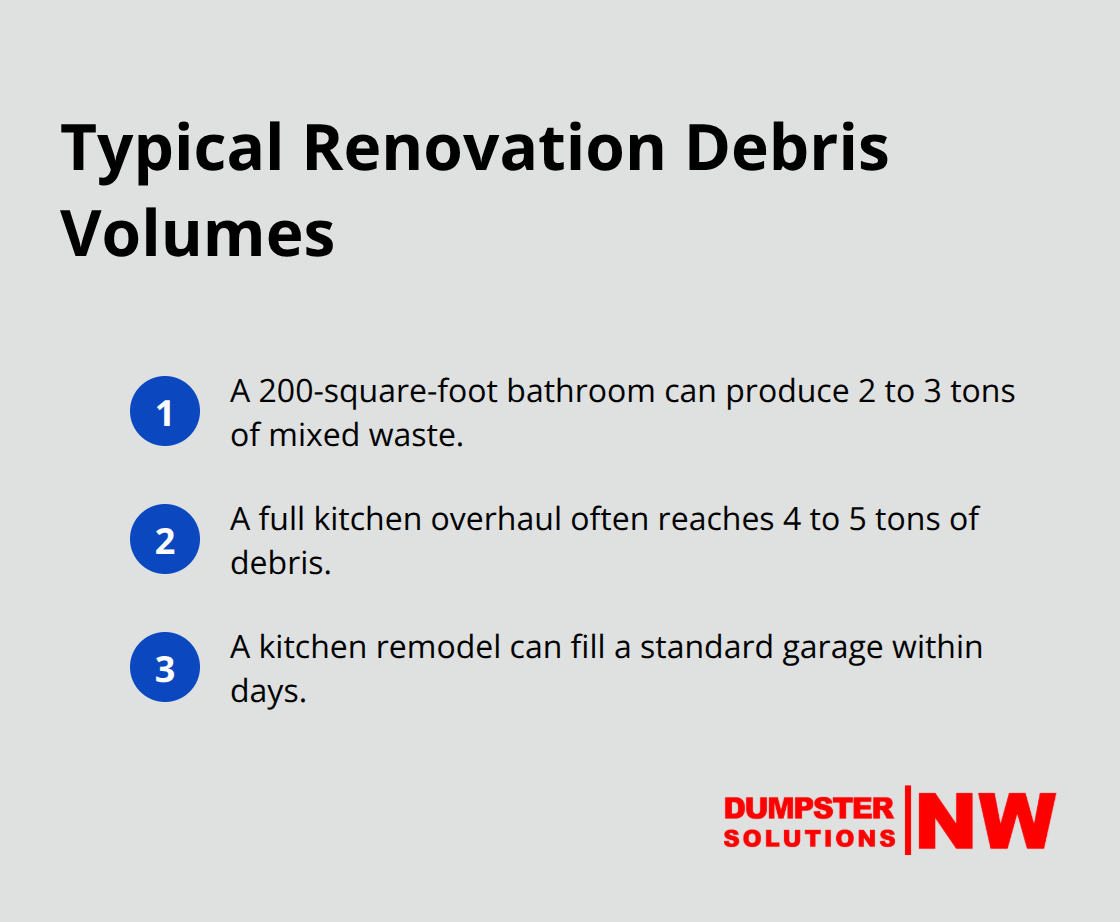
According to the U.S. Environmental Protection Agency, construction and demolition debris generates significant waste volumes annually in the United States, with residential renovations contributing to that total. A modest 200-square-foot bathroom renovation can easily produce 2 to 3 tons of mixed waste, while a full kitchen overhaul often reaches 4 to 5 tons.
Space Constraints Create Real Problems
The problem intensifies because most homeowners lack adequate space on their property to stage materials. Piles of debris slow down your progress and create safety hazards for your family. You’ll trip over scattered wood, nails, and drywall fragments while trying to move through your home. Contractors working on your project face the same obstacles, which extends your timeline and increases labor costs.
Why DIY Disposal Costs More Than You Think
Attempting to haul renovation waste yourself sounds economical until you factor in actual costs and time investment. Renting a pickup truck multiple times, purchasing dump fees at local facilities (which typically range from $50 to $150 per load in Washington State), and spending your weekends transporting materials adds up quickly. Many Washington State facilities require separation of materials-drywall in one pile, wood in another, metal separately-which demands additional sorting time and multiple trips.
The Hidden Expense of Junk Removal Services
Hiring junk removal services sounds convenient, but they charge premium rates for mixed loads, often $800 to $2,000 for a single pickup. These services work on their schedule, not yours, which means waiting around for appointments that may not align with your project timeline. You’ll also pay extra if materials need sorting before removal, adding another layer of expense and delay to your renovation.
A Simpler Path Forward
Dumpster Solutions NW offers a straightforward alternative with transparent, flat-rate pricing and no hidden fees. We deliver dumpsters in sizes ranging from 10 to 40 yards to fit your specific project needs, often on the same or next day. Once you’ve filled your dumpster, we handle the hauling and responsible disposal, letting you focus on completing your renovation rather than managing logistics.
Smart Strategies for Managing Renovation Waste
Controlling renovation debris starts with understanding what materials your project produces and planning your disposal strategy around your actual timeline. Most homeowners fail here because they rent a dumpster too early, pay for days of unused space, or run out of room mid-project and scramble to rent a second one. The National Association of Home Builders reports that poor waste management on residential projects increases overall costs by 5 to 10 percent, which translates to hundreds or even thousands of dollars on a typical renovation. You need a realistic plan that accounts for when debris actually accumulates, not when you think it will.
Identify Your Debris Types and Timing
A kitchen remodel produces drywall, cabinetry, flooring materials, old appliances, and packaging-materials that accumulate at different rates depending on your work sequence. If you demolish first, you create a massive debris spike in days one through three. If you work in phases, waste spreads across weeks. Contact local Washington State recycling facilities before your project starts to learn their material separation requirements. Many accept wood, metal, and drywall at discounted rates or free if properly sorted, which saves money compared to mixed-load disposal.
Time Your Dumpster Rental Correctly
The timing of your dumpster rental matters more than most homeowners realize. Rent it to arrive two to three days before active demolition starts, not weeks ahead. This minimizes idle rental days while ensuring you have space when debris actually piles up. For a two-week kitchen renovation, a single 20-yard dumpster delivered on day two and picked up on day fifteen matches your actual debris timeline instead of paying for unused rental days.
Load Strategically to Maximize Space
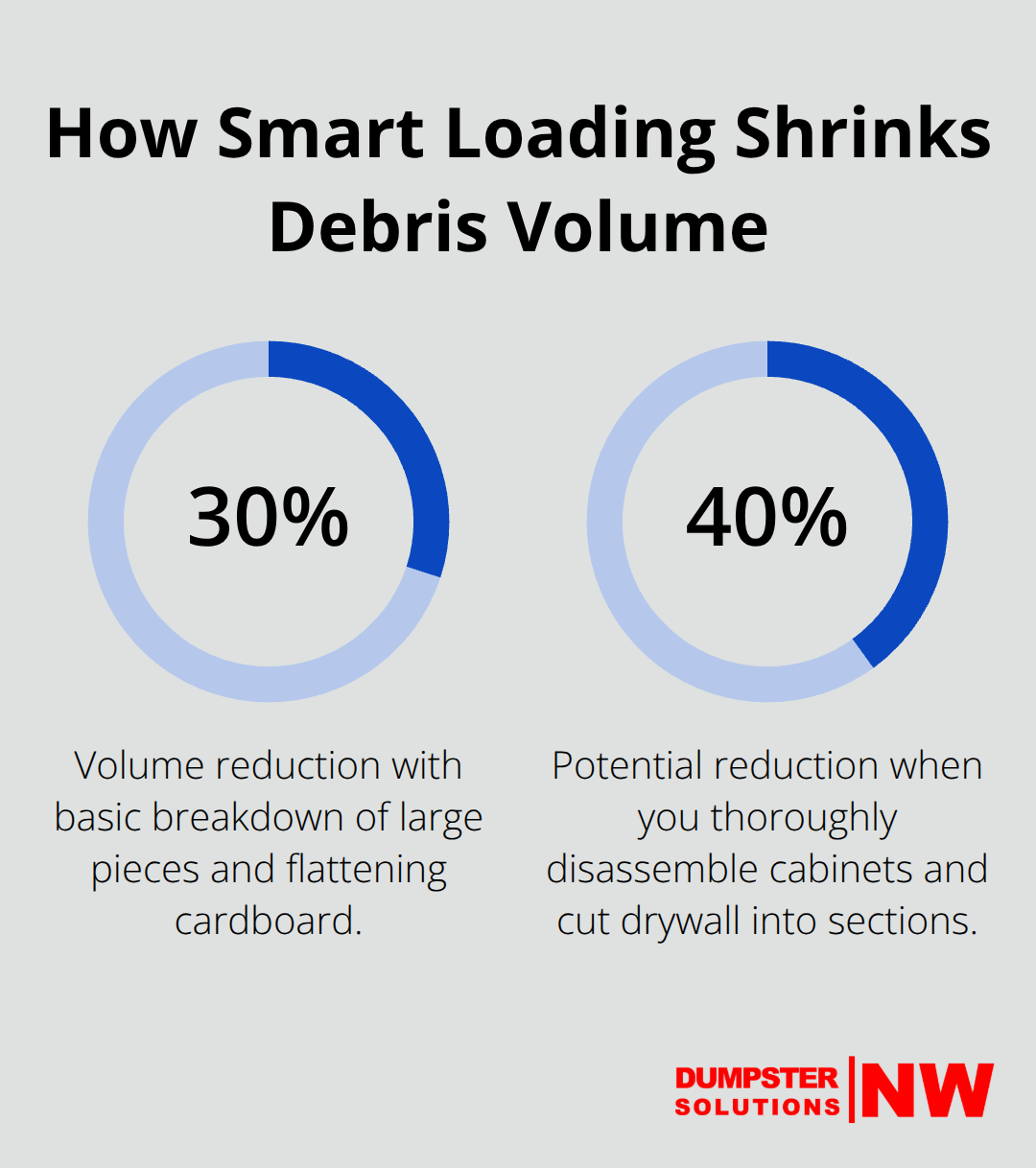
Heavy materials like concrete or tile belong at the bottom where weight doesn’t matter. Bulky but light items like drywall and insulation go on top. Break down large pieces-flatten cardboard, cut drywall into manageable sections, disassemble cabinet frames-which reduces volume by 30 to 40 percent according to waste management studies. This approach lets you fit more material into your rental and potentially avoid upgrading to a larger size.
Choose the Right Dumpster Size
Dumpster Solutions NW offers sizes ranging from 10 to 40 yards, which means you can right-size for your specific project rather than guessing at capacity. Smart dumpster size selection helps you pick between 20- and 25-yard options based on debris volume, type, space, and weight limits. Selecting the correct size upfront prevents the frustration of overfilled dumpsters and unexpected rental extensions. With this foundation in place, the next step involves comparing how dumpster rentals stack up against other disposal methods available to Washington State homeowners.
Dumpster Rental vs. Other Disposal Options
Cost Comparison: The Real Numbers
Dumpster rental consistently beats other disposal methods when you calculate actual expenses instead of surface-level pricing. Junk removal services charge $800 to $2,000 for a single mixed-load pickup in Washington State, making them the most expensive option for most renovations. Multiple trips to local disposal facilities add up faster than homeowners expect-fuel costs, dump fees ranging from $50 to $150 per load, and your time spent driving back and forth easily exceed a flat-rate dumpster rental.
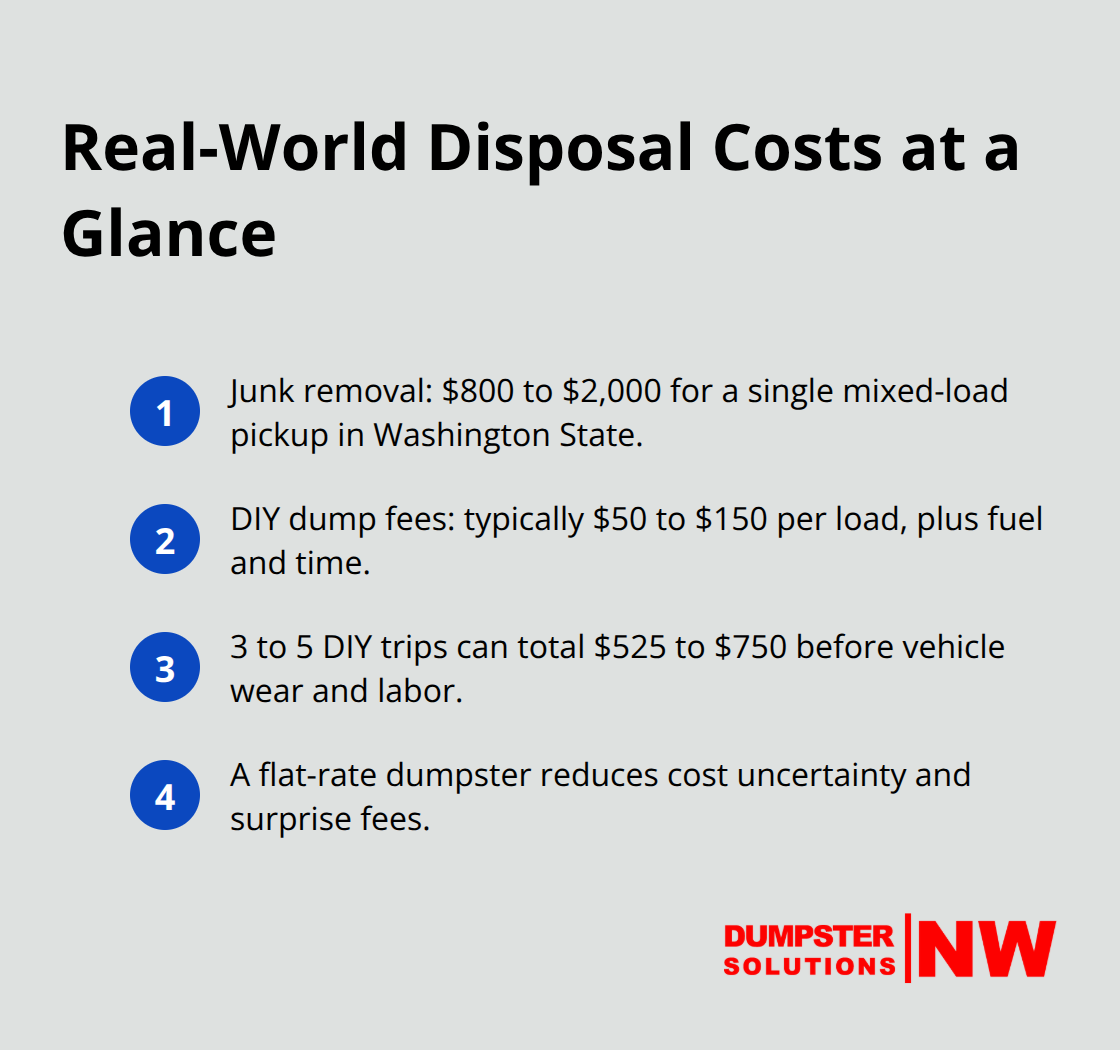
Three to five trips at $100 per trip plus $75 to $125 in dump fees each time total $525 to $750 in direct costs alone, before accounting for vehicle wear and your labor hours. A single dumpster rental with transparent pricing eliminates the cost uncertainty that plagues DIY disposal and prevents the sticker shock that junk removal companies deliver when they charge extra for material separation or weight overages.
Environmental Responsibility Matters
Professional dumpster haulers sort materials properly-they send wood to facilities that chip it for mulch, metal to recycling centers, and drywall to specialized processors rather than letting mixed debris end up in landfills. Junk removal services often dump everything together, prioritizing speed over environmental stewardship. DIY trips to facilities depend entirely on your willingness to sort materials correctly, which most homeowners skip due to time constraints. This approach means your renovation waste actually gets handled responsibly instead of creating unnecessary landfill burden.
Convenience and Schedule Control
Junk removal services control the appointment window, forcing you to wait around on their schedule while your project sits idle. A rented dumpster stays on your property, accessible whenever you need to load it, whether that’s early morning before work or late evening after contractors leave. You avoid the physical labor of multiple loading cycles, the frustration of driving to distant facilities, the hassle of material separation requirements that vary by location, and the uncertainty of whether your local facility accepts specific materials. For homeowners and contractors throughout Washington State communities like Seattle, Tacoma, Bellevue, and Redmond, a rented dumpster simply works better because it keeps your work moving forward without interruption. The time you save-hours that would otherwise disappear into transportation and logistics-translates directly into faster project completion and less disruption to your household.
Final Thoughts
Renovation debris disposal doesn’t have to derail your project or drain your budget. The strategies outlined here-timing your rental correctly, maximizing dumpster space through smart loading, and choosing the right disposal method-work together to keep your renovation on track and your costs predictable. A single dumpster rental with transparent pricing beats multiple trips to disposal facilities, junk removal services charging premium rates, and the hidden costs of DIY hauling.
You save money, time, and the physical exhaustion that comes with managing waste logistics yourself. Professional disposal means your renovation materials get handled responsibly instead of creating unnecessary landfill burden. For homeowners and contractors throughout Washington State, whether you’re in Seattle, Tacoma, Bellevue, Redmond, or any of the surrounding communities, the right solution depends on your project scope and timeline.
A small bathroom remodel might need a 10-yard dumpster, while a full kitchen overhaul typically requires 20 to 25 yards. The key involves matching your dumpster size to your actual debris volume rather than guessing and paying for unused capacity. Visit Dumpster Solutions NW to get started with hassle-free renovation debris disposal today.
Disclaimer: The information provided in this blog is for general informational purposes only and does not constitute legal, financial, or insurance advice. Coverage options, terms, and availability may vary. Please consult with a licensed professional for advice specific to your situation