
Renovation projects generate massive amounts of debris, and managing it without a plan turns into chaos fast. At Dumpster Solutions NW, we’ve helped thousands of homeowners across Washington State handle renovation debris removal efficiently.
The right approach saves time, money, and stress. This guide walks you through every step.
Planning Your Renovation Project
Assess the Scope and Scale of Your Project
Most homeowners underestimate renovation debris volume by 30 to 40 percent, according to construction waste data from the EPA. This miscalculation leads to either renting a dumpster that’s too small or paying for unnecessary capacity. Start by honestly assessing what you’re removing. Are you gutting a kitchen, doing a full bathroom remodel, or tackling a room addition?
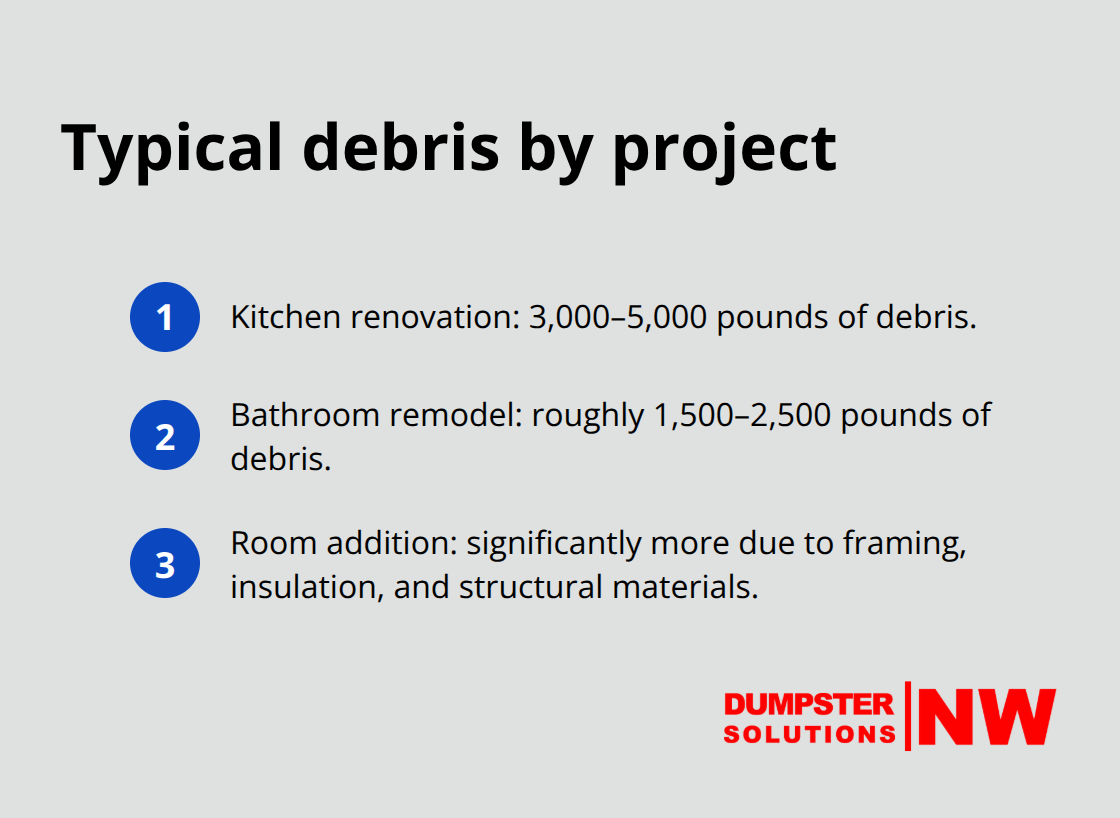
A kitchen renovation typically generates 3,000 to 5,000 pounds of debris from cabinets, countertops, flooring, and drywall. A bathroom remodel produces roughly 1,500 to 2,500 pounds. A room addition creates significantly more because you’re dealing with framing lumber, insulation, and structural materials.
Walk through your space with a notepad and list every material you’ll remove: old flooring, drywall, fixtures, appliances, trim, and anything else that won’t stay. This inventory becomes your debris blueprint.
Estimate the Volume of Debris You’ll Generate
Your material list directly determines which dumpster size works best for your project. Dumpster Solutions NW offers 10, 20, 30, and 40-yard dumpsters to fit projects of any scale. Smaller renovations fit comfortably in a 10 or 20-yard container, while major remodels require 30 or 40-yard options. Weight matters as much as volume-concrete, roofing shingles, and other dense materials add up fast. Some materials (like concrete and roofing shingles) have weight restrictions on standard dumpsters, so knowing what you’re removing helps you plan correctly.
Understand Local Disposal Regulations in Your Area
Washington State requires homeowners to follow specific disposal rules depending on your location and material type. Seattle enforces strict construction waste diversion requirements, meaning you can’t simply dump everything in one dumpster. Hazardous materials like asbestos, lead paint, and refrigerants need professional handling and separate disposal. Non-hazardous materials get sorted into wood, metal, drywall, and mixed debris categories at most facilities.
Check with your city or county waste management department before your project starts-many areas offer free disposal guides online. Your specific community in the Puget Sound region (whether Auburn, Bellevue, Tacoma, or Seattle) may have different rules. Contact Dumpster Solutions NW before finalizing your material list; we can advise on what fits in each dumpster size and what requires special handling for your specific location.
Choosing the Right Dumpster Size
Picking the wrong dumpster size wastes money and creates project delays. Too small, and you’ll need emergency pickups that cost extra. Too large, and you’re paying for capacity you won’t use. Match your dumpster to your specific materials and timeline rather than guessing.
Match Dumpster Capacity to Your Project Needs
A 10-yard dumpster holds roughly 3 to 4 tons and works for minor kitchen updates, single-room renovations, or bathroom remodels under 2,000 pounds of debris. A 20-yard dumpster accommodates 6 to 8 tons and handles most full kitchen or bathroom remodels generating 3,000 to 5,000 pounds of mixed materials. A 30-yard dumpster holds 10 to 12 tons and suits larger projects like room additions or whole-home renovations.
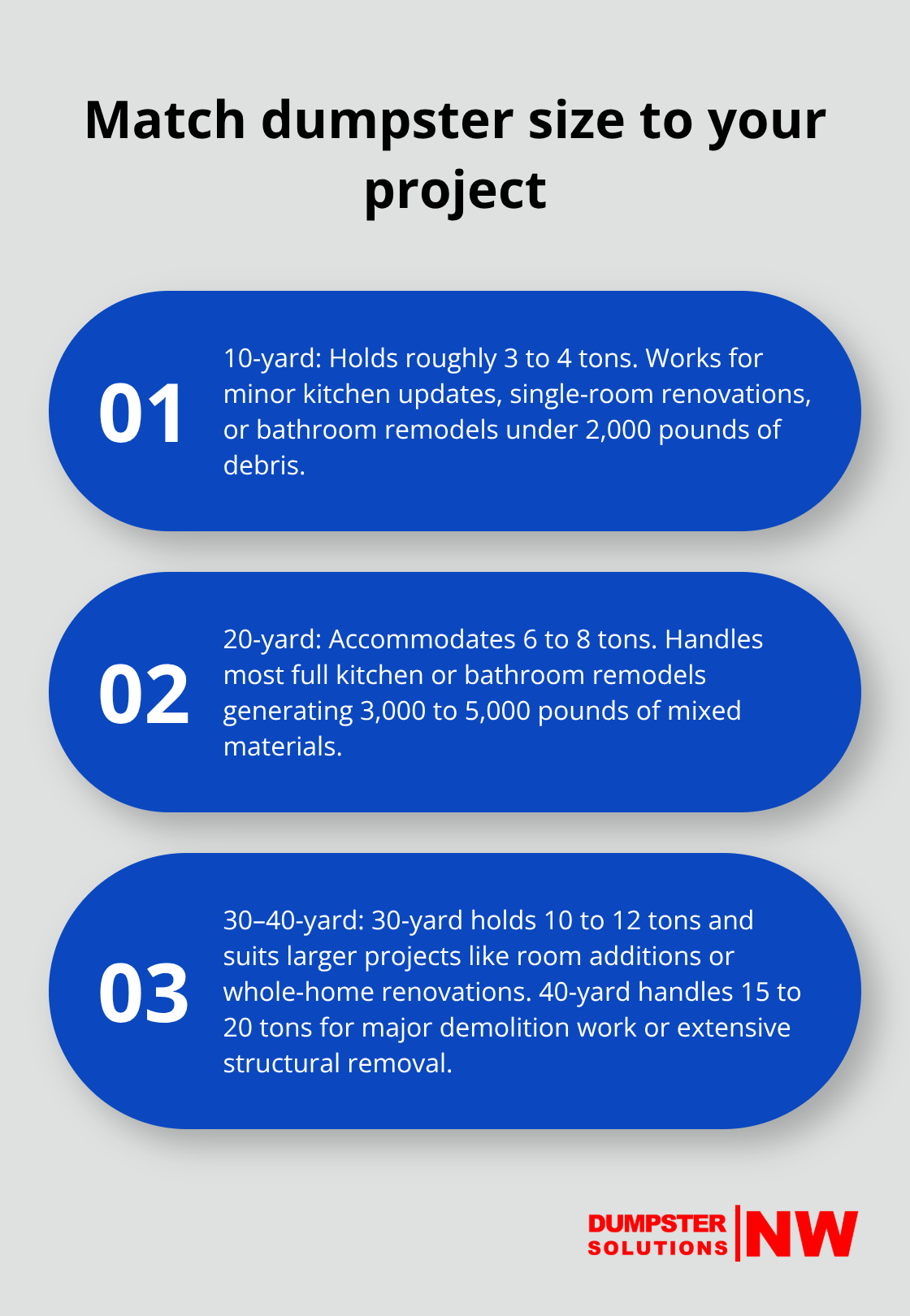
A 40-yard dumpster handles 15 to 20 tons for major demolition work or extensive structural removal.
Consider Weight Limits and Material Types
Weight limits create real constraints that many homeowners overlook. Roofing shingles weigh about 2.5 pounds per square foot, so removing shingles from a 2,000-square-foot roof generates roughly 5,000 pounds alone. Concrete debris weighs 150 pounds per cubic yard, meaning a small basement flooring project can max out a 20-yard dumpster quickly. Drywall weighs 1.3 pounds per square foot, so gutting a 1,500-square-foot home generates around 2,000 pounds from drywall alone.
Be honest about dense materials in your project. If your renovation involves concrete removal, roofing work, or extensive flooring replacement, move up one dumpster size from your initial estimate. Dense materials (like roofing shingles and concrete) fill containers faster than lighter debris and add weight quickly.
Account for Timeline and Multiple Pickups
For timeline planning, schedule a new dumpster delivery if your project runs longer than two weeks rather than overfilling your current one. Multiple smaller pickups often cost less than paying overage fees or renting an oversized container from the start. Dumpster Solutions NW delivers quickly-often on the same or next day-so scheduling additional pickups won’t delay your work.
Contact Dumpster Solutions NW before your project begins so we can match your specific materials and timeline to the right size for your Washington State community. Once you’ve selected your dumpster, the actual removal process requires careful planning to keep your site safe and organized.
The Renovation Debris Removal Process
Schedule Delivery at the Start of Your Project
Timing your dumpster delivery makes the difference between a smooth renovation and constant frustration. Schedule your dumpster arrival for the day before you start demolition work, not the day of, so you’re ready to load immediately when debris starts accumulating. Dumpster Solutions NW delivers quickly throughout the Seattle and Puget Sound region, often on the same or next day, which means you can plan your demolition schedule around a confirmed delivery date. Having the dumpster on-site from day one prevents debris from piling up in your yard or blocking access to your home. Most homeowners who wait until mid-project to order a dumpster end up paying rush fees or dealing with temporary storage headaches that slow everything down.
Load Debris Safely and Efficiently
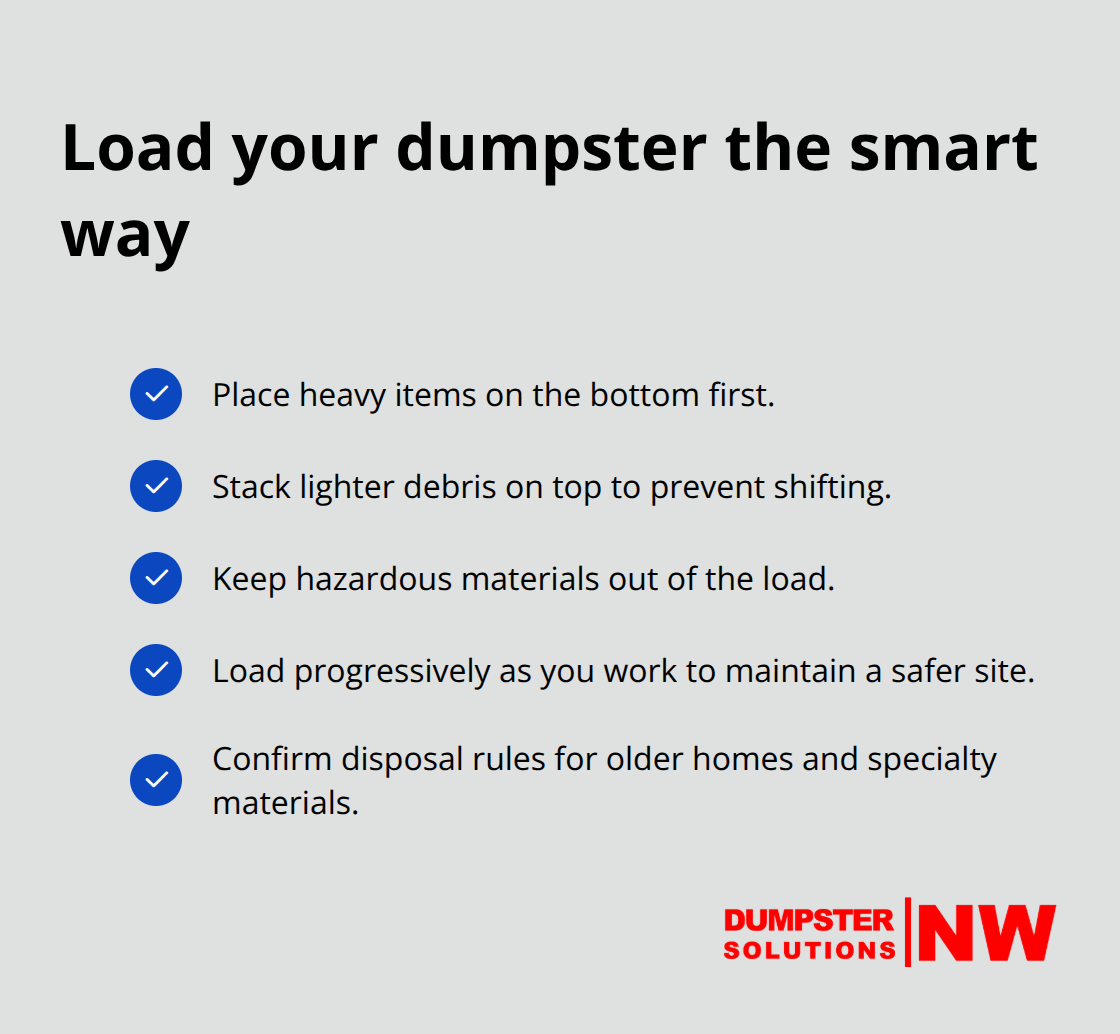
Loading your dumpster efficiently requires a straightforward strategy: place heavy materials like concrete and roofing shingles first at the bottom, then stack lighter debris on top. This prevents lighter materials from shifting and compacting, which wastes valuable space. Drywall, flooring scraps, and wood framing stack well, but avoid mixing hazardous materials like paint cans, solvents, or asbestos-containing materials into your general debris load.
Washington State regulations prohibit hazardous materials in standard dumpsters, and violating these rules creates liability for you and fines for violations.
If your renovation involves removing old insulation, roofing with tar paper, or anything from a home built before 1980, contact your local building department to confirm disposal requirements for your specific community. Load the dumpster progressively as you work rather than waiting until the end, which keeps your work area safer and prevents tripping hazards around piles of debris.
Coordinate Pickup and Responsible Disposal
Coordinate pickup timing with your project completion to avoid paying rental fees while waiting for collection. Communicate your expected completion date when you schedule delivery, and confirm pickup at least two days before you finish work. If your project runs longer than anticipated, contact Dumpster Solutions NW immediately to reschedule rather than paying overage charges for an extra week of rental. We handle all hauling and disposal responsibly, sorting materials at our facilities according to Washington State requirements, so your renovation debris gets processed correctly without additional effort from you.
Final Thoughts
Renovation debris removal becomes manageable when you plan ahead, select the appropriate dumpster size, and work with a reliable partner who handles the logistics. We at Dumpster Solutions NW have supported thousands of homeowners across Washington State-from Seattle to Tacoma, Auburn to Bellevue, and every community in between-and we understand the specific challenges your area presents. Your project site stays cleaner and safer when you remove debris consistently throughout your work rather than letting it accumulate in piles that create tripping hazards and frustrate your neighbors.
Professional debris removal eliminates the burden of sorting materials, navigating local disposal regulations, or making multiple landfill trips yourself. We at Dumpster Solutions NW deliver quickly (often on the same or next day), offer transparent flat-rate pricing with no hidden fees, and manage responsible disposal according to Washington State requirements. Our 10, 20, 30, and 40-yard dumpsters fit any renovation scale, and we handle all the heavy lifting so you can focus on your project.
Schedule your dumpster today and start your renovation with confidence. We stand behind our work as local experts who know your area and deliver results.
Disclaimer: The information provided in this blog is for general informational purposes only and does not constitute legal, financial, or insurance advice. Coverage options, terms, and availability may vary. Please consult with a licensed professional for advice specific to your situation