
Your yard is probably telling you it’s time for a cleanup. Overgrown plants, scattered debris, and broken structures pile up faster than you’d think, and tackling it alone feels overwhelming.
A yard cleanup dumpster changes everything. We at Dumpster Solutions NW help homeowners across Washington State transform their outdoor spaces quickly and safely, without the stress of hauling everything yourself.
Signs Your Yard Needs a Cleanup
Overgrown Vegetation and Debris Accumulation
Your yard doesn’t need to look like a disaster zone before cleanup becomes necessary. Most homeowners wait too long, and that delay compounds the problem. Overgrown vegetation spreads aggressively-a small patch of weeds becomes an invasive takeover within weeks. Debris accumulation follows the same pattern: a few fallen branches become piles of wood, leaves, and broken limbs scattered across your property.
Dead trees and shrubs create fire hazards and attract pests. If you live in Washington State communities like Seattle, Tacoma, or Bellevue, seasonal weather compounds these issues. Spring brings rapid growth, fall brings massive leaf drop, and winter storms leave branches everywhere. The key indicator that cleanup is overdue arrives when you stop using parts of your yard because they’re too cluttered or unsafe to navigate.
Broken Structures and Damaged Materials
Broken structures and damaged materials signal that action is needed. Old sheds, fencing, decking, or garden beds deteriorate faster than most homeowners realize. Wood rot accelerates in our wet Pacific Northwest climate, making damaged materials not just unsightly but genuinely dangerous. Sharp metal edges, rusted hardware, and splintering wood create injury risks, especially for children and pets.
Pest problems follow close behind deteriorating structures. Rodents nest in piles of wood and debris, insects colonize dead vegetation, and standing water attracts mosquitoes. If you notice rodent droppings, increased insect activity, or actual pest sightings near debris piles, your yard has crossed from messy to hazardous.
Taking Action on Safety Hazards
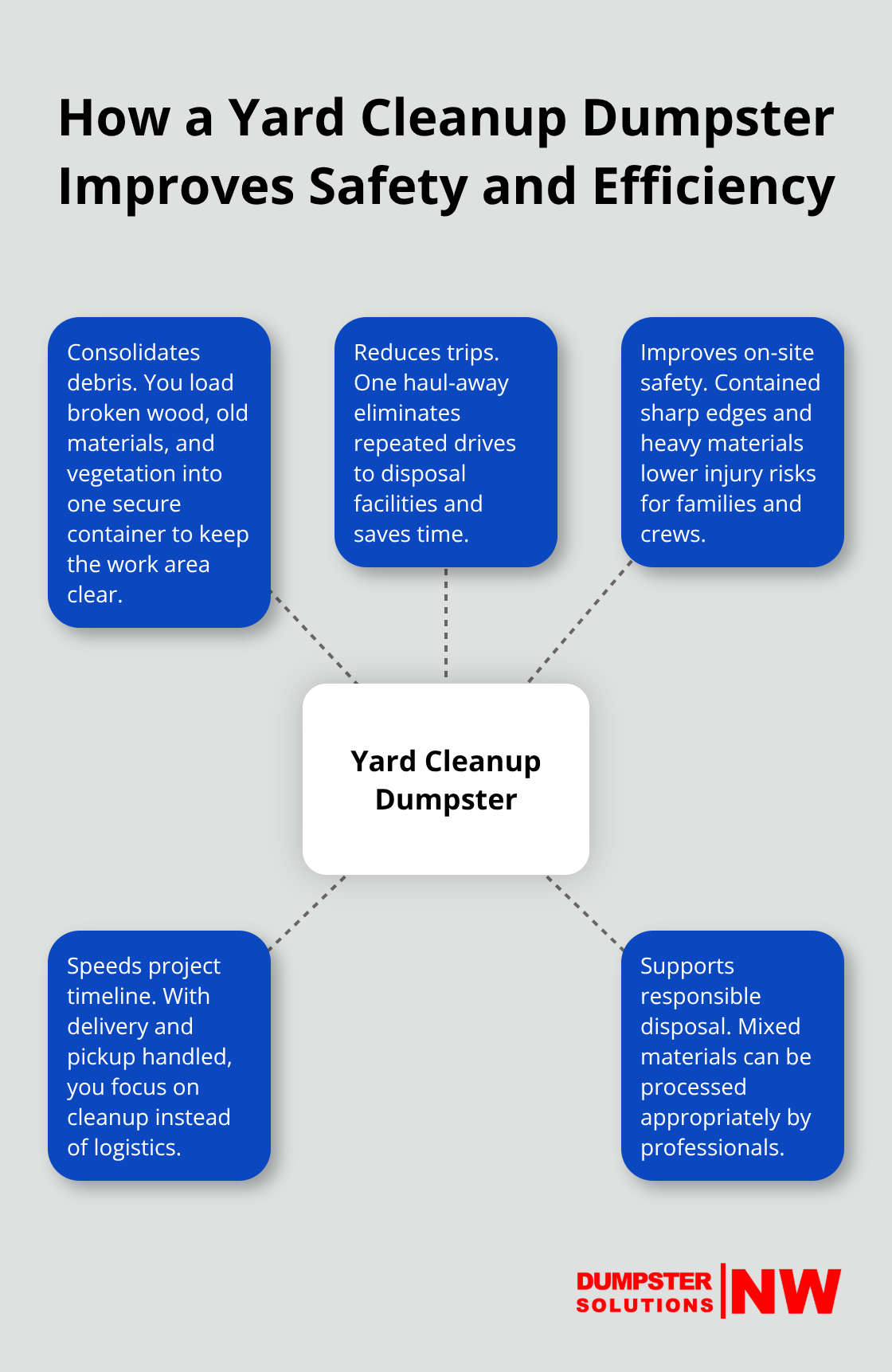
The solution requires removing these materials entirely, not stacking them elsewhere on your property. A yard cleanup dumpster provides a practical way to handle this work. You can safely collect broken wood, old materials, and debris in one place, then have professionals haul everything away responsibly. This approach (especially for larger projects involving multiple types of debris) eliminates the need for multiple trips to disposal facilities and keeps your property safe during the cleanup process.
Planning Your Yard Cleanup Project
Assess What You’re Actually Removing
Walk your entire yard and categorize what needs to go: dead vegetation, broken wood structures, old fencing, concrete debris, or a combination. This matters because different materials require different disposal methods, and some take up more dumpster space than others. Wet leaves and fresh branches compress significantly, while rigid items like old deck boards and broken concrete don’t compress at all.
Spend 15 minutes photographing problem areas from different angles-this gives you a clear visual reference when sizing your rental. Many homeowners underestimate their project scope and end up renting twice, which costs more money and wastes time. Most residential yard cleanups generate between 5 and 15 cubic yards of material, though larger properties with significant tree damage can easily exceed 20 cubic yards. Your yard size matters less than the actual volume of material you’re removing.
Match Your Materials to Dumpster Size
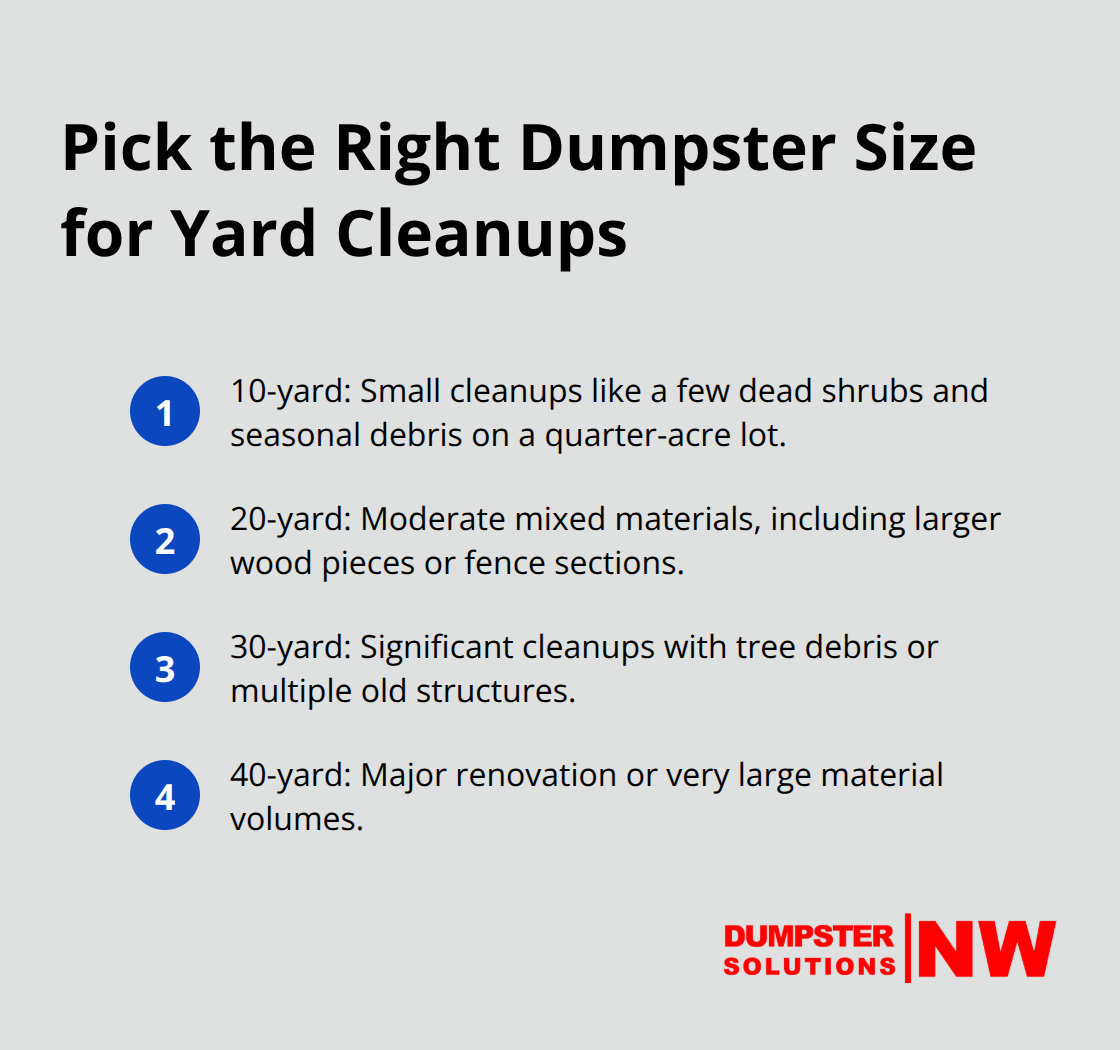
Dumpster size selection requires matching your material type to container capacity. A 10-yard dumpster works for small cleanups-think a few dead shrubs and seasonal debris from a quarter-acre lot. A 20-yard dumpster handles moderate projects with mixed materials, including some larger wood pieces or old fence sections. A 30-yard dumpster accommodates significant cleanups involving tree removal debris, multiple old structures, or large properties. A 40-yard dumpster serves major renovation projects with substantial material volume.
Most yard cleanup projects in Washington State communities like Seattle, Tacoma, and Bellevue fall into the 20 to 30-yard range. We at Dumpster Solutions NW offer all these sizes with flat-rate pricing, so no surprise charges appear regardless of disposal complexity.
Schedule Your Rental Around Your Timeline
Schedule your rental around your actual cleanup work window-not before you’re ready and not so far in advance that the dumpster sits empty. Same-day or next-day delivery keeps your project moving forward without delays. With your materials assessed and your dumpster size locked in, you’re ready to organize those materials strategically and maximize every inch of space.
How to Pack Your Dumpster Without Wasting Space
Organize Materials by Type
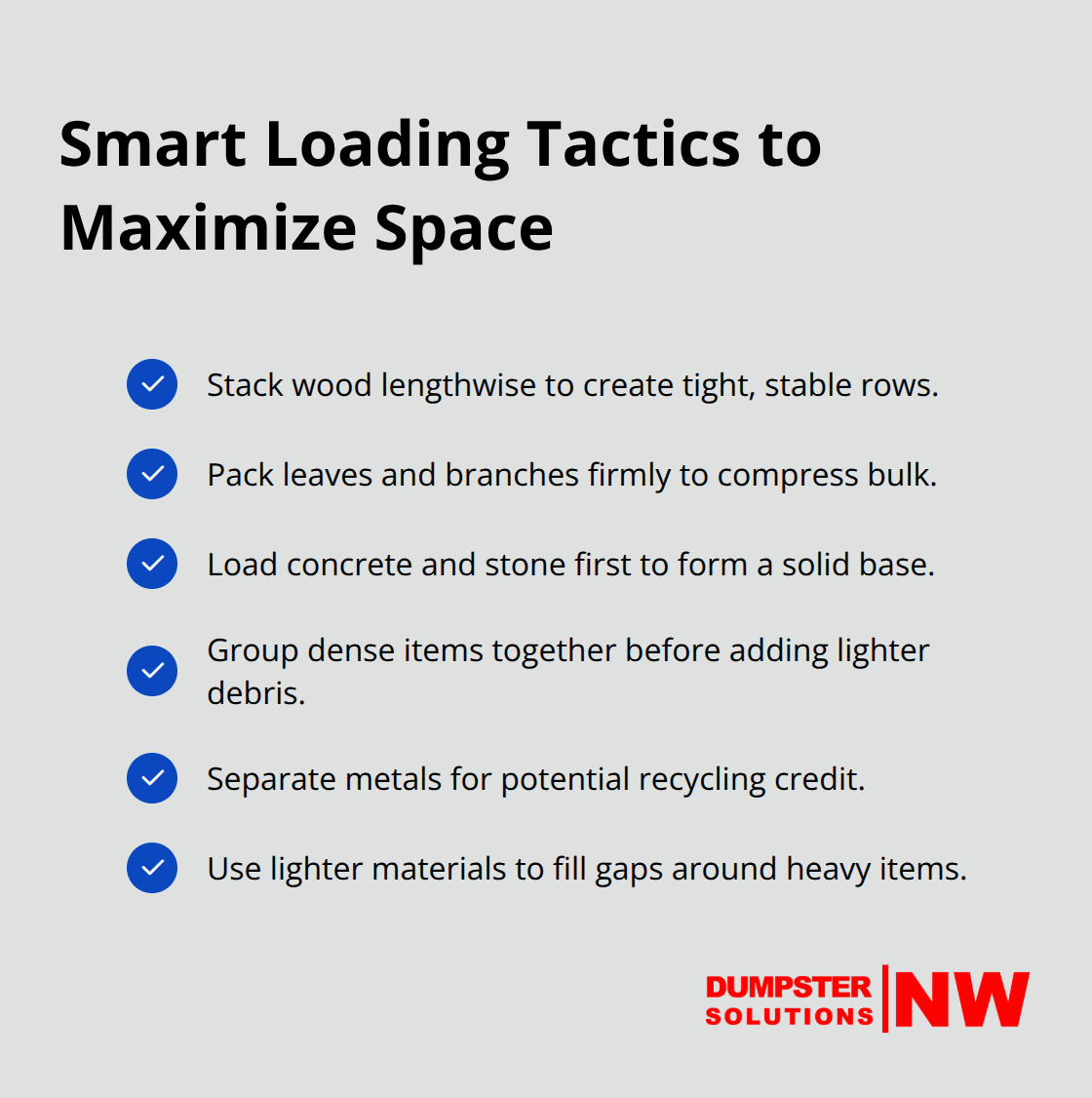
Throwing everything into a dumpster randomly wastes space and money. Dense, heavy items compress differently than bulky, lightweight debris, so organizing materials by type before loading matters significantly. Wood pieces stack efficiently when positioned lengthwise rather than scattered randomly. Leaves and branches compress substantially when packed down, which frees up cubic yards for heavier materials. Concrete and stone don’t compress at all, so these materials should go in first as a foundation layer. Separate metal items, as some facilities recycle these materials and may offer credit toward your rental.
Load Materials in Strategic Order
Load denser materials first (concrete, wood, metal), then fill remaining gaps with vegetation and lighter debris. This strategy can reduce your needed dumpster size by one category, potentially saving hundreds of dollars on your project. The sequence matters because heavy items settle during transport, and lighter materials pack around them efficiently. Wet leaves and fresh branches weigh significantly more than dry vegetation, so if your yard cleanup includes fresh storm damage, account for this extra weight when planning your project timeline.
Handle Heavy Items Safely
Heavy items and bulk materials require specific handling to prevent injury and maintain dumpster balance. Never stack materials higher than the dumpster walls, as items shift during transport and create safety hazards on roads throughout Washington State communities like Seattle, Tacoma, and Bellevue. Concrete chunks should be broken into manageable pieces before loading, which makes them easier to position and maximizes space efficiency. Old deck boards and fence sections should be broken into 4-foot sections before loading, which makes them easier to position and maximizes space efficiency.
Final Thoughts
Your yard cleanup project transforms from overwhelming to manageable once you have the right plan and equipment in place. A yard cleanup dumpster removes the biggest barrier to action: figuring out where everything goes and how to haul it away safely. Instead of making multiple trips to disposal facilities or leaving piles scattered across your property, you load materials once and let professionals handle the rest.
We at Dumpster Solutions NW deliver your dumpster quickly-often the same or next day-with transparent flat-rate pricing that never includes hidden fees. Whether you need a 10-yard container for seasonal debris or a 30-yard dumpster for a major yard overhaul, we’ve got the right size for your project across the entire Seattle and Puget Sound region, including communities like Seattle, Tacoma, Bellevue, and beyond. Visit Dumpster Solutions NW to choose your dumpster size and schedule delivery today.
Disclaimer: The information provided in this blog is for general informational purposes only and does not constitute legal, financial, or insurance advice. Coverage options, terms, and availability may vary. Please consult with a licensed professional for advice specific to your situation