
Picking the wrong dumpster size wastes money and creates headaches. We at Dumpster Solutions NW help customers across the Seattle area get this decision right every single day.
This guide breaks down dumpster rental sizes so you can match the perfect container to your project, whether you’re clearing out a garage or managing a major renovation.
How Dumpster Sizes Work
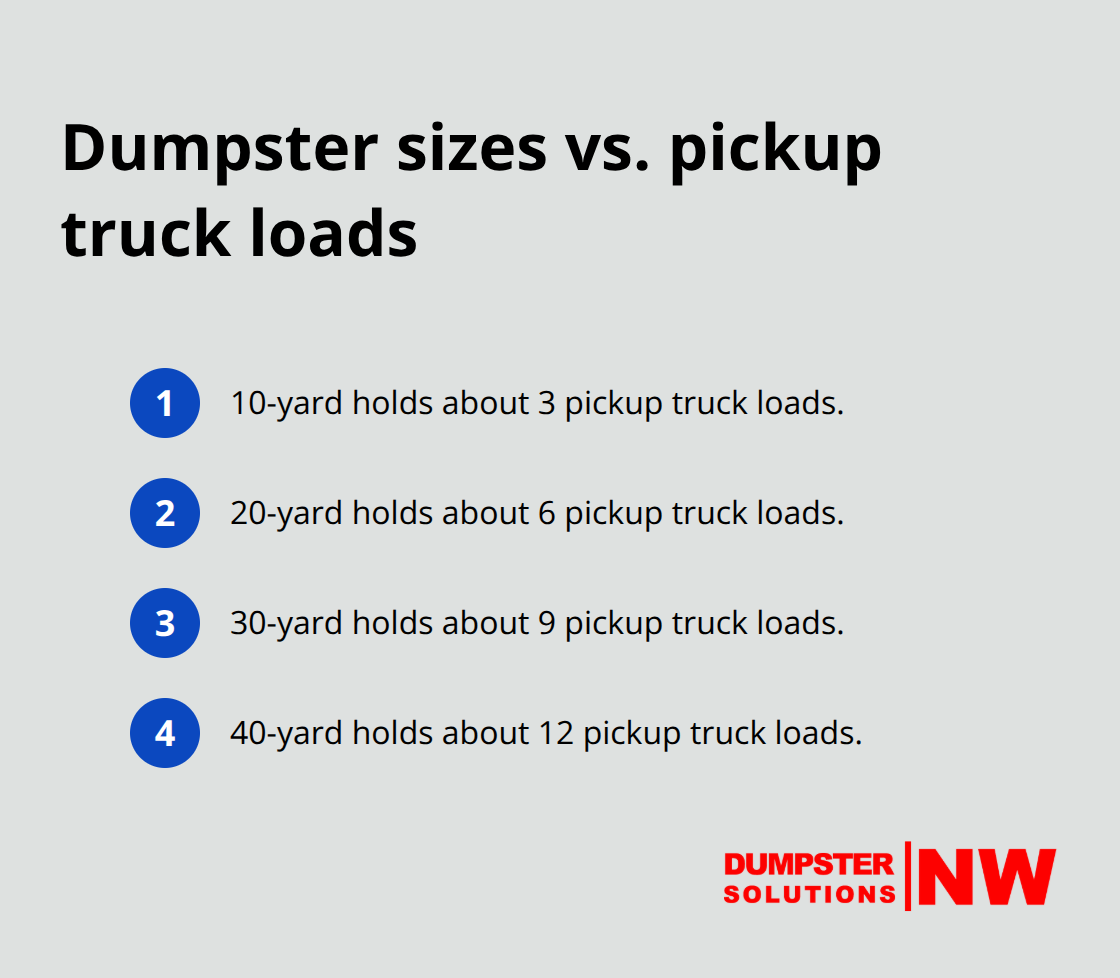
Dumpster sizes are measured in cubic yards, a straightforward three-dimensional measurement of volume. One cubic yard equals 27 cubic feet, which is roughly the size of a standard washing machine. This matters because it tells you exactly how much waste a dumpster can hold, not how it looks from the outside. External dimensions vary between manufacturers, but the internal volume is what counts. A 10-yard dumpster holds about 10 cubic yards of waste, equivalent to roughly 3 pickup truck loads. A 20-yard dumpster holds about 20 cubic yards, or approximately 6 truck loads. A 30-yard holds around 9 truck loads, and a 40-yard can handle about 12 truck loads. The 20-yard dumpster remains the most popular choice for Seattle-area homeowners because it balances capacity with practical fit for most driveways and projects.
What Weight Limits Actually Mean
Weight limits are included in your rental price, and exceeding them triggers additional fees. The limit depends on the dumpster size and local regulations in Washington State. Heavy materials like concrete, shingles, or dirt can max out a smaller dumpster’s weight capacity long before it’s physically full. A 10-yard dumpster works best for dense debris because the smaller volume prevents overloading. If you’re unsure whether your debris is heavy, ask your provider about weight estimates before you order. Placement matters too: position your dumpster on a clear, flat surface, remove vehicles and obstacles, and check for overhead wires or trees. These steps prevent delivery delays and safety issues.
Matching Projects to the Right Size
A 10-yard dumpster suits small bathroom or kitchen remodels, attic or garage cleanouts, yard debris, old tiles, drywall, and small roofing jobs. A 20-yard handles full kitchen renovations, multi-room cleanouts, roof replacements with multiple shingle layers, and medium landscaping projects. A 30-yard works for large-scale home additions, multi-room renovations, and demolition debris. A 40-yard is built for full-home remodels or massive office cleanouts. The key is estimating your debris volume honestly. Underestimating leads to overflow and extra trips; overestimating wastes money on unused capacity. Measure your driveway or work area before you order to confirm a dumpster fits safely with room for loading and pickup truck access.
Planning for Success
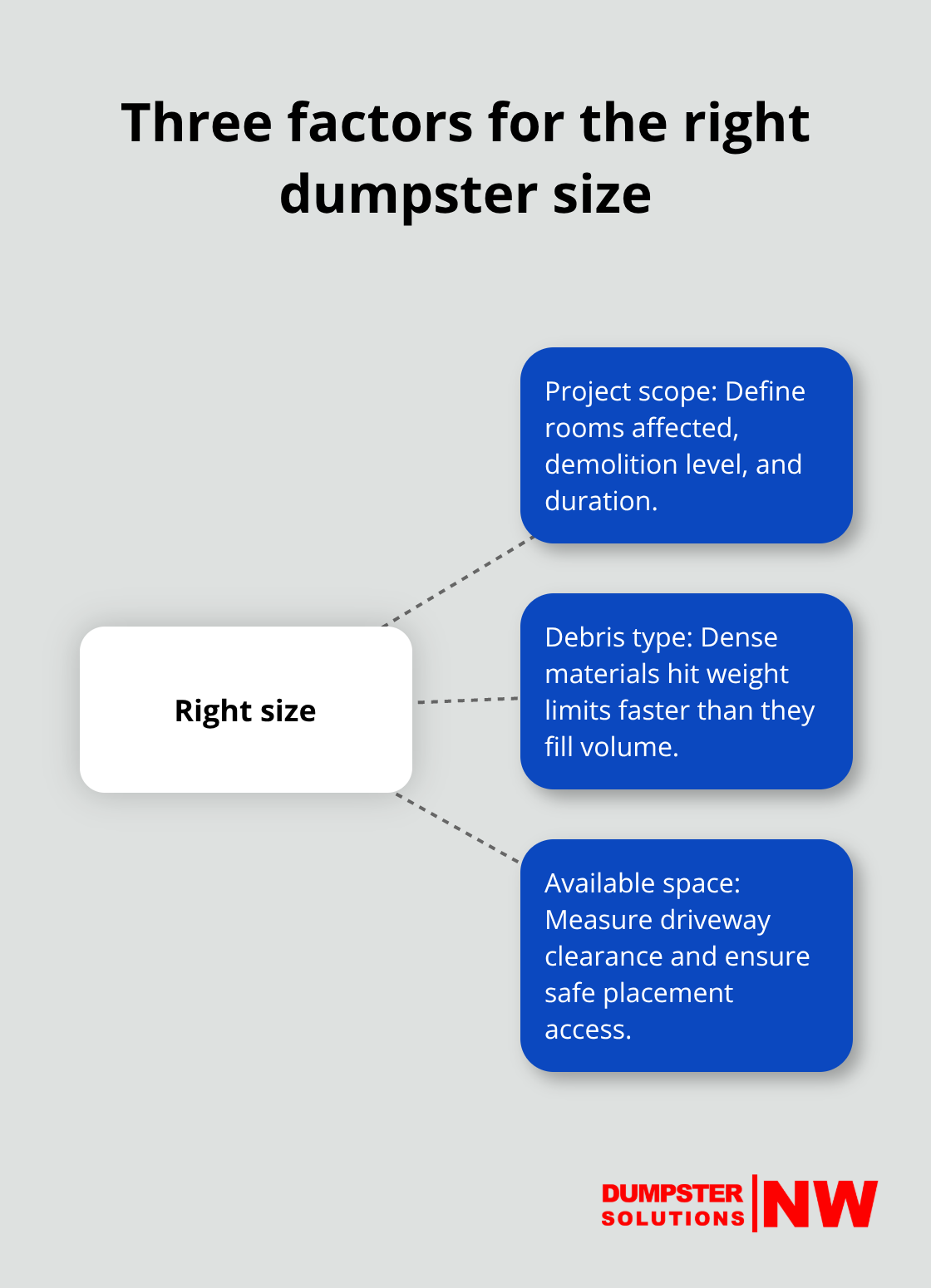
Honest volume estimates prevent costly mistakes. Heavy debris (concrete, shingles, soil) fills a dumpster faster than light materials, so account for density when you calculate. A 10-yard dumpster may look spacious, but dense loads can hit weight limits quickly. Conversely, a 20-yard dumpster might seem like overkill for a small kitchen remodel until you factor in cabinet removal, flooring, and wall materials. Picking the wrong dumpster size wastes money and creates logistical friction. The right size depends on three factors: project scope, debris type, and available space on your property. Once you understand these variables, you can move forward with confidence-and avoid the frustration of renting the wrong container.
Which Dumpster Size Fits Your Budget and Project
Small Projects Need Small Containers
For smaller jobs like garage cleanouts, attic purges, or single-room renovations, a 10-yard dumpster delivers solid value without excess capacity you won’t use. These projects typically generate 50 to 70 bags of waste, and a 10-yard container handles that volume comfortably while keeping costs down. The math works in your favor: you pay only for what you need, not for empty space sitting on your property.
Medium Projects Demand Flexibility
A 20-yard dumpster makes sense when your project spans multiple rooms or involves heavier debris like flooring or cabinet removal. The 20-yard remains the most popular choice across the Seattle area because it absorbs unexpected debris without forcing you into an oversized rental. If you tackle a full kitchen renovation or estate cleanout, this size prevents the frustration of overflow and the expense of a second haul.
Large Projects Require Strategic Planning
For renovations involving structural work-additions, multi-room remodels, or demolition-a 30-yard dumpster becomes practical. These projects generate roughly 230 bags of waste or more, and attempting to squeeze that into a 20-yard creates logistical headaches. A 40-yard dumpster sits at the extreme end and only makes sense for full-home remodels or large commercial cleanouts where you remove walls, flooring, and framing simultaneously.
Cost Discipline Prevents Waste
A 10-yard dumpster costs significantly less per cubic yard than larger options, but only if your project truly fits. Oversizing to a 20-yard when a 10-yard suffices wastes money on unused space and weight capacity you never touch. Conversely, renting a 10-yard for a project that needs a 20-yard forces you to pay for a second delivery and pickup, which erases any savings. The real cost optimization happens before you call: measure your space, estimate your debris volume honestly, and account for debris density. Heavy materials like concrete or shingles compress into less volume than drywall or wood, so a project with dense waste may need a larger container despite appearing smaller in scope.
Finding Your Sweet Spot
Most homeowners in the Seattle area find that a 20-yard strikes the right balance between affordability and flexibility, absorbing unexpected debris without forcing budget overruns or multiple trips. Once you’ve matched your project scope to a realistic dumpster size, the next challenge involves avoiding common pitfalls that derail even well-planned projects.
Common Mistakes That Cost You Money
Volume Underestimation Hits Hard
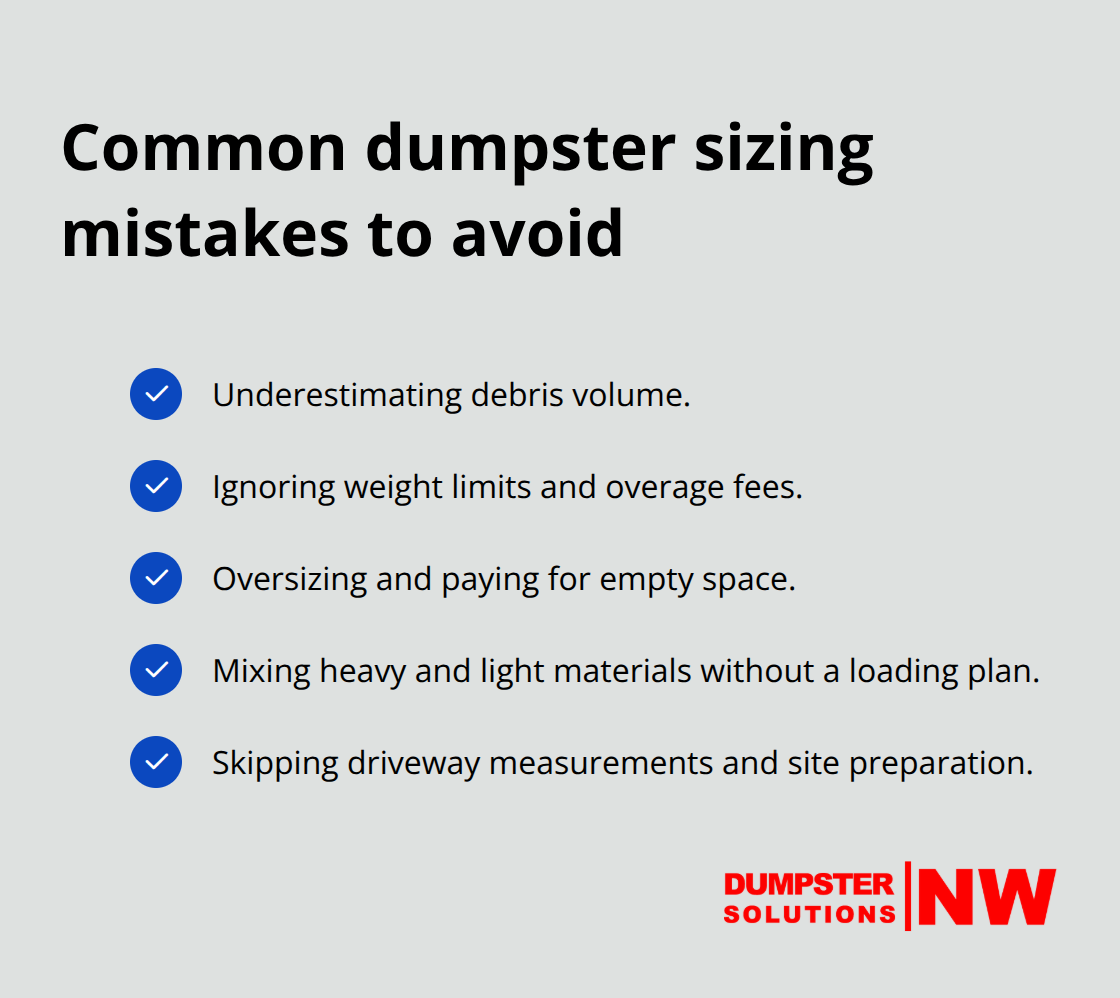
Underestimating debris volume ranks as the most expensive mistake homeowners make, and it happens constantly. A homeowner rents a 10-yard dumpster for a kitchen renovation, assumes cabinet removal and flooring tearout will fit, then hits capacity halfway through the project. Concrete, tile, and old cabinetry are dense materials that compress poorly, so a kitchen remodel that looks modest on paper generates far more waste than expected. The result: you either overstuff the dumpster and face overage fees, or you schedule an emergency second pickup, which costs nearly as much as renting a 20-yard from the start.
The fix requires honesty about your project scope. Measure your space, itemize what you’re removing, and when in doubt, size up. A 20-yard dumpster costs more than a 10-yard, but it costs far less than a 10-yard plus a second haul.
Weight Limits Create Hidden Costs
Weight limits catch people off guard because a dumpster can look empty while hitting its weight capacity. Weight limits on dumpster rentals typically range between 1 and 5 tons depending on bin size and local limits. A single-layer roof replacement with asphalt shingles can weigh 4,000 to 5,000 pounds per square, meaning you max out weight on a 10-yard before the dumpster is visually full.
Exceeding weight limits triggers per-ton overage fees that range from $50 to $150 per ton, transforming a budget-friendly rental into an expensive miscalculation. Always ask your provider for weight estimates before you order, especially if your project involves heavy materials.
Oversizing Wastes Money on Empty Space
Renting a 30-yard dumpster for a single-room cleanout or small bathroom remodel means you pay for 20+ cubic yards of unused space, plus the fuel surcharge for delivering and hauling a larger container. The temptation to upsize stems from fear of running out of room, but that fear costs real money. Try sizing to your actual project scope, not your anxiety about the project.
If you genuinely underestimate and need more space mid-project, many providers offer empty-and-return service where they swap out your full dumpster for an empty one without charging a second delivery fee (though this depends on your rental agreement). The real discipline happens before you call: measure your driveway, list every item you’re removing, and estimate volume in cubic yards. A 20-yard dumpster holds approximately 230 to 250 bags of waste-roughly six pickup truck loads of debris. If your project generates fewer than three truck loads, a 10-yard makes financial sense.
Material Density Demands Strategic Loading
The third and most underestimated mistake involves mixing debris types without planning for weight distribution. A project that combines heavy materials like concrete with light materials like drywall requires strategic loading. Concrete should go in first, distributed evenly across the dumpster floor, because placing heavy material on top of lighter debris creates safety hazards and wastes space.
Mixing wet and dry materials can shift weight unexpectedly; wet soil weighs significantly more than dry soil, and wet drywall is heavier than dry drywall. If your project involves multiple debris types with different densities, account for that when sizing. A renovation mixing drywall removal, flooring tearout, and fixture disposal needs a larger dumpster than the cubic yardage alone suggests because weight distribution matters as much as volume.
Final Thoughts
Three core factors determine your dumpster rental size: your project scope, the type and weight of debris you’re removing, and the physical space available on your property. Washington State regulations, county disposal rules, and neighborhood-specific space constraints affect your rental decision differently across Auburn, Bothell, Edmonds, Federal Way, Issaquah, Kent, Kirkland, Mountlake Terrace, Renton, Sammamish, Seattle, Shoreline, and Tacoma. What works in Bellevue may not work in Puyallup because driveway clearance requirements and transfer station fees vary by location.
Honest measurement and estimation prevent costly mistakes that derail even well-planned projects. Measure your driveway or work area, list every item you’re removing, and account for material density so you select the right dumpster rental sizes for your specific situation. The 20-yard dumpster remains the most popular choice across the Puget Sound region because it balances affordability with flexibility for most homeowners and contractors.
We at Dumpster Solutions NW help customers across the Seattle area navigate these decisions with transparent pricing and same-day or next-day delivery. Contact us for a flat-rate quote on 10, 20, 30, and 40-yard dumpsters with no hidden fees. Our team handles the delivery, hauling, and responsible disposal so you can focus on your project.
Disclaimer: The information provided in this blog is for general informational purposes only and does not constitute legal, financial, or insurance advice. Coverage options, terms, and availability may vary. Please consult with a licensed professional for advice specific to your situation