
Seattle yard waste piles up fast, especially during spring and fall cleanup seasons. Overgrown branches, grass clippings, and leaves don’t just clutter your property-they attract pests and violate local disposal regulations.
At Dumpster Solutions NW, we’ve helped hundreds of Seattle homeowners tackle yard waste efficiently. This guide covers practical solutions to clear your property without the headache.
Why Yard Waste Cleanup Matters in Seattle
King County’s yard waste regulations since January 1, 2018 make this simple: yard debris cannot be mixed with garbage. Leaves, branches, grass clippings, and prunings must be separated and sent to specific facilities like Bow Lake, Enumclaw, Factoria, Shoreline, or Vashon transfer stations. Violating these rules results in rejected loads and wasted trips. The reality is that improper disposal costs you time and money. When yard waste ends up in landfills instead of composting facilities, it generates methane-a greenhouse gas with significant climate impact, according to the EPA. Seattle’s climate means year-round growth; spring and fall seasons alone generate massive volumes of debris that pile up faster than most homeowners expect. A single mature tree drops 200 to 400 pounds of leaves annually. Without a plan, your property becomes a pest magnet and a liability.
How Accumulated Waste Damages Your Property
Putting off yard cleanup creates cascading problems. Accumulated branches trap moisture, encouraging rot and fungal growth that spreads to healthy plants. Overgrown vegetation blocks drainage, causing water to pool near your foundation-potentially leading to thousands in water damage repairs. Seattle homeowners who delay cleanup often face emergency situations after winter storms, when branches clog gutters and damage roofing. These problems compound quickly, turning a manageable cleanup into an expensive repair project.
Why Professional Hauling Solves the Problem
Professional hauling and disposal services handle this burden immediately, removing materials in one trip rather than multiple landfill runs. Dumpster rentals sized for your exact project, from 10-yard containers for small seasonal cleanups to 40-yard units for major renovations, ensure you control the timeline while we handle responsible disposal and compliance with King County regulations. This approach eliminates the stress of coordinating multiple trips and navigating local waste acceptance rules.
What Happens Next in Your Cleanup Journey
Understanding the stakes of yard waste management sets the stage for exploring the solutions available to Seattle homeowners. The next section covers the specific yard waste solutions that work best in our region and how to match them to your project needs.
Yard Waste Solutions Available in the Seattle Area
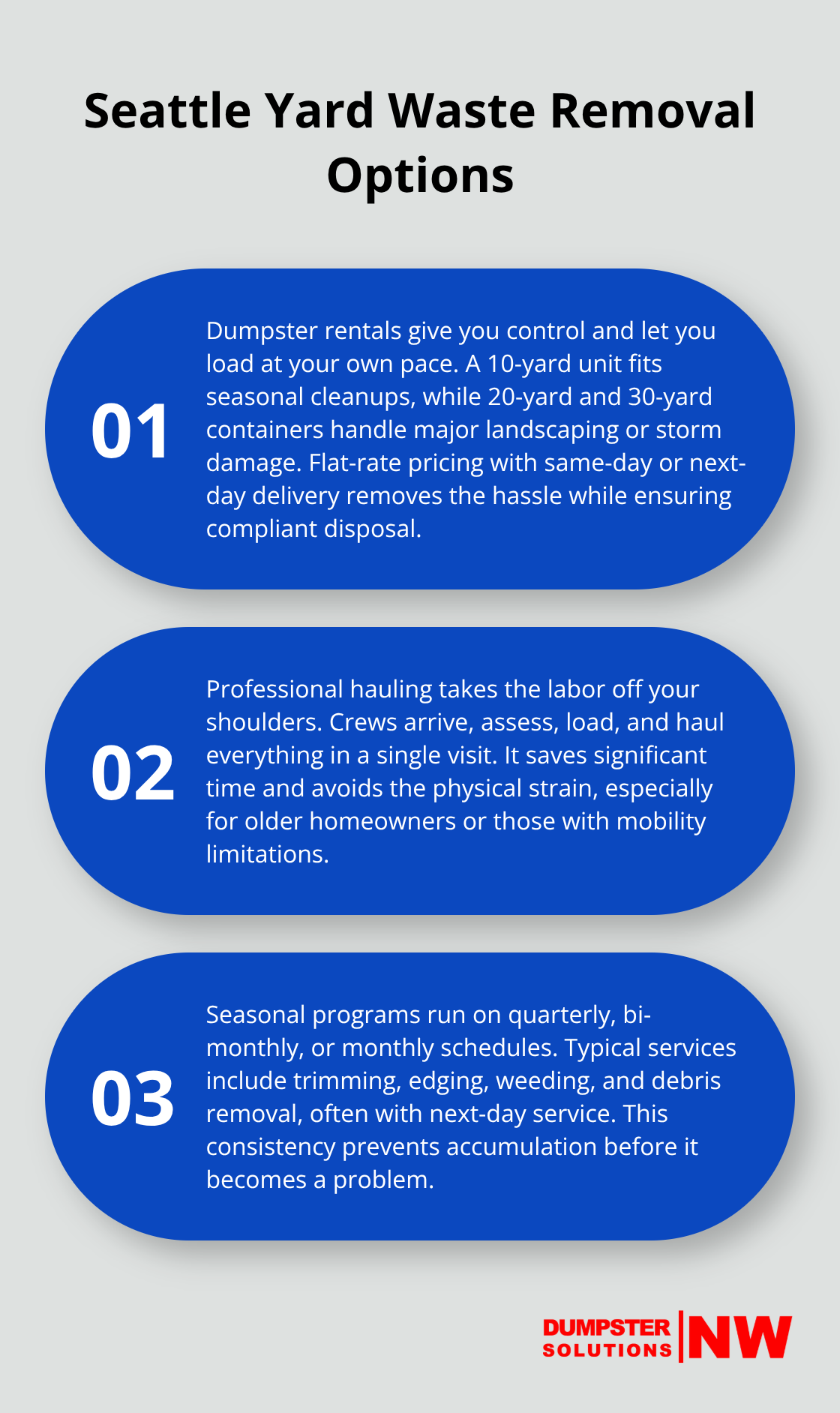
Seattle homeowners face three main approaches to yard waste removal, each suited to different project sizes and timelines. Dumpster rentals offer the most control for large-scale cleanups, letting you load materials at your own pace without coordinating multiple trips to transfer stations. A 10-yard dumpster works for typical seasonal cleanups like spring leaf removal or fall branch trimming, while 20-yard and 30-yard containers handle major landscaping projects or storm damage. Dumpster Solutions NW delivers same-day or next-day service and charges flat rates with no hidden fees, handling responsible disposal that complies with King County’s separation requirements. This eliminates the guesswork of navigating which materials go where.
Professional Hauling and Disposal Services
Professional hauling services take the labor entirely off your shoulders. Crews arrive, assess your yard, load debris, and haul everything away in a single visit. This approach saves significant time if you manage a property with extensive overgrowth or deal with post-storm cleanup. You avoid the physical strain of loading heavy branches and wet leaves yourself, which matters especially for older homeowners or those with mobility limitations.
Seasonal Yard Debris Management
Seasonal management programs work best for homeowners who prefer consistent maintenance rather than crisis cleanups. Services operating in the Seattle area offer quarterly, bi-monthly, or monthly schedules for yard cleanups, which typically include trimming, edging, weeding, and debris removal with next-day service available in many cases. This approach prevents accumulation from happening in the first place, reducing pest problems and property damage before they start.
Matching Solutions to Your Needs
The key difference between these solutions comes down to your timeline and labor capacity. Dumpster rentals give you autonomy if you need flexibility and control over when materials get removed-you fill the container on your schedule, and pickup happens when you’re ready. Professional hauling eliminates the labor entirely and often costs less than making multiple landfill runs in your own vehicle. Seasonal programs prevent the expensive emergency repairs that come from ignoring yard waste for months or years (water damage, pest infestations, foundation issues).
Combining Approaches for Long-Term Success
Seattle’s wet climate means vegetation grows year-round, so the solution you choose should match whether you’re fighting a backlog or preventing future ones. Most homeowners benefit from combining approaches: use a dumpster rental for the initial major cleanup, then switch to quarterly seasonal maintenance to stay ahead. This strategy prevents the cascading problems that emerge when yard waste accumulates unchecked. Understanding which solution fits your situation sets the stage for exploring how to prepare your property and coordinate timing with local services.
How to Prepare Your Yard for Efficient Waste Removal
Proper preparation reduces the time and cost of yard waste removal, whether you choose dumpster rental or professional hauling. Start with material separation into distinct piles before pickup arrives. King County regulations require yard waste to stay separate from other debris, so you should group leaves, branches, grass clippings, and prunings together to speed up the loading process and prevent rejection at transfer stations. Dense materials like concrete, roofing shingles, or soil need their own pile since these require different handling and may incur additional fees. This separation also helps crews load efficiently and confirms compliant disposal.
Sizing and Sorting Materials Correctly
Walk your property systematically and identify what stays versus what goes; many homeowners waste time hauling items they could have composted or donated. Branches longer than 8 feet violate King County’s size restrictions, so you should cut oversized pieces down before scheduling pickup. Items exceeding 2 feet by 2 feet by 2 feet and weighing over 200 pounds face acceptance restrictions at most transfer stations, making advance sizing critical. This step prevents rejection at the facility and eliminates costly return trips.
Timing Your Cleanup with Seasonal Demand
Spring and fall represent peak demand for yard waste services in the Seattle area, meaning dumpster availability tightens and pricing increases during March through May and September through November. If your project isn’t weather-dependent, you should schedule during summer or winter months to get faster delivery and better rates. Check weather forecasts before your scheduled pickup date since wet leaves and muddy soil weigh significantly more than dry materials, potentially pushing loads over weight limits and triggering overage charges.
Confirming Size Requirements and Access
Call ahead with your dumpster rental provider to confirm size requirements based on your pile dimensions; overestimating wastes money while underestimating forces you to schedule a second delivery. Property access matters tremendously-you should clear a path from your yard waste pile to the dumpster or pickup location so crews can work without obstacles. Remove parked cars, garden tools, and low-hanging branches that block truck access (properties requiring crews to navigate narrow gates or tight driveways often face scheduling delays or surcharges). At Dumpster Solutions NW, we handle Seattle’s typical residential setups without issue, but you should communicate access limitations upfront to prevent frustration on service day.
Final Thoughts
Seattle yard waste solutions work best when you match your approach to your property’s specific needs and timeline. Dumpster rentals give you control and flexibility for one-time projects, professional hauling eliminates physical labor entirely, and seasonal programs prevent accumulation before it becomes expensive. The real advantage of any professional solution is compliance with King County’s separation requirements, which saves you rejected loads and wasted trips to transfer stations.
We at Dumpster Solutions NW have seen firsthand how the right approach transforms yard cleanup from a dreaded chore into a manageable task. Flat-rate pricing with no hidden fees removes the guesswork, and our range of sizes from 10 to 40 yards handles everything from seasonal leaf removal to major landscaping overhauls. You control the timeline-fill the dumpster at your pace, and we handle responsible disposal that meets local regulations.
Assess your current yard situation today: do you have an existing backlog that needs immediate clearing, or are you preventing future accumulation? Contact Dumpster Solutions NW for a fast quote and next-day service to start your cleanup. Taking action now prevents the pest problems, foundation damage, and emergency repairs that come from ignoring yard waste.
Disclaimer: The information provided in this blog is for general informational purposes only and does not constitute legal, financial, or insurance advice. Coverage options, terms, and availability may vary. Please consult with a licensed professional for advice specific to your situation