
Construction projects generate massive amounts of waste, and managing it poorly costs time and money. A commercial dumpster rental keeps your job site organized, safe, and compliant with local regulations.
We at Dumpster Solutions NW help contractors across Washington State handle debris efficiently so you can focus on building. This guide walks you through sizing, planning, and maximizing your rental investment.
Why Contractors Need Reliable Dumpster Rentals
Unmanaged debris transforms job sites into obstacles. Concrete chunks, drywall scraps, and lumber accumulate faster than crews can haul them away, and suddenly your team wastes hours navigating around waste instead of working. The American Rental Association reports that most commercial projects rent dumpsters for 7–14 days, and that timeline exists because debris piles up relentlessly on active sites. Without a dumpster on-site, contractors either make repeated trips to disposal facilities-burning fuel and labor-or leave waste scattered across the project, which triggers safety violations and delays. A dedicated dumpster eliminates these friction points immediately.
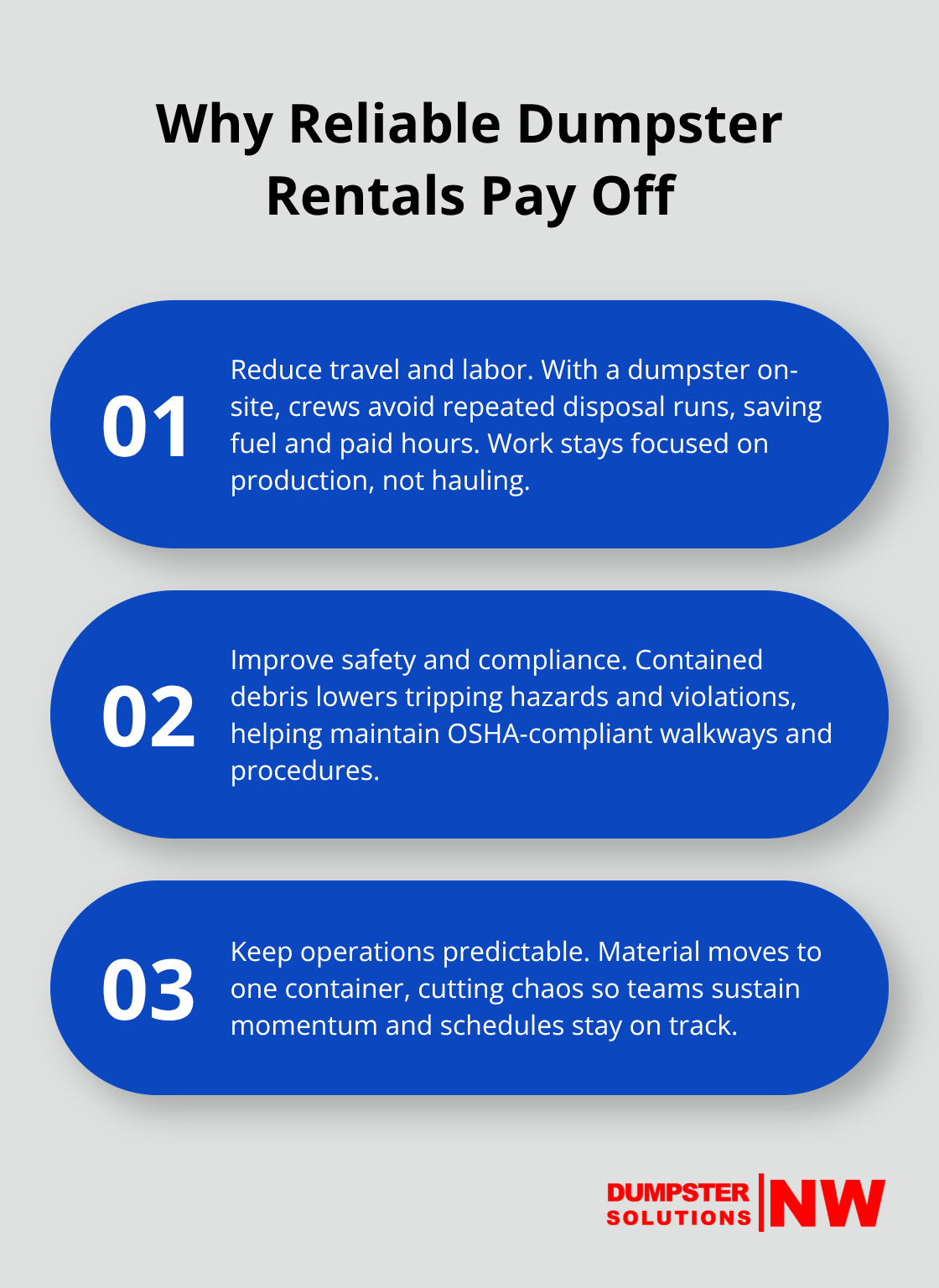
Your crew stays focused on the work instead of managing chaos, material moves predictably into a single container, and the entire operation runs tighter.
Debris Control Directly Impacts Your Bottom Line
Construction waste comes in different forms, and mixing them wastes money. Concrete, brick, and asphalt recycled as aggregate cost less to dispose of than general construction debris, sometimes generating revenue rather than expense. The U.S. Environmental Protection Agency confirms that debris sorting and recycling significantly reduce disposal costs by diverting metals, concrete, wood, and drywall from landfills. Right-sizing your dumpster matters equally-a 20-yard dumpster holds roughly 110–130 trash bags with a 2-ton weight limit, while a 30-yard handles 170–190 bags with 3 tons included. Oversizing wastes rental dollars; undersizing triggers overage fees of $140–$200 per ton, which erase any savings from a smaller initial rental. Contractors who plan waste streams upfront-separating recyclables, estimating volume accurately, and matching dumpster capacity to actual debris-cut disposal costs by 15–25% compared to reactive, haphazard approaches.
Safety and Compliance Stop Being Afterthoughts
Job sites with scattered debris invite injuries, permit violations, and project shutdowns. OSHA emphasizes that walkways must stay clear and waste handling must follow proper procedures; a dumpster confines debris and creates organized workflow. Seattle demolition projects exceeding 750 square feet trigger mandatory Waste Diversion Reports due within 60 days of final inspection, and failure to submit incurs $250 fines plus statutory assessments. Similar rules apply to new construction or remodeling valued at $75,000 or more. The report requires weight tickets, facility receipts, and documentation of where materials went-reuse, salvage, recycling, or disposal. Contractors who start with a waste management plan that includes proper dumpster sizing and material sorting satisfy these requirements without scrambling at project end. Placing a dumpster on public streets requires temporary encroachment permits in most Washington municipalities, while private property placement typically avoids permitting. Knowing these rules upfront prevents delays and fines that derail schedules and inflate costs.
Selecting the Right Size Prevents Budget Surprises
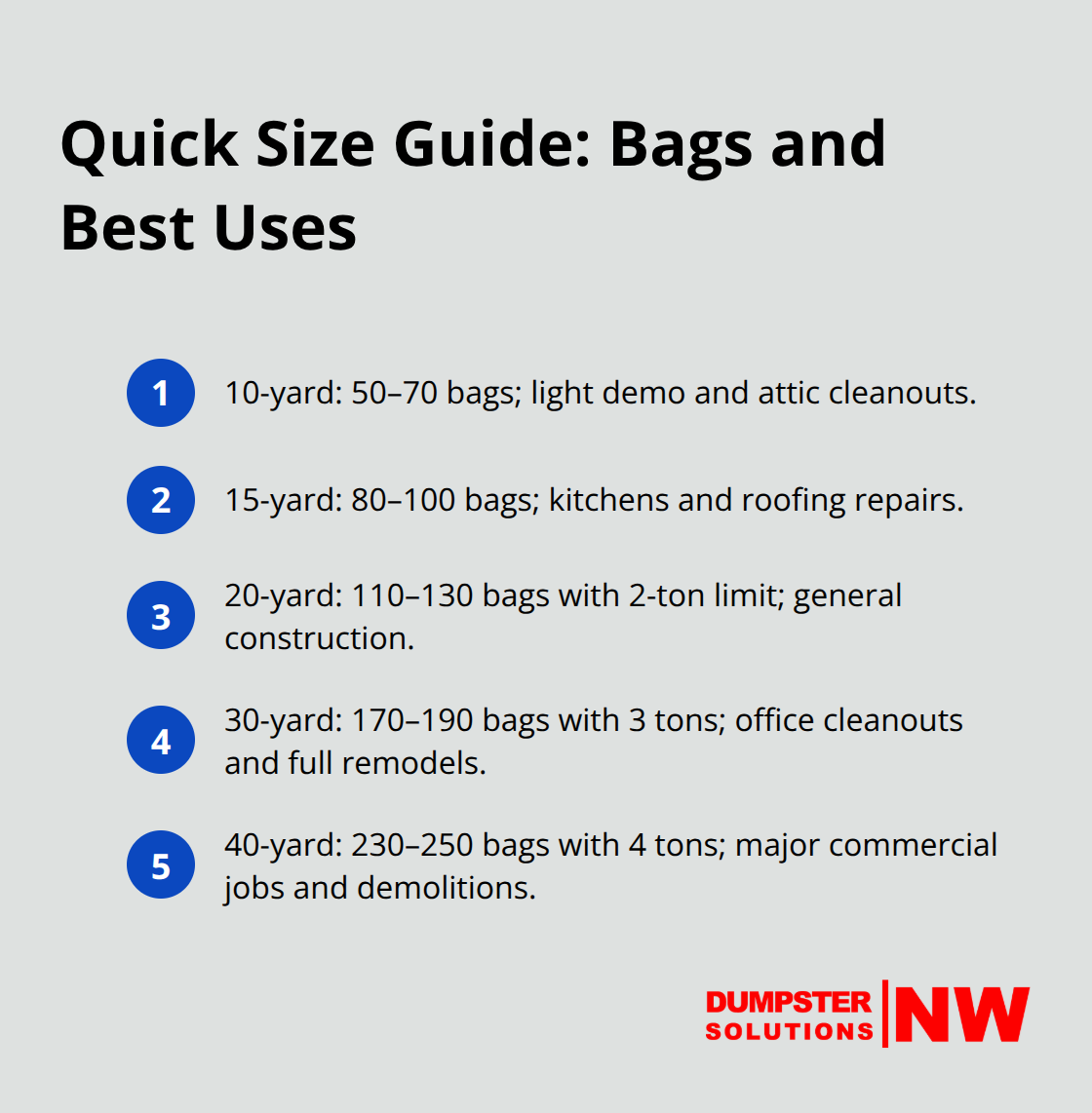
The dumpster size you choose determines whether your project stays on budget or spirals into unexpected charges. A 10-yard dumpster holds 50–70 trash bags and works for light demolition or attic cleanouts, while a 15-yard accommodates 80–100 bags for bathroom or kitchen remodels. Most contractors find that a 20-yard dumpster (110–130 bags) fits general construction work, whereas 30-yard and 40-yard containers handle full home remodels and major commercial jobs. Each size carries a weight limit-exceed it, and per-ton fees apply immediately.
Contractors who estimate their debris volume before ordering avoid the trap of undersizing and facing overage charges mid-project. The next section walks you through matching dumpster capacity to your specific project type and timeline.
What Size Dumpster Do You Actually Need
Match Capacity to Your Project Type
Picking the wrong dumpster size tanks your budget faster than any other rental decision. A 10-yard dumpster holds 50–70 trash bags, making it suitable for light demolition, attic cleanouts, or small bathroom remodels where debris volume stays modest. A 15-yard accommodates 80–100 bags, perfect for kitchen remodels or roofing repairs where the waste stream is predictable and contained. The 20-yard dumpster, holding 110–130 bags with a 2-ton weight allowance, represents the sweet spot for most general construction work-partial home cleanouts, room additions, and standard commercial jobs all fit comfortably here.
Contractors who underestimate and rent a 10-yard for a project that generates 20-yard volume face per-ton overage fees that obliterate any savings from the cheaper initial rental. A 30-yard dumpster handles 170–190 bags with 3 tons included, appropriate for office cleanouts, home additions, and full remodels. The 40-yard contains 230–250 bags with 4 tons and suits complete home demolitions or major commercial projects.
Estimate Debris Volume Accurately
The American Rental Association found that most commercial projects rent for 7–14 days, and that window reflects how quickly debris accumulates on active sites. Your first move is estimating actual debris volume-concrete and brick weigh significantly more than drywall and wood, so a project with heavy demolition materials needs a larger dumpster than one with framing waste alone.
Separate inert materials like concrete and dirt from general debris whenever possible; inert dumpsters often have no weight limit, making them far cheaper for demolition-heavy work than standard containers. Weight limits exist on every size except inert options, and exceeding them triggers immediate charges that compound across multiple overage incidents.
Plan Your Rental Duration and Delivery
Matching dumpster size to project duration prevents the trap of extension fees that stretch your timeline and costs. A standard 7-day rental period works for most residential jobs where crews work continuously and fill the container steadily, but larger commercial projects often need scheduled swaps-removing a full dumpster and delivering an empty one mid-project to maintain uninterrupted debris removal without overfilling.
Street placement requires a temporary encroachment permit in most Washington municipalities, adding 1–2 weeks to your planning timeline, while private property placement typically avoids permitting delays. Dumpster Solutions NW delivers quickly across the Seattle and Puget Sound region, often on the same or next day, eliminating the guesswork around when your container arrives.
Load and Prepare Your Site Properly
Load efficiently by placing heavy, flat items first, breaking down large pieces to maximize space, distributing weight evenly across the dumpster floor, and never piling debris above the rim-overfilled containers trigger trip fees and safety violations. Site preparation matters equally: clear the placement area of obstacles, protect driveway surfaces with plywood if the dumpster sits there, check for overhead power lines, and mark underground utilities before delivery to avoid costly damage. These steps take minimal time upfront but prevent expensive mistakes that halt progress and inflate final costs, making them essential to any project plan.
How to Maximize Your Dumpster Rental Investment
Plan Your Waste Strategy Before Work Starts
Planning waste management before a single nail drops separates contractors who stay on budget from those who face surprise fees mid-project. Walk your site and categorize debris types-concrete and brick belong in inert dumpsters with no weight limits, while mixed construction waste goes in standard containers. The U.S. Environmental Protection Agency confirms that on-site sorting and recycling reduce disposal costs by diverting metals, concrete, wood, and drywall from landfills, sometimes generating revenue instead of pure expense. Create dedicated zones on your site: one for recyclables like metal studs and copper wire, another for inert materials, and a third for general construction debris. This separation takes minimal effort during demolition but saves thousands in tipping fees because recycled concrete and asphalt cost far less to process than mixed waste.
Coordinate with your hauler upfront about which materials go where and confirm that your dumpster provider accepts your specific debris streams. Some materials like hazardous paints, solvents, and batteries require specialized disposal and trigger fines if mixed into standard containers. Document your waste plan in writing before crews arrive so everyone understands the sorting expectations and no one tosses materials into the wrong bin out of habit or confusion.
Load Your Dumpster Efficiently
Efficient loading prevents trip fees, overage charges, and project delays that compound throughout your timeline. Load heavy, flat items like concrete chunks and brick first, then break down large pieces to maximize interior space and distribute weight evenly across the dumpster floor rather than piling it to one side. Never fill above the rim-overfilled containers trigger immediate trip charges and create safety hazards for haulers, and that extra fee often costs more than renting a slightly larger dumpster would have.
Clear your placement area before delivery arrives by removing vehicles, equipment, and obstacles that block access. Protect driveways with plywood if the dumpster sits on pavement to prevent damage that becomes your liability. Check for overhead power lines and mark underground utilities with flags or paint before the truck arrives-damaging electrical or gas lines halts your entire project and creates liability that extends far beyond the dumpster rental cost.
Coordinate Delivery and Pickup Strategically
Schedule your pickup strategically to avoid extension fees and overage charges that accumulate without purpose. Waiting until the dumpster overflows to call for removal means paying for extensions or overage fees, while scheduling pickup too early wastes rental days. Most contractors benefit from a 7-day standard rental, but larger commercial projects need scheduled swaps where your dumpster provider removes a full container and delivers an empty one mid-project, maintaining continuous debris removal without overfilling.
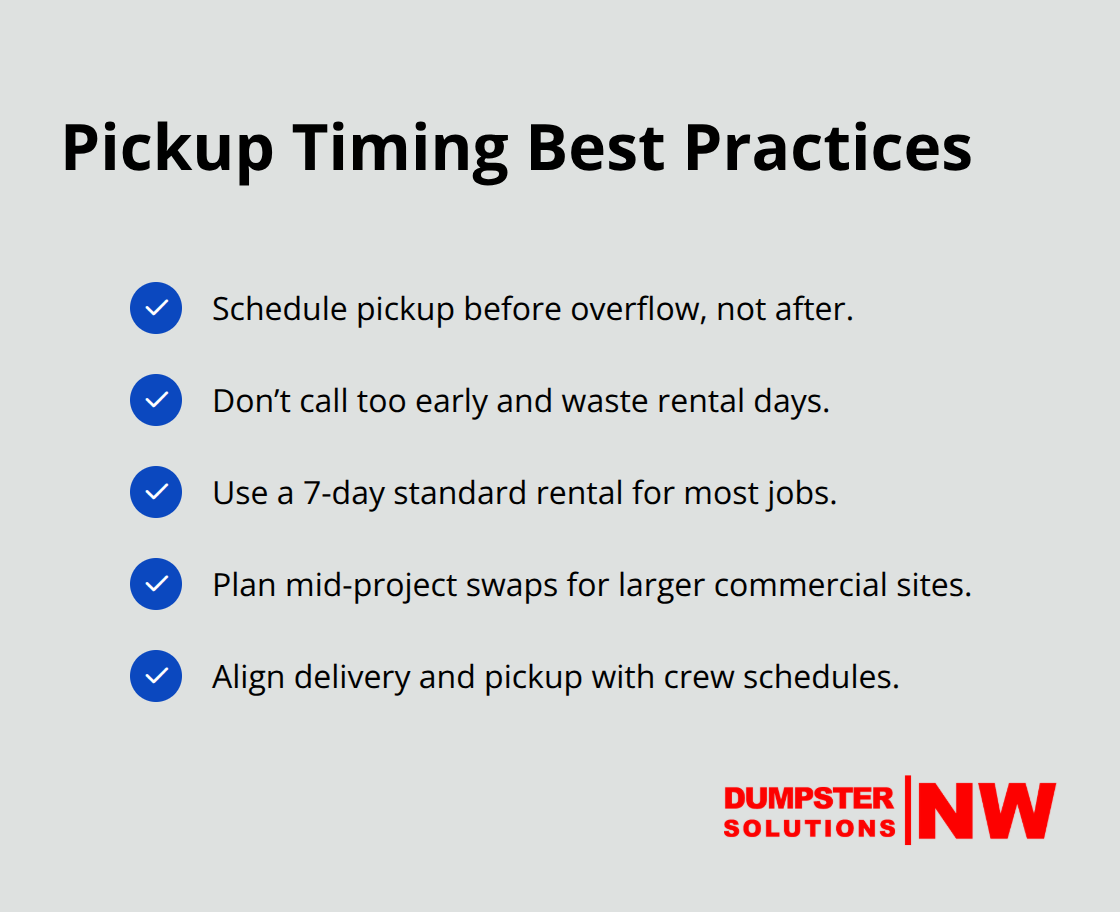
Coordinate your delivery and pickup windows with crew schedules so the dumpster arrives when work begins and leaves when the site is clean, not days before or after when rental fees accumulate without purpose. Position your dumpster within 50 feet of your primary work area to maximize efficiency and keep your project timeline tight.
Final Thoughts
Right-sizing your dumpster, planning waste streams upfront, and coordinating delivery schedules transform commercial dumpster rental from a logistical headache into a straightforward operational decision. Contractors who estimate debris volume accurately, separate recyclables from general waste, and load efficiently stay on budget and keep projects moving forward without surprise fees or delays. A 20-yard dumpster with a 2-ton weight limit costs roughly $555 for a 7-day rental, while oversizing to a 30-yard at $670 wastes $115 if your project only needed 20-yard capacity-undersizing and triggering $140–$200 per-ton overage fees erases any savings from the cheaper initial rental.
We at Dumpster Solutions NW serve contractors and builders throughout the Seattle and Puget Sound region with transparent pricing and same-day or next-day delivery on most orders. We offer 10, 20, 30, and 40-yard dumpsters to match any project size, from small garage cleanouts to large commercial sites, and our flat-rate pricing eliminates hidden fees. Your crew stays focused on building while we manage the waste and handle responsible disposal.
Contact us to discuss your project timeline, debris types, and site access requirements, and we’ll recommend the right dumpster size and rental duration for your specific needs. Whether you’re managing a kitchen remodel in Bellevue, a full demolition in Seattle, or a commercial build in Tacoma, visit our website to request a quote and schedule your delivery today.
Disclaimer: The information provided in this blog is for general informational purposes only and does not constitute legal, financial, or insurance advice. Coverage options, terms, and availability may vary. Please consult with a licensed professional for advice specific to your situation